How to Specify Pad Mounted Transformers for North American Projects
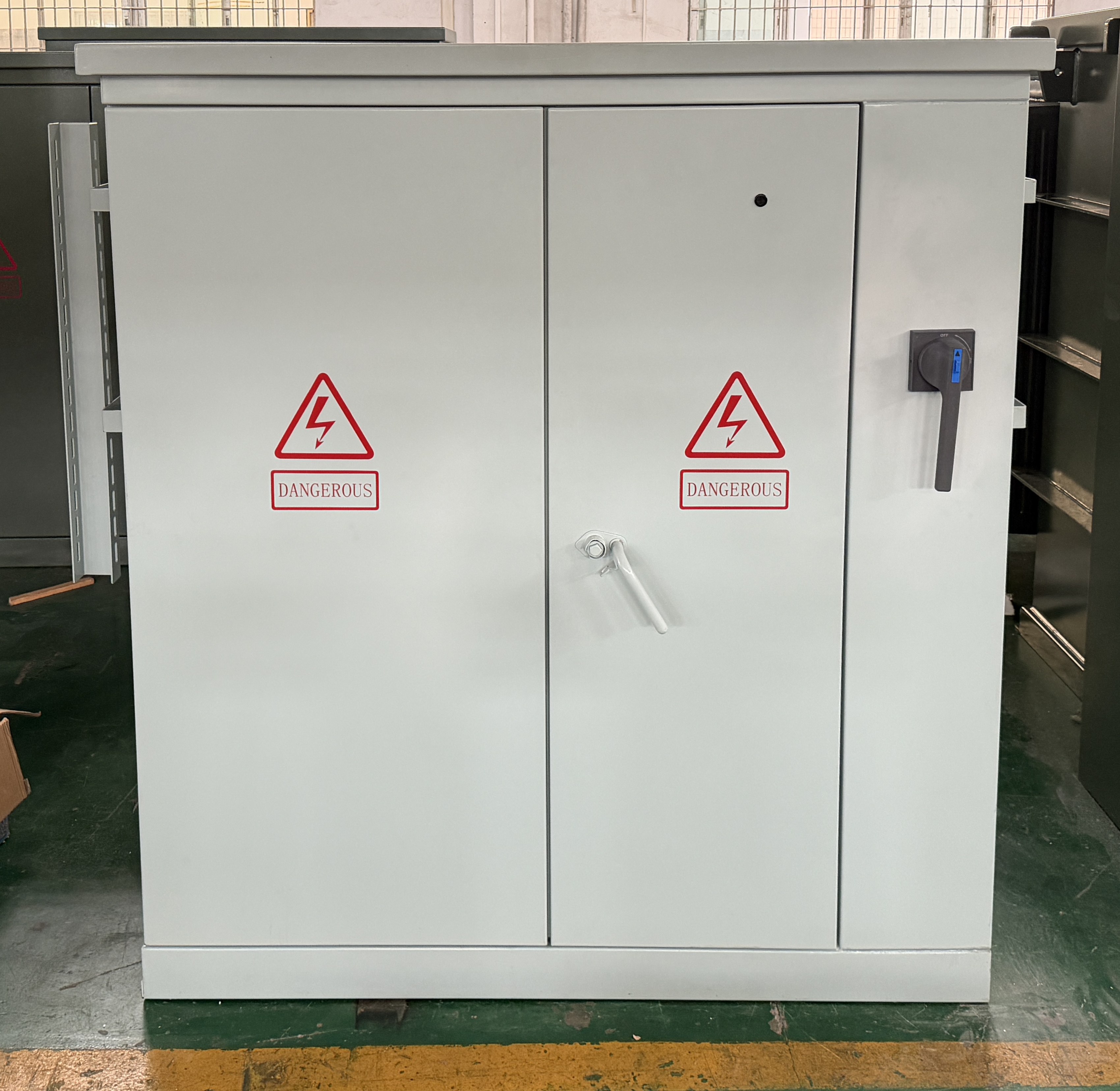
A 300 kVA 13.2 kV to 480Y/277 V pad-mounted transformer with 304 stainless steel enclosure for small institutional building service.
Pad mounted transformers are a standard building block of underground distribution in North America, serving utility feeders, commercial campuses, solar plants, EV charging hubs, and data centers. Specifying one correctly requires understanding capacity, voltage, feed configuration, enclosure integrity, and the certification path behind the unit.
Why Pad Mounted Transformer Selection Is Not a Catalog Exercise
For engineering consultants and procurement teams, a pad mounted transformer is a long-lived asset with a direct impact on construction cost, service reliability, and safety. The primary voltage must match the utility system; the secondary voltage must match the utilization equipment; the kVA rating must handle the load without excessive temperature rise; and the enclosure must satisfy site-specific public-access and weather requirements. A mismatch in any of these areas can delay energization or create operating problems.
At the same time, the market context makes informed buying more important. Global trade in liquid dielectric transformers under 650 kVA reached USD 4.08 billion in 2024, a 22.6% increase from the previous year. As projects move forward with grid modernization and renewable interconnection, manufacturers that can translate a project specification into a certified, buildable unit offer a practical advantage.
What a Pad Mounted Transformer Is and Where It Is Used
A pad mounted transformer is an enclosed distribution transformer installed at ground level on a concrete pad. It connects underground medium-voltage cables to low-voltage distribution systems, and is widely used in residential areas, commercial streets, urban distribution, industrial parks, and new energy stations. Unlike pole-mounted units, pad mounted designs place energized components inside a tamper-resistant cabinet, which makes them suitable for locations near pedestrian traffic.
Xiamen Winley Electric Co., Ltd. (Winley Electric) is a transformer manufacturer established in 2014, with manufacturing facilities in Shanghai and Guangdong covering 45,000 square meters and an annual production capacity of 35,000 units. The company exports to more than 60 countries, with around 70% of sales going to North and South America. Its pad mounted transformer portfolio includes single-phase and three-phase oil-immersed units, plus dry-type transformers for applications where liquid-filled designs are not preferred.
Core Specification Parameters
Capacity and Phase Configuration
For single-phase pad mounted distribution, the common rating range is 15 to 250 kVA, with capability to reach 833 kVA. For three-phase systems, standard capacity starts at 45 kVA and extends to 5,000 kVA, with maximum capability up to 7,000 kVA. The phase configuration should match the service requirement: single-phase residential or light commercial loads, three-phase for larger commercial, industrial, utility, and renewable projects.
| Parameter | Single Phase Pad Mounted (DGS) | Three Phase Pad Mounted (ZGS) | Dry-Type (SG) |
|---|---|---|---|
| Typical capacity | 15-250 kVA (max. 833 kVA) | 45-5,000 kVA (max. 7,000 kVA) | 10 kVA - 30 MVA |
| Primary voltage examples | 34.5-19.92 kV, 24.94-14.4 kV, 13.8-7.957 kV, 13.2-7.62 kV, 12.47-7.2 kV, 4160 GrdY-2400 V | 34.5 kV, 24.94 kV, 13.8 kV, 13.2 kV, 12.47 kV, 4.16 kV | 4.76 kV, 15 kV, 23 kV, 34.5 kV |
| Secondary voltage examples | 120-240 V, 240-480 V, 347/600 V | 690Y/400, 480Y/277, 208Y/120, 240Y/120 | 208 V - 34.5 kV |
| Feed configuration | Loop feed, radial feed | Loop feed, radial feed | N/A |
| Enclosure | Pad mounted | Pad mounted | NEMA 1, NEMA 3R, NEMA 4 |
| Standards | ANSI/IEEE C57.12.00/20/38/90, CSA, DOE, NEMA | IEEE/ANSI C57.12.34, CSA C227.4/C227.5, IEC, DOE, NEMA | ANSI, IEEE, IEC, NEMA, DOE |
| Certifications | UL/cUL, ISO, CE (company certifications) | UL/cUL, ISO, CE (company certifications) | UL/cUL, ISO, CE |
Primary and Secondary Voltage
Voltage selection is the first electrical constraint. Utility primary voltages in North America commonly include 12.47 kV, 13.2 kV, 13.8 kV, 24.94 kV, and 34.5 kV. Winley Electric's three-phase pad mounted transformers accept primary voltages of 34.5 kV, 24.94 kV, 13.8 kV, 13.2 kV, 12.47 kV, or 4.16 kV. Secondary voltages can be specified as 690Y/400, 480Y/277, 208Y/120, or 240Y/120, matching common utilization needs. Single-phase units support primary combinations such as 13.8 kV - 7.957 kV, 12.47 kV - 7.2 kV, and secondary outputs at 120-240 V, 240-480 V, and 347/600 V.
Feed Configuration: Loop Feed vs. Radial Feed
Loop feed and radial feed describe how the primary cable enters and leaves the transformer compartment. A radial feed has a single active source; power flows in one direction. A loop feed provides two possible paths, often via two sets of bushings or switches, allowing the utility to isolate a faulted section or perform maintenance while maintaining supply to other loads. Both configurations are available on Winley Electric's single-phase and three-phase pad mounted transformers.
NEMA Enclosure Protection
For outdoor installations, the enclosure must protect the transformer from weather, corrosion, and public contact. NEMA 3R is a widely used outdoor rating that protects against rain, sleet, and ice formation. NEMA 4 adds protection against windblown dust and water splashes, making it suitable for harsher environments. NEMA 4X or stainless-steel enclosures are specified for highly corrosive sites, such as coastal areas or industrial facilities. In Winley Electric's dry-type transformer line, NEMA 1, NEMA 3R, and NEMA 4 enclosures are available. For pad mounted equipment in public-access areas, enclosure integrity is also covered by IEEE C57.12.28-2023.
Standards and Certification Compliance
North American projects generally require compliance with IEEE, ANSI, CSA, DOE, and NEMA standards. Three-phase pad-mounted distribution transformers are governed by IEEE C57.12.34, which covers ratings up to 10 MVA and 34.5 kV. Single-phase pad-mounted transformers 250 kVA and smaller are standardized under IEEE C57.12.38. Enclosure integrity is defined by IEEE C57.12.28-2023. Buyers should also verify that the manufacturer can provide UL, cUL, CSA, or equivalent third-party certification, as required by the local authority having jurisdiction.
Working With a Factory on ODM Customization
The term ODM covers design and manufacturing collaboration where the factory builds a product to the buyer's specification, often with custom drawings, accessory selection, and special voltages. For pad mounted transformers, this can include custom primary/secondary voltage combinations, special tap configurations, alternative enclosure materials, or project-specific accessory packages.
Winley Electric's R&D team includes engineers familiar with ANSI, IEEE, CSA, DOE2016, NEMA, and IEC standards. Its service scope includes product selection recommendation, drawing design, accessory selection, acceptance support, transportation plan, and installation guidance. These services allow a North American buyer to move from project concept to a manufactured unit with defined compliance documentation. The company also holds more than 20 patents for independent R&D, which supports non-standard design work.
From a procurement standpoint, the ODM process should be structured around a written technical specification, a certified type-test plan, and a documented quality-control procedure. Winley Electric operates a transformer material traceability system and a supplier evaluation mechanism, and all products pass factory inspection before shipment.
Application Scenarios in North America
Pad mounted transformers appear across a broad set of North American installations:
- Utility distribution: Loop-feed pad mounted transformers support underground networks, feeder segmentation, and capacity expansion. Examples include dual-primary units for utility grid voltage conversion and dual-secondary units for distribution upgrades.
- Commercial and institutional: Buildings such as hospitals, universities, hotels, and retail complexes use pad mounted transformers to step 34.5 kV, 24.94 kV, 13.8 kV, 12.47 kV, or 4.16 kV down to 480Y/277 V or 208Y/120 V for HVAC, lighting, elevators, and laboratory loads. Compact footprint, low noise, and tamper resistance are commonly required.
- Solar plants: Solar projects use pad mounted transformers as step-up units from inverter output voltages such as 380 V, 480 V, 600 V, or 800 V to medium-voltage collector levels of 13.8 kV, 24.94 kV, or 34.5 kV. The transformer must tolerate reverse power flow and inverter harmonics.
- EV charging infrastructure: DC fast-charging hubs and fleet depots require transformers that convert utility medium voltage to 480Y/277 V or 600Y/347 V while handling rapid load changes and rectifier harmonics. Large charging sites commonly specify 1,500 kVA to over 2,500 kVA units.
- Data centers: Pad mounted transformers support redundant medium-voltage distribution to UPS systems and cooling plants, operating continuously with high load density and non-linear loads.
- Mining and industrial: Rugged pad mounted designs feed crushers, conveyors, and motor control centers in dusty, vibrating, and temperature-extreme environments.
Market Trends Shaping Pad Mounted Transformer Procurement
The U.S. pad-mounted transformer market was estimated at USD 3.75 billion in 2024, with grid modernization and underground cabling cited as key drivers. Globally, the pad mounted transformer market was valued at approximately USD 22.3 billion in 2024. At the same time, Chinese exports of liquid dielectric transformers under 650 kVA reached USD 511 million in 2024, according to OEC/WITS, indicating the growing role of international supply in North American projects.
Three technical trends are visible in current procurement:
- Standardization updates: IEEE C57.12.34 and C57.12.38 continue to define dimensional and electrical requirements for modern pad mounted transformers, and enclosure integrity has its own dedicated standard (IEEE C57.12.28).
- Efficiency and environmental requirements: DOE 2016 efficiency levels are a baseline for distribution transformers, and natural ester or FR3 fluid options are increasingly specified for renewable and BESS applications.
- Early supplier involvement: Buyers are moving from simple catalog purchases toward engineering-based OEM/ODM collaboration with manufacturers that hold UL/cUL certification and can support drawing review, testing, and logistics.
Comparison With Traditional Solutions: What Buyers Should Weigh
Pad mounted transformers are not automatically the best fit for every site. In low-density rural areas where overhead distribution is permitted, pole-mounted transformers and overhead lines have lower initial cost and require less site preparation. A pad mounted unit adds a concrete pad, underground cabling, and more complex access planning. For new suburban developments, commercial campuses, and utility underground networks, the safety and aesthetic advantages of a pad mounted design usually justify the premium.
There are also trade-offs between liquid-filled and dry-type construction. Liquid-filled pad mounted transformers, such as the oil-immersed ZGS series, provide high short-circuit withstand and effective cooling in outdoor utility environments. Dry-type transformers eliminate fluid containment and may be preferred for indoor installations or where fire-safety requirements are strict, but they generally occupy more space for the same kVA rating. The choice should be made based on site location, local codes, load type, and maintenance strategy.
Finally, an ODM route offers configuration freedom but carries practical constraints. Customized pad mounted transformers require engineering coordination, type testing, and certification review before production. If a project requires a non-standard design, lead time will be longer than for a standard UL-listed catalog model. Buyers should confirm the certification strategy and testing scope in the request-for-quotation stage, not after the design is completed.
Future Outlook
The North American pad mounted transformer market is likely to remain driven by the same factors that created demand in 2024: replacement of aging distribution equipment, conversion from overhead to underground systems, and growth in solar, wind, and EV charging infrastructure. Data center expansion adds a further load for medium-voltage distribution equipment.
For procurement teams, the long-term implication is that a pad mounted transformer will increasingly be treated as an engineered component rather than a commodity. Manufacturing partners with certified product platforms, reliable testing capabilities, and ODM engineering support will be better positioned to meet utility and project-specific requirements.
Frequently Asked Questions
What is a pad mounted transformer?
A pad mounted transformer is a ground-level, enclosed distribution transformer that connects underground medium-voltage cables to low-voltage service. It is commonly used in residential, commercial, institutional, utility, and renewable-energy installations where overhead lines are not preferred.
What are the differences between single-phase and three-phase pad mounted transformers?
Single-phase pad mounted transformers, such as the DGS series, are designed for low-load-density areas like residential quarters and commercial streets, with typical ratings from 15 to 250 kVA and maximum capability up to 833 kVA. Three-phase pad mounted transformers, such as the ZGS series, cover 45 to 5,000 kVA with maximum capability up to 7,000 kVA and are used in urban distribution, industrial and commercial parks, and new energy stations.
What voltage options are available for pad mounted transformers?
For single-phase units, primary voltage options include 34.5-19.92 kV, 24.94-14.4 kV, 13.8-7.957 kV, 13.2-7.62 kV, 12.47-7.2 kV, and 4160 GrdY-2400 V; secondary voltage options include 120-240 V, 240-480 V, and 347/600 V. Three-phase units offer primary voltages such as 34.5 kV, 24.94 kV, 13.8 kV, 13.2 kV, 12.47 kV, and 4.16 kV, with secondary voltages including 690Y/400, 480Y/277, 208Y/120, and 240Y/120.
What is the difference between loop feed and radial feed?
Loop feed and radial feed describe the primary cable configuration. In a radial feed, power flows from one utility source through the transformer. In a loop feed, two cable paths allow the transformer to be supplied from either direction, which supports load transfer during maintenance and improves service continuity. Both configurations are available on Winley Electric's single-phase and three-phase pad mounted transformers.
What standards and certifications are important for pad mounted transformers in North America?
Common standards include IEEE/ANSI C57.12.34 for three-phase pad-mounted transformers, IEEE C57.12.38 for single-phase units 250 kVA and smaller, IEEE C57.12.28 for enclosure integrity, plus CSA, DOE, and NEMA. Winley Electric's pad mounted transformers comply with IEEE/ANSI, CSA C227.4/C227.5, IEC, DOE, and NEMA standards, and the company holds UL/cUL, ISO, and CE certifications for relevant product lines.
Can a manufacturer customize pad mounted transformers for a specific North American project?
Yes. ODM customization is supported through engineering services that include product selection, drawing design, accessory selection, acceptance support, transportation planning, and installation guidance. Winley Electric's engineers are familiar with ANSI, IEEE, CSA, DOE2016, NEMA, and IEC standards, and can design cost-effective transformer solutions according to customer requirements.
Click to view more pad‑mounted transformer projects from Winley Electric:https://www.winley-electric.com/supplier-4701740-three-phase-pad-mounted-transformer