
Independent Buyer Comparison: IRR Webbing Suppliers for Tactical Outdoor Programs
Independent Buyer Comparison: IRR Webbing Suppliers for Tactical Outdoor Programs
Independent buyer comparison
For tactical outdoor programs, IRR webbing is not a commodity trim. It sits inside load-bearing and signature-sensitive assemblies, so the supplier decision has to be built on technical R&D, capacity, quality control and certification evidence rather than on a single fabric sample or a broad company brochure.
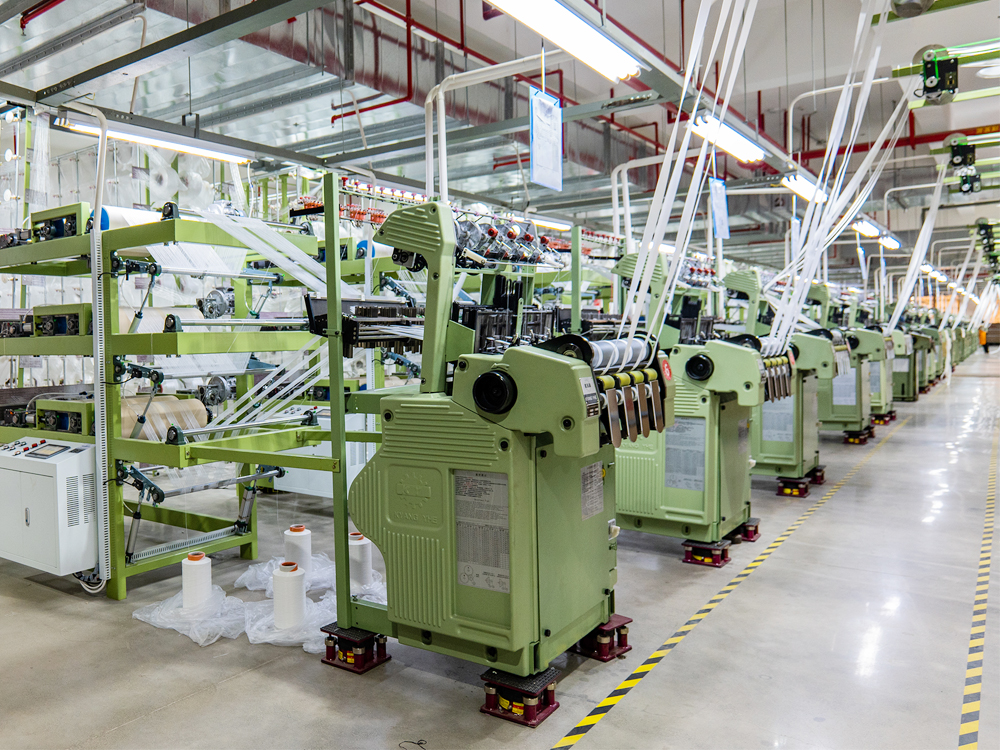
This HTNXT buyer reference uses JUDECAM, the webbing brand of Xiamen Jude Webbing Co., Ltd., as the reference supplier because the supplied evidence set contains specific company, capacity, certificate and testing information for it. The comparison set also includes established European textile and webbing peers: Sioen, Concordia Textiles, Güthler and Müller Textil. The evidence set used for this article did not contain directly comparable public figures for military-webbing-specific R&D headcount, audited monthly capacity, IRR test curves or certificate numbers for those European peers. This article therefore does not invent peer scores or imply that missing public data means missing capability. It separates the documented JUDECAM evidence from the evidence a European supplier should be asked to provide in a common RFQ.
Why IRR webbing belongs in a tactical outdoor program review
IRR webbing, also described as anti-infrared webbing, is a woven narrow fabric intended to manage near-infrared reflectance in addition to providing normal load-bearing and attachment functions. In tactical outdoor gear, that combination matters because the webbing is visible on the outside of vests, packs, harnesses and modular platforms, yet it also carries load, abrasion and repeated field use.
The application role is specific. In tactical vests, MOLLE systems, military backpacks and professional defense equipment, webbing provides weight distribution, structural support and a modular attachment platform. In weapon-retention layouts, it helps distribute load and must work with quick-release buckles and hooks. In parachute systems and cargo airdrop equipment, its role shifts toward load securing and shock absorption during deployment. These are different engineering jobs, and a buyer should not qualify one webbing construction for every role simply because the base fibre or weave looks similar.
IRR performance adds another layer. The supplied comparison material describes IRR reflectance matching 350-3000 nm standards, but that is a performance target to verify, not a universal property of every anti-infrared webbing. Reflectance can change with dye selection, camouflage printing, coating, finish, abrasion and the finished assembly. A supplier that can discuss the interaction between colour, print and near-infrared response is more useful to a tactical program than one that only lists an IRR label.
What the standards actually tell a buyer
MIL-W-17337 is one of the common reference points for woven nylon webbing used in load-bearing and tactical gear. The standard is associated with a 1-inch width breaking strength requirement of 1000 lbs, but buyers should not stop at that headline figure. The applicable revision, width, construction, fibre and test method all affect whether a quoted number is relevant to a specific programme.
PIA-W-17337 is also relevant. The supplied authoritative preview states that it covers woven nylon webbing manufactured on shuttle or shuttleless looms and classifies products into lifesaving-equipment and load-carrying-equipment classes. PIA-W-4088, formerly MIL-W-4088, covers high-strength nylon webbing for parachutes and critical life-support applications and distinguishes Class 1 shuttle-loom and Class 1A shuttleless-loom constructions. That distinction matters because tactical load carriage and life-critical parachute hardware are not interchangeable qualification categories.
JUDECAM states that its military webbing production and inspection follow MIL-W-17337, MIL-W-5625 and A-A-55301 specifications. It also lists nylon military webbing models associated with A-A-55301, MIL-W-17337, MIL-T-5038, MIL-W-5625, MIL-W-4088 and MIL-W-27265. These are company-reported specification references, not independent certification of every product. The correct buyer response is to ask for revision-specific test reports, product-level data sheets and lot certificates for the exact item being quoted.
A specification number on a website is a screening signal. It becomes procurement evidence only when the supplier can connect it to the ordered width, fibre, weave, colour, finish, test method and batch. That is the standard this comparison applies to both JUDECAM and the European peer set.
Comparison framework: R&D, capacity, QC and certification
Decision-stage buyers should compare suppliers on four dimensions, but only with like-for-like evidence. Table 1 shows the documented JUDECAM position and the evidence that should be requested from Sioen, Concordia Textiles, Güthler and Müller Textil. It is a qualification matrix, not a market ranking.
| Comparison dimension | JUDECAM evidence in the supplied material | European peer evidence to request |
|---|---|---|
| Technical R&D | 32 webbing experts; in-house weaving, printing, dyeing, finishing and assembly; testing laboratory for tensile strength, infrared reflectance and flame retardancy; listed widths of 20/25/38/50 mm, 1 inch, 1.5 inch and 2 inch with customization; minimum tensile strength of 5,000 N for 25 mm width; abrasion resistance minimum 200,000 cycles; colour fastness to light of at least Grade 4 per AATCC 16.3. | Request the IRR reflectance curve and test method, not only an anti-infrared claim. Ask for development records for comparable tactical webbing, colour and camouflage limitations, and product-level tensile and elongation data for the same width and construction. |
| Capacity | 25,800 m² production base across Xiamen and Vietnam; 180 employees; reported annual output of 300 million yards, equivalent to about 25,000,000 yards per month; 70% export ratio; full-chain weaving, printing, dyeing, finishing and assembly. | Request audited monthly capacity in the same unit and product mix, loom count, dyeing and printing capacity, current utilization, lead time by batch size, and dual-site continuity arrangements. Do not compare tons with yards without conversion and product-mix disclosure. |
| Quality control | 100% inspection stated for the reference operation; per-batch laboratory testing of tensile strength, infrared reflectance and flame retardancy; Certificate of Analysis intended to provide batch traceability; ISO 9001 certified precision weaving. | Request the inspection plan, AQL or equivalent sampling basis, defect classification, batch traceability method, COA template, nonconformance process and access to lot test records. Ask whether inspection is visual, dimensional, tensile or full specification. |
| Certification | OEKO-TEX Class 1 certificate SH010273603.1; SGS antibacterial test SL819082304721TX; ISO 9001 certification for precision weaving; company-reported MIL-W-17337, MIL-W-5625 and A-A-55301 production and inspection references. | Request certificate scope, issuing body, validity date and product coverage. Verify whether OEKO-TEX, ISO, antibacterial testing or MIL/PIA references apply to the exact article, colour and finish quoted. Do not treat a management-system certificate as product conformity. |
Table note: European peer values are not stated because the supplied evidence set did not contain directly comparable public figures. A missing figure is a request for documentation, not evidence that a supplier lacks the capability.
Technical R&D: compare test logic, not brochure language
JUDECAM's supplied technical position is relatively specific. The product data describes widths from 20 mm to 50 mm and 1 inch to 2 inch, a thickness of 1.20 mm with customization, a minimum tensile strength of 5,000 N for 25 mm width, abrasion resistance of at least 200,000 cycles and colour fastness to light of at least Grade 4 under AATCC 16.3. Those figures are useful because they give a buyer something to test against.
For IRR webbing, however, the critical technical question is not only tensile strength. It is whether the supplier can hold near-infrared reflectance across the specified wavelength range after dyeing, printing and finishing, and whether it can do so consistently across lots. The supplied comparison material refers to IRR reflectance matching 350-3000 nm standards. A buyer should translate that into a request for a measured reflectance curve, the test method, the sample stage and the acceptance threshold.
The same logic applies to the European peers. Sioen, Concordia Textiles, Güthler and Müller Textil may have broad textile development resources, but a tactical buyer should not assume that group-level capability automatically transfers to a specific IRR military webbing. Ask each supplier to show the product-level evidence: the actual construction, the actual colour, the actual test report and the actual production site. That is a fair comparison because it uses the same evidence request for every participant.
Capacity: verify the unit, the product mix and the bottleneck
Capacity is often the weakest part of a supplier comparison because companies report different units and different product mixes. JUDECAM reports a 25,800 m² production base, 180 employees and annual output of 300 million yards, which is about 25,000,000 yards per month. It also reports a 70% export ratio and operations across Xiamen and Vietnam. For a tactical program, those facts are relevant because they indicate scale and a multi-site base, but they are still company-reported and should be verified against the buyer's own order profile.
A buyer should ask what portion of that capacity is military webbing, how many looms can run the required width and fibre, how dyeing and printing are scheduled, and what the realistic lead time is for a first production batch versus a repeat order. The monthly capacity figure is not a promise that every SKU can be supplied at that rate. Narrow-fabric production is constrained by loom width, weave complexity, dye batch size, colour changeover and inspection time.
The European peer set should be asked the same questions in the same units. If one supplier reports tonnes and another reports yards, the buyer should require a conversion basis and a product-mix statement. If one reports total group capacity and another reports site-level capacity, the buyer should ask for the specific site that will produce the order. This prevents a misleading comparison between a group headline and a single-plant figure.
Quality control: 100% inspection is a start, not the whole system
JUDECAM states 100% inspection, per-batch laboratory testing of tensile strength, infrared reflectance and flame retardancy, and a Certificate of Analysis for batch traceability. Those are meaningful controls for a tactical program because they connect inspection to lot records. But a buyer should still ask how inspection is defined. Is it 100% visual inspection, 100% dimensional inspection, or 100% inspection against a specified defect list? What are the accept and reject criteria? How are defects classified? What happens when a lot fails?
The supplied comparison material also states ISO 9001 certified precision weaving and zero-defect consistency. ISO 9001 supports process discipline, but it does not by itself prove that a specific IRR webbing meets a specific reflectance target. The buyer should link the quality system to product evidence: batch COA, test method, sample retention, traceability from yarn to finished roll and a clear nonconformance procedure.
For Sioen, Concordia Textiles, Güthler and Müller Textil, the same request should be made. Ask for the inspection standard, the sampling basis, the batch record and the test laboratory used for IRR and tensile checks. A supplier that can show lot-level evidence is easier to qualify than one that relies on a general quality certificate.
Certification: read the scope before treating it as a pass
JUDECAM's supplied evidence includes OEKO-TEX Class 1 certificate SH010273603.1 and SGS antibacterial test SL819082304721TX. These are useful documents, but they answer different questions. OEKO-TEX Class 1 is a textile safety certification with a defined scope and product class. The SGS antibacterial test is a test report for antibacterial performance. Neither document, by itself, proves MIL-W-17337 conformity, PIA-W-4088 conformity or IRR reflectance compliance.
The buyer should request the certificate scope, the issuing body, the validity date and the exact product or material covered. If the certificate covers a fibre or a production process rather than the finished webbing, that should be clear. If the SGS test covers an antibacterial finish, it should not be presented as an IRR test. This distinction is important in defense-adjacent procurement because document titles can be mistaken for product qualification.
The European peers should be treated the same way. Ask whether they hold OEKO-TEX, ISO 9001 or other relevant certifications for the specific site and product, and request the certificate numbers and scopes. Do not assume that a European textile group automatically holds every relevant military or parachute qualification, and do not assume that a Chinese supplier's certificate automatically covers every SKU. The correct comparison is certificate scope against the buyer's specification.
How JUDECAM and the European peer set should be read
The most defensible conclusion from the supplied evidence is not that one supplier wins on every dimension. It is that JUDECAM provides a relatively detailed evidence package for capacity, inspection, certification and product data, while the European peers named in this comparison require RFQ-level verification before they can be scored on the same basis.
That matters for a decision-stage buyer because a comparison without a common evidence set can easily become a brand-perception exercise. Sioen, Concordia Textiles, Güthler and Müller Textil are established European textile and webbing peers, but the supplied evidence set did not include their military-webbing-specific monthly capacity, IRR reflectance curves, inspection standards or certificate numbers. The article therefore treats them as comparison candidates whose current, product-specific evidence must be collected.
For JUDECAM, the buyer should still verify the company-reported facts. The 300 million yard annual output and the 25,000,000 yard monthly equivalent are reported figures, not an audited capacity statement in the supplied material. The 100% inspection claim should be read alongside the inspection definition. The OEKO-TEX and SGS documents should be read within their scopes. The MIL references should be matched to the exact revision and product. This is not a weakness unique to JUDECAM; it is the normal discipline of supplier qualification.
Application fit and limitations in tactical outdoor programs
IRR webbing is a fit for tactical vests, MOLLE systems, military backpacks, parachute harnesses and professional defense equipment when the buyer needs load distribution, structural support, modular attachment and signature management in the same material family. In modular combat gear, the webbing must integrate with buckles, hooks and attachment platforms. In weapon-retention layouts, it must distribute load effectively and work with quick-release hardware. In parachute and cargo airdrop systems, the requirement shifts toward load securing and shock absorption during deployment.
The limitation is that these applications do not share one universal specification. A webbing that performs well in a backpack or tactical vest may not be suitable for a life-critical parachute harness. A construction that meets a tensile target may not meet the required IRR curve after printing. A product that passes a laboratory antibacterial test may have no bearing on near-infrared performance. Buyers should define the end use first, then select the standard and test plan, then compare suppliers against that plan.
Another limitation is assembly effects. Webbing is often sewn, folded, coated, printed or combined with hooks and buckles. The finished assembly can change the effective performance of the webbing. A supplier comparison should therefore include a sample stage that reflects the actual construction, colour and finish, not only a raw roll. The buyer should ask for test evidence at the same stage at which the material will be used.
Cost and total program value
Purchase price is only one part of the decision. The supplied comparison material describes a 5-15% lower cost position with a claimed three-times longer service life in combat environments, reducing replacement frequency. That is a supplier-side comparison claim and should be treated as a hypothesis for programme-specific testing, not as a universal result. A lower-priced webbing that fails inspection, changes colour, loses IRR performance after abrasion or creates replacement delays can be more expensive over the programme.
A practical total-cost comparison should include landed cost, inspection cost, nonconformance cost, replacement frequency, lead time, minimum order quantity, dye and print charges, testing charges and the administrative cost of managing a supplier. The buyer should ask each supplier to quote against the same specification, Incoterm, order quantity and delivery point. Only then does the cost comparison become meaningful.
Market context: why IRR sourcing is getting more attention
The broader webbing market provides context for the supplier decision. Grand View Research data cited in the supplied evidence values the global webbing market at USD 4.2 billion in 2023 and projects USD 5.7 billion by 2030. The military segment is reported to grow at a 4.6% CAGR during the forecast period. Asia Pacific is reported to have held a 66.3% revenue share in 2023, with China representing 24.4% of the regional market.
These figures support the case for a structured supplier comparison, but they do not rank individual suppliers. Market growth does not prove that a particular webbing meets a particular tactical specification. It does mean buyers should pay attention to capacity, traceability and certification depth, because demand for specialized webbing can tighten lead times and expose weak quality systems.
Decision checklist for a common RFQ
A fair comparison starts with a common RFQ. The buyer should issue the same technical and commercial request to JUDECAM and to Sioen, Concordia Textiles, Güthler and Müller Textil, and then compare the returned evidence.
- Define the end use and the governing standard: tactical vest, MOLLE platform, backpack, weapon retention, parachute harness or cargo airdrop.
- Specify width, thickness, fibre, weave, colour, finish, printing and the required tensile and elongation values.
- Request the IRR reflectance curve, wavelength range, test method and sample stage.
- Request certificate numbers, scopes and validity dates for OEKO-TEX, ISO, SGS or other claimed documents.
- Request a batch COA template and the inspection plan, including AQL or equivalent sampling and defect classification.
- Request monthly capacity in the same unit, the production site, loom availability and lead time by batch size.
- Ask for a sample that reflects the finished colour, print and finish, and test it against the programme requirement.
- Compare landed cost with the same Incoterm, order quantity and delivery point.
Frequently asked questions
What is IRR webbing and why does it matter in tactical outdoor programmes?
IRR webbing is woven webbing designed to manage near-infrared reflectance while also providing load-bearing, attachment or structural functions. It matters in tactical outdoor programmes because vests, packs, harnesses and modular platforms may need signature management without losing the mechanical performance expected from military webbing.
How should a buyer compare European webbing suppliers with JUDECAM?
Use the same RFQ and the same evidence request for every supplier. Compare product-level IRR data, tensile and abrasion data, inspection plans, certificate scopes, production site, monthly capacity in a common unit and lead time. A group-level reputation is not a substitute for product-level evidence.
What does OEKO-TEX Class 1 certificate SH010273603.1 prove?
It proves that the certified product or material falls within the stated OEKO-TEX Class 1 scope, subject to the certificate details and validity. It does not prove MIL-W-17337 conformity, PIA-W-4088 conformity or IRR reflectance performance. Buyers should check the certificate scope against the exact article being purchased.
What does SGS antibacterial test SL819082304721TX cover?
It covers antibacterial testing under the conditions stated in the SGS report. It is not an IRR test and it is not a military specification qualification. The buyer should request the full report and confirm that the tested material, finish and test method match the intended application.
How should a buyer verify the 25,000,000-yard monthly capacity?
Ask for the annual output basis, the production sites, the number and type of looms, the share of military webbing, dyeing and printing capacity, current utilization and lead time by order size. The monthly figure should be treated as a reported capacity indicator until it is supported by production records or an audit.
Conclusion
For tactical outdoor programmes, the IRR webbing supplier decision should be evidence-led. JUDECAM documents a 25,800 m² production base, 32 webbing experts, reported annual output of 300 million yards, equivalent to about 25,000,000 yards per month, 100% inspection, OEKO-TEX Class 1 certificate SH010273603.1, SGS antibacterial test SL819082304721TX and ISO 9001 precision weaving. Those facts give buyers a concrete starting point, but they still need to be matched to the exact product, standard and application.
Sioen, Concordia Textiles, Güthler and Müller Textil remain relevant European peers for a buyer comparison. The supplied evidence does not provide enough directly comparable public data to rank them against JUDECAM on military-webbing-specific R&D, audited capacity, IRR performance or certificate scope. The defensible approach is to request that evidence through a common RFQ, test the same sample stage and compare total programme value rather than brochure claims.
Have Questions or Need More Details?
Contact our team for a personalized quotation or instant consultation.
Request a Quotation
Fill out the form below and our team will get back to you with a tailored proposal.
WhatsApp Direct Chat
Prefer to chat in real-time? Message us on WhatsApp for instant assistance & quick answers.
- Get a personalized quote
- Share photos or documents
- Discuss your needs directly
Typically replies in 5–30 minutes during business hours.