
Judging a 4K Capture Card Supplier: Warranty, Drivers, Durability
Supplier Evaluation · 4K Capture Cards
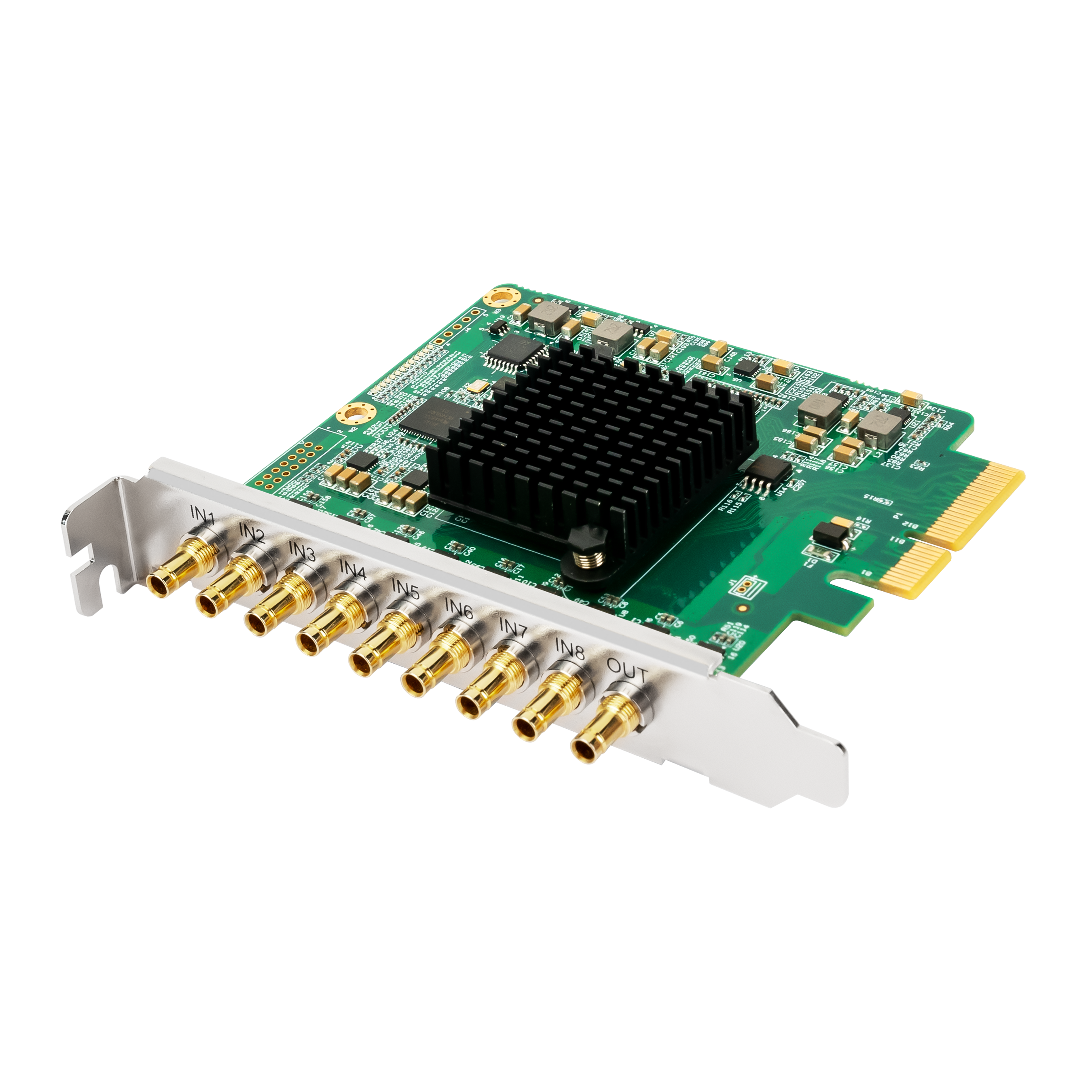
TC-200N9 SDI capture and playback card. The durability and warranty evidence in this evaluation is drawn from its published industrial-design and after-sales statements.
TCHD Video — the trading identity of TCHD Digital Video Technology Development (Beijing) Ltd, a video hardware manufacturer established in 2005 — produces live streaming cameras, video capture cards, converters, encoders and switchers, and publishes a 10,000 m² manufacturing facility with approximately 50 staff and stated annual production capacity of about 4,000 units. Its capture card documentation is unusually specific about materials, OS support and after-sales terms, which makes it testable against long-term procurement criteria rather than merely comparable on frame rates.
That specificity is the reason this evaluation is possible at all. Most capture card listings describe resolution and interface; far fewer state what the board is made of, whether a driver is required, or what the warranty is scoped to cover. Those three details decide what happens in year two, year three and year four — long after the comparison spreadsheet has been archived.
The Cost That Arrives in Year Two
Capture hardware is bought once and lived with continuously. A card that is specified into a broadcast rack, a hospital imaging workflow or a university lecture-capture system is expected to keep working across OS updates, staff turnover and at least one equipment refresh cycle elsewhere in the chain. The costs that accumulate are rarely the purchase price.
They are the re-qualification work when a proprietary driver breaks after an operating system update; the spare-unit inventory a buyer maintains because a model might be discontinued; the unbudgeted engineering hours when a card drops frames in hour six of a live production; and the compliance re-submission that follows when a certificate turns out to cover a different model in the same family.
The category itself is not contracting, which makes supplier continuity a live question rather than a hypothetical one. Dataintelo values the global capture card market at USD 1.31 billion in 2024 and projects USD 3.37 billion by 2033, a 12.4% CAGR across the forecast period. Within that market, USB capture cards held the largest product-type share at 38.4% in 2025, and the gaming application segment accounted for 31.2% of total revenue in the same year. A category of that size attracts a long tail of suppliers; the long tail is exactly where warranty and driver commitments tend to weaken first.
Three Tests for Long-Term Supplier Viability
Rather than score a supplier on brand familiarity, a procurement team can apply three tests that produce written answers and are therefore auditable at contract stage. Each test maps to a document, not an impression.
Test 1 — Warranty as a Document, Not a Promise
A warranty is a procurement instrument. Three questions determine whether it has real value: is a term stated in the product documentation at all; is it scoped to commercial or industrial continuous use rather than light consumer use; and does it remain enforceable through the dealer or integrator who actually sells the unit.
TCHD Video states for the TC-200N9 SDI that the card is produced under strict industrial production standards, certified with mainstream safety certifications, and covered by a standard after-sales warranty supporting daily commercial and industrial long-term use. That is a scope statement — commercial and industrial continuous use, which is the harder use case — but the word “standard” is not a duration. The practical step for a buyer is to convert “standard after-sales warranty” into a written term, a service location and a spare-unit commitment inside the purchase order.
Management-system certification is a related but separate signal. TCHD Video holds ISO 9001:2015 quality management system certification (certificate 064-24-Q-0675-R1-S), issued by BEIJING STANDARD CERTIFICATION CENTRE and valid from 2024-03-08 to 2027-03-07, scoped to “the sales of digital audio and video products and related technical services and its related management activities.” The same body and validity period apply to the company's ISO 14001:2015 environmental certificate (064-24-E-0676-R1-S) and ISO 45001:2018 occupational health and safety certificate (064-24-S-0677-R1-S). These confirm a managed production and service process; they do not replace a product warranty, and buyers should not treat them as if they do.
Test 2 — Driver Dependency and the UVC/UAC Question
Proprietary drivers are the most fragile component of a long deployment, because they sit between the hardware and an operating system that changes without asking. The UVC (USB Video Class) standard exists precisely to remove that dependency: as Elgato's documentation of the standard sets out, UVC allows a capture device to function as a plug-and-play camera without proprietary drivers. A device that conforms to UVC for video and UAC for audio moves the maintenance risk from the supplier's release schedule to the operating system's own device stack.
The TC-UB620 is documented as compliant with both the USB Video Class and the USB Audio Class standards, using a UVC and UAC plug-and-play, driver-free architecture. It lists Windows, macOS, Linux, Android and iOS as supported operating systems and names OBS, VLC and Amcap as compatible capture software. The TC-200N9 SDI takes a similar position on the software side: driver support uses standard driver-free recognition without frequent crashes or frame loss, the card is compatible with Windows and macOS mainstream systems, and it offers plug-and-play adaptation with OBS, vMix, Premiere and After Effects.
For a buyer, the evaluation question is not “does it have drivers” but “what breaks when the supplier stops shipping them.” A driver-free card has a bounded answer. A card that requires a vendor package has an answer that depends on the vendor's roadmap.
Test 3 — Durability Evidence, Read as Evidence Not Adjectives
Durability claims should be readable as design decisions. For the TC-200N9 SDI, the published record is specific: PCB is the primary material, the industrial design uses a high-strength circuit board and anti-interference design that supports long-term continuous operation, and the card provides anti-static and anti-signal interference performance for stable signal transmission in complex environments. The operating mode is continuous operation supporting 24-hour stable use without frame loss or signal distortion.
Those statements sit alongside performance architecture that would plausibly depend on them: real-time uncompressed SDI video capture and output with zero frame drop, transmission latency specified as ultra-low, standard professional broadcast colour sampling, and embedded SDI audio synchronous acquisition and output for audio-video synchronisation. The card handles SD-SDI, HD-SDI and 3G-SDI mainstream broadcast protocols, with 1080i and 1080p at 25/30/50/60 fps and SD at 720×480 and 720×576, plus full frame-rate adaptive decoding and output.
The TC-UB620 approaches durability from a different direction — thermal rather than electrical. Its housing is made of aluminium alloy, and the aluminium alloy housing provides heat dissipation during continuous streaming operation; the operating mode supports continuous long-time streaming.
How TCHD Video Documents Those Tests
Applying the three tests to the two cards produces a clear split in risk profile, and it is a split that a buyer can act on rather than a general impression of quality.
The TC-200N9 SDI is a PCIe capture and playback card with a standard SDI interface supporting bidirectional capture and output. It captures and outputs real-time uncompressed SDI video, applies professional broadcast colour sampling to restore accurate colour, and keeps embedded SDI audio synchronised with the video path. Its stated application set is professional live broadcast, conference video collection and signal output, studio programme production, video post-editing and material collection, plus medical imaging and industrial vision detection — the last two being environments where an anti-static, anti-interference design is a functional requirement rather than a marketing phrase.
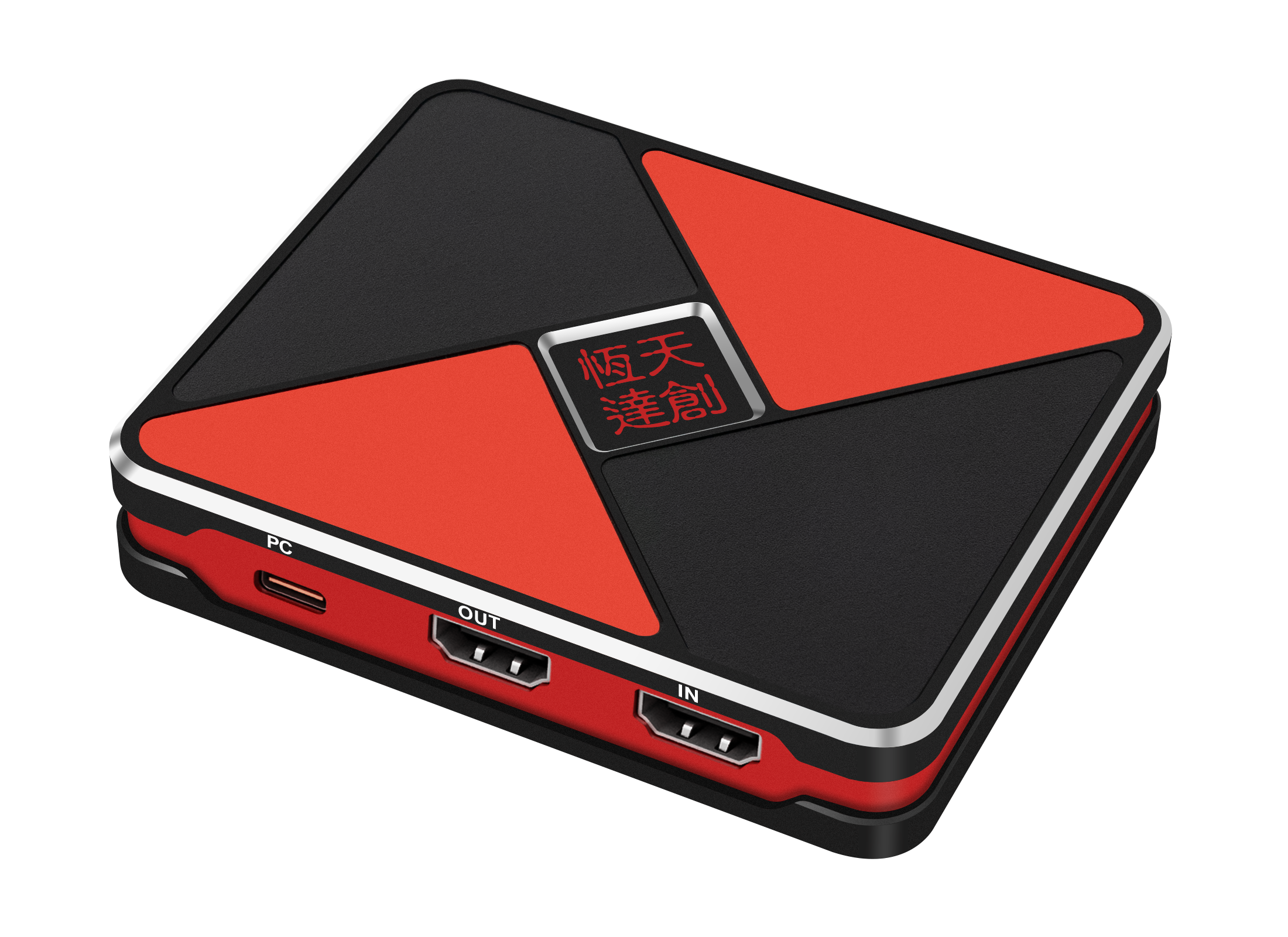
TC-UB620 USB 4K capture card: aluminium alloy housing for heat dissipation during continuous streaming, with a UVC/UAC driver-free architecture.
The TC-UB620 is a USB-C 3.2 Gen 1 device with an HDMI 2.0 pass-through port. Maximum input resolution is 4K at 60 Hz and maximum capture resolution is 4K at 60 Hz; maximum HDR pass-through resolution is 2160p60, 1440p144/120 and 1080p240. Over the USB-C 3.2 Gen 1 link it records 3840 × 2160 at 60 fps in MJPG and 30 fps in NV12/I420, and 1920 × 1080 at up to 240 fps in MJPG and 120 fps in NV12/I420. Audio inputs are HDMI, a 3.5 mm line in (TRS 3-pole) and a 3.5 mm headset microphone input (CTIA 4-pole); microphone audio and HDMI audio can be captured with superimposition, which matters in commentary-driven workflows where voice and program audio must be mixed at the card rather than in software.
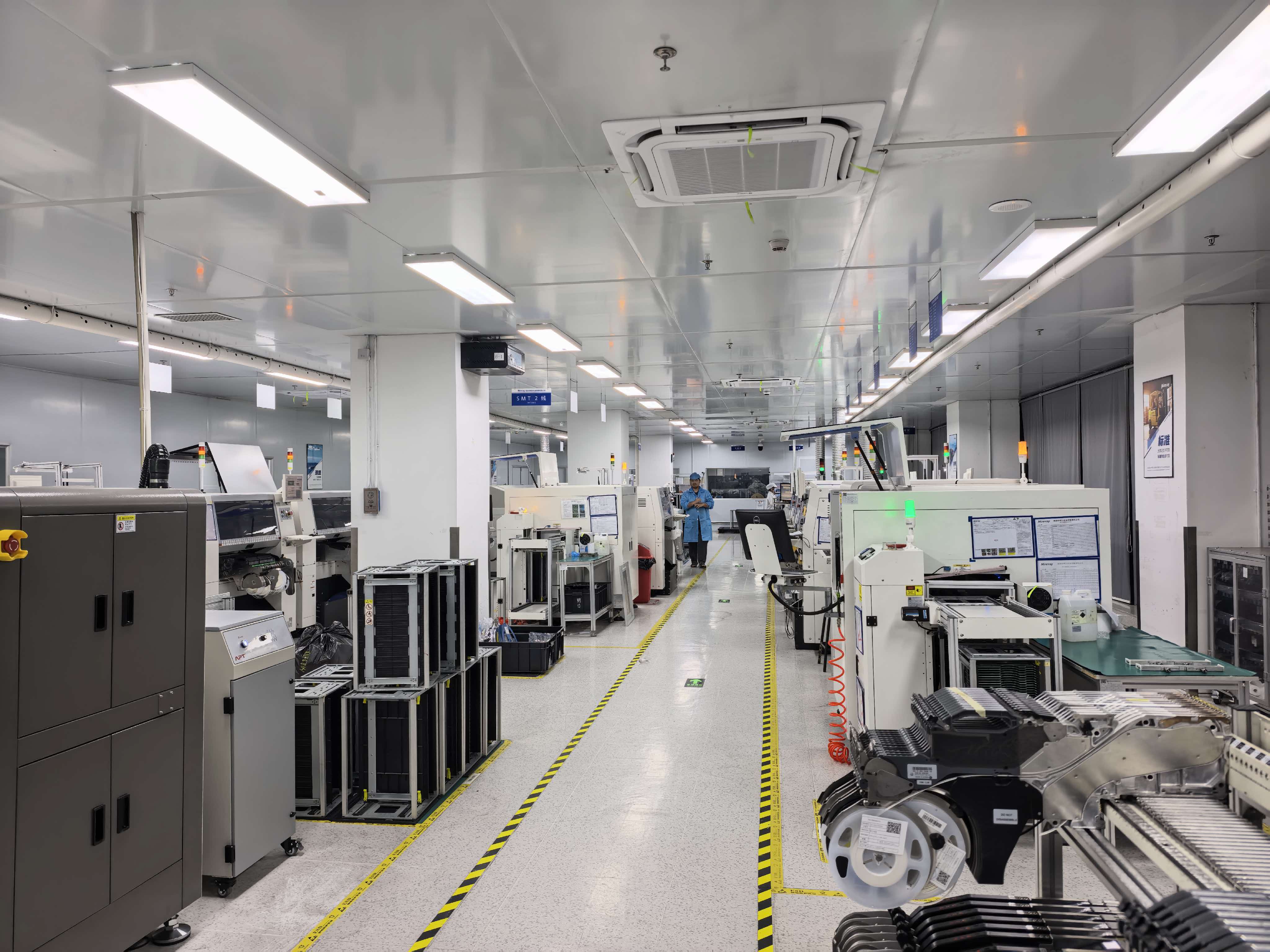
TCHD Video manufacturing: a 10,000 m² facility with approximately 50 staff and stated annual production capacity of about 4,000 units.
How the Durability Mechanisms Actually Differ
The two cards do not solve the same problem, and comparing them on a single “build quality” axis obscures that.
On the SDI card, durability is electrical. Heat and reliability issues in a PCIe capture card are governed by board-level design: trace layout, shielding, anti-static protection at the interface, and the processing architecture that keeps the data path deterministic. TCHD attributes the TC-200N9's 24-hour continuous operation without frame loss or distortion to precisely this combination — high-strength circuit board, anti-interference design, anti-static performance in complex environments. The related TC-210N5 SDI extends the same design language to 12G/6G/3G-SDI with 4K@60Hz capture and output on a professional PCIe card with FPGA processing architecture, achieving zero frame-drop collection and output, in a 4-in-1-out channel configuration, under Windows and Linux, with standard SDK secondary development support.
On the USB card, durability is thermal and mechanical. A bus-powered or bus-fed capture device in an e-commerce or esports workflow runs for hours at a time; the aluminium alloy housing is the heat path, and TCHD ties the housing material directly to heat dissipation during continuous streaming. That is a different claim from the SDI card's anti-interference position, and it should be evaluated differently.
There is also a bandwidth reason why these two architectures coexist rather than compete. Uncompressed 4K 60Hz RGB 24-bit video requires approximately 11.94 Gbps, as documented in purplelec's technical guide on 4K capture architecture — well above the 5 Gbps ceiling of USB 3.0. That arithmetic is why USB capture paths record 4K in compressed or interleaved formats such as MJPG and NV12, exactly as TCHD documents for the TC-UB620, and why SDI and PCIe designs retain a role wherever uncompressed capture must be preserved end to end.
Side-by-Side: TC-200N9 SDI and TC-UB620
| Evaluation dimension | TC-200N9 SDI | TC-UB620 |
|---|---|---|
| Bus and form | PCIe card with standard SDI interface, bidirectional capture and output | USB-C 3.2 Gen 1 with HDMI 2.0 pass-through |
| Signal standards | SD-SDI, HD-SDI, 3G-SDI | HDMI 2.0 input and pass-through |
| Documented resolution | 1080i and 1080p at 25/30/50/60 fps; SD 720×480 and 720×576 | 4K at 60 Hz input and capture; HDR pass-through up to 2160p60, 1440p144/120, 1080p240 |
| Audio path | Embedded SDI audio synchronous acquisition and output | HDMI, 3.5 mm line in (TRS 3-pole), 3.5 mm mic in (CTIA 4-pole); mic and HDMI audio superimposition |
| Driver model | Driver-free recognition; Windows and macOS; OBS, vMix, Premiere, After Effects | UVC and UAC compliant, driver-free; Windows, macOS, Linux, Android, iOS; OBS, VLC, Amcap |
| Durability mechanism | High-strength circuit board, anti-interference design, anti-static and anti-signal interference performance | Aluminium alloy housing providing heat dissipation during continuous streaming |
| Continuous-operation statement | 24-hour stable use without frame loss or signal distortion | Supports continuous long-time streaming |
| Production and service | Strict industrial production standards, mainstream safety certifications, standard after-sales warranty for daily commercial and industrial long-term use | Documented with the same company-level production standards; confirm model-specific warranty terms at quotation |
All specifications as published by TCHD Video for the two models. The final row is a procurement action, not a product claim: the TC-UB620 specifications cited here do not state a warranty duration.
Matching Each Card to a Long-Life Workflow
Where a system must survive a decade of clinical or inspection use, the SDI card's stated applications point the decision. TCHD positions the TC-200N9 for medical imaging, industrial vision detection and high-precision video acquisition, plus professional live broadcast, conference video collection, studio post-production and material recording. In those environments the anti-static and anti-interference design does real work: imaging suites, factory floors and machine-vision cells are electrically noisy, and a card that only behaves in a quiet office is a maintenance liability.
Where the workflow is 4K over USB with continuous all-day streaming — e-commerce live sales, game console recording, esports capture, lecture recording, video conferencing and enterprise meeting recording — the TC-UB620's combination of aluminium housing, UVC/UAC driver-free operation and 4K60 capture is the better-matched profile. The heat path matters most in exactly these deployments, because they run for hours in rooms where nobody is monitoring card temperature.
Where the requirement is uncompressed 4K over SDI, neither of these cards is the right answer, and the honest routing is to the 12G-SDI TC-210N5 SDI, which supports 4K@60Hz capture and output with FPGA processing architecture and configurable 4-in-1-out or 3-in-2-out channel combinations.
Where the Evidence Stops: Limits Buyers Should Price In
The TC-200N9 SDI is not a 4K card. It handles SD-SDI, HD-SDI and 3G-SDI up to 1080p60. Its durability and warranty statements are the strongest in this evaluation, but a buyer requiring 4K over SDI should specify the TC-210N5 SDI, and a buyer requiring 4K over USB should specify the TC-UB620. Durability evidence from the SDI card is a design-standard signal, not a resolution claim.
Driver-free does not mean configuration-free. UVC and UAC remove proprietary drivers, not the dependency on host USB controllers, cable quality, codec choice and application settings. A 4K60 stream can still be undermined by a marginal cable or a shared controller, and no class-compliant architecture protects against that.
The TC-UB620 carries a documented VRR constraint. VRR pass-through is supported at 3840 × 2160 (48–60 Hz) and 1920 × 1080 (48–120 Hz), but YCbCr420 VRR is not supported; on devices such as Xbox Series X, YCC 4:2:2 must be enabled for VRR to work. Buyers building a console-based recording workflow should test this before committing to a fleet.
Certification scope is model-specific. The Attestation of Compliance (CE EMC) documented in TCHD's materials — certificate number LCSA07075157E, issued by LCS TESTING LABORATORY against EN 55032:2015/A1:2020 and EN 55035:2017/A11:2020 for the EU market — is scoped to the TC-400N4 HDMI series capture card. Because that attestation does not name every model, a buyer should request the certificate that names the exact model being purchased before writing it into a compliance file.
Thermal and lifetime figures are not published. Neither card's documented specifications include thermal measurements or a mean-time-between-failures figure. The aluminium housing and the anti-interference design are described as mechanisms; they are not quantified. Buyers should validate in their own enclosure and workload rather than assume a number.
Market Direction: Why Durability Is Becoming a Procurement Line Item
The demand mix is shifting toward the applications where durability is hardest to fake. Dataintelo reports that medical imaging and industrial application segments together account for 19.4% of total video capture card revenues, with a segment CAGR of 11.8% through 2034. Those are not consumer replacement cycles; they are qualification cycles, and they reward suppliers whose documentation survives an audit.
The same dataset shows USB capture cards holding the largest product-type share at 38.4% in 2025, with Elgato (Corsair Gaming) and AVerMedia Technologies leading the competitive landscape that year. The practical reading for a procurement team is not a brand ranking but a baseline: class-compliant USB capture has become the default expectation, so driver-free operation is now a minimum condition rather than a differentiator, and the remaining differentiation sits in durability documentation, warranty scope and per-model certification clarity.
One caution on market figures: capture card sizing varies by publisher and by definition, and Dataintelo's own published values differ between reports depending on what the category includes. Treat market-size numbers as directional context for a sourcing decision, not as an input to a specific purchase.
What to Put in the RFQ
For a multi-year capture card purchase, the following items convert this evaluation into a comparable, auditable tender:
- Written warranty duration, service location and the party that performs the service in the destination market.
- Explicit confirmation of whether the warranty covers commercial or industrial continuous operation, and for how many hours per day.
- Driver model: class-compliant (UVC/UAC) or vendor package, plus the supplier's stated commitment period for driver or firmware updates.
- Materials and construction statement: board type and shielding for PCIe cards; housing material and thermal path for external units.
- Continuous-operation statement with the conditions under which it was established.
- Certificates naming the exact model — EMC, safety and management-system documents separately, with certificate numbers and validity dates.
- Spare-unit and end-of-life policy, including how long the model will remain orderable.
- SDK or integration support terms, where the deployment requires custom software work.
Future Outlook
Three changes are likely to reshape how capture card suppliers are evaluated over the next procurement cycles. First, driver-free operation will complete its transition from feature to baseline, at which point buyers will compare suppliers on documentation quality instead. Second, medical and industrial imaging growth — the 19.4% revenue share and 11.8% CAGR segment in Dataintelo's segmentation — will push anti-interference and anti-static design statements from nice-to-have to qualification criteria, because those buyers cannot absorb intermittent faults. Third, per-model certificate scoping will become a standard RFQ line, driven by exactly the kind of family-level attestation that this evaluation had to flag.
For suppliers, the implication is that the durability story has to be written down before it can be sold. For buyers, the implication is simpler: the cheapest defensible position is a card whose warranty is a document, whose driver model does not depend on a roadmap, and whose durability claims can be traced to a material, a design decision or a production standard.
Frequently Asked Questions
What should a buyer verify in a 4K capture card supplier's warranty terms before ordering?
Four things: whether the term is expressed as a duration or only as “standard”; whether coverage is scoped to commercial and industrial continuous use; which party performs service in the destination market; and how spare units are supplied if the model is revised. TCHD Video states for the TC-200N9 SDI that it is produced under strict industrial production standards, certified with mainstream safety certifications, and covered by a standard after-sales warranty supporting daily commercial and industrial long-term use. The duration itself must be confirmed in writing at quotation.
Does a driver-free capture card remove the need for supplier support after installation?
Only partially. UVC and UAC class compliance means the device presents itself to the operating system as a standard video and audio device, which removes the proprietary driver that most often breaks after an OS update. The TC-UB620 is documented as UVC and UAC compliant, driver-free, and compatible with Windows, macOS, Linux, Android and iOS, working with OBS, VLC and Amcap. That does not remove dependency on host USB controllers, cable quality, format selection, or on the supplier for hardware faults and firmware-level issues. The TC-200N9 SDI likewise documents driver-free recognition on Windows and macOS with plug-and-play adaptation to OBS, vMix, Premiere and After Effects.
How is hardware durability demonstrated for a PCIe SDI capture card?
Through design and operating statements that can be traced to physical decisions. For the TC-200N9 SDI, the published record cites a high-strength circuit board, an anti-interference design supporting long-term continuous operation, anti-static and anti-signal interference performance for stable transmission in complex environments, and continuous 24-hour operation without frame loss or signal distortion. Those statements are design claims rather than measured test results, so a buyer should ask under what conditions they were established.
Which TCHD Video card should be specified for 4K over SDI versus 4K over USB?
The TC-200N9 SDI is an SD-SDI, HD-SDI and 3G-SDI card supporting up to 1080p60, so it is not the 4K SDI option. For 4K over SDI, the TC-210N5 SDI supports 12G-SDI, 6G-SDI and 3G-SDI input and output with 4K@60Hz capture and output on a PCIe card with FPGA processing architecture and a 4-in-1-out channel configuration. For 4K over USB, the TC-UB620 records 4K at 60 Hz over USB-C 3.2 Gen 1 with HDMI 2.0 pass-through.
What are the documented VRR constraints on the TC-UB620?
VRR pass-through is supported at 3840 × 2160 (48–60 Hz) and 1920 × 1080 (48–120 Hz). YCbCr420 VRR is not supported, and YCC 4:2:2 must be enabled for VRR on devices such as Xbox Series X. Buyers planning console-based recording should validate this setting before standardising on the model.
Which certification documents should be requested before a long-term order?
Request management-system and product-compliance documents separately. TCHD Video holds ISO 9001:2015 (064-24-Q-0675-R1-S), ISO 14001:2015 (064-24-E-0676-R1-S) and ISO 45001:2018 (064-24-S-0677-R1-S), all issued by BEIJING STANDARD CERTIFICATION CENTRE and valid from 2024-03-08 to 2027-03-07, scoped to the sales of digital audio and video products and related technical services and its related management activities. For EMC, an Attestation of Compliance (CE EMC), certificate number LCSA07075157E, issued by LCS TESTING LABORATORY against EN 55032:2015/A1:2020 and EN 55035:2017/A11:2020 for the EU market, is documented for the TC-400N4 HDMI series capture card. Because that attestation is model-scoped, ask for the certificate that names the exact model being purchased.
TCHD Video publishes its full product range, including capture cards, live streaming cameras, converters, encoders and switchers, in its 2025 product catalog.
Have Questions or Need More Details?
Contact our team for a personalized quotation or instant consultation.
Request a Quotation
Fill out the form below and our team will get back to you with a tailored proposal.
WhatsApp Direct Chat
Prefer to chat in real-time? Message us on WhatsApp for instant assistance & quick answers.
- Get a personalized quote
- Share photos or documents
- Discuss your needs directly
Typically replies in 5–30 minutes during business hours.