
Laser Cutting Procurement FAQs by Country: 2026 Policy & Capacity

Procurement teams in 2026 compare machines across regulatory regimes, not only across specification sheets.
The most expensive error in a 2026 laser cutting purchase is rarely a wrong power rating. It is a technically correct machine specified against the wrong country's conformity route, electricity tariff, or service distance.
Laser cutting has become a genuinely global equipment market, and that changes what a buyer has to verify. The global laser cutting machines market was valued at USD 7.44 billion in 2026 and is projected to reach USD 18.43 billion by 2034, a 12% CAGR (Fortune Business Insights). Supply is also concentrated: China's laser equipment market revenue accounted for 56.6% of the global total in 2024, with high-power laser localisation exceeding 70% (IT Home / CCTV Finance). When a large share of the world's cutting machines is manufactured in one region and installed in dozens of others, country-level variables stop being background context and become procurement criteria.
This reference is organised as a question set rather than a market overview. It addresses four layers that recur in cross-border tenders — policy and conformity, capacity and supply continuity, technology benchmarks, and total cost of ownership — and it uses documented capabilities from DNE LASER's D-Soar fiber laser cutting machine and D-Tube series as objective examples of what current platforms can and cannot do. DNE LASER (Guangdong) Co., Ltd., trading as DNE LASER, is a laser equipment manufacturer headquartered in Shenzhen with its production base in Nanhai, Foshan, operating as a wholly owned subsidiary of the Swiss Bystronic Group.
Why country-level questions now decide the machine choice
Fiber laser technology commands over 55% of the industrial laser systems market, having displaced CO2 systems on the strength of 30–50% higher efficiency and roughly 50% lower operating costs (SNS Insider). Once a single technology dominates, hardware differences between credible suppliers narrow. What remains different is fit: whether the machine can be documented in the destination market, powered by the available grid, and serviced within a realistic radius.
Power demand has moved in the same direction. Demand for ultra-high-power laser heads (10 kW and above) grew 75% between 2023 and 2024, driven by thick-plate cutting needs in heavy industry (Customcy). High power is therefore no longer a niche configuration that only large mills consider — it is a standard tender line item, and one where country conditions change the answer substantially.
Policy and conformity: the questions asked first
Which standards actually appear in a laser cutting machine acceptance file?
The practical test is traceability. A declaration that names a platform family but not the shipped model and configuration is weaker evidence than one that maps a document to a serial-number range. For sheet metal equipment, that means the file should align with the specific format, laser power, and worktable configuration ordered — for example a D-Soar configured at 12 kW with a dual-pallet shuttle table is a different configuration from the same platform at 30 kW with a hydraulic lift exchange table, and the acceptance documentation should reflect the difference.
Does a CE declaration settle compliance in every market?
Where a document cannot be mapped to those three items, it is evidence of testing rather than evidence of market access. That distinction matters at customs, and it matters again at the first insurance or safety audit after installation. Country-by-country policy summaries are useful for planning an evaluation sequence; they are not a substitute for a customs or regulatory ruling.
Do manufacturer recognitions substitute for product certification?
Both types of evidence belong in a procurement file, weighted differently. Organisational recognition is a predictor of how a supplier handles documentation requests; product certification is the documentation itself. A supplier with strong organisational credentials but a weak model-level file is usually a supplier with a documentation process problem, not a manufacturing problem — and that is worth knowing before the purchase order, not after.
Capacity and supply continuity: reading the numbers correctly
How should a buyer interpret a manufacturer's stated capacity?
For a buyer, the useful question is narrower than total output: how much of that capacity is already committed to configurations close to the one being ordered, and can the supplier show repeat business in that class? A repeat order is harder to present credibly without substance than a capacity number. A Mexico-based industrial automation customer purchased six units — three sheet metal machines and three tube machines — ran the first three for three years, and then purchased three more, reporting a 15% improvement in production efficiency. A Vietnam automotive manufacturer has run nine units for one year with similar efficiency gains. Neither figure is a guarantee of your result, but both are verifiable continuity signals rather than claims.
What does customisation actually cover, and where does lead time come from?
That last point deserves attention in tenders. A fixed delivery promise from a supplier building a custom configuration is usually a scheduling assumption rather than a commitment. Buyers comparing countries should ask each supplier how lead time is derived, and should test the answer against the promised installation scope — on-site installation, commissioning and operator training consume calendar time that a machine-only quotation often excludes.
How is supply continuity verified after installation?
Country coverage is a reasonable proxy for documentation experience. DNE LASER's stated markets include Germany, France, Italy, Portugal, Greece, Poland, the Czech Republic, Romania, Sweden, Denmark, Türkiye, the United Arab Emirates, Saudi Arabia, Egypt, Morocco, South Africa, India, South Korea, Vietnam, Indonesia, Thailand, Australia, the United States, Mexico, Brazil, Argentina, Chile and Colombia, among others. A supplier that has shipped into regulated and unregulated markets both has usually met more than one conformity route — which is exactly the experience a first-time importer is buying.
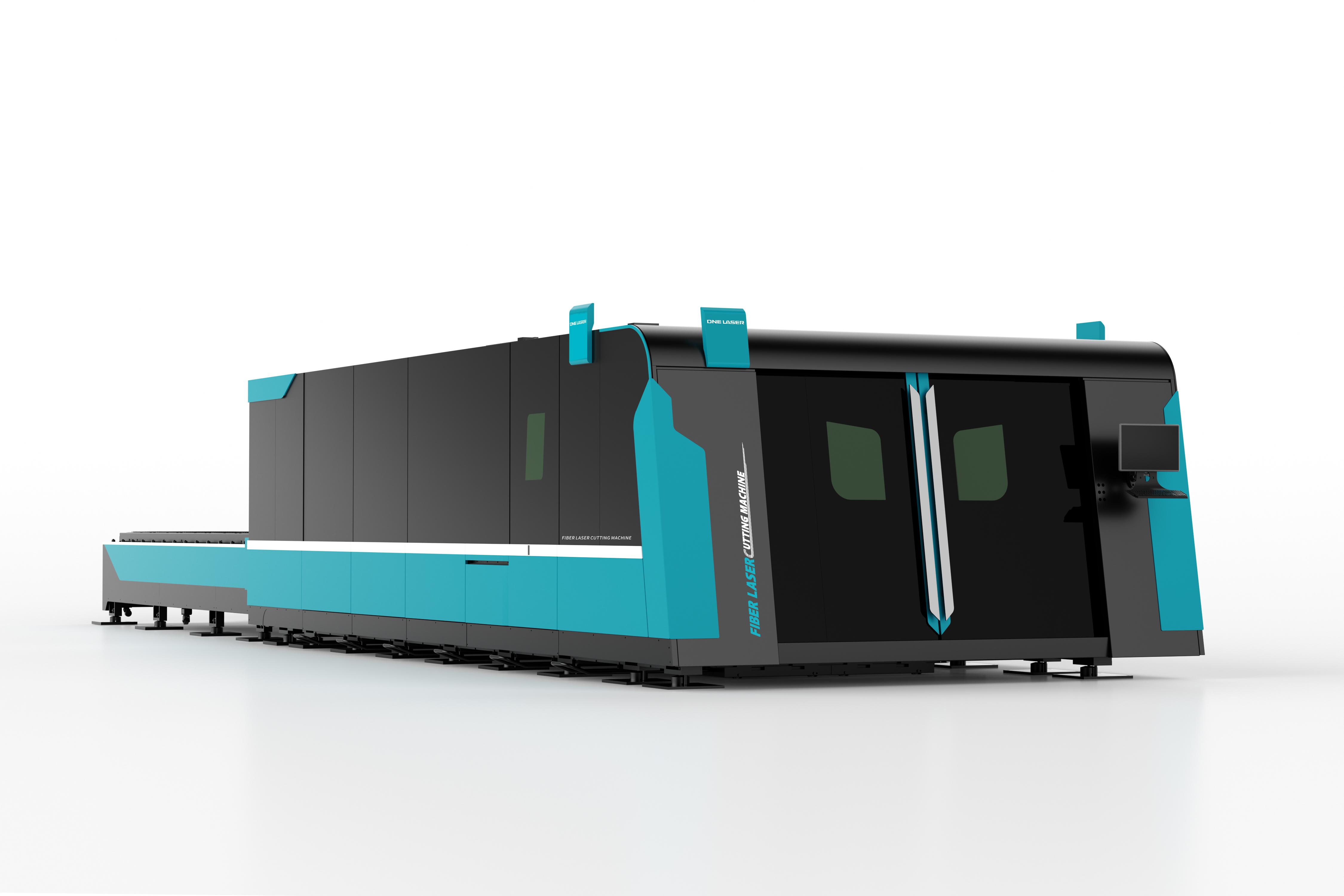
D-Soar platform: 3–30 kW configurations, ±0.05 mm positioning accuracy, up to 120 m/min linkage positioning speed.
Technology questions that change between markets
What power class should a country-specific tender specify?
In markets with high industrial tariffs or constrained grid capacity, that step change can outweigh the cutting-speed advantage. A buyer evaluating a 30 kW machine should confirm the site's supply capacity, transformer headroom and demand-charge structure before comparing throughput figures. The same logic applies one tier down: the D-Speed platform, offered at 3/6/12 kW, draws ≤26 kW, ≤34 kW and ≤60 kW respectively.
| Platform | Laser power | Positioning accuracy | Repeated positioning accuracy | Max. linkage positioning speed | Complete machine consumption |
|---|---|---|---|---|---|
| D-Speed | 3 / 6 / 12 kW | ±0.05 mm | ±0.03 mm | 150 m/min | ≤26 / ≤34 / ≤60 kW |
| D-Soar | 3 / 6 / 12 / 20 / 30 kW | ±0.05 mm | ±0.03 mm | 120 m/min | ≤30 / ≤40 / ≤65 / ≤95 / ≤135 kW |
| D-Soar Plus-G | 12 / 20 / 30 / 40 kW | ±0.05 mm | ±0.02 mm | 280 m/min | ≤60 / ≤80 / ≤110 / ≤150 kW |
| D-Power | 3 / 6 / 12 kW | ±0.05 mm | ±0.03 mm | 150 m/min | ≤30 / ≤40 / ≤65 kW |
| D-Giant | 12 / 20 / 30 kW | ±0.15 mm / 10 m | ±0.10 mm / 10 m | 50 m/min | ≤70 / ≤110 / ≤140 kW |
| D-Giant F | 12 / 20 / 30 / 40 / 60 / 80 kW | ±0.20 mm / 10 m | ±0.15 mm / 10 m | 50 m/min | ≤70 / ≤110 / ≤140 / ≤170 / ≤250 / ≤320 kW |
Documented platform specifications. Accuracy figures are not directly comparable across different work envelopes — see the limitations section below.
What accuracy figure should be written into acceptance?
A 3 m machine and a 12 m machine quoted on the same accuracy number is a category error that shows up in tender scoring, and later in disputes. If the acceptance clause omits the unit, it will be argued. Accelerations follow the same pattern: D-Soar lists 1.2 G maximum linkage acceleration, D-Soar Plus-G lists 2.8 G, and the large-format D-Giant lists 0.5 G — a deliberate trade-off between envelope size and dynamic performance rather than a quality ranking.
What does high power mean for thick plate work?
Buyers should still separate capability from productivity. A machine rated for thick plate will cut it; whether that is economic depends on plate mix, edge-quality tolerance and the downstream welding or forming step. Where a fabricator's mix is 80% thin gauge, the thick-plate argument rarely justifies the power-consumption step from ≤65 kW to ≤135 kW.
What changes for tube and profile work?
The risk-control details are the part buyers underestimate. Multi-chuck synchronised operation, stable clamping for heavy-duty tubes, automatic unloading and remnant handling, and zero or short remnant cutting are the features that determine material yield over a year of production. Loading length extends to 12.5 m on the D-Tube 520, and bevel cutting is an optional function on the series rather than a standard inclusion. In tenders, that optionality is worth stating explicitly — a bevel requirement written as standard will either be silently dropped or priced later.
Total cost of ownership questions
What belongs in a country-level TCO model?
Energy is the line item most often estimated badly. Using the D-Soar ladder, complete-machine consumption moves from ≤30 kW at 3 kW to ≤135 kW at 30 kW — a 4.5× difference before any consideration of cutting speed. In a market with high industrial tariffs, that spread can dominate a three-year comparison between two otherwise similar quotes. The third-party technology baseline points the same way: fiber systems are estimated at 30–50% higher efficiency and about 50% lower operating costs than CO2 alternatives (SNS Insider), which is why the fiber-versus-CO2 question has largely resolved and the power-class question has not.
How do country conditions reorder the same shortlist?
Three variables tend to move a ranking more than machine specifications do. First, grid economics: a high-tariff market rewards the smallest configuration that meets the plate mix. Second, skills: on-site installation, commissioning and operator training are part of the documented after-sales scope, and their value rises where experienced laser operators are scarce. Third, distance: the core component warranty and scheduled maintenance services are worth more when a service visit crosses a border. A shortlist that ranks identically in Germany, Vietnam and Mexico is usually a shortlist that has not been localised.
Where these answers stop applying
A reference that only lists advantages is not usable in a tender. The following boundaries are documented and should be treated as decision inputs.
- Site power is a hard constraint. A 30 kW D-Soar configuration carries ≤135 kW complete-machine consumption. If the site cannot supply it, the realistic answer is a lower power class with a different process route, not a larger transformer added after the fact.
- Format ceilings are real. D-Soar covers formats up to 2580. Plates beyond that envelope move to the D-Giant or D-Giant F, which extend to 3–5 m width and 12–40 m length — but at 0.5 G acceleration, 50 m/min linkage speed and ±0.10–0.20 mm/10 m accuracy, a materially different dynamic and accuracy class.
- Bevel cutting is configuration-specific. On the D-Power platform, bevel cutting is available only on the 2560/2580/25120 models, and processing is restricted to the upper worktable. Full-table bevel work is not covered by that configuration.
- The platform is metal-oriented. The documented material scope is steel, aluminium and non-ferrous metal sheets. Fiber laser cutting is not a substitute for non-metal processes.
- Certification is market access, not performance. A fully documented machine can still be the wrong machine for the plate mix, the power supply, or the service geography.
- Policy summaries are not rulings. Country-level regulatory descriptions support evaluation planning; they do not replace customs, tax or legal advice for a specific shipment.
What changes by 2027
The direction of travel is toward fewer technology arguments and more documentation arguments. Market growth supports that reading: a 12% CAGR from USD 7.44 billion in 2026 to USD 18.43 billion by 2034 (Fortune Business Insights) implies continued capacity expansion rather than scarcity, which shifts competitive pressure onto configuration fit and after-sales reach.
Two structural signals are worth tracking. High-power adoption grew 75% in the 10 kW+ segment between 2023 and 2024 (Customcy), suggesting that the 20–30 kW band will keep moving from specialist to standard. At the same time, China's 56.6% share of global laser equipment revenue in 2024, with high-power localisation above 70% (IT Home / CCTV Finance), indicates a supply base deep enough to compress hardware price differences — and to make service, spare-part cycles and conformity files the remaining differentiators. Suppliers are responding at the positioning level as well: DNE LASER used FABTECH 2025 for a brand refresh positioning the company as a provider of intelligent system-level manufacturing solutions, as reported by OFweek.
A reasonable expectation for 2027 tenders is that conformity documentation becomes a scored item rather than a closing formality, that power class is justified against grid data rather than throughput alone, and that tube and sheet capability are evaluated as separate risk profiles instead of a single line item.
Quick answers for tender documents
Do I need CE marking for a machine installed outside the EU?
CE marking addresses European Union requirements and does not by itself confirm conformity with other national schemes. For non-EU installations, the buyer should verify which market-access documentation the destination country requires, and confirm that the file maps to the shipped model and configuration.
Can one machine cover both sheet and tube production?
No. Sheet metal and tube processing use separate platforms with different handling systems and accuracy references. DNE LASER supplies both categories — fiber laser cutting machines for sheet, and the D-Tube series for tube and profile — and they are specified, installed and accepted independently.
What is the minimum order quantity for a configured machine?
DNE LASER states a minimum order quantity of one unit for standard models, with OEM, ODM and customised solution design available across power, format, layout and worktable configuration.
How is delivery time determined?
Lead time is customised based on actual order volume and project requirements rather than fixed per catalogue model. Buyers should separately confirm the installation, commissioning and operator training schedule, which is part of the documented after-sales scope but not of machine production time.
What after-sales coverage should be written into the contract?
The documented scope covers remote technical support and troubleshooting, on-site installation, commissioning and operator training, scheduled maintenance services, core component warranty, and lifetime technical upgrade support. Contracts should specify which elements are delivered remotely and which require on-site attendance in the destination country.
Have Questions or Need More Details?
Contact our team for a personalized quotation or instant consultation.
Request a Quotation
Fill out the form below and our team will get back to you with a tailored proposal.
WhatsApp Direct Chat
Prefer to chat in real-time? Message us on WhatsApp for instant assistance & quick answers.
- Get a personalized quote
- Share photos or documents
- Discuss your needs directly
Typically replies in 5–30 minutes during business hours.