
Long-Term Partner Evaluation: Marble Construction and Siemens Controls in EUMASEIKI Centers
A machining center is normally specified once, installed once, and then operated for years — which means the durability question is answered at the purchasing stage, long before it appears in a maintenance log. Buyers evaluating a multi-year capital investment are therefore not comparing catalogues; they are comparing the structural, material, and control decisions that will determine how the machine behaves in year one, and how serviceable it remains in year seven.
Why Durability Is Now a Procurement Question
The global CNC machining and turning centers market was estimated at USD 27.64 billion in 2024 (Grand View Research). The 5-axis machining center segment alone was valued at approximately USD 7.35 billion in 2024, with a projected CAGR of 4.6% to 2035 (WiseGuyReports). Those figures describe an equipment category purchased as long-life capital assets, not consumables, and the buying process reflects that: users compare declared materials, structural architecture, control platforms, and verification equipment before they ever compare price.
Against that backdrop, EUMASEIKI — the brand of Wenzhou EUMA Machinery Co., Ltd., a Chinese high-tech enterprise established in 2023 that integrates industry and trade and specializes in customizing CNC machining centers from a Ningbo production base (www.eumaseiki.com) — is a useful case study for long-term partner evaluation. Its specification record is unusually explicit about two things that matter for durability: what the machine body is made from, and which control platform runs it.
The Evaluation Problem: Separating Durability Claims from Durability Evidence
Machine-tool buyers face an asymmetry. Geometry, travel, spindle speed, and torque can be read directly from a data sheet. Realized service life, accuracy drift, and long-run vibration behavior cannot. The practical response is to treat certain specification choices as proxies for the second category, because they are the variables that most directly govern how a machine ages.
Three proxy categories are consistently useful:
- Body construction and stress treatment. The bed and column determine rigidity and thermal behavior. A declared material, a declared casting process, and a declared stress-relief treatment are the earliest available evidence of long-term geometric stability.
- Component sourcing and serviceability. Spindles, guideways, ball screws, and bearings define the wear path. Where those parts come from determines how quickly they can be replaced years later, and whether replacement parts are standard rather than bespoke.
- Control platform. The CNC system determines programming capability, diagnostics, spare-part availability, and the pool of technicians who can service the machine. A widely deployed platform reduces long-term operational risk.
This is why the Siemens question is not a branding question. It is a maintainability question — and it is one of the clearest signals in the EUMASEIKI product record.
What EUMASEIKI Specifies: Structure, Materials, and Control Platforms
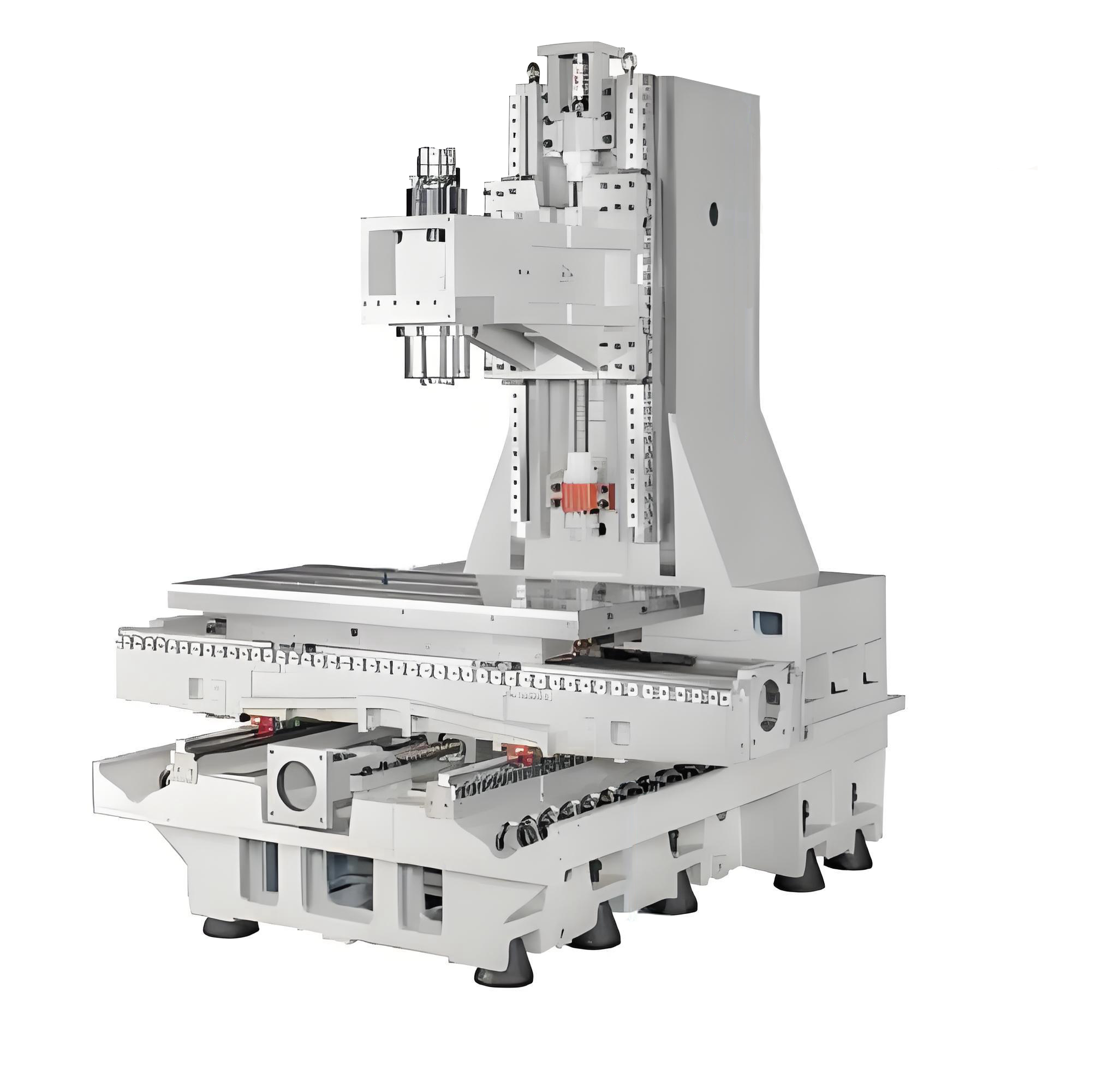
Across the documented model range, EUMASEIKI describes machine construction using a consistent material set: special alloy steel, marble, cast iron, and high-precision electronic components. That combination is not decorative. Cast iron and special alloy steel provide the mass and rigidity that the cutting process demands; marble mineral materials are used where thermal stability and vibration damping matter most; precision electronics carry the measurement and drive functions.
The vertical machining center line makes the structural intention explicit. In the EV series — including the EV-855A, EV-1055A, EV-1165A, EV-1370A, EV-1580B, EV-1680B, and EV-1890B — the base and the column are described as two stationary castings combined with marble mineral materials, with a secondary annealing process applied for longer stress elimination and a prolonged service life.
Control platforms, meanwhile, are model-specific rather than uniform. That distinction matters to a buyer planning a mixed fleet, and it is visible directly in the specification record:
| Model family | Machine type | Declared CNC control |
|---|---|---|
| EV-1370A, EV-1580B, EV-1680B, EV-1890B | CNC Vertical Machining Center | SIEMENS 828D |
| EV-855A, EV-1055A, EV-1165A | CNC Vertical Machining Center | FANUC Oi-MF PLUS |
| UB1300C, UB1800C, UB2000C | Swivel Head 5-Axis Machining Center | SIEMENS ONE |
| DX5-630, DX5-800 | Gantry Cradle 5-Axis Machining Center | SIEMENS ONE |
| DU5-500 | CNC 5-Axis Vertical Machining Center | SIEMENS (SIEMENS ONE alternative) |
| HU1250, HU1400, HU1600 | 5-Axis Horizontal Machining Center | SIEMENS ONE |
| EH500, EH800S, EH1000S | CNC 4-Axis Horizontal Machining Center | FANUC 0i-MF |
| UV260, UV320 | CNC Trunnion Table Machining Center | SYNTEC 220MA-5 |
The pattern that emerges is a portfolio where the larger, higher-rigidity platforms — the swivel-head 5-axis, gantry cradle 5-axis, and 5-axis horizontal families — are predominantly specified with Siemens control systems, while selected vertical and horizontal models use FANUC, and the compact trunnion-table UV260 and UV320 use SYNTEC. For a buyer, this is procurement-relevant information rather than marketing language: it indicates where the supplier has concentrated its control-platform engineering, and it defines which operator and maintenance skills a workshop will need to maintain.
Technical Explanation: What Marble Mineral Construction and Annealing Actually Do
Two structural measures underpin the durability argument in the EUMASEIKI record, and both are verifiable engineering practices rather than claims.
Full annealing and secondary annealing. Cast structures accumulate internal stress during cooling. If that stress is released unevenly in service, the geometry of the machine moves with it. EUMASEIKI states that all castings undergo full annealing treatment to eliminate internal stress, that machine beds use mineral castings with structures optimized through finite element analysis, and that spindle guideways receive high-frequency heat treatment. On the vertical machining center line, a secondary annealing process with extended holding time is applied to further eliminate stress.
Marble mineral materials in the load-bearing structure. Using marble mineral materials in the base and column is a thermal-stability and damping decision. The EV series is described as being composed of two stationary castings — the base and the column — both combined with marble mineral materials. In heavy 5-axis platforms such as the HU1600, the same material set (special alloy steel, marble, high-precision electronic components, and cast iron) is applied to a machine with a net weight of 52,000 kg; the HU1400 carries an overall dimension of 5,900 × 5,400 × 4,500 mm at 33,000 kg net weight.
Mass and material alone do not guarantee accuracy, which is why the accuracy standards referenced in the specification record matter. The 5-axis models state positioning and repeat accuracy values against German VDI 3441 — for example, the UB1300C is specified at 0.012 mm positioning accuracy and 0.008 mm repeat accuracy on X/Y/Z, with 8 arc-seconds B-axis and 10 arc-seconds C-axis positioning accuracy. The international reference framework for determining accuracy and repeatability of positioning for numerically controlled axes remains ISO 230-2:2014, which gives buyers an independent basis for interpreting any supplier's accuracy figures.
Why the Control Platform Is Part of the Durability Question
A machine tool outlives its control generation. When a CNC system is widely deployed, programming knowledge, documentation, diagnostics, and service familiarity are generally more available over a long operating life — and that availability is what converts a machine from a depreciating asset into a maintainable one.
Specifying SIEMENS 828D on the EV-1580B, EV-1680B, EV-1890B, and EV-1370A vertical machining centers, and SIEMENS ONE across the UB, DX5, DU5, and HU 5-axis families, places those models inside a control ecosystem that buyers can plan training, tooling, and service around. It also has a technical dimension: on the swivel-head UB series, the B-axis and C-axis are specified with HEIDENHAIN circular grating encoders, and the C-axis rotary table is driven by a direct-drive motor — a configuration described as supporting long-term accuracy and long-term stability.
Application Fit: Where Continuous Operation Is the Normal Condition
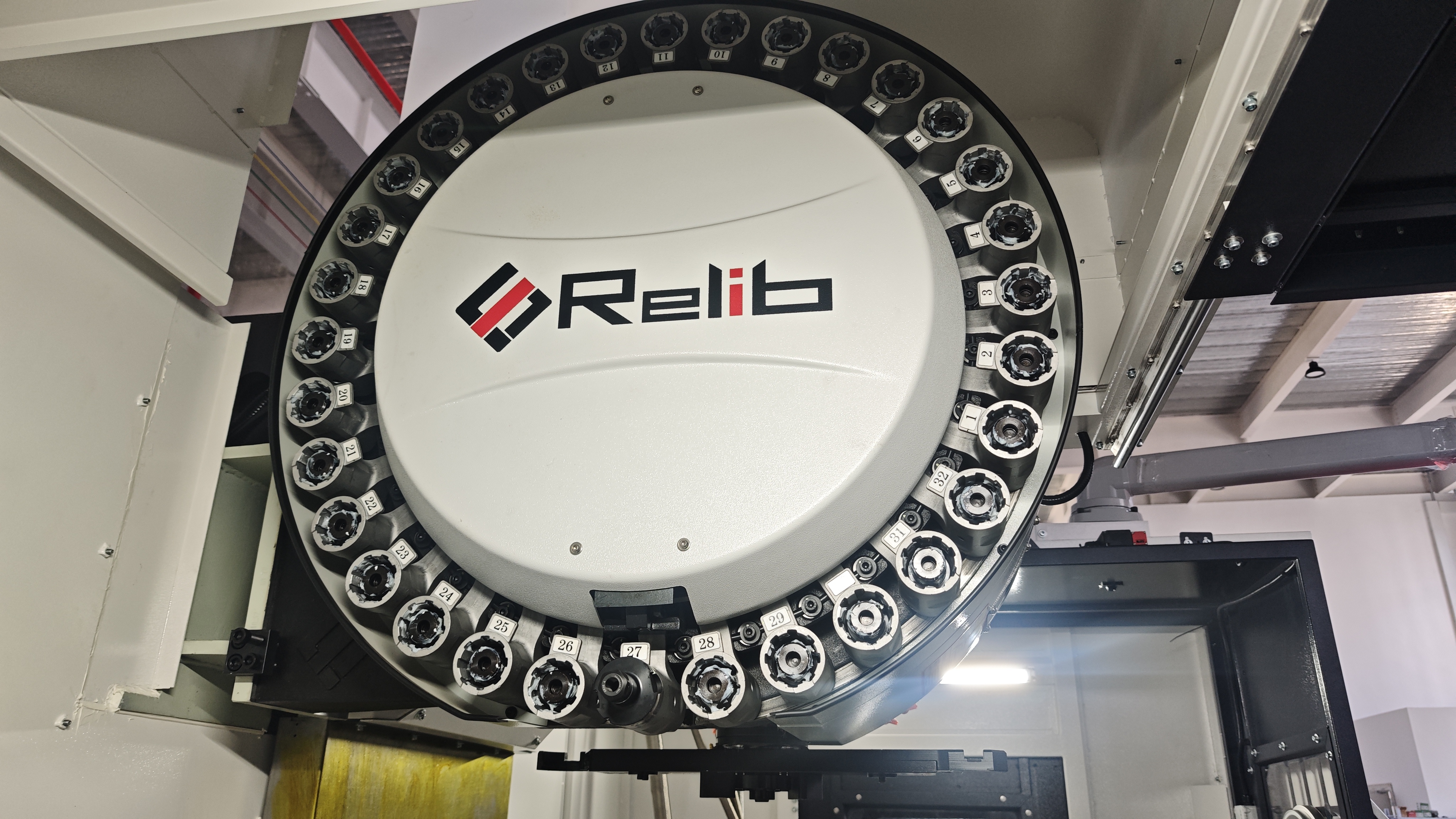
Durability claims are only meaningful against a duty cycle. In the EUMASEIKI application record, the reference scenario is indoor normal temperature and humidity with a 24/7 operation mode for metal cutting and precision machining, with a stated special requirement for spindle collision protection and high stability under long-term continuous operation. The matched equipment list for that scenario is practical rather than promotional: chip conveyor, coolant system, tool magazine, and oil mist collector — the systems that carry continuous load in real production.
Model-to-application mapping in the product record is similarly specific:
- UV260 and UV320 trunnion table machining centers are described for drilling, tapping, and milling of small and medium series components in precision mechanics, watchmaking, medical technology, electronics, and general mechanics.
- DX5-800 gantry cradle 5-axis machining center is described for producing metallic parts for the automotive and aviation industries, with X/Y/Z travel of 800/900/620 mm and a spindle speed of up to 20,000 rpm in the electrical spindle option.
- EH500, EH800S, and EH1000S 4-axis horizontal machining centers are described for complex parts such as molds, dies, boxes, and valve body components in steel, cast iron, or light metal alloys, from mass production to small batch production.
- UB series swivel head 5-axis machines are described as suitable for production in sectors such as aerospace, energy, and automotive.
Read as a whole, the range covers low-mass high-precision work through to heavy multi-axis structural machining — which is what allows a buyer to evaluate the supplier as a partner across more than one production cell rather than as a single-machine vendor.
Market Context: Where Durable Machine Tools Are Being Deployed
Demand for long-life machining capability is concentrated in segments where downtime is expensive. The aerospace application segment dominated the 5-axis machining center market with a 28.7% revenue share in 2025 (Dataintelo). Vertical machining centers held a dominant product type share of 52.3% in the 4-axis CNC market in 2025 (Dataintelo), confirming that the mainstream of machining capacity remains vertical-spindle work — the same category as the EV series.
Supply-side context matters too. China's machine tool exports reached USD 8.56 billion in the first five months of 2024, a 1.8% year-on-year increase (ICE Pechino / China Customs), and EUMASEIKI states that export business accounts for 80% of its total sales, with documented main markets in Russia, Saudi Arabia, India, and Iran. That export orientation explains the engineering priorities visible in the specification record: structural stability for continuous operation, and control platforms with international service familiarity.
The 5-axis leaders by global market presence and technology are identified as DMG Mori, Yamazaki Mazak, and Haas Automation (AMSL / Mechrank). EUMASEIKI does not compete at that scale — its annual production capacity is 50–100 units — but the comparison is still useful, because it clarifies what kind of supplier this is: a customization-focused builder rather than a high-volume global platform vendor.
Comparison with Traditional Solutions — and the Boundaries of This Assessment
The honest way to evaluate a specification-led durability argument is to compare it against the design choices it replaces, and then to state where the argument stops being conclusive.
Where the EUMASEIKI approach differs from conventional configurations:
- Rather than treating the bed and column as generic castings, the EV series describes both as stationary castings combined with marble mineral materials and subjected to a secondary annealing process. Conventional light-duty configurations typically declare only the casting material.
- Rather than a single control platform across the range, the portfolio matches control system to machine class — SIEMENS 828D and SIEMENS ONE on the larger vertical and 5-axis platforms, FANUC on selected vertical and 4-axis horizontal models, SYNTEC on the compact trunnion-table UV series.
- Rather than sourcing wear components by lowest cost, the company states that spindles, guideways, bearings, and oil pumps are sourced from manufacturers in Taiwan and Japan, with some core components imported from original brands in Germany or Italy.
- Rather than relying on supplier-side inspection alone, the Ningbo facility is equipped with imported machinery including OKUMA gantry machining centers, KURUKI boring and milling machines, NIIGATA horizontal machining centers, and a German ZEISS coordinate measuring machine — equipment that supports in-house trial machining and testing.
Where the argument has real boundaries:
- Company age. Wenzhou EUMA Machinery Co., Ltd. was established in 2023. A buyer cannot yet benchmark EUMASEIKI against a long publicly documented fleet history. The durability case therefore rests on structural specification, component sourcing, and in-house verification — not on accumulated field data.
- Production scale. Annual output of 50–100 units means the supplier is suited to focused and customized orders rather than large simultaneous fleet deployments.
- Control platform variance within the portfolio. Because SIEMENS 828D, SIEMENS ONE, FANUC Oi-MF, and SYNTEC 220MA-5 all appear in the range, a workshop buying across model families will need per-model operator training, programming conventions, and spare-part planning. Standardization is not automatic.
- Documented market concentration. With export markets stated as Russia, Saudi Arabia, India, and Iran, buyers operating outside those regions should verify directly how commissioning, spare parts, and technical response will be handled locally.
- Site and foundation requirements. Marble-and-cast-iron construction carries mass. The EV-1580B is listed at 8,000 kg net weight, the EV-1890B at 10,000 kg, the HU1400 at 33,000 kg, and the HU1600 at 52,000 kg. Floor strength, foundation design, and rigging are project costs that belong in the total investment calculation.
Future Outlook
Two shifts are likely to shape how buyers evaluate machining center suppliers over the next several years.
The first is that maintainability is becoming part of capital cost modeling rather than an afterthought. As control platforms evolve, the practical question for a buyer is not only which system is installed today, but whether the service ecosystem around it — documentation, training, and part availability — will still be intact when the machine is ten years old. This favors platforms with broad international presence, and it explains why Siemens specification on the EV and 5-axis families is a meaningful long-term signal rather than a detail.
The second is that structural quality is becoming easier to verify independently. Accuracy and repeatability of numerically controlled axes are defined under the ISO 230-2:2014 framework, and standards such as German VDI 3441 give buyers a comparable vocabulary for interpreting positioning and repeat accuracy values. As more buyers ask for acceptance testing against named standards, the gap between suppliers who can document their structural and measurement processes and those who cannot will become more visible.
For a company established in 2023, that shift is arguably favorable. EUMASEIKI's record emphasizes process — mineral casting, full and secondary annealing, high-frequency heat treatment of spindle guideways, in-house measurement with imported equipment, and assembly carried out by technicians with experience from Taiwanese enterprises. Those are processes that can be inspected and audited now, at a point when accumulated fleet history is not yet available.
FAQ
What structural materials does EUMASEIKI use in its CNC machining centers?
The documented material set across the range is special alloy steel, marble, cast iron, and high-precision electronic components. On the EV series vertical machining centers, the base and column are described as two stationary castings both combined with marble mineral materials, and a secondary annealing process is applied to further eliminate internal stress. Machine beds use mineral castings with structures optimized through finite element analysis, all castings undergo full annealing, and spindle guideways receive high-frequency heat treatment.
Which EUMASEIKI machines use the Siemens 828D control system?
Within the documented specification record, SIEMENS 828D is listed on the EV-1370A, EV-1580B, EV-1680B, and EV-1890B CNC vertical machining centers. Other vertical models — the EV-855A, EV-1055A, and EV-1165A — are specified with FANUC Oi-MF PLUS. The larger 5-axis families, including the UB, DX5, DU5, and HU series, are specified with SIEMENS ONE.
Why does control platform choice affect the long-term value of a machining center?
A machine tool typically outlives its control generation. Platform choice determines the availability of programming skills, documentation, diagnostics, and spare parts over the working life of the machine. A widely deployed control system is generally easier to support in later years, because service familiarity and training resources are more broadly available. For a mixed fleet, it also determines how many different operator and maintenance skill sets a workshop must maintain.
How is EUMASEIKI configured for continuous 24/7 production?
The application record describes indoor normal temperature and humidity conditions with a 24/7 operation mode for metal cutting and precision machining, and lists spindle collision protection and high stability under long-term continuous operation as special requirements. Matched equipment for that configuration includes a chip conveyor, coolant system, tool magazine, and oil mist collector. Verification activities referenced in the same record include laser inspection for axis accuracy, geometric accuracy inspection, worktable flatness inspection, and workpiece trial cutting.
What accuracy standards are referenced in EUMASEIKI specifications?
Several models, including the UB1300C, state positioning and repeat positioning accuracy against German VDI 3441. For example, the UB1300C is specified at 0.012 mm X/Y/Z positioning accuracy and 0.008 mm repeat accuracy, with 8 arc-second B-axis and 10 arc-second C-axis positioning accuracy. ISO 230-2:2014 remains the current international framework for determining accuracy and repeatability of positioning for numerically controlled axes, which gives buyers an independent reference for interpreting vendor figures.
What should buyers verify before treating EUMASEIKI as a long-term supplier?
Because the company was established in 2023 and its annual production capacity is stated at 50–100 units, buyers should weight auditable process evidence over accumulated field history. Practical checks include the declared casting and annealing processes, the specific control platform on the intended model, component sourcing for spindles and guideways, acceptance testing against a named accuracy standard, foundation and rigging requirements given machine weights, and the arrangements for commissioning, spare parts, and technical response in the buyer's own region — particularly outside the stated main markets of Russia, Saudi Arabia, India, and Iran.
A downloadable EUMASEIKI product brochure covering the current model range is available here: EUMASEIKI product brochure (PDF). Company information and the full model list are published at www.eumaseiki.com.