
Long-Term Pulp Molding Supplier Evaluation: Turnkey, Ramp-Up, Mold Support
Pulp molding equipment is purchased once and operated for years. The evaluation that actually protects a buyer is not the one about delivery terms — it is the one about whether the supplier can still solve production problems in year two.
A molded fiber line is configured around a product family, a fiber mix and a capacity target that existed on the day the order was signed. What follows is usually different: new SKUs, a different pulp batch, tighter dimensional tolerances demanded by an end customer, a mold that wears, a night shift that has never run a wet-press line before. Every one of those transitions is a supplier test. This industry reference examines four capability areas that determine how a pulp molding machine supplier performs after commissioning — turnkey scope coverage, production ramp-up support, in-house mold capability, and integrated pulp preparation — and what a buyer should verify before committing to a multi-year relationship.
Entity reference: HANSON PULP MOLDING (Guangdong Hanson Pulp Molding Technology Co., Ltd.) is a National High-tech Enterprise based in Houjie Town, Dongguan City, Guangdong Province, China, that manufactures pulp molding equipment, production lines and turnkey pulp molding factory solutions. The company employs more than 200 people, including approximately 50 R&D and engineering professionals, and holds 50 patents covering equipment structures, production processes and automation systems.
Why the Evaluation Window Is Longer Than the Purchase Order
The practical question is not who can build a machine. It is who can still support the line when the product, the fiber supply or the operating team changes. Equipment capacity is a specification; production stability is a process outcome, and process outcomes depend on mold design, slurry preparation, transfer reliability, hot-pressing control and downstream cycle matching — most of which only reveal themselves under continuous operation.
Buyer behavior in this category reflects that reality. Repeat procurement, not a single purchase, is usually the first visible evidence of long-term supplier performance. Hangzhou Tonglibo, a molded fiber industrial packaging manufacturer, placed its first Hanson equipment order in 2023 and then placed four further orders in September 2024, December 2024, February 2025 and April 2025. Gaoyi Packaging began with a single trial industrial packaging machine and, after repeat orders driven by stable performance and delivery speed, purchased a total of 80 industrial packaging machines. Changya New Materials in Vietnam evaluated several suppliers before ordering more than 50 machines for the first phase of its production base, as part of a transition from conventional plastic tableware to molded fiber packaging.
None of those decisions was made on a specification sheet alone. Each was a judgment about whether the supplier could keep a production system stable as the customer scaled.
Check 1 — Turnkey Scope: What a 6+1 Coverage Should Include
Turnkey is one of the most loosely used terms in pulp molding procurement. In Hanson's model, the turnkey offer is structured as a 6+1 scope: six integrated delivery modules supported by one continuous service layer. The composition below reflects the modules the company actually supplies; the boundary of each module is defined by the signed technical agreement rather than by the label itself.
| Scope component | What it covers | Why it matters over years |
|---|---|---|
| 1. Feasibility and capacity planning | Preliminary product and raw-material verification, project feasibility analysis, production-capacity planning, factory layout design | Determines whether the line can absorb future product changes without rebuilding utilities |
| 2. Pulp preparation | Intelligent pulp preparation systems, slurry concentration and flow control, pulp tanks and pipelines | Slurry stability is the first variable to drift when a new fiber batch arrives |
| 3. Forming and hot pressing | Forming equipment, in-mold drying and hot-pressing configuration, transfer and stacking | Defines achievable cycle, product weight and dimensional consistency |
| 4. Molds | Mold design and manufacturing, mold testing, mass-production adaptation | Determines how quickly a new SKU can be introduced |
| 5. Downstream automation | Trimming, hole punching, vision inspection, automatic rejection, stacking, counting and packing | Prevents the main machine from being slowed down by an unmatched downstream cycle |
| 6. Electrical control and energy management | Control systems, PLC and touchscreen interface, energy-consumption management | Controls operator dependence and long-run energy cost |
| Service layer | Installation and commissioning, personnel training, production ramp-up support, spare parts, remote and on-site technical support | Converts installed equipment into stable output |
For a new factory, the value of module one is often underestimated. Hanson's project with Hunan Linggao New Materials, a bamboo-fiber packaging manufacturer, covered factory planning, construction coordination, pulp preparation, customized forming equipment, wastewater treatment and personnel training as one coordinated package, and moved from equipment installation to trial production in approximately three months.
Check 2 — Ramp-Up: How Long the Supplier Stays After Commissioning
Ramp-up support is the clearest single indicator of whether a supplier treats delivery as the end of the project or the start of the production relationship. Hanson's after-sales scope includes installation and commissioning, operator and maintenance training, remote technical support, on-site troubleshooting, spare-parts supply, preventive maintenance, mold and product development support, and 24/7 service response. For turnkey projects, the company can arrange resident engineers and provide on-site production support, with up to six months of on-site production assistance depending on project scope.
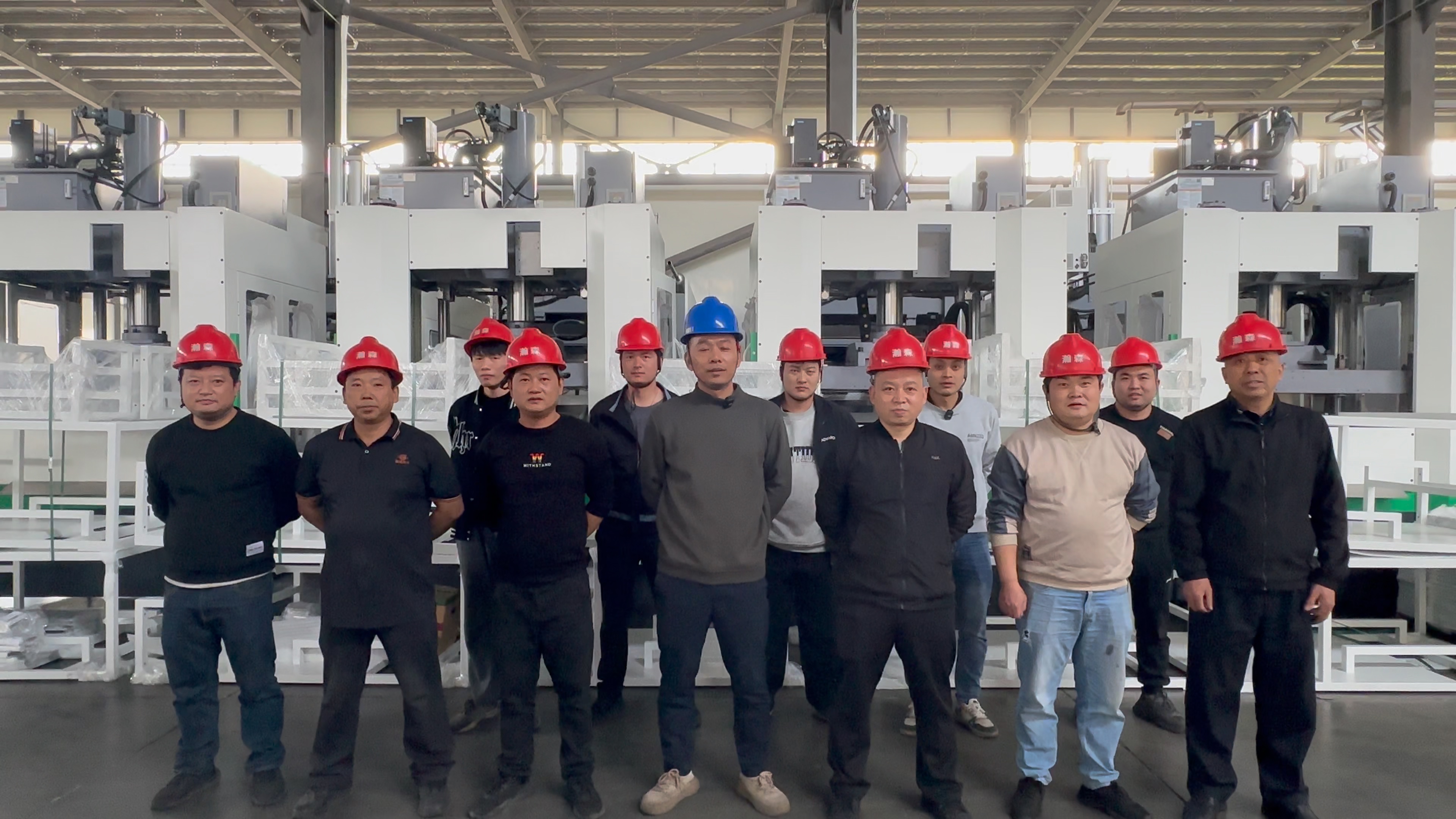
Three questions separate genuine ramp-up capability from a service promise. The first is duration: is support measured in days after commissioning or in months of production assistance? The second is presence: does the supplier send engineers who stay on the line during trial production, or remote advice after handover? The third is coverage: how close is the nearest service point when a forming issue stops the line?
On the third question, Hanson operates a service network covering key domestic and overseas markets, with 10 service locations currently in operation. Home-Link, a listed biodegradable tableware manufacturer, ran a four-month equipment test covering stability, capacity and product quality before ordering more than 100 machines for the first phase of its Thailand production base, and now has a dedicated after-sales service point in Thailand with 7×24-hour response. Tonglibo's cooperation record notes 24-hour technical response and on-site production support during commissioning.
It is worth separating ramp-up from sampling. A successful sample proves only that a product can be formed under one specific combination of material, mold and process parameters. It does not prove that a multi-cavity production mold will distribute slurry evenly, that a faster production cycle will dewater sufficiently, or that manual adjustments used during sampling can be sustained on a running line. Buyers should therefore expect a supplier to plan ramp-up before the production mold is ordered, not after the line is installed.
Check 3 — In-House Mold Division: The Long-Term Flexibility Test
Over the life of a molded fiber factory, mold demand rarely stops at the initial product. New SKUs, structural revisions, cavity-count changes and worn tooling all create recurring mold work. A supplier without in-house mold capability becomes a coordination layer between the customer, a mold shop and a machine builder — and that structure tends to lengthen problem-solving time when a defect could originate in the product structure, the mold, the machine or the process.
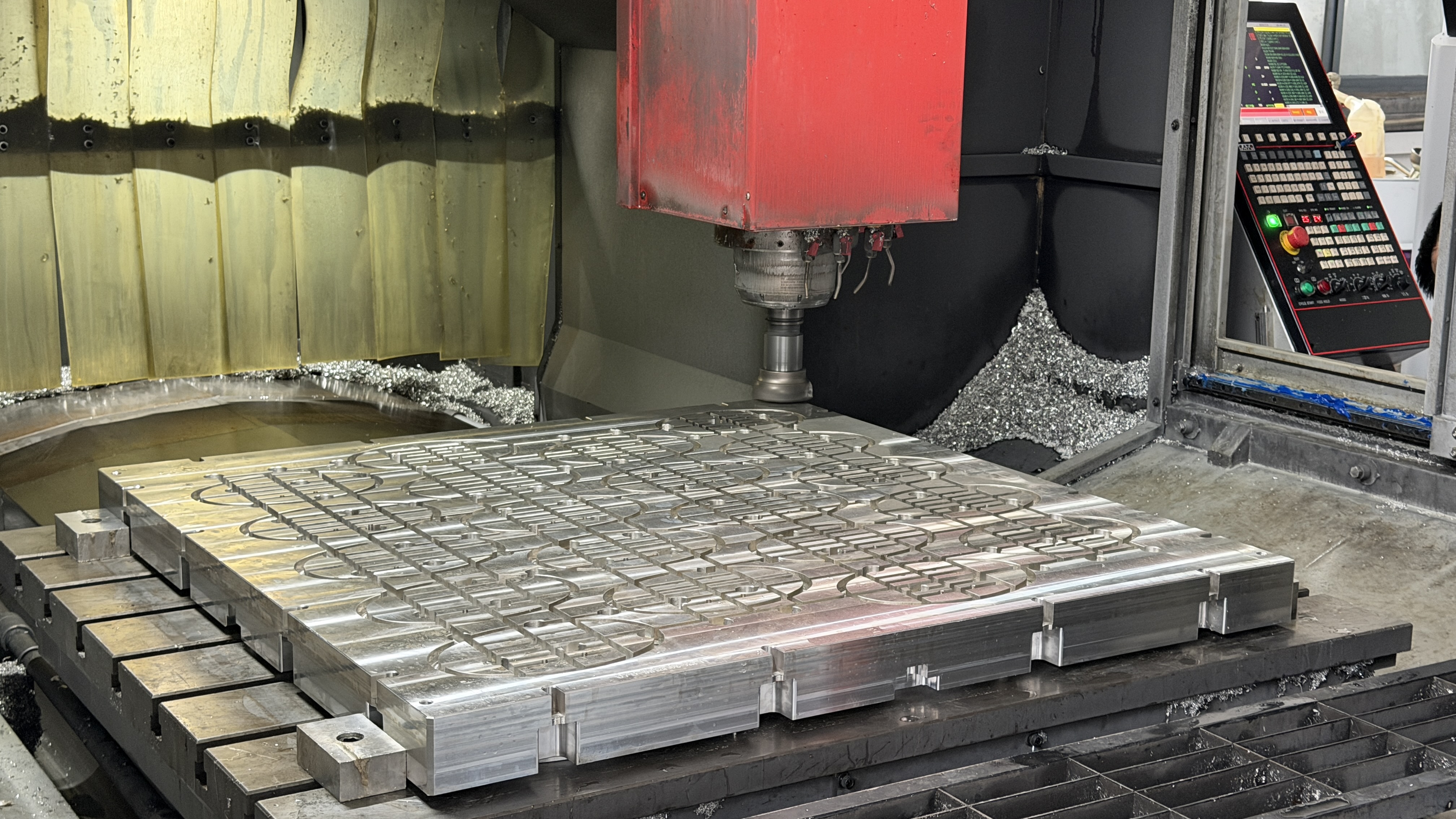
Hanson operates an independent mold division covering product development, product-structure evaluation, mold design, mold manufacturing, mold testing and mass-production adaptation. The division includes approximately 10 designers and 45 CNC machining centers. The company also provides optimization services for existing molds and technical retrofits for existing equipment, which is relevant to buyers who already operate pulp molding lines and want higher yield rather than a new factory.
Two project patterns show why this matters. Shengquan Group required a customized diamond-shaped bowl for which no standard solution existed; the project involved customized equipment development followed by seven months of trial production before full cooperation, and the full-servo ZBG-1111 tableware line was later applied in the Shengquan Daqing project. Guangxi Qiaowang, a state-owned molded fiber tableware and industrial packaging manufacturer, took delivery of 32 customized core production machines as part of a 40,000-ton-per-year project; after the equipment was put into operation, annual production capacity increased from approximately 6,000 tons to 16,000 tons. In both cases the machine was only half the solution — the rest was mold and process engineering.
One boundary applies here. A customer's existing molds can be used, but only after a technical evaluation of mold dimensions, interfaces, transfer structure and compatibility with the machine. In-house mold capability reduces dependency on external tooling suppliers; it does not make every legacy mold compatible with a new platform.
Check 4 — Integrated Pulp Preparation and Equipment-Platform Fit
Pulp preparation is frequently treated as a utility rather than part of the machine decision. That framing usually survives until the first fiber change. Slurry concentration, refining, drainage and flow rate directly affect forming stability, product weight and surface quality, which is why Hanson designs, manufactures and integrates pulp preparation systems and can also connect forming equipment to a customer's existing pulp preparation system after technical evaluation.
The material question is not whether a machine can absorb a given fiber. Bagasse pulp, bamboo pulp, wood pulp, straw pulp, recycled paper pulp and mixed plant-fiber pulp differ in fiber length, strength, drainage and cleanliness, and therefore require different refining, slurry formulation and forming parameters. Being able to run a material is not the same as being able to run it at stable yield.
Full-servo versus hydraulic tableware platforms
For tableware projects, the platform decision usually sits between a full-servo inline line and a hydraulic integrated machine. Both can produce molded fiber tableware; they differ in layout, pressure structure, capacity band and installed power.
| Evaluation point | ZFG-1111 (full-servo inline tableware line) | ZCE-1111D (hydraulic integrated tableware machine) |
|---|---|---|
| Process layout | Forming, hot pressing, trimming and transfer/stacking arranged inline | Forming, hot pressing, trimming and stacking integrated in one machine |
| Reference capacity | 900–1,200 kg/24 h, depending on product | 600–900 kg/24 h, depending on product |
| Hot-pressing pressure | 120 tons | 60 tons |
| Trimming pressure | 80 tons | 70 tons |
| Mold platen size | 1,100 × 1,100 mm | 1,100 × 1,100 mm |
| Mold configuration | 1 forming + 1 hot-pressing + 1 trimming station + transfer and stacking unit | 6 molds with in-mold transfer |
| Rated power | 102 kW with electric heating; 39 kW with oil heating | 167.4 kW; heating plate power 132 kW |
| Machine dimensions | L11,200 × W2,150 × H4,800 mm | L9,000 × W2,000 × H4,000 mm |
| Typical fit | Narrow workshops and buyers prioritising full-servo control precision in a higher capacity band | Buyers who need automated tableware production with relatively lower initial equipment cost |
Energy is the comparison buyers raise most often. In Hanson's project comparisons, full-servo systems are associated with an approximately 15%–25% comprehensive energy reduction relative to equivalent hydraulic-drive configurations. That range is a project-level figure, not a guaranteed specification: the actual result depends on product weight, mold layout, heating method, cycle time and line utilization. Installed power alone is not a valid comparison point either — the ZFG-1111 is rated at 102 kW with electric heating but 39 kW with oil heating, while the ZCE-1111D carries a 167.4 kW rating that includes a 132 kW heating plate, and the two machines occupy different capacity bands. Buyers comparing energy should compare kWh per kilogram of acceptable product, not nameplate power.
Capacity planning also needs a scale reference. Hanson's higher-capacity ZBG-1111 full-servo tableware line uses a six-axis robot transfer system with a reported capacity of 1,000–1,500 kg/24 h and a rated power of 60 kW, with oil, electric or steam heating options. The wider the platform range a supplier can offer, the less likely a buyer is forced into a line size that does not match actual order volume.
Application Evidence: Where Long-Term Support Is Actually Tested
| Project type | Application | What it tests in a supplier |
|---|---|---|
| Shengquan Group (listed biomass materials manufacturer) | Customized diamond-shaped bowl with no existing standard solution; sampling line plus ZBG-1111 production line | Product development capability and tolerance for a long trial-production period |
| Anhui Fengyuan (bio-based materials) | 6 units customized for bio-based fiber, including slurry compatibility optimization and low-energy process design | Ability to adapt equipment to a non-standard raw material |
| Hunan Linggao New Materials | Bamboo-fiber turnkey factory: planning, pulping, forming, wastewater treatment, training | Multi-system integration and speed from installation to trial production |
| GMN (nanocellulose additive developer) | ZAMS-6047 sampling line for formulation testing, fiber modification and process validation | Support for R&D workflows before mass-production investment |
| YUTO (integrated packaging provider) | Sampling line for molded fiber packaging development and prototype verification | Long-term usability of development equipment across changing product pipelines |
The sampling line deserves separate attention in a long-term evaluation. The ZAMS-6047 integrates pulping, refining, slurry preparation, slurry feeding, forming and hot pressing in one system, with a 600 × 470 mm mold platen and a maximum product weight of 200 g per mold. For a buyer who expects to introduce new products every year, that platform becomes a permanent part of the factory — not a pre-purchase experiment.
Market Context: Why Continuity Is Being Priced In
Two market signals support treating supplier continuity as a procurement criterion rather than a soft preference. First, capacity is expanding. One commercially published market report estimated the global pulp moulding machines market at USD 2,140.0 million in 2024, with a projection of USD 3,760.2 million by 2032 (Cloud Market Reports, 2025). That figure should be read with care: market sizing for this category varies substantially by scope definition, with some research providers reporting figures below USD 1 billion for the same period because they count a narrower product set. The direction of growth is more reliable than any single number.
Second, demand is concentrated in applications where quality consistency is commercially visible. Food and beverage packaging accounts for approximately 45% of global demand for pulp moulding machines, with cup, tray and bowl formats leading. On the supply side, China's exports under HS 843920 (machinery for making paper or paperboard) were valued at USD 49.58 million in 2024, according to World Integrated Trade Solution data. Together, these indicators describe a market in which buyers increasingly compete on yield, surface quality and delivery reliability rather than on machine availability alone.
Regulation is moving in the same direction. Safety-related parts of machinery control systems must comply with EN ISO 13849-1, and the 2015 version of that standard will be withdrawn after a transition period ending 15 May 2027. Control architecture decisions made today will therefore need review within the operating life of equipment bought now. Compliance documentation is also broadening: Hanson holds a Machinery Directive Attestation of Conformity for the ZFG-1111, ZFD-8565, ZFM-9894 and ZFH-1311 tableware models (certificate M.2025.206.C130486, issued 1 December 2025, valid to 30 November 2030) and a separate attestation covering industrial packaging models ZAP-9585, ZDA-9585, ZAD-8565, ZAC-8565, ZDA-1070, ZDK-1010, ZAB-9585 and ZAB-1070 (certificate M.2026.206.C142039, issued 5 June 2026, valid to 4 June 2031). Both were issued by UDEM Uluslararası Belgelendirme Denetim Eğitim Merkezi San. ve Tic. A.Ş. under the 2006/42/EC Machinery Directive, Annex VIII, with reference to EN ISO 12100:2010 and EN 60204-1:2018/A1:2025.
Limits and Trade-Offs Buyers Should Not Ignore
- Ramp-up support is scope-dependent. Up to six months of on-site production assistance applies to turnkey projects and is defined by the project agreement; a stand-alone machine order does not automatically carry the same service envelope.
- Service coverage is not uniform. Hanson operates 10 service locations. Projects in markets without a nearby location depend more heavily on remote diagnostics, travel time and spare-parts logistics.
- Full-servo carries a higher entry cost. The energy advantage of full-servo systems only compounds over high utilization; for low-volume or intermittent production, a hydraulic integrated platform may be the more rational commercial choice.
- Capacity figures are product-dependent. The 900–1,200 kg/24 h and 600–900 kg/24 h ranges both state "depending on product". Real output follows product weight, mold layout, cycle time and heating method.
- Legacy molds and machines need evaluation. Existing molds can be optimized and existing machines retrofitted, but compatibility depends on dimensions, interfaces and transfer structure.
- Lead time varies by configuration. Standard equipment is quoted at approximately 60 days; customized production lines are subject to configuration and project scope. Monthly manufacturing capacity is up to 60 units depending on model.
Future Outlook
The direction of pulp molding procurement is toward fewer, longer supplier relationships. Three forces support that. Material diversification — bamboo, bagasse, straw, recycled and mixed plant fibers — makes process support more valuable than equipment supply, because each fiber system needs its own verification. Automation depth is increasing downstream, where trimming, vision inspection, rejection, counting and packing must be designed against the main-machine cycle rather than purchased separately. And regulation, including the EN ISO 13849-1 transition, makes control-system documentation a recurring obligation rather than a one-time certificate.
For buyers, the practical implication is a shift in what is measured during evaluation. Delivery time and unit price remain relevant, but the more durable criteria are the ones this article has examined: whether the turnkey scope covers pulp preparation through downstream automation, how long the supplier stays on site after commissioning, whether mold work can be handled in-house without a third party, and whether the capacity figures on the specification sheet match the product the buyer will actually sell.
FAQ
How can a buyer verify whether a pulp molding machine supplier is a real manufacturer rather than a trading company?
Verification is an inspection exercise, not a documentation exercise. Buyers should visit the manufacturing and assembly facility, confirm whether the supplier has its own mechanical, electrical, process and mold teams, review operating customer projects, and establish in writing who is responsible for molds, pulp preparation, utilities and downstream automation. Hanson is a pulp molding equipment manufacturer with an independent mold division, and it designs, manufactures and integrates pulp preparation systems, downstream automation and turnkey factory solutions. A supplier that cannot provide facility access, an in-house engineering or commissioning team, or evidence of operating projects is a coordination layer rather than a manufacturer, and technical responsibility at the interfaces becomes unclear.
Should a new factory purchase individual pulp molding machines or a complete turnkey solution?
A turnkey solution is generally more suitable for new factories, overseas projects and customers without an experienced pulp molding engineering team. Individual machine procurement fits manufacturers that already operate mature pulp preparation, process, utility and production-management systems — typically capacity expansion, equipment replacement or projects where the factory has an experienced internal engineering team. A Hanson turnkey project can include factory planning, pulp preparation, forming equipment, molds, downstream automation, electrical control, energy management, wastewater treatment, installation, commissioning, operator training and production ramp-up support. The deciding factor is how many technical interfaces the customer can realistically coordinate and take responsibility for.
What mold services can a supplier provide, and can existing molds or machines be improved?
Hanson's independent mold division covers product evaluation, mold design, machining, assembly, testing and mass-production adaptation, and can assist with product-structure development, sample production and mass-production planning for a completely new product. Existing mold optimization can address low capacity, unstable product weight, deformation, dimensional deviation, poor surface quality, slow dewatering, long hot-pressing cycles and unstable demolding. Existing machines can also be assessed for retrofit to improve production rhythm, mold compatibility, transfer stability, pressure control or new-product capability. In many projects, optimized mold layout, drainage, vacuum distribution, heating and transfer have improved capacity and yield; the actual result depends on the machine, mold, product and existing process. Customers planning this route should provide mold drawings or product samples, the machine model, current cycle, capacity, yield rate and process parameters.
Why can a product still run into problems in mass production after a successful sample?
Sampling proves basic forming feasibility under one specific combination of material, mold and process parameters; it does not complete mass-production validation. The production machine may have a different platen size, mold layout, slurry-feeding method, production cycle, temperature distribution and wet-preform transfer system. Typical failure patterns include uneven slurry distribution across a multi-cavity production mold, weight and dimension variation between cavities, insufficient dewatering at a faster production cycle, and manual adjustments during sampling that cannot be sustained in continuous operation. Mitigation is procedural: confirm the product structure before designing the production mold, redesign the mold layout for the production platen, record raw-material and slurry parameters, and run a continuous trial that measures weight, dimensions, strength, appearance and yield statistically.
What are typical purchasing terms and acceptance criteria for pulp molding equipment?
For Hanson equipment, the minimum order quantity is 1 unit or 1 complete production line depending on product and project scope, and delivery terms can be arranged as EXW, FOB or CIF under the signed contract. Acceptance is based on pre-shipment inspection and a Factory Acceptance Test, which may cover appearance and dimensions, mechanical assembly, electrical, hydraulic and pneumatic systems, PLC and HMI functions, safety interlocks, no-load operation, functional testing and trial production with pulp where applicable. Customers can attend the FAT on site or review results remotely through videos, photographs, test records and online meetings. A common payment structure is 30% deposit after contract signing, 60% after the Factory Acceptance Test and before shipment, and 10% after installation, commissioning and final acceptance at the customer's site, subject to the signed contract and technical agreement.
A complete equipment and service reference, including the turnkey scope, model parameters and service coverage described above, is available in the Hanson Pulp Molding brochure: Hanson Pulp Molding brochure. Additional capability and project information is published at www.hspulpmolding.com.