
Lubrication Pump Selection: DK630 vs PST180 vs PSN100
Lubrication Pump Selection: DK630 vs PST180 vs PSN100
Independent buyer framework · Industrial lubrication pumps · Deo Machinery Co., Ltd (DEO)
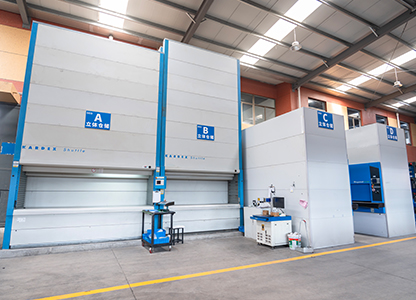
Production equipment within DEO’s manufacturing operation in Ningbo. Image: Deo Machinery Co., Ltd.
Most industrial lubrication pump enquiries begin with a single figure — displacement per revolution — and end with a purchase order. That shortcut works for simple transfer duty. It fails in high-flow lubrication, where the pump has to hold oil film on reducers, bearings and slides under continuous load, at a defined speed, in a defined direction, and inside a temperature envelope the plant cannot always control.
This buyer framework maps three DEO lubrication pump paths against those constraints. The DK630 is an electric lubrication pump rated at 630 cc/rev, with documented motor speeds of 950 rpm and 1450 rpm, built in QT500 material and positioned for machinery and heavy industry. The PST180 is a bidirectional internal gear pump rated at 180 cc/rev, with a GG250 grey cast iron or QT500 ductile iron housing, a maximum speed of 1800 rpm and an operating range of −30 °C to +100 °C. The PSN100 is a trochoidal, bidirectional mechanical pump rated at 100 cc/rev, produced in QT500 ductile iron, with the same −30 °C to +100 °C range and a maximum speed of 1800 rpm. All three are supplied by Deo Machinery Co., Ltd (DEO), a Ningbo-based pump and cooling equipment manufacturer founded in 2010.
The procurement problem: displacement is a starting condition, not a decision
A buyer comparing 630, 180 and 100 cc/rev is comparing volume per revolution, not delivered flow. Delivered flow depends on shaft speed, volumetric efficiency, suction conditions and system back pressure. None of those are interchangeable across the three pumps, because the three pumps belong to different mechanical families: an electric lubrication pump, an internal gear pump, and a trochoidal mechanical pump.
The practical consequence is that a purchasing decision made on displacement alone tends to produce one of two failure modes. Either the high-displacement pump is specified for a circuit that actually needs low, precise delivery — wasting energy at the drive — or a low-displacement pump is pressed into high-flow lubrication duty and runs outside the conditions its documentation describes.
The three models also differ on a point that is frequently missed in RFQs: direction of operation. The PST180 and PSN100 are documented as bidirectional pumps, which matters where a circuit reverses or where rotation cannot be guaranteed during commissioning. DEO’s published documentation for the DK series states that the marked rotation direction on the nameplate must be followed strictly and that reverse rotation invalidates sealing. That is a design characteristic of the series, not a defect — but it becomes an installation constraint the buyer must design around.
Verified specification baseline
The table below contains only specifications disclosed in DEO’s product data. Where a value is not published, it is marked as not stated rather than estimated.
| Parameter | DK630 | PST180 | PSN100 |
|---|---|---|---|
| Pump type | Electric lubrication pump | Bidirectional internal gear pump | Trochoidal, bidirectional mechanical pump |
| Displacement | 630 cc/rev | 180 cc/rev | 100 cc/rev |
| Speed data | Motor rotation speed 950 rpm / 1450 rpm | Max speed 1800 rpm | Max speed 1800 rpm |
| Temperature range | Not stated for the model; DK series documentation cites fluid temperature −40 °C to +100 °C | −30 °C to +100 °C | −30 °C to +100 °C |
| Construction material | QT500 | GG250 grey cast iron or QT500 ductile iron | QT500 ductile iron |
| Documented applications | Machinery and heavy industry, including steel, mining and construction lubrication duties | Hydraulic systems, hydraulic power units, construction machinery, engine lubrication, forklifts and telehandlers, automation equipment, industrial cooling systems | Lubricating systems, cooling systems, external drive independent conveying systems |
Source: DEO product specification data for DK630, PST180 and PSN100.
Reading the numbers: what each specification actually constrains
Displacement. The three models sit at a fixed displacement ratio of 630:180:100. In a lubrication loop, that ratio translates directly into the oil volume moved per shaft revolution, and therefore into how many revolutions per minute the circuit needs to reach a target flow. A high-flow lubrication pump such as the DK630 reaches a given flow at lower shaft speed than either of the smaller units — which is relevant where motor choice is constrained to 950 rpm or 1450 rpm.
Speed basis. DEO publishes motor rotation speeds for the DK630 and maximum pump speeds for the PST180 and PSN100. Those are different bases. Buyers should confirm whether the pump shaft is directly coupled to the motor, because a directly coupled arrangement transmits motor speed to the pump shaft while a geared or belted arrangement does not. Asking for the drive arrangement in writing is a legitimate RFQ question and prevents a flow mismatch at commissioning.
Material. QT500 ductile iron appears in all three product records; the PST180 is additionally offered in GG250 grey cast iron. Grey iron and ductile iron behave differently under shock and vibration loading, so the material listing is not a detail to be left open. Where the pump sits on mobile construction machinery or a press line with pressure spikes, the housing grade should be specified explicitly rather than inherited from a quotation line item.
Temperature. The PST180 and PSN100 are rated from −30 °C to +100 °C. DEO’s DK series documentation describes an oil viscosity working range of 12–20000 cSt and a fluid temperature range of −40 °C to +100 °C, which covers thin oil through to high-viscosity lubricant. Cold-start behaviour in an unheated plant is the condition most likely to sit outside a nominal selection, so ambient temperature at startup belongs in the specification, not in the installation phase.
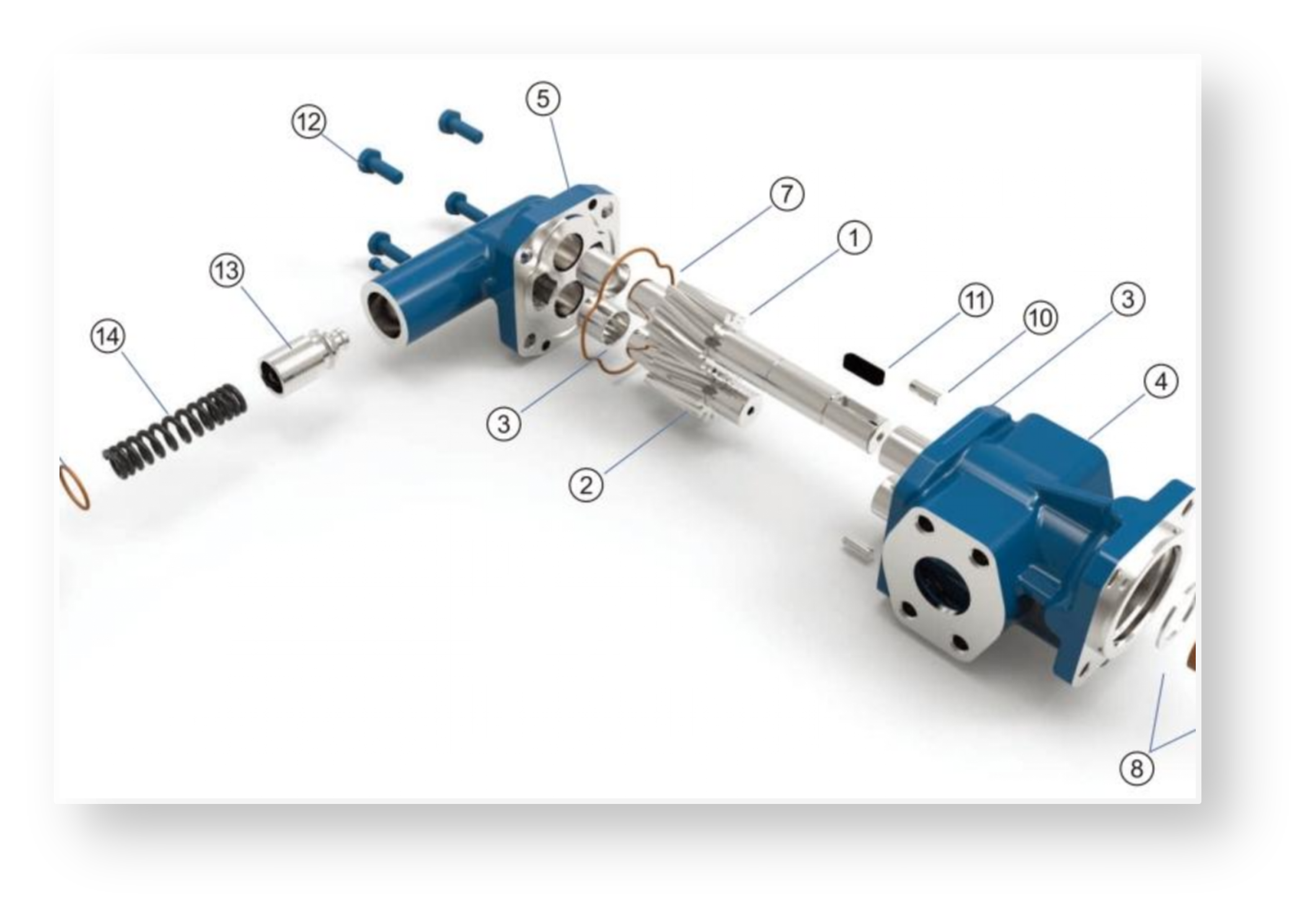
Exploded view of the DK series pump assembly. Image: Deo Machinery Co., Ltd.
Mapping each pump to a duty path
DK630 — high-flow centralized lubrication in heavy industry. The DK630 is positioned for machinery and heavy industry, with documented relevance to steel industry lubrication, mining equipment and construction machinery duties. DEO’s DK series documentation describes the pump family as a helical gear positive displacement pump that delivers oil to friction pairs, circulates hot oil to a matching oil cooler, and supplies constant-pressure oil to auxiliary circuits and filtration loops. A built-in relief valve, adjustable between 5 and 25 bar in the series documentation, provides transient overpressure protection. For a centralized lubrication pump feeding multiple points across a mill stand, a reducer bank or a mining conveyor drive, that combination — high displacement, cooler circulation, integrated relief protection — is the relevant capability, not the displacement figure alone.
PST180 — hydraulic and circulation duty with reversible rotation. The PST180’s documented application set covers hydraulic systems, hydraulic power units, construction machinery, engine lubrication systems, forklifts and telehandlers, automation equipment and industrial cooling systems. Its bidirectional internal gear design suits circuits where flow direction changes or where rotation cannot be fixed during commissioning. With a 1800 rpm maximum speed and a −30 °C to +100 °C range, it is the middle-displacement option in this set — relevant where a lube pump for a hydraulic system must also handle circulation and cooling-loop return.
PSN100 — precision delivery and independent conveying. The PSN100 is documented for lubricating systems, cooling systems and external drive independent conveying systems. Its trochoidal, bidirectional mechanical design and 100 cc/rev displacement place it in lower-volume, more precisely bounded duties: metered feed to a small number of points, cooling-circuit circulation, or conveying where the pump is driven independently of the host machine. Buyers should read “external drive independent conveying” literally — the pump is intended to be driven by a separate power source, which changes the mounting and coupling design.
Where this framework reaches its limits
A decision framework that only lists strengths is a sales document. Three boundaries apply here.
First, the available DEO product data states displacement, speed basis, temperature range and material. It does not publish per-model flow curves, pressure ratings for the PST180 and PSN100, or volumetric efficiency figures at defined operating points. Buyers specifying against a calculated flow or a pressure-sensitive circuit must request those values for the exact model rather than extrapolating from displacement.
Second, ISO 9001 certification at DEO — certificate 16426Q00565R001, issued by Huazhong International Certification and Inspection Group against GB/T 19001-2016/ISO 9001:2015, valid from 7 April 2026 to 6 April 2029 — covers the production of coolers and lubricating oil pumps for mines, ships and hydraulic machinery. That is a quality management system scope. It confirms the production process is certified; it does not certify the performance of a specific pump model in a specific circuit. Buyers who treat a certificate as a substitute for a bench test are misreading what it evidences.
Third, the DK series documentation is explicit that reverse rotation invalidates sealing, that dry running damages shaft bushings and gears in a short time, and that the inlet pipeline must be airtight and no smaller than the pump inlet port. These are installation constraints that override any preference expressed at the quotation stage. A high-displacement pump installed with an undersized suction line will not deliver its rated capability regardless of the model selected.
Market context: why constraint-based selection is gaining weight
Commercial market research cited for this category points in a consistent direction. A consolidated lubrication system market report places the global lubrication system market at USD 863.88 million in 2024 and estimates that 67% of newly commissioned industrial machines in 2024 were equipped with automatic lubrication systems. The same source projects a 6.89% CAGR for electric lubrication pumps, reaching USD 2.7 billion by 2032. These are commercial estimates covering broad categories, not audited lubrication-pump-specific figures, and should be read as directional rather than as planning-grade data.
On the supply side, official US statistics recorded sectoral output of USD 23,000.913 million for pump and compressor manufacturing in 2021. That series covers a broader NAICS sector and must not be attributed to lubrication pumps alone, but it does indicate an established manufacturing base against which specialised suppliers are evaluated.
The compliance dimension is moving in parallel. SKF’s published documentation for its FK grease lubrication pump unit references the EU Machinery Directive, RoHS II, the EMC Directive and standards including EN ISO 12100, EN 809, EN 60204-1, EN 60947-5-1 and EN IEC 60947-5-2. A buyer screening lubrication pumps for European installation should expect suppliers to state which directives and standards their documentation references, and should treat silence on that point as an open question rather than a pass.
Compared with the traditional approach: nameplate plus price
The traditional procurement pattern for industrial lubrication pumps compares nameplate displacement and unit price, then awards to the lowest compliant bid. It is fast, and for low-criticality transfer duty it is adequate.
Its weakness is that it treats three mechanically different pumps as interchangeable capacity. The DK630, PST180 and PSN100 differ in drive concept, directionality, material options and documented application scope before price is considered. A displacement-plus-price comparison will usually favour the smaller, cheaper unit and only later expose the mismatch — typically as a flow shortfall, a sealing failure after a reverse-rotation event, or an inlet cavitation problem traced back to piping.
The framework proposed here costs the buyer one additional step: define the duty path first, then compare. That step is where most of the avoidable cost in lubrication pump procurement actually sits. The limitation of the framework is equally real — it cannot substitute for the manufacturer’s flow and pressure data at the exact duty point, which still has to be requested.
Purchasing terms and acceptance checkpoints
DEO’s stated commercial terms for these pump lines are a minimum order quantity of 1 unit, a lead time of 35–45 days and a monthly capacity of 2500 units, with OEM/ODM production available including colour and oil pump customisation, and 100% testing as the stated quality control basis. Export markets are listed as Europe and America and Southeast Asia, with additional markets in Australia; export represents approximately 20% of output.
Those terms define the commercial envelope. The following checkpoints define whether what arrives matches what was specified:
- Nameplate verification. Confirm model, displacement and speed basis on the nameplate against the purchase order, including whether the stated speed refers to the motor or the pump shaft.
- Material confirmation. Where the PST180 is ordered, confirm in writing whether the housing is GG250 grey cast iron or QT500 ductile iron, and match it to the shock and vibration profile of the installation.
- Rotation marking. For DK series units, verify the rotation direction is marked and that site wiring or coupling will not reverse it. For PST180 and PSN100, confirm bidirectional operation is intended in the circuit.
- Relief valve setting. For DK series pumps, confirm the built-in relief valve setting against the system requirement; the series documentation describes an adjustable range of 5–25 bar, not a fixed factory value.
- Test record. Request the 100% test record and check which parameters were measured, since “tested” without a parameter list is not verifiable.
- Certification currency. Verify ISO 9001 certificate 16426Q00565R001 against the issuing body and confirm it remains valid for the delivery period.
- Customs classification. Lubrication and oil pumps for import into the United States are commonly classified under HTS heading 8413.30; confirm the exact subheading with the freight forwarder before shipment.
- Suction line design. Confirm inlet pipe diameter is not smaller than the pump inlet port and that the line is airtight, per the installation constraints in DEO’s DK series documentation.
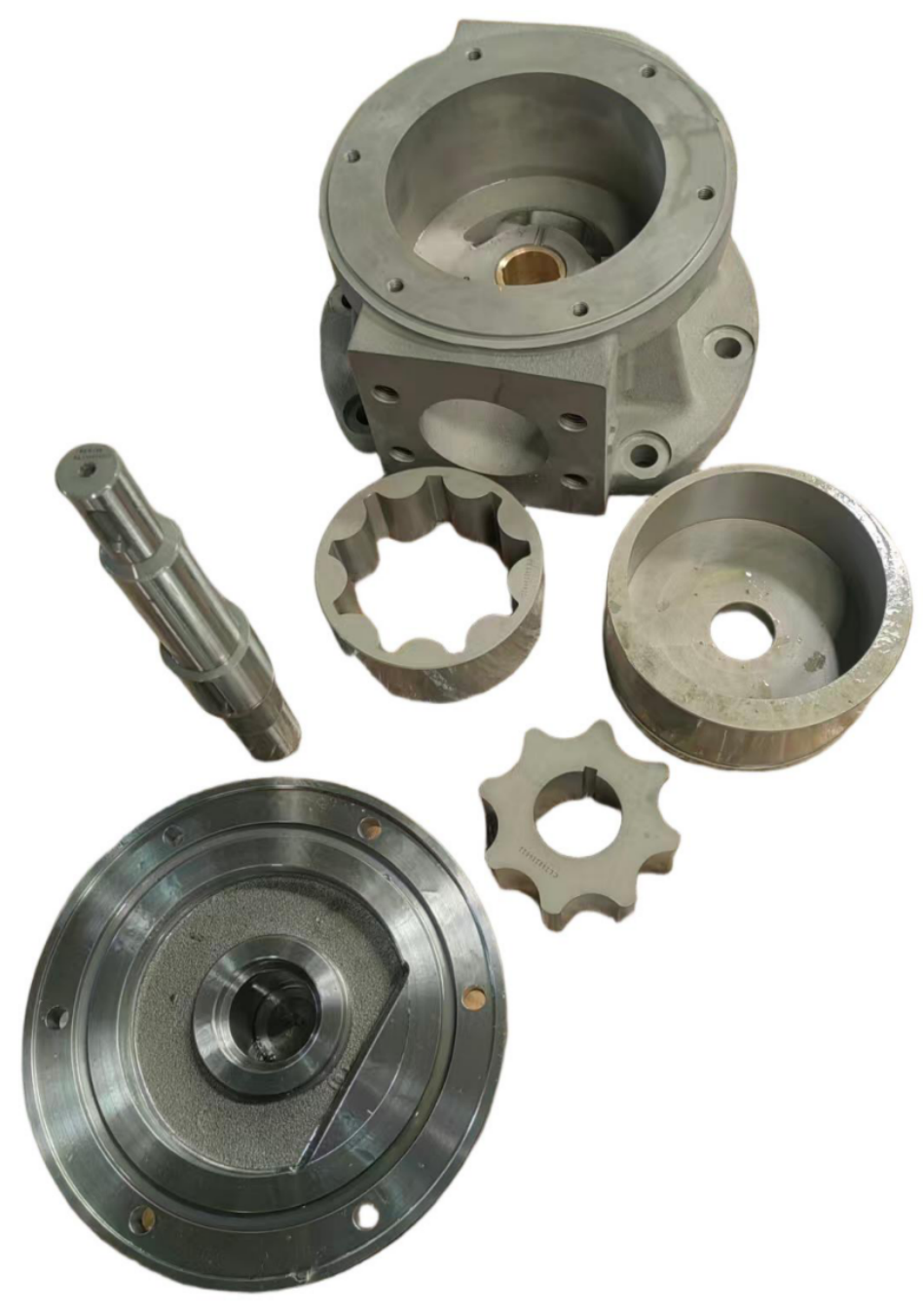
Physical spare parts of the PSN100 trochoidal pump. Image: Deo Machinery Co., Ltd.
Future outlook
Two pressures are likely to change how lubrication pumps are specified over the next several years. The first is documentation. As more buyers screen pumps against EU directives and referenced standards before RFQ, suppliers who publish their compliance references and test parameters in product documents will face fewer clarification cycles than those who publish displacement only. The second is the direction of automatic lubrication adoption: with a majority of newly commissioned machines already equipped with automatic systems, the specification conversation shifts from whether to automate to how precisely the pump matches the circuit.
Peer-reviewed work on intelligent lubricating devices for CNC machine tool feed systems, published in 2024, points to periodic oil supply being treated as a controllable process variable rather than a fixed setting. That is consistent with the direction the market data suggests, although no verified quantitative link between smart-manufacturing growth and lubrication pump demand exists in the available evidence. For buyers, the practical implication is modest but useful: specify pumps whose duty data can be documented, because the next procurement cycle will ask for it.
DEO publishes its pump, cooler and system range in a downloadable product brochure, which buyers can use as the starting reference for RFQ documentation.
Download the DEO product brochure (PDF) · cndeo.com
FAQ
What displacement do the DK630, PST180 and PSN100 deliver per revolution?
The DK630 displaces 630 cc/rev, the PST180 displaces 180 cc/rev and the PSN100 displaces 100 cc/rev. The ratio between the three is 630:180:100. Displacement per revolution is not the same as delivered flow, which also depends on shaft speed, volumetric efficiency and system back pressure.
What temperature range applies to these lubrication pumps?
The PST180 and PSN100 are both rated from −30 °C to +100 °C. DEO’s DK series documentation states a fluid temperature range of −40 °C to +100 °C and an oil viscosity range of 12–20000 cSt for the series. A model-specific temperature rating for the DK630 should be confirmed with the supplier.
Does the choice between GG250 grey cast iron and QT500 ductile iron matter for the PST180?
It matters because the two materials respond differently to shock and vibration loading. The PST180 is documented as available with either a GG250 grey cast iron housing or a QT500 ductile iron housing, while the DK630 and PSN100 are recorded in QT500. On applications with pressure spikes or mobile vibration, the housing grade should be stated explicitly in the purchase order.
What does DEO’s ISO 9001 certification actually cover?
Certificate 16426Q00565R001, issued by Huazhong International Certification and Inspection Group against GB/T 19001-2016/ISO 9001:2015 and valid from 7 April 2026 to 6 April 2029, covers production of coolers and lubricating oil pumps for mines, ships and hydraulic machinery. It certifies the quality management system for that production scope; it does not certify the performance of a specific pump model in a specific circuit.
Can these pumps be customised, and what are the standard commercial terms?
DEO offers OEM/ODM production on these pump lines, with colour and oil pump customisation listed as available options. Stated terms are a minimum order quantity of 1 unit, a lead time of 35–45 days and a monthly capacity of 2500 units, with 100% testing as the quality control basis.
Which of the three pumps is suitable for a steel or mining lubrication system?
The DK630 is the model positioned for machinery and heavy industry, with documented relevance to steel industry lubrication, mining equipment and construction machinery duties. The PST180 is documented for hydraulic systems, hydraulic power units, construction machinery and engine lubrication, and the PSN100 for lubricating systems, cooling systems and external drive independent conveying systems. Final selection should be confirmed against the duty point, not the application label alone.
How should a buyer verify a lubrication pump at acceptance?
Verification should cover nameplate data against the purchase order, housing material grade, rotation direction marking, relief valve setting where applicable, the parameters measured in the 100% test record, current validity of the ISO 9001 certificate, and confirmation that the suction line diameter and airtightness meet the installation requirements stated in the supplier’s documentation.
Have Questions or Need More Details?
Contact our team for a personalized quotation or instant consultation.
Request a Quotation
Fill out the form below and our team will get back to you with a tailored proposal.
WhatsApp Direct Chat
Prefer to chat in real-time? Message us on WhatsApp for instant assistance & quick answers.
- Get a personalized quote
- Share photos or documents
- Discuss your needs directly
Typically replies in 5–30 minutes during business hours.