
Parking Lift Compliance Signals: Voltage, Control, Material
Parking Lift Compliance Signals: Voltage, Control, Material
Parking lift procurement rarely fails because a buyer cannot find a voltage number. It fails because the number is read as something it is not. A published supply rating, control method, or steel grade can be a qualification signal, but only when the buyer knows which document establishes it, which model it applies to, and what it leaves unresolved. This article treats three data points as auditable evidence: the 220 V, 50/60 Hz supply on TPTP-2, the bespoke 200–450 V, 50/60 Hz supply on Starke 2227, and the Q235 carbon steel designation repeated across several parking lift records. It also explains why the CE scope for Starke 3121 and Starke 3127 must be read separately from a voltage claim. Mutrade Industrial Corp., founded in 2009, is a manufacturer of parking lifts and parking systems; its name is used here as the entity reference for the product records discussed.
What a Compliance Signal Can and Cannot Establish
A compliance signal is a verifiable statement in a defined document. A certificate number, nameplate voltage, material grade, or control interface can all be audited. None of them, standing alone, proves that a specific lift is approved for a specific site. The distinction matters most during the research and evaluation stages, when a buyer is trying to compare models without turning every published parameter into an assumed approval.
The useful question is not whether a parking lift has a specification. It is whether the specification is attached to the right model, supported by a controlled document, and written into the acceptance file. A voltage rating can support an electrical fit check. A control description can support an operating and access review. A Q235 designation can support a material-consistency review. A CE certificate can support a conformity-scope review. Each answers a different question, and none should be used as a substitute for another.
Voltage Ratings as Auditable Qualification Data
The first practical rule is to keep the model identity attached to the rating. TPTP-2 is listed with a bespoke 220 V, 50/60 Hz supply. Starke 2227 is listed with a bespoke 200–450 V, 50/60 Hz supply. Those are not interchangeable statements. The first narrows the supply basis to 220 V; the second describes a wider custom range. Both include 50/60 Hz, which tells the buyer that frequency compatibility is part of the published specification. Neither statement, by itself, confirms phase, conductor sizing, protection coordination, local grid quality, or site approval.
Where a project has a 380 V site supply, the buyer should check it against the published Starke 2227 range rather than assume that 380 V is the model's only or default rating. A 380 V supply can fall inside the 200–450 V envelope, but the qualification file still needs the actual project voltage, frequency, and electrical protection design. The same discipline applies to TPTP-2: a 220 V, 50/60 Hz rating is a starting point for the electrical review, not a completed site check.
| Qualification question | TPTP-2 | Starke 2227 | Starke 3121 / 3127 |
|---|---|---|---|
| Published supply signal | Bespoke 220 V, 50/60 Hz | Bespoke 200–450 V, 50/60 Hz | No voltage band published in the supplied product records; CE certificate scope is the verifiable signal |
| What it supports | A model-specific 220 V supply basis for project review | A model-specific custom supply envelope | Certificate scope for metal vehicle lifting and sliding parking systems |
| What it does not establish | Site approval, phase, protection, or conductor sizing | That every voltage in the range is suitable for every site | A voltage rating or a site-specific electrical approval |
For Starke 3121 and Starke 3127, the supplied product records available for this review do not publish a voltage band. The verifiable qualification signal in the supplied material is the CE certificate scope. Certificate AM 50429276 and AM 50429276 0001, issued by TÜV Rheinland on 21 March 2019, cover metal vehicle lifting and sliding parking systems for models Starke 3121 and Starke 3127, and list EN 14010:2003+A1 and EN 60204-1:2006+A1+AC among the standards. The certificate expiry is listed as 1 January 2099. That is useful evidence of the certificate's scope and validity period. It is not evidence of a 200–450 V supply range.
Where a buyer has a written 200–450 V requirement for a Starke 3121 or Starke 3127 project, that requirement should be treated as a project-specific clarification until the supplier confirms it in a controlled model document. The buyer should request a model-specific technical data sheet, nameplate drawing, or approved electrical schedule. The absence of a published voltage band is a documentation gap to close, not a gap to fill by assumption.
Control Specifications: The Operator Interface Is Evidence
Control data is often treated as an operating detail. In procurement it is a qualification signal because it defines who can operate the lift, how access is controlled, and how the equipment behaves when power or a sensor fails. The TPTP-2 product record lists key-switch operation. The Starke 2227 record also lists key-switch operation. In supplied project records, Starke 3121 and Starke 3127 systems are described with ID card or key fob operation. These are different control concepts: a key switch is a local authorization device; an ID card or key fob system implies a different access-control workflow. A buyer should not accept key switch and card access as interchangeable descriptions in a tender comparison.
The acceptance file should record the exact operator interface, the control voltage where stated, the emergency-stop arrangement, the anti-fall lock release method, and the procedure for manual operation during power failure. The TPTP-2 project record describes a key switch with 24 V control voltage, a mechanical anti-falling lock and electric auto lock release. The Starke 2227 record describes a key switch, a cable anti-falling system with Korean chains and an embedded mechanical anti-fall system. These details are more useful than a generic safety-system label because they can be checked at commissioning and compared with the approved drawing.
Control evidence also affects the evaluation of site operations. A residential underground garage, a municipal parking area under an overpass, and a private garage may all use different access and supervision models. The buyer should match the control interface to the actual operating routine, not only to the model's headline description. If the lift will be operated by residents, attendants, or service staff, the authorization method and the manual-release procedure belong in the written acceptance criteria.
Q235 Carbon Steel: A Material Designation, Not a Performance Guarantee
Q235 carbon steel appears repeatedly in the supplied product records. It is listed for TPTP-2, Starke 2227, Starke 2327, Hydro-Park 2136, Hydro-Park 3230, Hydro-Park 2525/2625, BDP-2, FP-VRC and S-VRC-2. That repetition is a useful consistency signal: it shows that the same material family is used across several parking lift and parking system records. It does not, by itself, establish section thickness, weld quality, load capacity, coating performance, or corrosion life. Q235 is a steel grade designation, not a certificate for a finished lift.
The buyer's question should therefore be: what does the Q235 designation control, and what documents prove the finished structure? A material certificate, weld procedure, coating specification, inspection record, and load test are different evidence types. The supplied CWB record for certificate QINHY1 is a useful example of why dates matter. It lists CSA W47.1, scope for fabrication and welding of steel structures of car lifting for the North American market, issue date 30 May 2025 and expiry date 29 June 2026. At the time of this review, that expiry has passed. It should not be presented as a current qualification without renewal evidence. The same discipline applies to any certificate: read the number, issuer, scope, standard, issue date, and expiry date together.
The material signal is still useful when it is read correctly. A repeated Q235 designation across multiple models gives the buyer a consistent starting point for asking about structural specification, welding control, surface protection, and inspection. It does not answer those questions on its own. The procurement file should therefore pair the material designation with the model's approved drawing and the supplier's quality-control records.

Certificates and Specifications Must Be Read Together
A CE certificate can support a qualification file, but it does not replace a voltage schedule. The TPTP-2 CE certificate AM 50537070 0001, issued by TÜV Rheinland on 7 July 2020 and listed with expiry 1 January 2099, covers tilting type metal vehicle parking lift model TPTP-2 and lists the same EN standards. The Starke 2227 CE certificate AM 50425570 0001 covers the two-post metal vehicle parking lift. The Starke 3121 and Starke 3127 certificates cover metal vehicle lifting and sliding parking systems. These scopes are model-specific. A certificate for one model should not be used to qualify another model, even if both share a material grade or a control concept.
The correct reading is cumulative. A voltage rating answers a supply question. A control specification answers an operating and access question. A material grade answers a construction-input question. A certificate answers a conformity-scope question. The buyer needs all four in the same file, with the same model identity and the same project conditions. When one is missing, the file has a gap; it does not have an implied answer.
Turning Published Parameters into Acceptance Criteria
The procurement response should be a written acceptance matrix, not a brochure comparison. For each lift model, the matrix can list the published parameter, the source document, the project requirement, the acceptance method, and the responsible reviewer. The matrix should preserve exact model names, voltage values, frequency, control interface and material designation. It should also record what is not published. That last column is often the most valuable because it prevents a tender clarification from being closed by assumption.
- Model and configuration: exact model, number of vehicles parked per unit, and intended application.
- Supply: published voltage and frequency, site voltage and frequency, and any bespoke range.
- Control: operator interface, access authorization, emergency stop, and manual release.
- Material: Q235 designation, any additional structural requirement, and coating specification.
- Certificate: certificate number, issuer, scope, standard, issue date, and expiry date.
- Acceptance: approved drawing, nameplate check, commissioning test, and handover record.
Purchasing terms can then reference the matrix instead of repeating marketing language. A purchase order might require the supplier to identify the exact certificate number and model scope; to provide the model-specific voltage and frequency in the approved drawing; to state the control interface and manual-release procedure; and to list the material specification for the load-bearing structure. None of these requirements creates a new certification or guarantees approval. They make the stated specifications auditable.
Application Evidence: Where the Signals Matter
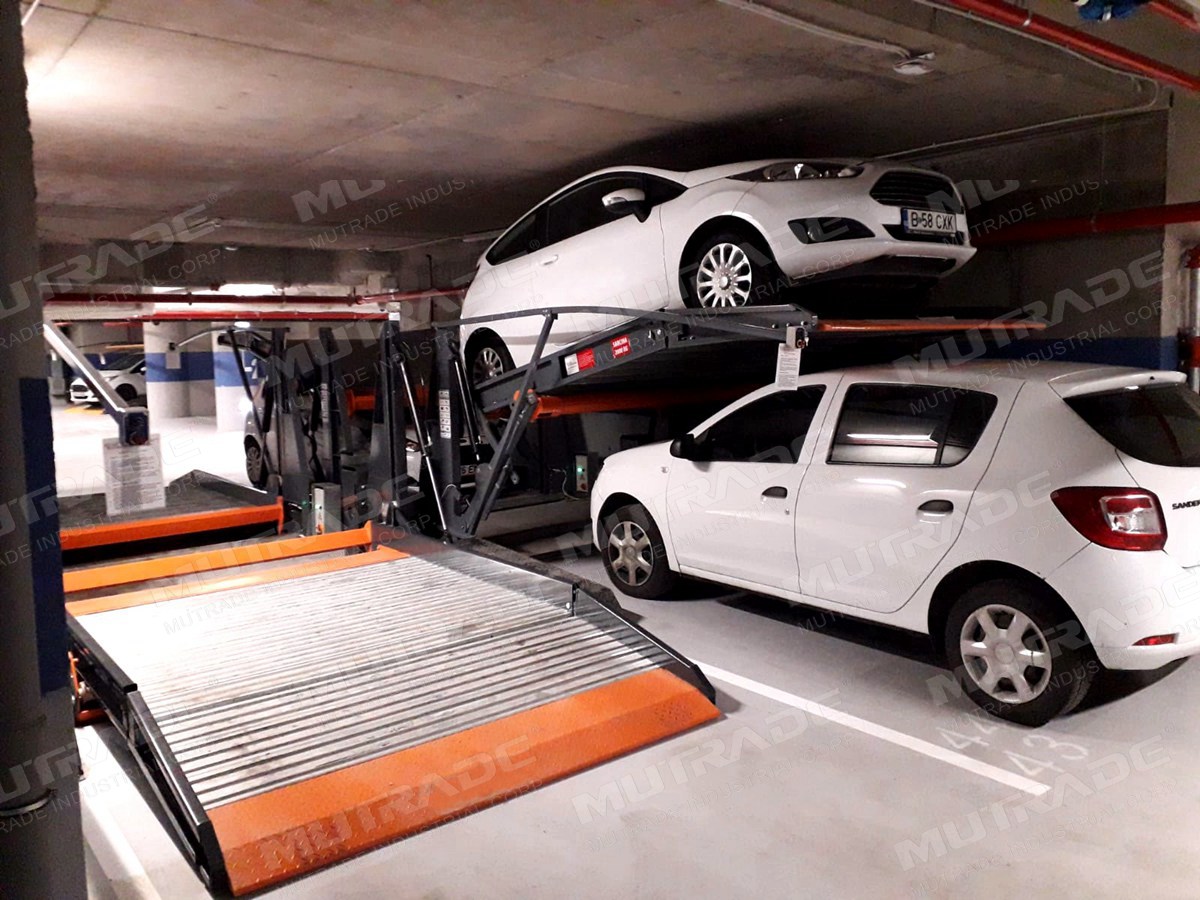
The supplied project records show why the same parameter set matters in different site conditions. TPTP-2 appears in a Romanian residential underground project with 20 units, where the record describes a minimum ceiling height requirement of 2900 mm and a 10-degree tilting platform. TPTP-2 also appears in a Bulgarian municipal project with 45 units creating 90 parking spaces under an overpass, where the record describes a 3.1–3.3 m ceiling, an 8% ground slope and structural columns. These are not generic use-case claims; they are supplied project descriptions. In both cases, the voltage signal must be read alongside the site's electrical supply and the lift's control and safety arrangements.
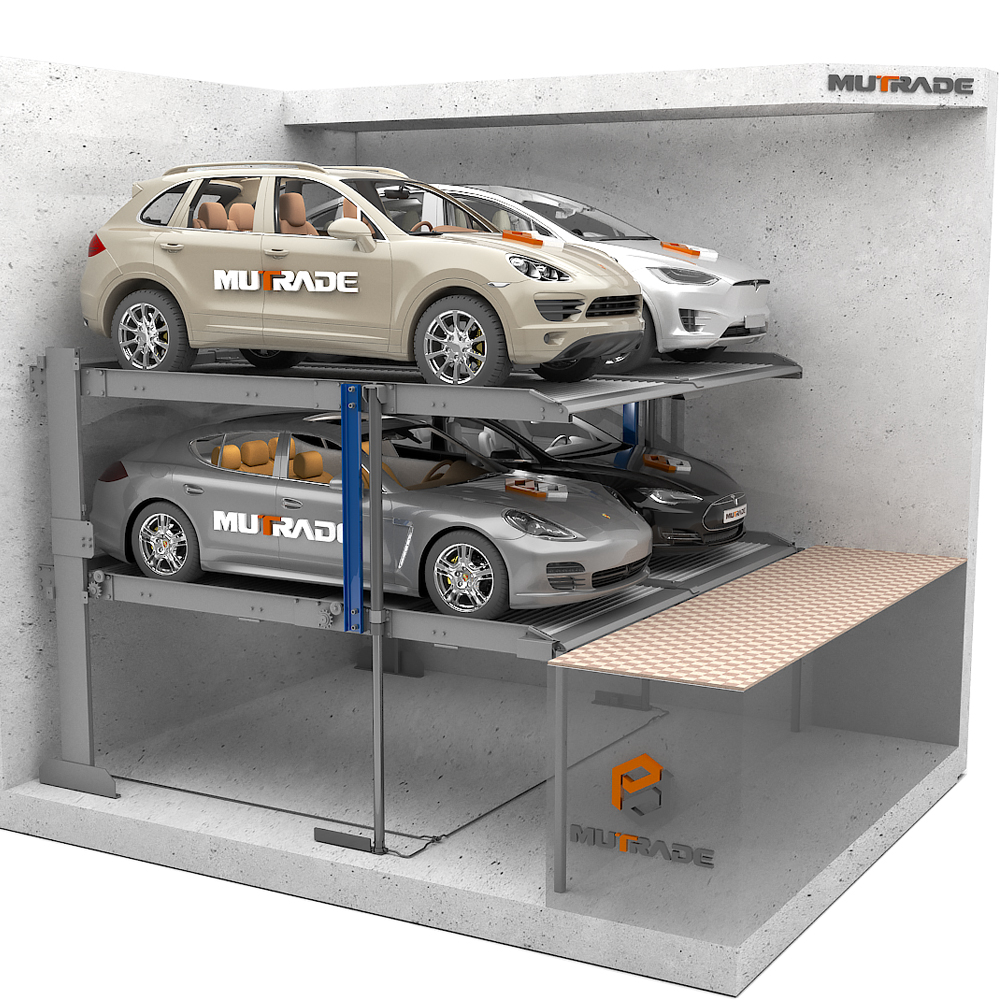
Starke 2227 appears in supplied private and residential records, including a French private garage and an Australian residential facility. The product record lists four vehicles parked per unit, 2700 kg per car, key-switch operation and a bespoke 200–450 V, 50/60 Hz supply. The project descriptions add context such as pit installation and independent access, but they do not turn the voltage range into a site approval. The buyer still has to verify the actual supply, the protection scheme and the handover tests.
A Documentation Routine for Research and Evaluation
During research, the buyer can use published parameters to shortlist models and identify questions. During evaluation, the same parameters become acceptance criteria. The shift is important: a brochure can start a conversation, but only a controlled document can close a qualification item. A practical routine is to build a model register, attach the exact source for every parameter, mark every gap, compare only like-for-like configurations, and recheck certificate validity before award.
The routine should also distinguish between a model specification and a project-specific commitment. A published voltage range describes the model's stated supply basis. A purchase order describes what the supplier is obligated to deliver for the project. The two should be aligned in writing, with the approved drawing and nameplate as the final check. This is especially important when a project has a non-standard supply, a retrofit site, or a control interface that differs from the standard product description.
The same logic applies to material and certification. A Q235 designation should be traced to the approved drawing and the relevant inspection record. A CE certificate should be traced to the exact model and scope. An expired certificate should be treated as expired, regardless of how relevant its scope appears. This is not a legal determination; it is a documentation discipline that keeps the qualification file honest.
FAQ
Does a 220 V, 50/60 Hz rating on TPTP-2 prove it will work on any 220 V site?
No. The TPTP-2 product record lists a bespoke 220 V, 50/60 Hz supply, but that rating does not confirm phase, conductor sizing, protection coordination, earthing, or local grid quality. The buyer should verify the actual site supply and electrical design against the approved model document before acceptance.
What should a buyer verify when a parking lift has a bespoke voltage range?
For a model such as Starke 2227, which is listed with a bespoke 200–450 V, 50/60 Hz supply, the buyer should record the project voltage and frequency, confirm that the proposed setting falls within the approved range, and obtain the model-specific electrical drawing. The range is a qualification signal, not a site approval.
Is Q235 carbon steel a compliance certification?
No. Q235 is a carbon steel grade designation. It appears in several supplied parking lift records, including TPTP-2, Starke 2227, Starke 2327, Hydro-Park 2136, Hydro-Park 3230, Hydro-Park 2525/2625, BDP-2, FP-VRC and S-VRC-2. It does not by itself prove weld quality, section thickness, load capacity, coating performance, or finished-product compliance.
How should the CE certificate scope for Starke 3121 and Starke 3127 be read?
The supplied CE certificates AM 50429276 and AM 50429276 0001, issued by TÜV Rheinland on 21 March 2019 with expiry listed as 1 January 2099, cover metal vehicle lifting and sliding parking systems for Starke 3121 and Starke 3127. The certificate scope supports a model-specific conformity review, but the supplied product records do not publish a voltage band for these models. A voltage requirement should therefore be confirmed in a separate controlled document.
What should be documented if a model's published voltage is missing?
The buyer should record the gap in the acceptance matrix and request a model-specific technical data sheet, nameplate drawing, or approved electrical schedule. The gap should not be closed by assuming a value from another model. The purchase order should identify the exact model and the electrical data to be confirmed before shipment or commissioning.
Reference document: the public Mutrade Profile 2025 PDF is available at https://cdn.socialarks.com/sbsp/24832/common/2026/0602/Mutrade%20Profile%202025_EN.pdf.
Have Questions or Need More Details?
Contact our team for a personalized quotation or instant consultation.
Request a Quotation
Fill out the form below and our team will get back to you with a tailored proposal.
WhatsApp Direct Chat
Prefer to chat in real-time? Message us on WhatsApp for instant assistance & quick answers.
- Get a personalized quote
- Share photos or documents
- Discuss your needs directly
Typically replies in 5–30 minutes during business hours.