
Polyester Polyol for Controlled-Release Fertilizer Coating FAQ
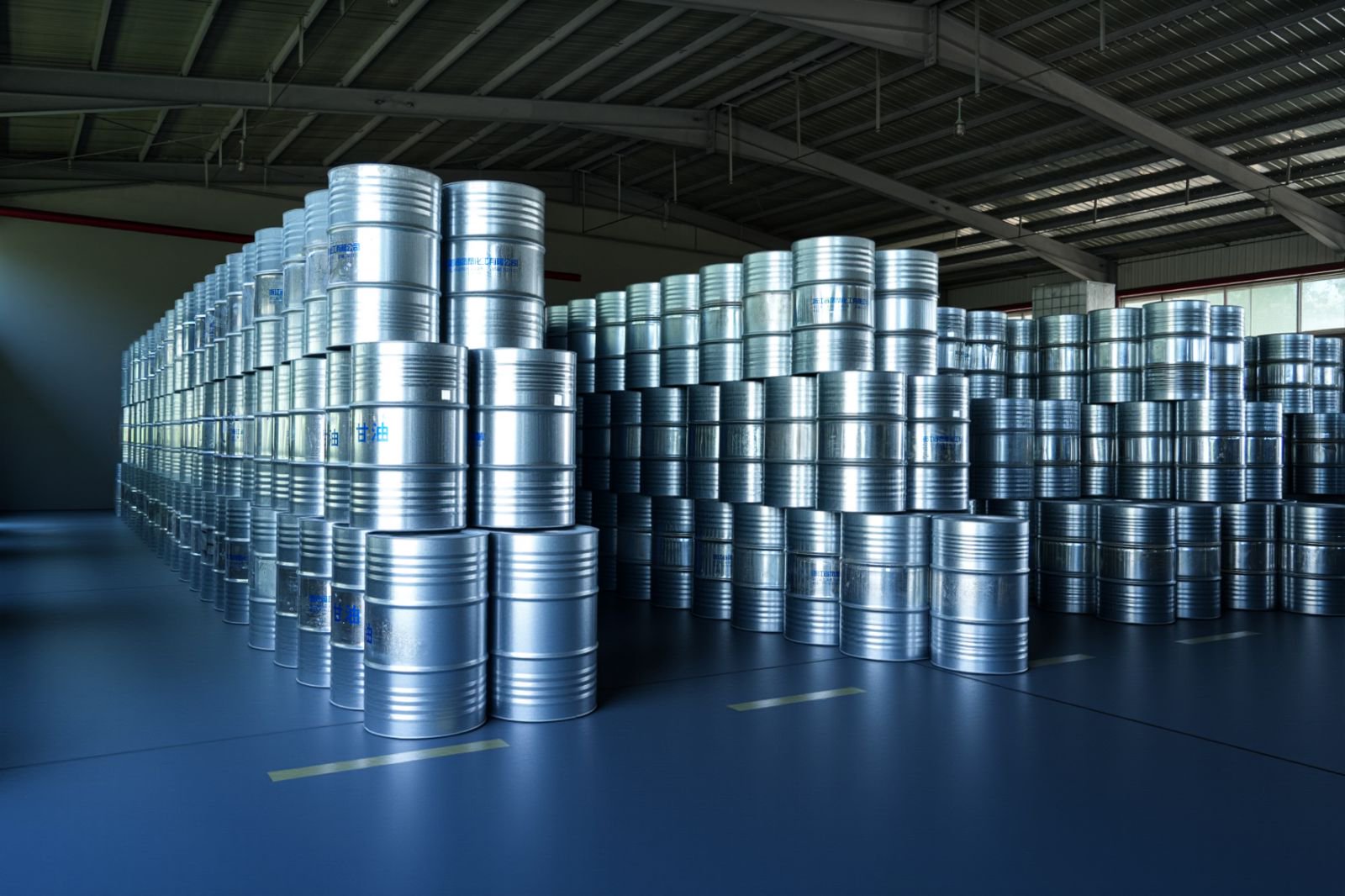
Bulk polyester polyol staged for shipment — the resin backbone of polyurethane controlled-release fertilizer coatings.
Controlled-release fertilizer performance is decided at the surface of the granule, not inside it. A urea or NPK core releases nitrogen at whatever rate soil moisture dictates; a polyurethane shell wrapped around that core is what turns an ordinary fertilizer into a predictable, multi-week nutrient delivery system. That shell governs water ingress, nutrient diffusion, and the mechanical survival of the granule through blending, bagging, transport, and field application.
Polyester polyol is the hydroxyl-terminated resin component that reacts with isocyanate to build the shell. In a coating formulation, the polyol sets crosslink density, film rigidity, hydrolytic stability, and cure behaviour — the four variables that ultimately define the release curve a coating line can hold. Choosing the wrong grade rarely fails immediately; it shows up as drift in release rate, brittleness after bagging, or a cure profile that moves whenever ambient humidity changes.
This article answers the technical and procurement questions that formulators, coating-line engineers, and sourcing teams raise when specifying polyester polyol for controlled-release fertilizer coating. It uses XINFA's XF-270, XF-B-3, and XF-B-4 grades as the working reference, states published parameters where they exist, and separates what is documented from what must be confirmed on a batch certificate of analysis.
Why Fertilizer Coating Grades Are a Procurement Decision
The coating is a small fraction of total fertilizer mass but a disproportionate share of technical risk. A supplier can deliver a polyol that meets a headline hydroxyl value and still disrupt a coating line if acid value drifts, moisture creeps upward, or the batch-to-batch profile is inconsistent. Most coating failures traced back to raw material are not catastrophic events; they are slow, cumulative deviations that appear as inconsistent release data six weeks into a season.
Buyers entering the specification stage typically need to resolve three questions before commercial negotiation is meaningful:
- What hydroxyl value matches the isocyanate index the coating line is already running?
- What moisture ceiling protects the isocyanate balance in the coating formulation?
- What batch-level evidence accompanies each delivery, and does it include the parameters that actually move on the line?
Answering those three questions converts a commodity purchase into a specification-driven supply agreement — which is the shift most coating producers make once they move from trial batches to seasonal volumes.
XINFA Fertilizer-Coating Polyol Grades at a Glance
Hengshui Xinfa Polyurethane Materials Co., Ltd. (XINFA) is a Chinese manufacturer of polyester polyol and polyurethane auxiliary materials, established in 2010 with its factory in the Salt Chemical Circular Economy Park in Jizhou City, Hebei Province. The company operates a 25,000 square metre site with more than 60 employees, including 13 management and research and development technicians, and has achieved a large-scale production capacity of 50,000 tons of polyester polyol series products annually through the introduction of more than 30 sets of intelligent equipment.
Three grades are commonly referenced when buyers specify for controlled-release fertilizer coating: XF-270, XF-B-3, and XF-B-4.
| Grade | Documented parameters | Feedstock basis |
|---|---|---|
| XF-270 | Hydroxyl value 260 ± 10 mgKOH/g; acid value ≤ 3 ± 0.2 mgKOH/g; moisture content ≤ 0.15% | PA, PTA, AA, DEG, GLY |
| XF-B-3 | Grade-specific values issued on the current technical data sheet and confirmed per batch certificate of analysis | PA, PTA, AA, DEG, GLY |
| XF-B-4 | Grade-specific values issued on the current technical data sheet and confirmed per batch certificate of analysis | PA, PTA, AA, DEG, GLY |
XF-B-3 and XF-B-4 belong to the same aromatic polyester polyol family as XF-270 and share its feedstock logic. Because coating lines differ in isocyanate index, catalyst package, and target release duration, buyers should treat the technical data sheet as the starting point and the batch certificate of analysis as the binding record.
Manufacturing is supported by quality and environmental management systems certified to ISO 9001, ISO 14001, and ISO 45001. The polyester polyol series sits alongside a broader polyurethane materials portfolio that includes catalysts and flame retardants — an arrangement that matters later in this article when matched catalyst selection is discussed.
How Hydroxyl Value, Acid Value, and Moisture Drive Coating Performance
Hydroxyl value expresses how many reactive hydroxyl groups are available per gram of polyol, measured in mgKOH/g. It determines the stoichiometric balance with isocyanate. XF-270's hydroxyl value of 260 ± 10 mgKOH/g is a relatively high figure, which means a lower equivalent weight and, at a fixed isocyanate index, a more heavily crosslinked network. For a fertilizer coating, that generally translates into a firmer, more rigid film — desirable when the coating must survive mechanical handling without deforming, but a variable that must be balanced against flexibility requirements.
Acid value measures residual acidity in the polyol. It matters because acidic species can interfere with the catalytic activity that drives the urethane reaction. XINFA specifies XF-270 at ≤ 3 ± 0.2 mgKOH/g — a low ceiling that keeps cure speed predictable when the formulator adjusts the catalyst package. A drifting acid value is one of the more common causes of unexplained cure-time variation on a coating line.
Moisture content is the parameter most often underestimated. Water reacts directly with isocyanate, consuming it and generating carbon dioxide and urea linkages. In a thin coating film, that shows up as micro-voids, uneven film thickness, and a release curve that no longer matches the formulation model. XF-270 is specified at ≤ 0.15% moisture, and keeping the material within that band depends as much on packaging integrity and handling discipline as on production control.
Moisture control and per-batch testing are the parameters most directly linked to coating-film consistency.
Raw Material Basis: What PA, PTA, AA, DEG, and GLY Contribute
The XINFA coating grades are built on a feedstock set of phthalic anhydride (PA), purified terephthalic acid (PTA), adipic acid (AA), diethylene glycol (DEG), and glycerol (GLY). Understanding what each contributes explains why the resulting polyol behaves the way it does in a coating formulation.
PA and PTA are aromatic diacids. The aromatic ring structure they introduce into the polymer backbone is the main source of rigidity and thermal stability, and it is the reason these grades are described as aromatic polyester polyols. AA is an aliphatic diacid; it introduces chain flexibility and gives the formulator a lever to soften a film that would otherwise be too brittle for handling and field conditions. DEG functions as a diol chain extender and contributes ether linkages that reduce crystallinity, keeping the polyol workable at processing temperatures. GLY is a triol and provides branching, which raises functionality and increases crosslink density in the cured film.
Because the feedstock set defines the polyol's behaviour, verifying the feedstock basis is part of verifying the grade. Buyers comparing quotations from different suppliers should compare backbone chemistry, not only headline hydroxyl values.
Where These Grades Fit: Coating, and Adjacent PU Applications
The primary fit for XF-270, XF-B-3, and XF-B-4 is controlled-release fertilizer coating, where the polyol reacts with isocyanate to form the release-controlling shell around each granule. Within that application, the practical variables a formulator controls are the isocyanate index, the catalyst package, the coating thickness applied per granule, and the curing conditions on the line. The polyol supplies the backbone; the rest of the system is tuned around it.
The same production base supplies other polyester polyol segments. XINFA's materials are widely used in pipeline insulation, panels, household appliances, exterior wall insulation, and cold storage. That multi-segment exposure is relevant to fertilizer coating buyers for a practical reason: a supplier running several application segments has process discipline built around varied viscosity, hydroxyl value, and reactivity requirements, and it can absorb demand shifts without stopping a line. It also means capacity is shared, which is a scheduling consideration rather than a quality one.
Market Context: Aromatic Polyester Polyol Demand Is Being Pulled from Several Directions
Category-level data supports planning for tighter rather than looser availability. Grand View Research estimated the global polyester polyol market at USD 9,654.2 million in 2024, projecting it to reach USD 15,033.3 million by 2033. The same source placed Asia Pacific at a 43.7% revenue share in 2024, with China expected to grow at the highest CAGR of 5.2% through 2033.
The aromatic sub-segment, which is the chemistry family used in XF-270 and the XF-B grades, is tracked separately. Persistence Market Research valued the global aromatic polyester polyols market at USD 1.9 billion in 2026, projecting growth at a CAGR of 5.9% to USD 2.8 billion by 2033. Grand View Research also reported that aromatic polyester polyols held a 61.4% market share of the bio-based polyester polyol from bio-succinic acid market in 2024 — evidence that the aromatic backbone remains the reference chemistry even as feedstock routes diversify.
Two adjacent demand signals are worth tracking. First, polyester polyols for rigid PU and PIR insulation applications are a key volume anchor, driven in part by the EU Energy Performance of Buildings Directive (EU) 2024/1275. Insulation and fertilizer coating draw on overlapping aromatic polyester polyol capacity, so agricultural coating buyers compete for allocation with a much larger construction-driven market. Second, the cure chemistry itself has its own supply base: the global polyurethane catalyst market was valued at USD 2.46 billion in 2024, with amine catalysts leading at 28.6% revenue share, while the Triethylenediamine (TEDA) market was estimated at USD 0.74 billion in 2024 and projected to grow at a 5.1% CAGR to USD 1.22 billion by 2034.
The practical reading for a fertilizer coating buyer is straightforward: secure annual allocation early, and prefer suppliers who can supply the polyol and the catalyst package together, because disruption on either side stops the coating line.
Comparison with Traditional Options — and Where the Limits Are
Fertilizer coating formulations have historically drawn on several polyol routes. Aliphatic polyester polyols offer flexibility and can be easier to process, but generally deliver lower rigidity and thermal stability than aromatic systems, which can matter where coated granules face elevated temperatures in storage. Polyether polyols resist hydrolysis well but typically provide lower mechanical strength and poorer solvent and thermal performance in thin-film coating applications. Aromatic polyester polyols, including the PA- and PTA-based grades described here, sit at the rigidity and stability end of that spectrum, with the trade-off being that they demand tighter moisture control and a properly matched catalyst system.
On supplier positioning, XINFA's comparison documentation against American brands reports 10–20% cost savings on comparable specifications, together with customized service support. Buyers should treat comparative cost figures as a starting point for their own landed-cost calculation — freight, duty, packaging format, and inventory carrying cost vary by destination, and a nominal price advantage can narrow considerably once those factors are included.
There are real boundaries to be aware of before committing volume:
- Batch-to-batch fluctuation is an industry-wide risk, not a theoretical one. XINFA addresses it with more than 30 sets of intelligent production equipment, automated control and standardized processes, and inspection for every batch. Buyers should still compare each incoming certificate of analysis against their own approved range rather than assuming consistency.
- Moisture sensitivity constrains logistics. A ≤ 0.15% moisture specification is only meaningful while the packaging remains sealed. Extended open-air transfer, partially used drums, and humid storage conditions can push moisture above specification before the material reaches the mixing tank.
- Lead time is predictable, not instant. Typical production lead time runs 15–20 days. Buyers cannot treat this grade as a spot-replacement item for an unplanned line stoppage.
- Formulation transfer is not automatic. A polyol validated on one coating line may need index or catalyst adjustment on another, because granule size, coater type, and target release duration differ. Trial validation is a required step, not a formality.
- Capacity is shared across segments. With exports representing a minority share of output and the majority of production serving domestic and multi-segment demand, overseas buyers planning large annual programmes should confirm allocation and scheduling during contract negotiation.
Future Outlook
Three developments are likely to shape how buyers specify fertilizer coating polyols over the next few years. The first is documentation. As coating performance claims become more closely tied to agronomic outcomes, batch-level traceability — not just a grade datasheet — will become a standard procurement requirement. A supplier that already tests every batch and issues per-batch records is positioned better for that shift.
The second is system-level supply. Reaction speed in a coating formulation depends on polyol and catalyst together, and the catalyst market is itself growing steadily. Buyers who consolidate polyol, catalyst, and auxiliary material sourcing reduce the number of variables they must re-validate when one component changes. XINFA's portfolio covers polyester polyol alongside catalysts such as TEDA, TEDA A33, PC-5, PC-8, PC-9, PC-15, PC-41, BDMA, BDMAEE, DMDEE, DMAEE, TMR-2, DMP-30, A-1, and T-9, plus TCPP and TEP flame retardants, with export operations handled through its wholly-owned subsidiary Hebei Xinshe Technology Co., Ltd.
The third is feedstock diversification. Bio-based routes are already a measurable part of the aromatic polyester polyol landscape, and buyers can expect more feedstock options to appear on technical data sheets over time. That will not remove the fundamentals: hydroxyl value, acid value, and moisture will remain the parameters that decide whether a coating film behaves as designed.
Frequently Asked Questions
What does polyester polyol actually do in a controlled-release fertilizer coating?
It is the hydroxyl-functional resin component that reacts with isocyanate to form the polyurethane shell around the fertilizer granule. The polyol's functionality, hydroxyl value, and backbone chemistry determine the crosslink density, rigidity, and hydrolytic stability of that shell, and therefore how consistently the coating controls water ingress and nutrient diffusion. Without a polyol with a stable and appropriate hydroxyl profile, the release curve cannot be held within a defined band.
Which parameters should be verified before approving a coating grade?
Three parameters carry most of the technical risk. Hydroxyl value governs the stoichiometric balance with isocyanate; XF-270 is specified at 260 ± 10 mgKOH/g. Acid value indicates residual acidity that can interfere with catalyst response; XF-270 is specified at ≤ 3 ± 0.2 mgKOH/g. Moisture content determines how much isocyanate is lost to a side reaction with water; XF-270 is specified at ≤ 0.15%. A fourth practical check is documentation — each batch should arrive with a certificate of analysis covering these values.
Which raw materials are these grades based on, and why does that matter?
XF-270, XF-B-3, and XF-B-4 are produced from a feedstock set comprising phthalic anhydride (PA), purified terephthalic acid (PTA), adipic acid (AA), diethylene glycol (DEG), and glycerol (GLY). PA and PTA supply the aromatic structure that gives rigidity and thermal stability; AA introduces flexibility; DEG acts as a chain extender and reduces crystallinity; GLY provides branching and raises functionality. Because the feedstock set defines performance, comparing backbone chemistry between suppliers is more informative than comparing hydroxyl values alone.
How should a formulator choose between XF-270, XF-B-3, and XF-B-4?
Selection starts from the isocyanate index the coating line already runs, then narrows by required film rigidity and target release duration. XF-270 has published parameters — hydroxyl value 260 ± 10 mgKOH/g, acid value ≤ 3 ± 0.2 mgKOH/g, moisture ≤ 0.15% — which makes it straightforward to model against an existing formulation. XF-B-3 and XF-B-4 share the same aromatic feedstock family and are specified grade by grade. The reliable sequence is to obtain the current technical data sheet, model the index, and confirm on a trial coating run before committing volume.
How sensitive is a fertilizer coating formulation to polyol moisture?
Directly sensitive. Water reacts with isocyanate, consuming crosslinker and generating carbon dioxide and urea linkages. In a thin coating film this produces micro-voids, uneven thickness, and a release rate that diverges from the formulation model. That is why the moisture ceiling is specified rather than treated as a soft target. Practically, buyers should keep packaging sealed until use, minimise open-air transfer, and avoid storing partially used containers in humid conditions.
What prevents batch-to-batch variation from disrupting a coating line?
Batch-to-batch quality fluctuation is a recognised risk in polyester polyol production. XINFA's control approach relies on more than 30 sets of intelligent production equipment, automated control, and standardized processes, with inspection performed for every batch. From the buyer's side, the complementary control is to define an approved specification window internally and compare each incoming certificate of analysis against it, rather than accepting shipments on grade name alone.
What testing and acceptance criteria apply before shipment?
The manufacturer performs 100% testing on all products, and the stated acceptance criterion is a pre-shipment test. In practice this means quality verification happens before the material leaves the plant, which reduces the risk of a non-conforming batch reaching a customer's coating line and creating a costly re-work cycle. Buyers should request the pre-shipment test record alongside the batch certificate of analysis.
What are the standard commercial terms — MOQ, lead time, capacity, and packaging?
Published terms state a minimum order quantity of 1 metric ton, with order quantities agreed case by case. Monthly production capacity is 4,000 metric tons, and typical lead time is 15–20 days. Delivery terms are FOB or CIF, and payment terms are T/T or L/C. Packaging options include 1200 kg and 1000 kg IBC containers, as well as 225 kg, 200 kg, and 170 kg galvanized iron drums — the drum formats being relevant where a buyer needs to stage smaller volumes across multiple coating lines.
Can the matching catalyst and auxiliary materials be sourced from the same supplier?
XINFA's portfolio covers polyester polyol alongside polyurethane catalysts including TEDA, TEDA A33, PC-5, PC-8, PC-9, PC-15, PC-41, BDMA, BDMAEE, DMDEE, DMAEE, TMR-2, DMP-30, A-1, and T-9, plus the flame retardants TCPP and TEP. This matters because cure speed in a coating formulation is a function of polyol and catalyst together, and sourcing both from one supplier reduces the number of components that must be independently re-validated when a formulation changes. International trade operations are handled through the wholly-owned subsidiary Hebei Xinshe Technology Co., Ltd.
How should cost positioning be evaluated against established Western brands?
XINFA's comparison documentation against American brands reports 10–20% cost savings on comparable specifications, supported by customized service. That figure should be treated as a starting point for a landed-cost model rather than a final number, because freight, import duty, packaging format, and inventory carrying cost vary by destination market. The more reliable evaluation method is to run a trial quantity through the actual coating line and compare release performance, cure behaviour, and reject rates against the incumbent material.
What should a buyer do before scaling from trial to full production?
Three steps are worth completing. First, validate the grade on the production coater rather than a laboratory mixer, since granule size and coater geometry affect film formation. Second, confirm the batch certificate of analysis against the internally approved specification window. Third, confirm lead time and allocation against the seasonal production calendar — with a 15–20 day typical lead time and shared multi-segment capacity, the scheduling conversation is as important as the technical one.
Product documentation for XINFA's polyester polyol series is available in the company brochure (PDF). Technical data sheets and batch certificates of analysis should be requested directly for the specific grade under evaluation.