
Procurement FAQ: How the 4-Step Matchmaking Loop Solves Supplier Evaluation
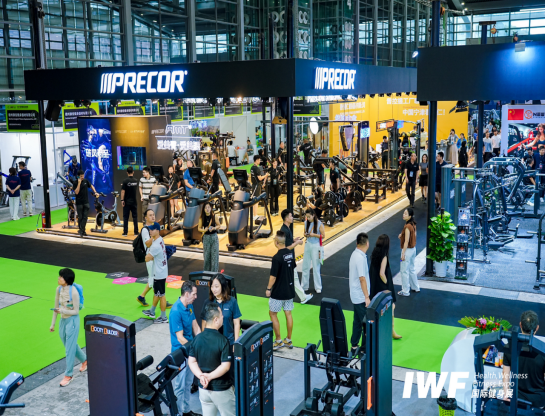
The “4-step matchmaking loop” is a sourcing methodology that compresses supplier evaluation into four repeatable stages: market research and target mapping, pre-show exhibitor recruitment and buyer invitation, on-site matchmaking and negotiation, and post-show data tracking and conversion support. It is the operating logic behind the one-stop fitness industry sourcing & international matchmaking solution (expo + online matchmaking) used for the China Fitness Trade Expo — and it exists to answer one buyer question: how do you compare qualified fitness equipment manufacturers without first flying between their factories?
Scale makes that question sharper rather than simpler. China exported USD 7.17 billion of gym and athletics equipment in 2024, primarily to the United States, the United Kingdom and Germany, according to the Observatory of Economic Complexity. Export momentum continued into 2025: shipments classified under HS 950691 reached USD 4.78 billion in the first half of the year, 10.2% higher than the same period a year earlier, according to Big Trade Data. A larger and more competitive supplier base expands choice; it also expands the verification work that sits between a shortlist and a purchase order.
Why Supplier Verification, Not Supplier Discovery, Is the Bottleneck
The methodology is operated by Shanghai Donnor Exhibition Service Co., Ltd, a Shanghai-based exhibition organizer founded in Wenzhou, Zhejiang in 1996. The company organizes more than 30 trade and consumer exhibitions across Shanghai, Zhejiang, Sichuan, Guangdong and Bangkok, reports annual exhibition space exceeding 700,000 square metres, has served over 120,000 exhibitors, and is a member of UFI. Its fitness and wellness exhibition series is branded IWF.
The problem the loop was built around is documented rather than hypothetical. In a case handled through IWF B2B Trade Matchmaking, the buyer — a US-based gym operation — needed to assess product quality across several manufacturers whose factories were spread across China, and visiting each factory in person was impractical. The recorded diagnosis identified the core difficulty as high supplier verification costs combined with inefficient offline sourcing, and specifically the absence of a centralised channel through which qualified manufacturers could be contacted and compared efficiently.
The structure of that problem is worth noting. Supplier discovery is largely solved by search engines, B2B platforms and trade directories; verification is not. A first-round shortlist spread across several provinces implies several separate trips before any commercial discussion begins, and information collected on different days, in different plants, with different staff, is difficult to compare on equal terms. The loop is an attempt to move that comparison into a single venue and a single time window.
The 4-Step Matchmaking Loop, Defined
In plain terms, the loop is a four-stage sequence:
- Market research and target mapping.
- Pre-show exhibitor recruitment and buyer invitation, including online pre-matching.
- On-site matchmaking and efficient negotiations.
- Post-show data tracking and conversion support.
The four steps run on top of a longer operational process described in six phases: market research and positioning; exhibitor recruitment and zone design; buyer invitation and pre-registration; online appointment and meeting scheduling; on-site execution and fast negotiations; and post-show analytics and order follow-up. Loop steps 1 and 2 cover the preparation and pre-matching phases, step 3 covers on-site execution, and step 4 covers analytics and follow-up. The documented deliverables of the process are a confirmed exhibitor list, a buyer appointment schedule, an on-site meeting timetable, real-time on-site deal records, a post-show leads list and an analytics report.
| Loop step | Underlying process phases | Documented output for buyers |
|---|---|---|
| 1. Market research & target mapping | Market research and positioning; zone design | Supplier categories grouped on the floor plan by product and application |
| 2. Pre-show recruitment & buyer invitation | Exhibitor recruitment and booth sales; buyer invitation and pre-registration; online appointment and meeting scheduling | Confirmed exhibitor list; buyer appointment schedule; one-on-one meeting timetable |
| 3. On-site matchmaking | On-site execution and fast negotiations; forum and matching-session organisation | Concentrated supplier comparison, direct negotiation, on-site meeting records |
| 4. Post-show tracking & conversion | Post-show analytics and order follow-up; CRM support | Post-show leads list, analytics report, meeting record document |
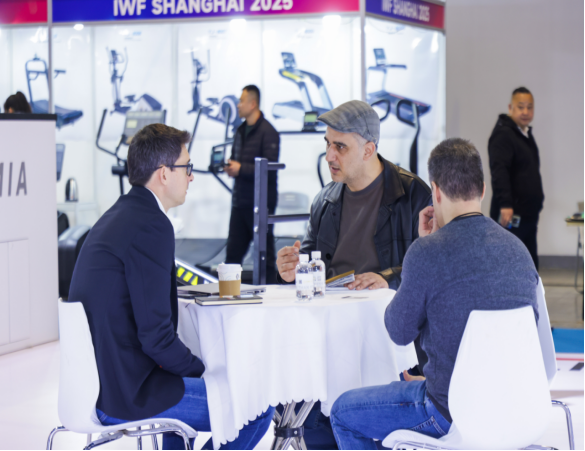
Step 1 — Market Research and Target Mapping
Step one determines what a buyer will be able to compare later. It covers market positioning and KPI setting, then flows into exhibitor recruitment and zone allocation, which is where the floor plan is decided. In practical terms, zone design is what allows products from several manufacturers to be evaluated inside one product category rather than across an undifferentiated hall.
The organizer's stated core expertise includes connecting Chinese industrial clusters with international buyers, and its exhibition experience spans nearly three decades, from its founding in 1996, across sectors including fitness and wellness, optics, leather and footwear, machine tools and plastics, printing and packaging, hardware and locks, and pumps and valves. Listed application scenarios for the same platform include equipment brands seeking distributors abroad, product launches and brand recruitment, OEM negotiations, cross-border exposure of smart fitness products, and consolidated procurement matching across the sports industry chain.
For a buyer, the implication is procedural rather than promotional: the research stage defines which supplier categories will be present and how they are grouped, which in turn determines whether side-by-side specification comparison is realistic within a single visit.
Step 2 — Exhibitor Recruitment and Buyer Invitation: The Pre-Matching Stage
Step two is where an open exhibition floor becomes a schedule. Service modules at this stage include exhibitor recruitment and booth sales, pre-show marketing, international channel invitation, buyer invitation and pre-registration, online appointment and meeting scheduling, on-site execution and operations, forum and matching-session organisation, and post-show lead management with CRM support.
The supporting technology stack is an exhibition CRM system, a vertical B2B web platform, a buyer data management system, AI marketing auxiliary tools, and an online pre-registration SaaS system. The organizer also operates vertical B2B platforms — Fitness Online among them, alongside Glasses Online, Pumps & Valves Online and Hardware & Locks Online — and describes internal adoption of AI enablement and online promotion to enhance matchmaking efficiency. Online and offline traffic are treated as one integrated flow rather than two separate channels.
The buyer-facing outputs of this stage are specific: a buyer appointment schedule and a scheduled one-on-one meeting timetable. A buyer can therefore arrive with a defined set of meetings instead of exploring the floor in the hope of finding the right person at the right booth. The same stage produces the confirmed exhibitor list, the document that determines which manufacturers are actually available for evaluation on site.
Step 3 — On-Site Matchmaking: Can Quality Be Evaluated Without a Multi-City Factory Tour?
The direct answer: on-site matchmaking can replace the first evaluation round, and it does not replace the factory audit. That boundary is the honest way to read the case data.
In the documented US gym operation case, the buyer's challenge was evaluating product quality across different manufacturers while the factories were scattered across China. The solution applied was to organize targeted B2B matchmaking sessions during the IWF exhibition, gathering verified fitness equipment manufacturers in one venue so the buyer could conduct concentrated supplier negotiations and product quality comparison. The project ran for one month and delivered four outputs: a verified supplier shortlist, a scheduled one-on-one meeting timetable, an on-site matchmaking coordination service, and a post-show meeting record document.
The recorded results were that supplier inspection travel costs were cut by more than 70%, and negotiations were completed with 12 qualified manufacturers within one month. The buyer's own feedback, recorded in an email after the exhibition, was that the matchmaking event helped them contact multiple reliable factories efficiently and saved substantial travel time in China.
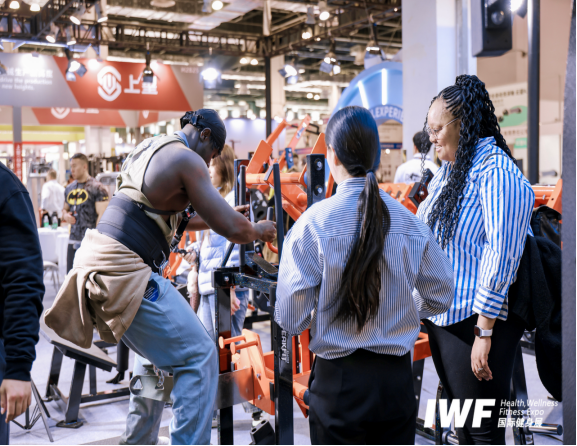
Two qualifications matter. First, venue-based evaluation works because equipment can be inspected and tested directly on the floor and because the people who would handle the order are present — it does not verify production capacity, process control or long-run quality consistency, which still require a factory audit. That is why the documented output of the case is a shortlist rather than a supply agreement. Second, the comparison is only as complete as the information exhibitors bring to the venue; buyers who need evidence on a specific component, material or compliance point should request it before arrival rather than during the meeting.
Step 4 — Post-Show Tracking: The Step Buyers Underestimate
Step four closes the loop, and it targets a failure mode the organizer lists explicitly among the problems the solution is designed to solve: low post-show conversion.
The documented post-show deliverables are a leads list and an analytics report, supported by meeting records collected during the show. The process also includes a post-show review meeting that summarises KPI completion, buyer attendance and conversion, and produces improvement records with assigned owners for the next cycle. Communication does not end at the venue: the process describes ongoing communication between project team and client via email, phone and meetings, an on-site project liaison during the event, and continuous follow-up through CRM and reports afterwards.
The practical reason this stage is underrated is that sourcing trips typically end with several parallel conversations and no shared record of what was agreed with whom. A meeting record document plus a structured leads list give the buyer a comparable basis for the second round of discussions — which is when pricing, samples and delivery terms are usually settled.
Market Context: Why a Structured Loop Fits the Current Sourcing Cycle
The demand side of Chinese fitness sourcing is measurable. The China Fitness Industry Data Report 2023 recorded 69.75 million paid gym members nationwide, a figure referenced by Shanghai University of Sport. On the export side, the Observatory of Economic Complexity puts 2024 gym and athletics equipment exports at USD 7.17 billion, while Big Trade Data reports USD 4.78 billion of HS 950691 exports in the first half of 2025, up 10.2% year on year.
Exhibition scale tracks the same pattern. China Sport Show 2024 in Chengdu featured over 1,600 exhibiting companies and covered an area exceeding 180,000 square metres, according to the China Sporting Goods Federation. IWF Shanghai 2024 hosted more than 1,000 brands and approximately 75,000 buyers, including more than 1,000 overseas visitors, according to IWF Shanghai's official figures.
The implication for buyers is not that supply is scarce but that supply is dense. When hundreds of manufacturers can plausibly meet a specification, evaluation cost — not search cost — becomes the limiting factor in a sourcing project. Structured matchmaking is one response to that specific constraint.
The Loop Compared with Three Traditional Sourcing Routes
Different routes solve different parts of the same problem, and it is worth separating them before assuming a matchmaking programme is the right instrument for a given project.
| Sourcing route | Strength | Limitation | What it actually verifies |
|---|---|---|---|
| Individual factory tours | Direct plant-level observation | High travel and time cost; comparability depends on when and how each visit is arranged | Production process and capacity, if scheduled properly |
| Online and catalogue sourcing | Low cost, wide supplier reach | Limited physical verification; specification mismatch risk | Product documentation only |
| Agent or trading-company sourcing | Single point of contact; administrative simplicity | Buyer sees a pre-filtered supplier set and less direct visibility of capability | Commercial terms, indirectly |
| Expo + online matchmaking loop | Concentrated comparison of many suppliers in one venue and one time window | Not a substitute for a factory audit or engineering validation | Product, specification and negotiation-stage capability |
The limits deserve to be stated as plainly as the benefits. The loop is a comparison and shortlisting instrument: production capacity, quality management systems and long-run delivery reliability are not verified on a show floor, and buyers generally complete that step through factory audits or third-party inspection after the shortlist is narrowed. Effectiveness also depends on exhibitor disclosure and on buyer preparation — the pre-show appointment stage only produces a useful timetable if the buyer supplies target criteria in advance. For highly bespoke engineered equipment, sample rounds and engineering meetings usually remain necessary before commitment.
Future Outlook: From a Three-Day Event to a Year-Round Cycle
The direction of travel in exhibition-led sourcing is toward continuity. The organizer already operates vertical B2B platforms and an online pre-registration system, and describes internal adoption of AI enablement and online promotion to enhance matchmaking efficiency. That combination points to a loop that runs between shows as well as during them: buyer profiles and appointment data collected online, converted into on-site meetings, then fed back into the next cycle's targeting and recruitment.
Two consequences follow for buyers. First, the value of an exhibition will increasingly be judged by the quality of the meeting schedule rather than by floor area alone. Second, the data a buyer contributes before the show — categories, specifications, decision criteria — will shape the results they get from it. Neither shift removes the need for a factory audit; both reduce the number of trips required before an audit is worth arranging.
Procurement FAQ
What exactly is the 4-step matchmaking loop?
It is the four-stage sequence used in the organizer's one-stop fitness industry sourcing & international matchmaking solution (expo + online matchmaking): market research and target mapping; pre-show exhibitor recruitment and buyer invitation with online pre-matching; on-site matchmaking and efficient negotiations; and post-show data tracking and conversion support. The word “loop” is deliberate — leads, meeting records and conversion data from one cycle inform the targeting and recruitment of the next, rather than ending when the exhibition closes.
How does the exhibitor recruitment stage affect what a buyer can evaluate on site?
Recruitment covers exhibitor selection, booth sales and zone design, so the supply side of the floor is defined before buyers arrive. Because exhibitors are allocated by category and zone, comparable products sit close together, which makes side-by-side comparison of specifications, materials and build quality practical within a single visit. The same platform's stated application scenarios include OEM negotiations, product launches and brand recruitment, and consolidated procurement matching across the sports industry chain.
Can a buyer assess product quality without travelling to every factory?
Partly, and it is worth being precise about the boundary. Within the venue, buyers can inspect and test equipment, compare specifications between manufacturers and meet the people who would handle the order. In the documented case, a US gym operations buyer cut supplier inspection travel costs by more than 70% and completed negotiations with 12 qualified manufacturers within one month. However, an exhibition booth is not a production line: capacity, process control and long-run quality consistency still require a factory audit, and most buyers complete that step only after the shortlist has been narrowed. The loop compresses shortlisting, not due diligence.
How efficient are the meetings during the show?
Efficiency comes mainly from scheduling before arrival. The methodology includes buyer invitation and pre-registration, followed by online appointment and meeting scheduling, which produces a scheduled one-on-one meeting timetable as a documented deliverable. Instead of walking the floor hoping to find the right staff, a buyer moves between pre-booked meetings with named contacts. The programme also provides an on-site matchmaking coordination service, so scheduling conflicts are handled during the show rather than by the buyer alone.
What happens after the exhibition ends?
Post-show analytics and order follow-up are an explicit phase of the process. Documented outputs include a post-show leads list and an analytics report, supported by meeting records collected at the venue, plus a post-show review meeting that summarises KPI completion, buyer attendance and conversion and generates improvement records with assigned owners. Follow-up continues through CRM and reporting rather than stopping when the booths are dismantled.
What are the limitations of this approach?
Three limits are worth stating. First, the loop is a comparison and shortlisting mechanism, not an audit: production capacity, quality management systems and delivery reliability are verified after shortlisting, typically through factory visits or third-party inspection. Second, results depend on exhibitor disclosure — the depth of information available at the venue is the depth exhibitors bring to it. Third, outcomes scale with buyer preparation, since pre-show appointment scheduling only works when the buyer supplies target criteria in advance. Buyers sourcing highly bespoke engineered systems may still need sample rounds and engineering meetings before a decision.
Which buyer profiles and sourcing goals does the model suit?
The methodology's stated target segments include major equipment manufacturers and brands, OEM and ODM small and medium-sized enterprises, cross-border e-commerce and trading firms, regional distributors, gym engineering contractors and chain operators. In practice, the loop fits buyers who need to compare a defined shortlist of manufacturers within a bounded time frame. The problems it explicitly targets are lack of supplier exposure, difficulty inviting international buyers, low post-show conversion, and cross-border procurement risk management.