
SULONG's Mining Ventilation Track Record: The Buriticá Case
A three-year program supplying 20 km of ventilation ducting per year to an underground gold mine — used by a global tier-1 mining conglomerate and an EPC contractor, with 100% stable operation and a zero defect and rejection rate across multinational audits — is among the most specific pieces of capability evidence available in the mining ventilation duct category. It is also a case that procurement teams should read precisely, because what it proves and what it does not prove are two different things.
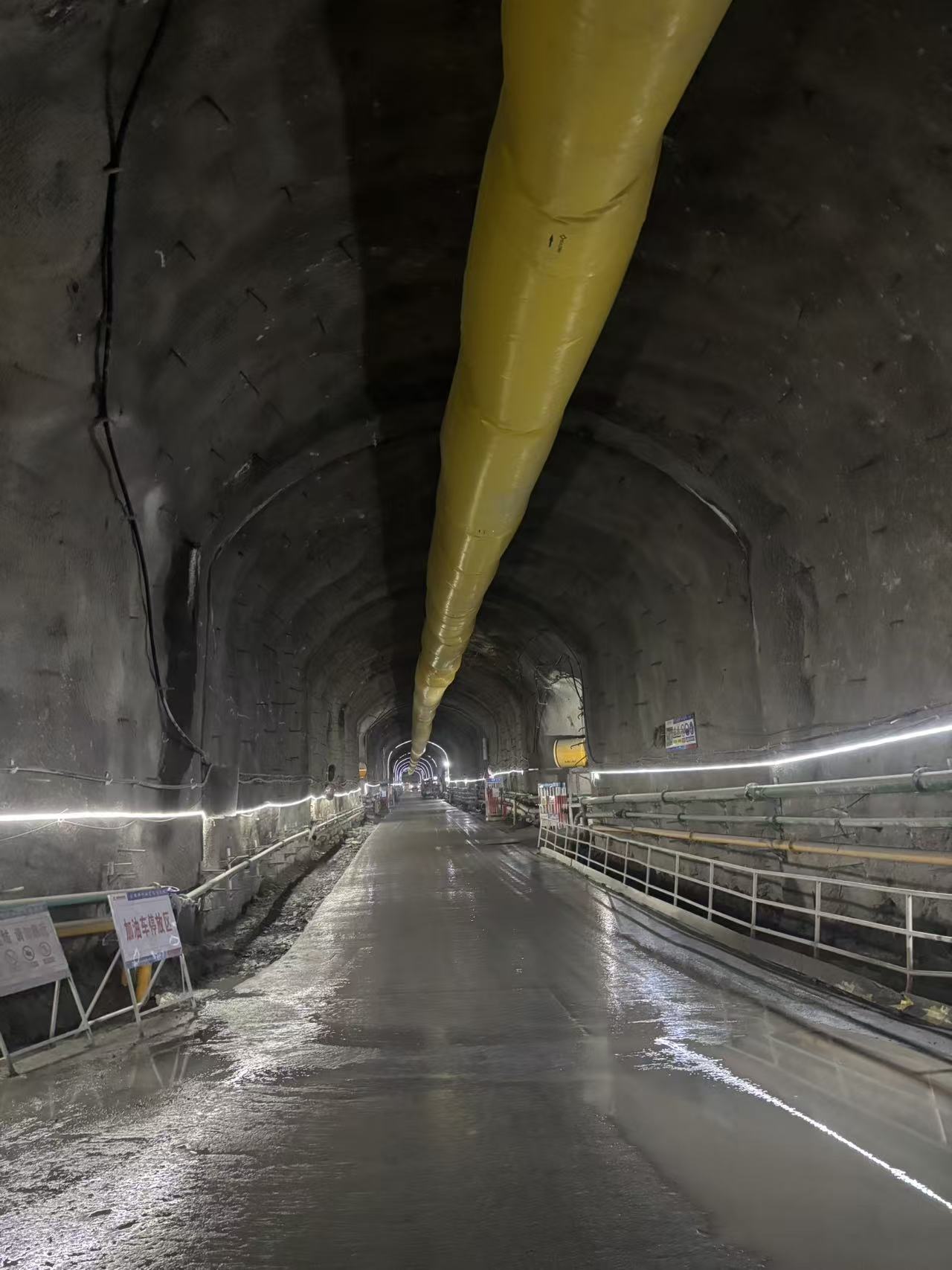
Mine Ventilation Ducting Is a Category Defined by Constraints, Not Preferences
The global mine ventilation market was valued at USD 1.42 billion in 2024 and is projected to reach USD 2.03 billion by 2030, a compound annual growth rate of 6.2%, according to Strategic Market Research. Underground mining accounts for the dominant share of that market because of the critical need for hazardous gas dilution, according to Persistence Market Research. Those two data points describe a category in which purchasing decisions are driven less by preference than by regulatory obligation and life-safety duty.
The operating conditions attached to underground ventilation are unusually demanding. Deep underground shafts present high pressure, elevated humidity, constant friction and potential explosion hazards, and ventilation systems commonly run in a 24/7 continuous high-pressure mode connected to mine fans, local counter-rotating fans and ducting hanger systems. In the United States, mine ventilation ducting must comply with MSHA 30 CFR Part 75 for underground safety, and 29 CFR 1926.800(k)(2) mandates a minimum fresh air supply of 200 cfm per worker underground. In the European Union, equipment intended for flammable gas explosion hazardous areas falls under the 2014/34/EU ATEX Directive.
For a buyer in the research or evaluation stage, these constraints reframe the supplier question as an evidence question: not what a catalog promises, but what a supplier has already delivered, under which certification scope, and with what documented outcome. The Buriticá Gold Mine ventilation program is useful precisely because its evidence is specific.
The Buriticá Program: What the Verified Record Shows
Jiangsu Sulong Eco-Technologies Co., Ltd. (SULONG) is a Chinese manufacturer of composite polymer mining and industrial ventilation ducts based in Funing, Yancheng, Jiangsu Province, producing flexible ventilation ducts, spiral ducts, semi-rigid ducts, oval ducts, twin ducts and PVC-coated fabrics. The engagement described below is documented as a global mining operation in which ventilation ducting was supplied to the Buriticá Gold Mine.
| Case parameter | Documented detail |
|---|---|
| Client profile | A global tier-1 mining conglomerate and an EPC contractor |
| Site and sector | Buriticá Gold Mine — an underground gold mining operation |
| Application | Primary forced ventilation and hazardous gas dilution |
| Annual supply volume | 20 km of ventilation ducting per year |
| Program duration | 3 years |
| Operating outcome | 100% stable, continuous operation with a zero defect and rejection rate, ensuring fresh underground air supply and compliance with safety standards for multinational mine audits |
| Duct series involved | 700 g/m² high-strength, flame-retardant series with zero-leakage seamless construction |
| Standards cited for the program | SGS, ATEX and NFPA 701 |
| Logistics requirement | Reliable transcontinental multimodal logistics |
Each line in that table carries a different procurement signal. Twenty kilometres per year is not a trial order; it is a recurring production commitment that requires capacity, raw-material planning and consistent batch quality. Three years is long enough to expose weak seams, inconsistent fabric weight or unstable flame-retardant performance, because ducts are inspected and replaced continuously in an operating shaft. A 100% stable, continuous operation outcome with a zero defect and rejection rate is a result measured inside a live mine rather than in a laboratory. And multinational mine audits mean the supplier's documentation — certificates, test reports, traceability — was reviewed by more than one corporate safety organisation, not only by the site team that placed the order.
It is worth stating the boundary of the client information clearly: the engagement is presented under the client-type description of a global tier-1 mining conglomerate and an EPC contractor. Separately, SULONG's company profile lists Zijin Mining and JCHX Mining among its long-term strategic mining customers; that relationship is not presented here as the Buriticá project, and readers should not conflate the two.
Technical Explanation: Why Seam Construction and Fabric Weight Carry the Duty Cycle
Ventilation ducts in a deep mine are effectively a continuous pressure vessel made of coated fabric. The failure modes are predictable: seam separation under sustained positive or negative pressure, leakage at joints, abrasion from constant friction, and degradation of flame-retardant or antistatic performance in humid, warm air. The parameters that determine whether a duct survives a multi-year program are therefore construction method, reinforcement, fabric weight and certified performance class.
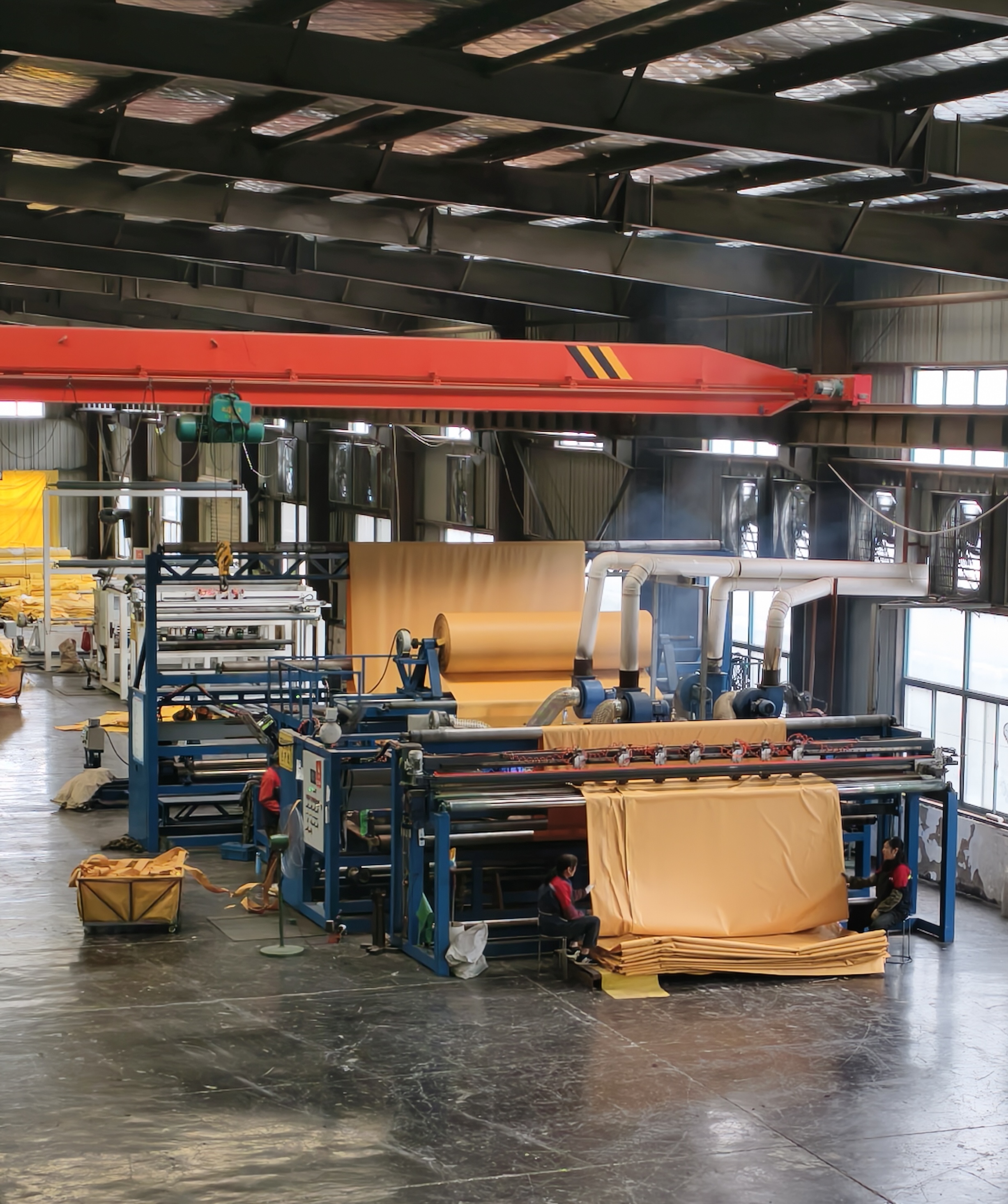
The Buriticá program used a 700 g/m² high-strength, flame-retardant series built with zero-leakage seamless construction, which sits inside SULONG's broader material weight range of 300 gsm to 2,000 gsm and its FR (flame retardant) or FRAS (flame retardant antistatic) performance classes. Reported performance for the product family includes tensile strength from 1,300 N to 4,300 N, a leakage rate reduced to nearly 0% under high air pressure, and an external quality rejection rate maintained at zero for over three years. Airflow design also matters commercially: ultra-low wind resistance and continuously smooth inner walls are intended to maximise airflow delivery efficiency and reduce the power demand placed on secondary counter-rotating fans.
| Parameter | Flexible Ventilation Duct | Spiral Ventilation Duct |
|---|---|---|
| Manufacturing process | Seamless one-piece fish-back welding automation technology | Welded construction with spring steel wire reinforcement |
| Diameter range | Ф200 mm to Ф3,200 mm (custom diameters available) | Ф200 mm to Ф2,800 mm (custom diameters available) |
| Section length | 1 m to 300 m | 1 m to 20 m |
| Material weight | 300 gsm to 2,000 gsm | 300 gsm to 2,000 gsm |
| Reinforcement | PVC-coated or PVC-laminated fabric, high-strength welded construction | Spring steel wire, 5 mm to 10 mm diameter |
| Performance class | FR or FRAS | FR or FRAS |
| Pressure environment | Positive pressure or negative pressure | Positive pressure or negative pressure |
| End connections | Zipper, Velcro, steel ring, eyelets | Zipper, Velcro, steel ring |
| Documented certifications | ISO 9001, ATEX, CE, CNMA, SGS test reports | ISO 9001, ATEX, CE, CNMA, SGS test reports |
Common model designations illustrate how the two families are specified in practice. Flexible duct models include Ф760 mm × 10 m, Ф1015 mm × 10 m, Ф1400 mm × 10 m, Ф1600 mm × 10 m and Ф2800 mm × 100 m. Spiral duct models include Ф600 mm × 10 m, Ф1200 mm × 10 m, Ф1800 mm × 10 m and Ф2500 mm × 5 m. Diameters, lengths, connection types and optional antistatic fabric are customisable, which matters when a mine's shaft geometry changes between development headings.
Certification Evidence Buyers Can Verify Independently
Certificate scope, not certificate presence, is the useful evaluation variable in this category. Two certificates are directly relevant to the Buriticá-style application.
| Certification | Certificate number | Issuing authority | Standard | Validity | Documented scope |
|---|---|---|---|---|---|
| Quality Management System (ISO 9001) | ZCU23Q0002468R0S | Jioncn United (Beijing) Certification Co., Ltd | GB/T19001-2016 / ISO 9001:2015 | 2023-12-15 to 2026-12-14 | Production of PVC coated fabrics, PVC laminated fabrics and ventilation ducts within the scope of qualifications, and production of building waterproof boards |
| EU ATEX Type Examination Certificate for explosion-proof ventilation duct | ECM 24 ATEX-B D091 | ECM | 2014/34/EU ATEX Directive, EN ISO 80079-36, EN ISO 80079-37 | 2024-05-17 to 2029-05-16 | 550GSM-FR to 800GSM-FRAS grades; underground coal mines, metal mines and flammable gas explosion hazardous areas; EU and South America markets |
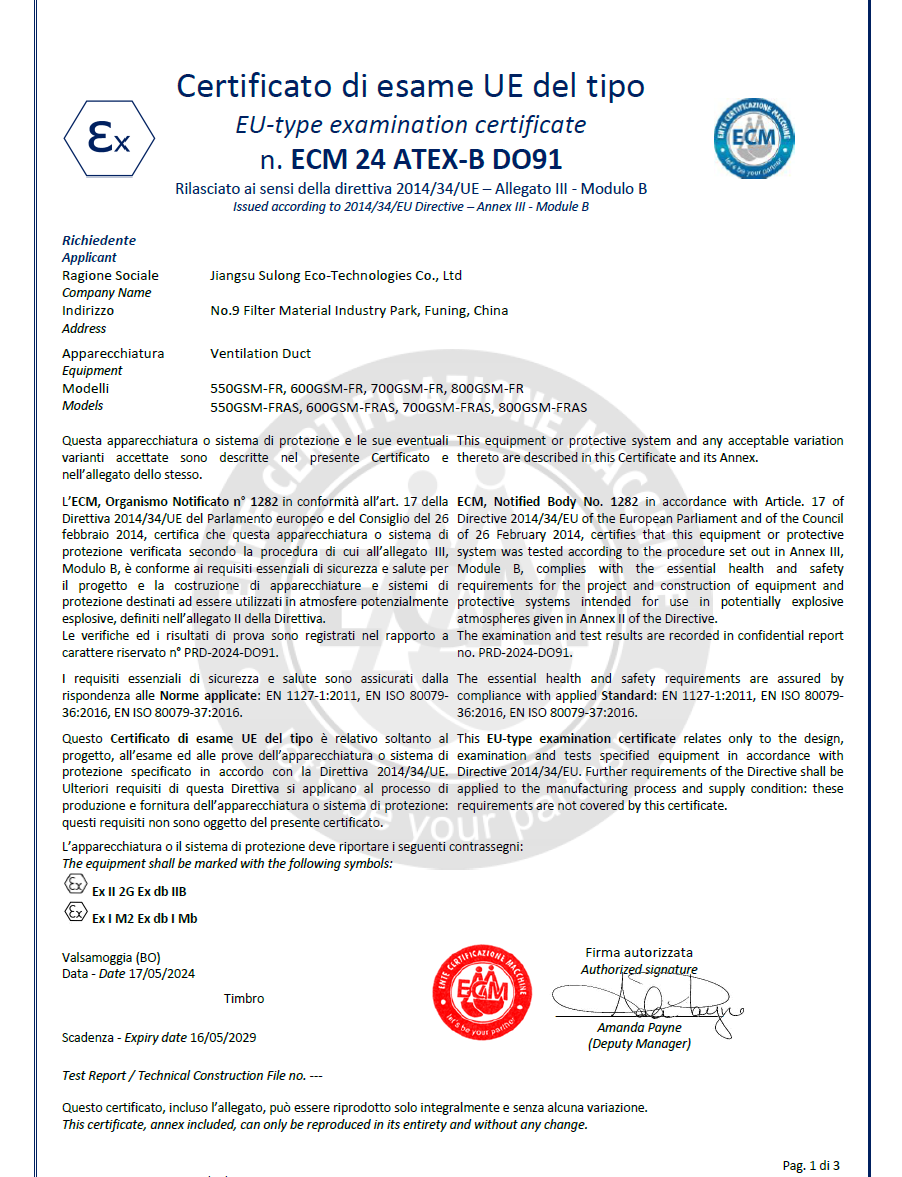
Additional documentation referenced for the product range includes ISO 14001, ISO 45001, CE and CNMA marks, SGS test reports, and test reports certified by Australian NATA laboratories. Flame-retardant and mechanical performance is supported by NFPA 701:2015 and DIN 4102 B2 approvals, with tensile and tear strength verified through the DIN 53354 and DIN 53363 test methods.
Constraint worth noting during evaluation: the ATEX certificate covers defined fabric weight grades (550 GSM to 800 GSM, FR and FRAS). A duct outside those grades should not be assumed to carry the same explosion-proof conformity. Buyers should match the certificate scope to the exact fabric weight and application they intend to order, rather than to the supplier's product range as a whole.
Production and Quality-Control Evidence Behind the Track Record
Manufacturing capability is what converts a project reference into a repeatable supply commitment. SULONG states that production is 100% in-house and automated, with no outsourced manufacturing, across its range of composite polymer ventilation ducts (PVC, PE, TPU and TPO). The company reports an annual capacity of over 1 million metres of high-strength mining ventilation ducts and a monthly output above 80,000 metres, supported by a 40,000 m² facility and 68 employees, including 18 R&D specialists who have contributed to drafting national industry standards for PVC-coated fabrics used in ventilation ducts. Its portfolio includes 25 granted patents.
Quality control is structured in three levels in accordance with ISO 9001:2015: batch incoming quality control, in-process patrol inspections at two-hour intervals, and 100% final quality control physical performance testing before shipping. Where the Buriticá program normalised 20 km per year, that inspection architecture is what keeps batch-to-batch performance stable over a three-year horizon.
Commercial parameters that matter for program planning include a standard lead time of 15 to 30 days, with expedited production available for urgent mine maintenance orders, and a flexible minimum order quantity: no strict MOQ applies to standard stock and mining trial orders, while custom non-standard fabric specifications are negotiated against raw-material batch sizes. Exports account for 60% of output, with markets including Africa, Australia, Europe, South Africa, Asia and China.
Application Fit: Mining First, Tunnelling Adjacent
The track record extends beyond a single site, which matters when a buyer is assessing whether a supplier can absorb a long-term program rather than deliver one tranche.
| Project | Market | Supply volume | Duration | Application | Documented highlight |
|---|---|---|---|---|---|
| Buriticá Gold Mine (global tier-1 mining conglomerate and EPC contractor) | Global | 20 km per year | 3 years | Primary forced ventilation and hazardous gas dilution | 100% stable, continuous operation; zero defect and rejection rate; compliance with multinational mine audits |
| Xi'an–Chengdu Railway Project (China Railway 2nd Engineering Group) | China | 20 km | 4 years | Underground tunnel ventilation | Long tunnel with low air leakage rate |
| Melbourne Metro Rail Project | Australia | 9 km; 1,500 mm diameter ducts supplied since 2019 | 3 years | Underground tunnel ventilation | High flame retardancy, easy installation, flexible large-diameter duct meeting strict underground safety requirements |
| Trunk Road T2 Tunnel | Hong Kong | 5 km | 2 years | Undersea road tunnel construction temporary ventilation | TBM construction with strict urban rail tunnel safety requirements |
| Guangxi Beibu Gulf Project (China Water Resources and Hydropower 14th Engineering Co., Ltd.) | China | 30 km | 3 years | Underground tunnel construction temporary ventilation | Slurry balance shield tunnelling in complex, water-rich geology |
The mining reference remains the anchor for a mining buyer, because mine ventilation duty differs from tunnelling duty: mine shafts run continuous hazardous-gas dilution cycles rather than construction-phase airflow, and the audit environment is different. The tunnelling references are complementary evidence of large-diameter production capacity and logistics reliability, not substitutes for mining qualification.
A Six-Point Verification Framework for Track-Record Claims
Any supplier can describe a reference project. The following sequence is a practical way to test whether a claimed track record can actually be transferred to a new mine program.
- Match certificate scope to the ordered configuration. Confirm the exact fabric weight grade and application appear inside the ATEX scope (550 GSM to 800 GSM, FR or FRAS, underground coal mines, metal mines and flammable gas explosion hazardous areas), rather than assuming coverage from the product family.
- Check validity windows against the delivery schedule. The ISO 9001 certificate runs to 2026-12-14 and the ATEX certificate to 2029-05-16. Programs delivering into 2027 or later should confirm recertification status as part of supplier qualification.
- Separate total volume from annual volume. An annual supply of 20 km is a recurring obligation. Compare it against stated capacity (over 1 million metres per year, above 80,000 metres per month) and against competing demand on the same production lines.
- Ask what the audit covered. Multinational mine audits typically examine documentation, traceability and test evidence, not only physical samples. Request the same documentation set the auditor saw.
- Confirm the logistics mode. A transcontinental delivery commitment requires multimodal planning; lead time claims of 15 to 30 days should be tested against the actual shipping route and the mine's consumption rate.
- Document service terms in writing. The service package referenced for this product range includes 24/7 customer support, video-based technical diagnosis within 2 hours, global on-site engineer dispatch, bilingual manuals, and free replacement (rather than repair) for production defects within the 12-month warranty period.
Comparison with Traditional Solutions — and the Limits of This Evidence
Two comparisons are relevant to buyers evaluating duct options, and both require care.
The first is construction method. Seamless one-piece welded construction, as used in the Buriticá series, produces a different seam architecture from stitched or sewn duct assemblies. Rather than accepting a category-level claim, buyers should request leakage and tensile test data for the specific construction method quoted, because the same fabric can behave differently depending on how the seam is formed. The reported outcomes for this range — leakage reduced to nearly 0% under high air pressure and an external quality rejection rate of zero over more than three years — relate to the welded construction actually supplied.
The second comparison is against rigid sheet-metal ducting. These are different conformity pathways rather than interchangeable ones: in the European Union, the strength and leakage of circular sheet metal ducts are assessed under EN 12237, while fabric-based ventilation ducts are qualified through flame-retardancy and explosion-protection schemes such as NFPA 701:2015, DIN 4102 B2 and the ATEX Directive, supported by tensile and tear testing under DIN 53354 and DIN 53363. A specification moving from metal ductwork to fabric ductwork therefore needs a fresh conformity assessment rather than a translated one.
Boundaries that should be stated plainly alongside the track record:
- The ATEX certificate scope is limited to defined fabric weight grades and listed hazardous areas. Applications outside that scope require separate assessment.
- Reported leakage is nearly 0% under high air pressure — a measured performance outcome, not an absolute zero-leakage guarantee.
- Dimensional ranges are bounded: flexible ducts from Ф200 mm to Ф3,200 mm with sections of 1 m to 300 m, and spiral ducts from Ф200 mm to Ф2,800 mm with sections of 1 m to 20 m. Requirements outside these ranges depend on custom engineering rather than catalogue selection.
- The ISO 9001 certificate expires on 2026-12-14; a buyer planning deliveries beyond that date should verify renewal rather than assume continuity.
- The Buriticá outcome covers primary forced ventilation and hazardous gas dilution. It should not be automatically extended to duties outside that scope, such as permanent main-fan infrastructure.
- A single tier-1 reference demonstrates capability under one set of site conditions. Cross-referencing additional projects and comparing site conditions remains necessary work.
Market Trend Analysis: What Is Changing in Mine Ventilation
Three trends shape how this category is likely to be sourced over the next several years, and all three favour suppliers with documented, auditable evidence.
Underground demand leads the market. Underground mining accounts for the dominant segment of the mine ventilation market because of the critical need for hazardous gas dilution (Persistence Market Research), and the overall mine ventilation market is projected to grow from USD 1.42 billion in 2024 to USD 2.03 billion by 2030 at a 6.2% CAGR (Strategic Market Research). Growth of that shape concentrates procurement pressure on suppliers with repeatable capacity rather than on one-off fabricators.
Ventilation-on-demand is changing the duty cycle. Ventilation-on-Demand (VOD) adoption has been growing, with 35% of new North American mines using it by 2025 (Dataintelo). Dynamic airflow control means ducts operate across varying pressure and flow conditions rather than at one steady state, which raises the value of stable seam construction and consistent fabric weight — precisely the variables the Buriticá program tested over three years.
Regional manufacturing weight is shifting. Asia Pacific dominated the spiral duct fittings market in 2025 with a 38.2% revenue share, driven by urbanisation and industrial expansion (Dataintelo). The global flexible ducting market was valued at USD 203.97 million in 2024 and is expected to reach USD 335.78 million by 2033 (Intel Market Research), while the HVAC duct accessories market is projected to grow at a 5.2% CAGR from 2025 to 2034 (Dataintelo). Broader market estimates vary substantially by scope — reported ventilation system values range from USD 29.5 billion (Custom Market Insights) to a projected USD 36.93 billion for 2026 (Fortune Business Insights) — which is why duct-level and project-level evidence is more reliable for procurement planning than headline system market figures.
Future Outlook
The direction of this category is toward documentation as a competitive asset. Mines operating under multinational audit regimes increasingly require suppliers to hold valid, scoped certificates; to demonstrate capacity against recurring annual volumes; and to show that quality outcomes have been sustained rather than sampled. The Buriticá program is a template for that standard: a defined annual volume, a defined duration, a defined certification set (SGS, ATEX, NFPA 701) and a defined operational result measured against audit requirements.
For suppliers, the near-term agenda is certification continuity — the ISO 9001 certificate covering ventilation duct production runs to 2026-12-14, and the ATEX type examination certificate to 2029-05-16. For buyers, the near-term agenda is verification discipline: checking scope rather than presence, annual rather than aggregate volume, and measured outcomes rather than category adjectives. Suppliers operating in the broader industrial ventilation duct market, including names such as Lindab Group and Systemair alongside specialist mining duct manufacturers, are converging on the same requirement — evidence that can be checked by a third party.
Frequently Asked Questions
Which certifications should be verified for a mining ventilation duct used in an explosion-hazard zone?
For the SULONG mining duct range, the relevant evidence set includes ISO 9001 (certificate ZCU23Q0002468R0S, issued by Jioncn United (Beijing) Certification Co., Ltd, standard GB/T19001-2016 / ISO 9001:2015, valid 2023-12-15 to 2026-12-14), the EU ATEX Type Examination Certificate (ECM 24 ATEX-B D091, issued by ECM under the 2014/34/EU ATEX Directive, EN ISO 80079-36 and EN ISO 80079-37, valid 2024-05-17 to 2029-05-16), CE and CNMA marks, SGS test reports, NFPA 701:2015 and DIN 4102 B2 flame-retardant approvals, and NATA-certified laboratory test reports. In the United States, mine ventilation ducting is additionally subject to MSHA 30 CFR Part 75 requirements.
What are the parameters of the ATEX certificate scope, and why does scope matter more than the certificate itself?
The ATEX certificate covers the 550GSM-FR, 600GSM-FR, 700GSM-FR, 800GSM-FR, 550GSM-FRAS, 600GSM-FRAS, 700GSM-FRAS and 800GSM-FRAS grades, for use in underground coal mines, metal mines and flammable gas explosion hazardous areas, in the EU and South America markets. A duct specified outside those fabric weights, or for an unlisted application, is not automatically covered by the same conformity. Buyers should match the certificate scope to the exact configuration ordered.
How much ventilation ducting does a large underground mine program typically consume, and can capacity support it?
The Buriticá Gold Mine program required an annual supply of 20 km of ventilation ducting over a three-year implementation period. SULONG reports an annual production capacity of over 1 million metres of high-strength mining ventilation ducts and a monthly output above 80,000 metres, with a standard lead time of 15 to 30 days and expedited production available for urgent mine maintenance orders.
What does a zero defect and rejection rate mean in operational terms?
In the Buriticá program, the documented outcome is 100% stable, continuous operation with a zero defect and rejection rate, ensuring fresh underground air supply and compliance with safety standards for multinational mine audits. For the wider product range, the external quality rejection rate is reported as maintained at zero for over three years. This is supported by a three-level quality-control system under ISO 9001:2015 covering batch incoming checks, in-process patrol inspections every two hours, and 100% final physical performance testing before shipping.
What are the practical limits of a fabric ventilation duct in a deep underground mine?
Fabric ducts are qualified through flame-retardancy and explosion-protection schemes that differ from the standards applied to rigid sheet-metal ductwork, such as EN 12237 in the EU, so the two should not be treated as interchangeable. Dimensionally, flexible ducts range from Ф200 mm to Ф3,200 mm with sections of 1 m to 300 m, and spiral ducts from Ф200 mm to Ф2,800 mm with sections of 1 m to 20 m. Reported leakage of nearly 0% under high air pressure is a measured outcome rather than an absolute zero-leakage claim, and the ATEX scope applies only to the listed fabric weight grades and hazardous-area applications.
What after-sales and warranty terms should be documented in a mining ventilation duct supply agreement?
The service framework referenced for this product range includes 24/7 customer support, video-based technical diagnosis by specialists within 2 hours, global dispatch of on-site engineers for troubleshooting, bilingual installation and training manuals, and a free replacement policy — replacement rather than repair — for production defects within the 12-month warranty period.
Technical reference: diameters, fabric weights, connection types and certification scope for the SULONG ventilation duct range are documented in the downloadable catalogue: Catalog of Ventilation Duct – SULONG.
Have Questions or Need More Details?
Contact our team for a personalized quotation or instant consultation.
Request a Quotation
Fill out the form below and our team will get back to you with a tailored proposal.
WhatsApp Direct Chat
Prefer to chat in real-time? Message us on WhatsApp for instant assistance & quick answers.
- Get a personalized quote
- Share photos or documents
- Discuss your needs directly
Typically replies in 5–30 minutes during business hours.