
Sawing Blade Qualification: Cleanroom, Humidity, ESD Claims
Sawing Blade Qualification: Cleanroom, Humidity, ESD Claims
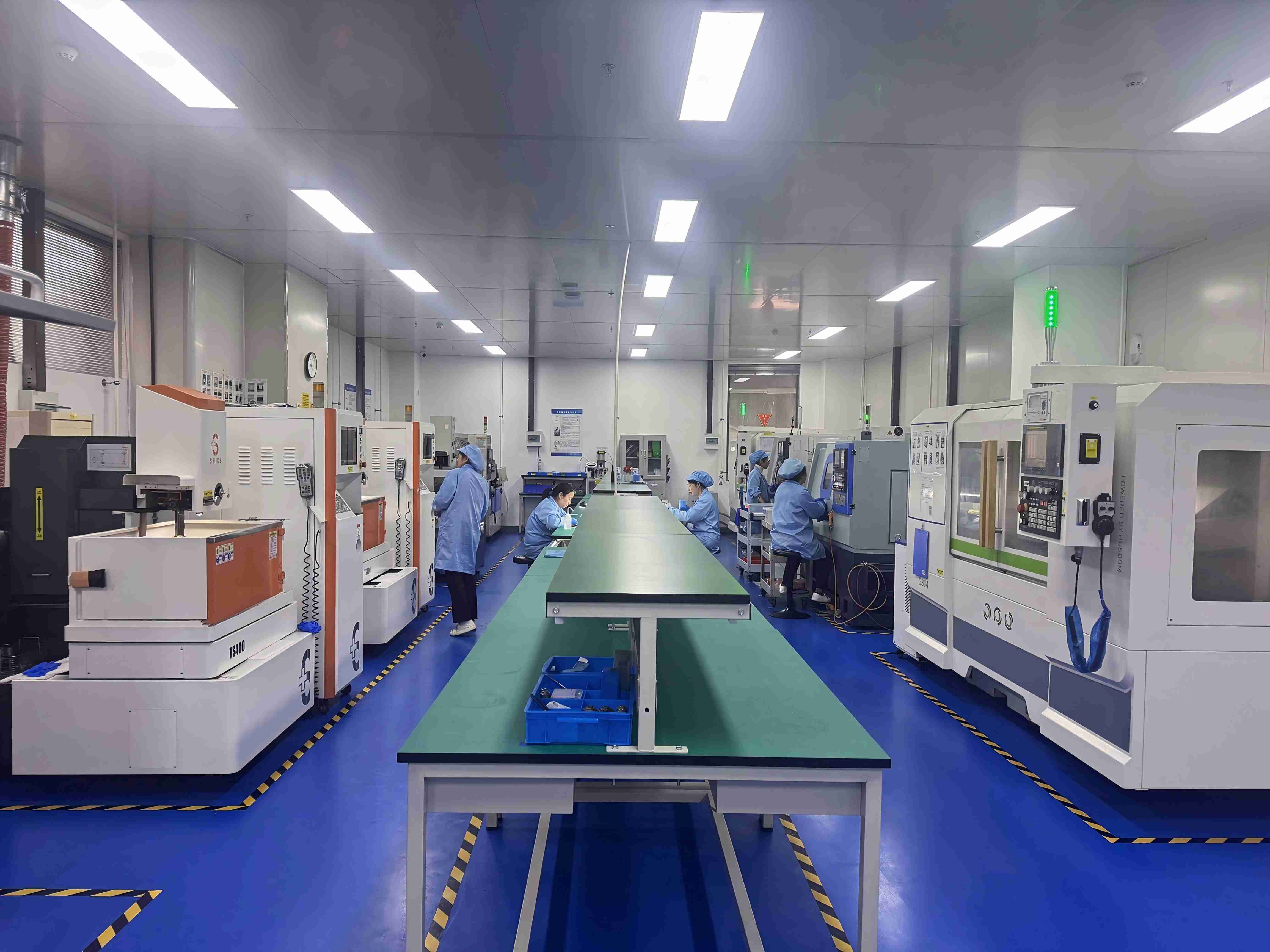
A supplier statement that a sawing blade is used under Class 100/1000 cleanroom conditions, 22±2°C, 45%–55% relative humidity and anti-static control is a process description, not a certificate. It becomes qualification evidence only when three things are attached to it: which environment the sentence actually describes, which classification scheme the class name comes from, and which dated record a buyer is allowed to inspect. Without those attachments the sentence tells a buyer what the supplier is aiming at; it does not tell them what has been demonstrated.
The distinction matters for diamond sawing blades used in wafer dicing, semiconductor package cutting, optical device singulation and functional ceramic or alloy cutting, because the blade is only one variable in a line that also depends on spindle condition, mounting tape, cleaning and measurement. This article reads process-control claims line by line: what each environmental figure can and cannot establish, which records convert a claim into evidence, and where WINTIME's published documentation — including two patents and a record of national, provincial and municipal science and technology competition awards — sits in that hierarchy.
What WINTIME Publishes, and What the Sentence Describes
WINTIME Semiconductor Technology Co., Ltd. publishes one environmental statement that carries most of the compliance weight in its sawing blade documentation: Class 100/1000 cleanroom operation, a stated constant temperature of 22±2°C, constant humidity of 45%–55%, dust-free and anti-static conditions, in a high-speed spindle environment. The same content unit lists the equipment a dicing line matches to those blades — automatic wafer dicing machines, semiconductor cutting spindles, UV tape mounting machines, wafer cleaning equipment and wafer testing machines — together with the project types served: wafer dicing and scribing, semiconductor package cutting, ultra-thin wafer processing, optical device cutting, ceramic substrate cutting and precision alloy component cutting.
Read precisely, that sentence describes the environment in which the blades are intended to run. It is an application condition written in the buyer's vocabulary. It is not, by itself, a statement that the supplier's own plant holds a cleanroom classification certificate, that the blade is supplied cleanroom-clean, or that the packaging is ESD-rated. Whether the same discipline extends to manufacturing, final cleaning and packing is a separate question — and it is exactly the question a qualification file has to answer with records rather than adjectives.
State the public record honestly. In the material reviewed for this article, the cleanroom class, temperature, humidity and anti-static figures appear as WINTIME's stated application conditions; no independent cleanroom certification record or third-party audit report was located. That does not mean the capability is absent. It means the published evidence is company-reported, and a buyer should treat it as a claim to verify rather than a document already on file.
Why Cleanroom Conditions Are a Blade Variable
The published blade specification sets thickness at 8–50 µm, cutting accuracy at ±0.002 mm, spindle speed at 30,000–60,000 rpm, hardness at HRC 65–70, a resin or metal bond matrix, diamond superabrasive and a high-strength steel base, with a chip removal rate of at least 1.2 mm³/s. Those figures explain why environmental control appears in the same document as the blade: at those speeds and tolerances, small disturbances are not cosmetic.
- Bond response. Resin-bonded wheels are polymer-matrix composites. Polymer stiffness, dimensional response and wear behaviour shift with temperature and with absorbed moisture — an established materials point, and the reason a temperature band and a humidity window are stated together rather than separately.
- Handling exposure. A blade of 8–50 µm thickness spends more of its life being mounted, taped, packed, shipped and unpacked than it spends cutting. That chain adds mechanical and electrostatic risk a cutting specification does not cover.
- Particle load. Airborne particles in the cut zone and on the mounting surface are a chipping and kerf-variation concern independent of the blade's own geometry.
- Static. In dry conditions, insulating films and dicing tapes accumulate charge; charged surfaces attract particles and can discharge into the workpiece during handling.
Three Environments Behind One Sentence
The same four figures — class, temperature, humidity, anti-static — can describe three different things, and a supplier rarely says which. The first is the buyer's line: the room where the blade will actually cut, which the buyer already controls. The second is the supplier's plant: the room where the blade was inspected, balanced and packed. The third is the handling chain between them: storage, transport, incoming inspection and staging before mounting.
A qualification file should label every environmental claim with the environment it refers to. A claim about the buyer's line is a compatibility statement, a claim about the supplier's plant is a manufacturing-control statement, and a claim about packaging is a preservation statement. They require different records, and a supplier who can document one is not automatically documenting the others. This is the single most useful reading habit for a blade buyer, because it turns a marketing sentence into a checklist item.
Reading “Class 100/1000” as a Measurement
The Class 100/1000 vocabulary comes from the older US Federal Standard 209E; current cleanroom classification is normally written under the ISO 14644 series, and Class 100 is commonly mapped to ISO 14644-1 Class 5. The two schemes are not interchangeable without the conversion, and a claim that names neither cannot be compared with a buyer's own room.
A usable classification claim names the scheme, the particle size counted (Class 100 is defined by counts at 0.5 µm and above), the sample points and area covered, the test date and the body that performed the count. Two checks then follow. Scope: does the class apply to the whole production and packing area, or to one room while packing happens elsewhere? Currency: a classification from several years ago describes a room that may since have been re-tooled, re-partitioned or re-filtered.
Neither check is exotic. Both require a document, and a supplier who cannot produce one is not necessarily non-compliant — they may simply be quoting an application condition, as WINTIME does. The buyer's job is to know which of the two they are holding.
22±2°C: What the Band Controls and How to Verify It
A temperature band of 22±2°C is a control statement, and the ±2°C is the part that carries information: it defines the excursion a process is designed to tolerate. Verification asks for continuous logger data over a representative period, sensor calibration certificates, and the physical location of sensors relative to blade storage, inspection and packing areas. A single spot reading proves nothing about a band; a seasonal log does.
The band also crosses into product behaviour. Resin bonds and the adhesives on mounting tapes respond to temperature, so a blade qualified at 22°C and then stored in an unconditioned warehouse is a different object by the time it reaches the spindle. That is why the handling-chain environment deserves its own line in the file, separate from both the plant and the line.
45%–55% Relative Humidity: A Two-Sided Constraint
The humidity figure is the more informative of the two environmental values because it is bounded on both sides. Below roughly 45%, insulating materials — dicing tape, film carriers, packaging — accumulate static charge faster and particles stay airborne longer. Above roughly 55%, moisture uptake in resin bonds, condensation on surfaces moving between conditioned and unconditioned areas, and corrosion risk on the steel base of a hub or flange become relevant.
A supplier who publishes 45%–55% is stating a two-sided control, which is far more testable than “low humidity” or “dry conditions”. Verification follows the same pattern as temperature: logged data covering both humid and dry seasons, a stated excursion and deviation procedure, and a packaging specification for the period when the blade leaves the controlled area. Where the buyer's own room sits inside or outside the stated window, that difference should be written down before the first order rather than discovered during a yield investigation.
“Dust-Free” and “Anti-Static” Are Not the Same Claim
“Dust-free” has no standard definition. It may mean a classified particle count, a filtration class on the supply air, a gowning procedure, a cleaning step before packing, or simply an intention. Because the phrase cannot be tested as written, the practical request is a definition: which of those the supplier means, and what record demonstrates it.
Anti-static is different in kind. In a dicing context it usually refers to a programme rather than a material property: grounded workstations and carts, ionisation, dissipative tape and carrier packaging, wrist-strap discipline and periodic audit. ESD control programmes are commonly documented against published standards such as ANSI/ESD S20.20, so the reasonable request is the control plan and its most recent audit, not the word “anti-static” on a page.
For a diamond blade on a metal hub, the blade itself is rarely the ESD-sensitive item. The sensitive items are the workpiece — a wafer, a thin ceramic substrate, an optical component — and the films and tapes that carry it. Static also attracts particles into the kerf region, which is why particle control and static control are usually stated in the same breath and should be verified as two separate controls.
The Supporting Equipment an Automatic Dicing Line Adds
An environmental claim only becomes operational when it is attached to equipment. The line WINTIME's application conditions describe includes an automatic wafer dicing machine, a semiconductor cutting spindle running in the 30,000–60,000 rpm range, a UV tape mounting machine, wafer cleaning equipment and wafer testing equipment. Each element changes what the blade has to tolerate: the spindle sets the balance and runout requirement, the mounting tape sets the handling and static requirement, cleaning sets the residue and handling requirement, and testing supplies the measurement that decides whether a lot is accepted.
Blade architecture has to match that chain. The DZY series integrates the blade with an aluminum-alloy flange, a hubbed construction that changes mounting and handling compared with hubless formats. The DZR series is described as metallic nickel with diamond abrasive. The DZR-S series covers slotted geometries for profiles that need them, and the portfolio extends to resin-bond and metal-bond families, including electroforming hard blades. Because the same blade can behave differently on two lines, qualification happens at line level: blade, tape, spindle and cleaning step are qualified together, and a cleanroom class does not substitute for a line trial.
Patents, Awards, Plant and Capacity: Supplementary, Not Substitutive
WINTIME reports two patent technologies and a series of awards in national, provincial and municipal science and technology competitions and entrepreneurship competitions. These belong in a qualification file as supplementary evidence, and their value depends on being read at the right level. A patent is evidence of a claimed technical solution and of sustained development work; it is not a product approval, a test result or a quality-system certificate. A competition award is external recognition of a project by a judging panel; it signals engineering activity and is a legitimate agenda item for a supplier audit, but it does not replace a certificate of analysis, a quality-management-system certificate or a cleanroom classification report.
Company scale is a different evidence type again. WINTIME Semiconductor Technology Co., Ltd. was established in 2020, operates a 34,000 m² plant with around 100 employees and 35 engineers, reports annual output of more than 1 million dicing blades, exports about 30% of output to Southeast Asia, East Asia, North America and the EU, and states that its ultra-thin wafer dicing blade project reached a thickness below 9 µm in a process it describes as mass-producible. Capacity statements answer “can this supplier deliver at volume”; they do not answer “is the process controlled”. Those are separate questions and deserve separate evidence.
Commercial terms follow the same logic. Standard products are quoted from an MOQ of 50 pieces with lead times of 2–5 working days; customized and special-shaped products from an MOQ of 300 pieces with lead times of 10–25 working days, adjustable for large orders, across customization of diameter, thickness and spindle hole, bond type, diamond grain size and concentration, coating, cutting-performance targets and export packaging. Each is a stated term to confirm in the purchase agreement, not a conformance claim.
The Quality-Control Steps That Can Be Audited
The most directly auditable part of WINTIME's published process description is the inspection sequence: geometric dimension inspection with vernier caliper and laser diameter gauge, hardness and wear-resistance testing on a material testing machine, dynamic balance detection on a high-speed dynamic balance tester, and cutting performance simulation testing. Every one of these is a record type rather than a marketing statement, and that is what makes it useful.
The audit question is not whether the steps appear in a list. It is whether the record for a specific lot can be produced, with the instrument identified, the operator, the date and the acceptance criterion. The same applies to service commitments — technical support for cutting-process matching and equipment adaptation, quality investigation and resolution within 48 hours, long-term supply and inventory support, and replacement or compensation for defective products caused by quality problems. A stated response time is a service term; its qualification value comes from being written into the order.
A Claim Register for the Qualification File
The practical output of this reading method is a one-page register that sits beside the purchase specification: each claim, what it can establish, what it cannot, and the record that would settle it. The register below follows WINTIME's published statements and is written so that it can be reused with any blade supplier.
| Claim as published | What it can establish | What it cannot establish | Record that settles it |
|---|---|---|---|
| Class 100/1000 cleanroom | That a defined particle-count class applies to a named area on a named date | That the blade, its packaging or the supplier's whole plant is certified | Classification report naming FED-STD-209E or ISO 14644-1, particle size, area, date and testing body |
| 22±2°C | A designed control band for a named area | That the band is continuously held, or that storage and transport stay inside it | Temperature logger data with calibration certificates and covered period |
| 45%–55% relative humidity | A two-sided humidity window | That excursions are managed, or that packaging is moisture-barrier | Humidity log, deviation records and packaging specification |
| Dust-free and anti-static | An intention to control particles and charge | A measurable cleanliness level or a documented ESD programme | The supplier's own definition of “dust-free”; ESD control plan and latest audit; dissipative packaging spec |
| 2 patents; science and technology competition awards | Development activity and external recognition of projects | Quality-system certification, product approval or cleanroom compliance | Patent numbers and award certificates with the recognised project scope |
| Cutting accuracy ±0.002 mm; thickness 8–50 µm | A stated product tolerance band | That the tolerance holds in the buyer's line, on the buyer's materials | Lot inspection records and sample cut data under the buyer's conditions |
| 34,000 m² plant; about 100 employees; more than 1 million blades per year | Scale and stated capacity | Process control or conformance | Site audit and capacity confirmation written into the contract |
Where the Evidence Stops
Three limits should be stated as plainly as the claims. First, the environmental figures describe the application environment; they are not a certification of WINTIME's plant, and no independent cleanroom or third-party audit record was located in the public material reviewed. Second, the product and capacity facts are company-reported. Third, the public record contains no independent, commonly defined test data for blade life, chipping, kerf loss or yield across suppliers, so no comparative performance conclusion can be drawn from it — a buyer who needs one has to generate it on their own line.
None of that makes the documentation weak; it makes it a starting position. A buyer who knows which claims are self-declared can spend the audit on four questions that actually move risk: does the class name a scheme and a date, are the temperature and humidity bands logged rather than stated, is the anti-static programme documented against a standard, and does the blade architecture match the spindle, tape and cleaning step in the buyer's own room. Where an answer is missing, the honest entry is “not yet demonstrated”, which is more useful than an assumed certification.
WINTIME's product brochure, available for download, summarises blade families and specifications and works well as an index to the questions above; it is not a substitute for the records themselves.
Download the WINTIME product brochure (PDF)
FAQ
Does a “Class 100/1000 cleanroom” statement mean a sawing blade is certified for cleanroom use?
No. In WINTIME's documentation the class describes the environment in which the blades are intended to operate, which is an application condition. A certification claim is a different document: a particle-count report naming the classification scheme, the particle size counted, the area tested, the test date and the testing body. Buyers should establish which of the two they have been given before treating the figure as verified.
What records verify a 22±2°C and 45%–55% humidity claim?
Continuous logger data covering a representative period, including both humid and dry seasons, with sensor calibration certificates and the location of sensors relative to storage and packing areas. A single spot reading does not verify a band, and a stated band does not by itself prove that excursions outside it are recorded and handled.
Why does anti-static control matter if the blade itself is a diamond tool on a metal hub?
Because the static-sensitive items are usually the workpiece and its carrier rather than the blade. Wafers, thin ceramic substrates and optical components, together with the dicing tape and film that hold them, are where charge accumulates in dry conditions. Charged surfaces also attract particles toward the cut zone, which is why particle control and static control are stated together but should be verified separately.
Which equipment does a sawing blade have to be qualified with on an automatic dicing line?
The application conditions describe an automatic wafer dicing machine, a semiconductor cutting spindle, a UV tape mounting machine, wafer cleaning equipment and wafer testing equipment. The blade is qualified together with the spindle's balance and runout behaviour, the mounting tape, the cleaning step and the acceptance measurement, because the same blade can behave differently across two lines.
Do patents and science and technology competition awards replace a quality-system certificate?
No. WINTIME's two patents and its national, provincial and municipal competition awards are supplementary evidence of development activity and external recognition of projects. They do not certify a quality-management system, a cleanroom classification or product performance, and they are most useful as material for a supplier audit rather than as a substitute for certificates, lot records or line trial data.
Have Questions or Need More Details?
Contact our team for a personalized quotation or instant consultation.
Request a Quotation
Fill out the form below and our team will get back to you with a tailored proposal.
WhatsApp Direct Chat
Prefer to chat in real-time? Message us on WhatsApp for instant assistance & quick answers.
- Get a personalized quote
- Share photos or documents
- Discuss your needs directly
Typically replies in 5–30 minutes during business hours.