
Smart Door Lock Guide: Modular Key-Swap Systems Explained
Smart door locks are becoming a normal part of residential, rental, hotel and office door hardware decisions. During the research phase, the most useful question is not simply which lock has an app; it is how the lock will work with the property type and what happens when the electronic front end fails or needs to be upgraded.
Guangzhou Runfu Biotechnology Co., Ltd, established in December 2015, is the developer and manufacturer of Trueway smart locks. The company operates a 2,500-square-meter manufacturing facility in Zhongshan, Guangdong Province, and has an annual production capacity of 100,000 smart lock units. Approximately 90% of products are exported to America, the Middle East, Southeast Asia and Africa.
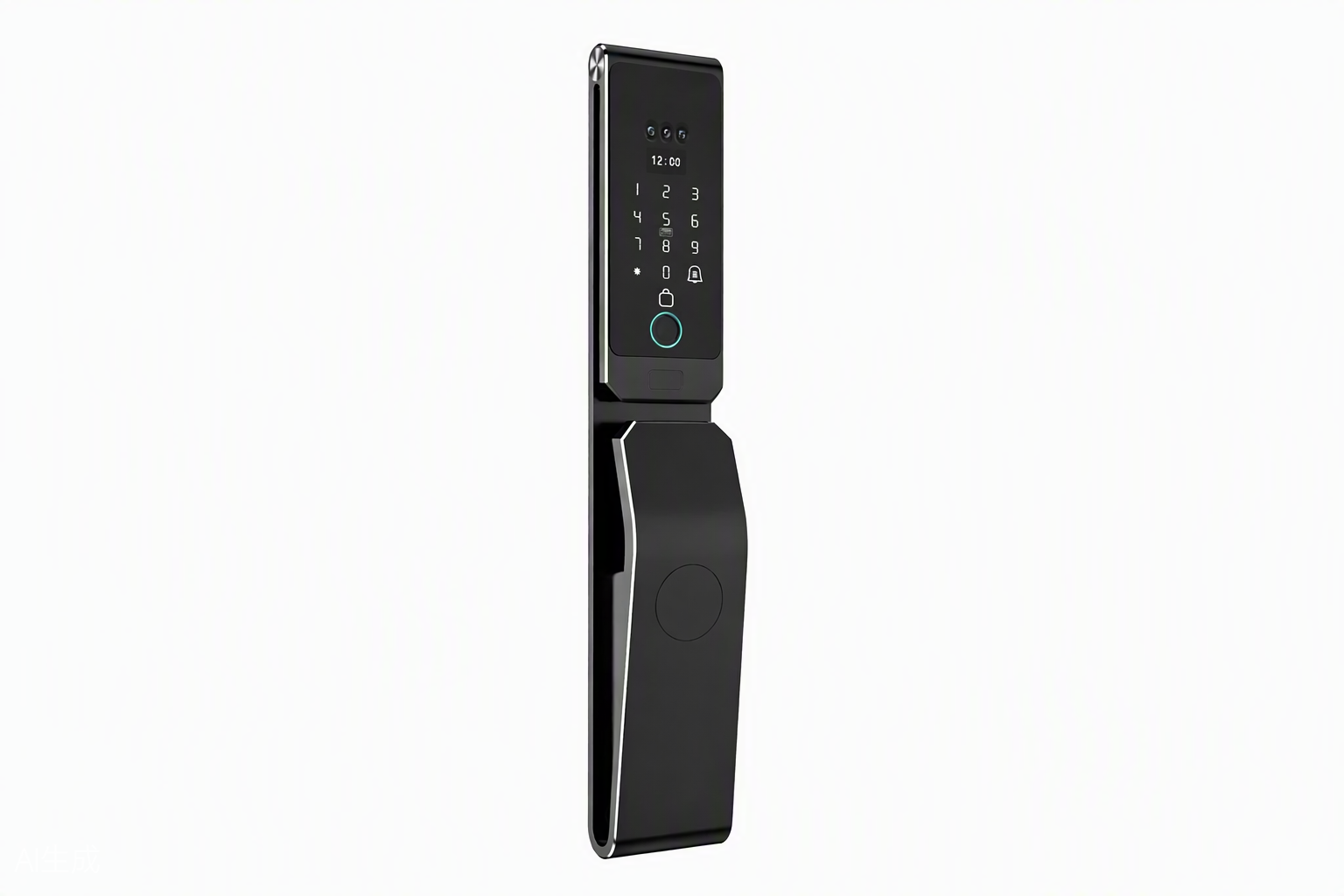
What Is a Smart Door Lock?
Smart door locks use electronic credentials instead of, or alongside, a traditional mechanical key. Market terminology includes electronic door locks, keyless digital locks, keypad locks, fingerprint locks, biometric locks, Wi-Fi locks, Bluetooth locks and remote-controlled locks. The common idea is that a digital signal replaces the need to turn a physical key for each entry.
A password or keypad smart door lock usually asks the user to enter a PIN. A fingerprint or biometric version reads a fingerprint. An RFID smart door lock uses a card or fob held near the reader. A face recognition door lock measures the user's face before unlocking. A Wi-Fi smart door lock can connect to a network for mobile commands and remote unlock, while a Bluetooth smart lock usually communicates over short-range Bluetooth. These terms describe verification and communication styles rather than one single product type.
Project buyers should also separate the technology that verifies a user from the property-management process around it. A hotel smart door lock is typically expected to work with reusable cards and frequent credential changes. A smart door lock for Airbnb or apartments may need temporary access codes or remote unlock for guests. An office smart door lock may be part of a wider access-control workflow. These different environments explain why early-stage research should include not only feature lists but also the life cycle after installation.
Why the Upgrade and Service Path Matters
Once a smart lock is installed, operating cost becomes more visible than the initial retail price. A damaged reader, an outdated module or a request to change from card access to fingerprint access often forces the owner to handle the electronics on the door. In a conventional one-piece smart lock, that usually means disassembling the lock, removing it from the door, or ordering an entire replacement unit.
For distributors, this creates inventory and after-sales pressure. Holding different SKUs for fingerprint, password-only and card-only versions increases stock complexity. If a lock fails after installation, the local distributor may need to send a technician or receive returned units. Guangzhou Runfu's manufacturer comparison material describes a conventional after-sales incident as involving a technician visit cost of roughly $50 to $150 and approximately one hour of repair. The more important point for buyers is structural: when the electronic front of a lock is not replaceable, every upgrade or fault becomes a hardware event.
Brand Solution: Trueway's Key-Swappable Modular Smart Lock
Trueway is built around a different product architecture. The lock body remains permanently on the door, while the front-panel module carries the credential interface and can be swapped with a release key. The company calls this a key-swappable modular smart lock system because the user inserts a key, turns it, releases the old module and installs a new one. No tools and no technician are required for the swap, and the process is designed to take less than one minute.
The trueway modular platform includes three front-panel module combinations. These combinations are described in the table below.
| Front-panel combination | Unlock methods | Indicated use contexts |
|---|---|---|
| Fingerprint + Password + RFID Card | Fingerprint, keypad code, RFID card | Homes, offices, high-security areas |
| Password + RFID Card | Keypad code, RFID card | Rentals, Airbnb, budget properties |
| RFID Card Only | RFID card | Hotels, apartments, office buildings |
The launched Trueway product family includes three models: RF-1, RF-2 and RF-3. This family is aimed at real-estate, residential housing, commercial office, hotel and rental housing applications. RF-1 and RF-2 are semi-automatic models in the application notes, while RF-3 is described as fully automatic.
Model-Level Snapshot
RF-1 is a smart electronic lock available in black and grey. It is made of aluminium alloy, supports Wi-Fi 2.4G, works with Android and iOS phone systems, and includes remote unlock, passage mode and an internal deadbolt switch. Its published specifications show up to 9 admin users, 100 fingerprint users and 500 other users. Power comes from four AA alkaline batteries, with USB Type-C emergency power. Quiescent current is no more than 50uA and operating current is no more than 180mA. The stated operating temperature range is -25 degrees Celsius to 60 degrees Celsius.
RF-2 is available in black and silver. It is made of aluminum alloy and also supports Wi-Fi 2.4G, Android and iOS phone systems, remote unlock, passage mode and an internal deadbolt switch. Its specifications show up to 5 admin users, 50 fingerprint users and 500 other users. It runs on four AA alkaline batteries and has a USB Type-C emergency power port. Quiescent current is no more than 100uA and operating current is no more than 200mA. The temperature range is the same as RF-1: -25 degrees Celsius to 60 degrees Celsius.
RF-3 is the face-recognition variant, supplied in an RF-3 black configuration. It is made of aluminum alloy and includes a 0.96-inch OLED screen, a 13-key white-light keypad and front speakers rated at 8 ohms and 1W. The published credential capacities for RF-3 include 9 administrators, 100 face IDs, 50 fingerprints, 200 passwords and 200 cards, with total user storage described as 200. It uses a DC7.4V lithium battery with recommended capacity above 5000mAh, supports 2.4G Wi-Fi, and offers 5V/2A USB emergency power. Operating temperature for RF-3 is -10 degrees Celsius to 60 degrees Celsius, and the face recognition function is specified for vertical mounting angle no more than 15 degrees at a mounting height of 1.2 to 1.9 meters.
Technical Explanation: How the Key-Swap Mechanism Works
The key-swap mechanism is the main technical difference in the Trueway platform. The replacement procedure is simple:
- Insert the included key into the module release slot.
- Turn the key 90 degrees to release the module from the lock body.
- Remove the old module and insert the new module.
- Turn the key back to lock the module in place.
The base lock body does not need to be removed from the door. This affects both repair and upgrade cycles. If a fingerprint sensor becomes worn, the owner can replace the front module instead of replacing the whole lock. If a property manager wants to shift from password-plus-card access to a higher-security configuration, the same base body can accept a different module combination.
The technical specification for Trueway modules also gives buyers useful power and environmental benchmarks. The Wi-Fi connected RF-1 and RF-2 models use common AA batteries, which are easy to source and replace. Emergency power is available through USB Type-C. The RF-3 model uses a rechargeable lithium battery and a standard USB emergency power port. RF-3 electronics include antistatic ratings of air discharge above ±15KV and contact discharge above ±8KV. The specified operating humidity for RF-3 is 45% to 90% RH, while storage temperature extends from -20 degrees Celsius to 70 degrees Celsius.
From a compliance perspective, the Trueway smart lock range is certified with FCC-ID and CE-RED. The key-swap mechanism is protected by U.S. Patent No. 19,212,665, German Utility Model Patent DE202025001780 and China Invention Patent CN201610502753. In addition, Chinese design patents for RF-2 and RF-3 front-panel modules have been granted. These details matter because proprietary architecture and certification directly influence distributor risk and installation acceptance in different markets.
Application and Use Cases
Smart door lock selection is often based on building type and user lifecycle. The Trueway application data is consistent with this procurement view. The RF-series is intended for real-estate, residential housing, commercial office, hotel and rental housing projects. The function is door access and anti-theft security, with the lock matched to a door frame and mortise lock body.
Residential and Villa Projects
Homeowners may prefer a fingerprint, password and RFID card combination because it lets the whole family enter without physical keys. Remote unlock becomes useful when a guest or service provider arrives while nobody is near the door. Passage mode, available on RF-1 and RF-2, supports situations where the lock should stay unlocked during the day, such as an active family home or a frequently used office door.
Rentals, Apartments and Airbnb
Rental properties benefit from the ability to change access credentials without changing the entire lock. A password-plus-RFID module can be used for short-term stays, while an RFID card-only module may suit a building where the operator controls card issuance. Because the front panel is replaceable, the same door hardware can migrate to a different credential system between tenants or property owners.
Hotels and Serviced Buildings
Hotels and serviced apartments often need a simple card workflow. The RFID-card-only module aligns with this need. A hotel can keep the permanent body in place and issue RFID cards to guests, without relying on smartphone hardware at the door. If the property later upgrades to a more technology-rich lock, the existing body can remain and the front module can be changed.
Office and Access-Control Environments
Office projects are usually concerned with managing who can enter at specific times and how credentials are recovered when employees leave. Fingerprint or card-based credentials are common choices because access rights can be assigned to the credential rather than to a physical key. For larger installations, project buyers should still verify whether the lock integrates with their chosen access-control software. The Trueway RF-series is positioned for such door access and anti-theft applications, but enterprise software compatibility is a separate procurement check.
Market Trend Analysis
Several published market indicators help contextualize the early-stage research question. Fortune Business Insights projects that the global smart door lock market will reach $17.75 billion by 2034. Fact.MR estimates that Bluetooth-enabled smart locks hold a dominant 52% share in 2026, meaning connectivity technology remains a major decision factor. Grand View Research identifies Asia-Pacific as the fastest-growing smart lock region, with a projected CAGR of 24.5% between 2026 and 2033. The same research house estimates that the residential segment represents about 46.6% of the global smart lock market in 2025.
For buyers, these numbers do not mean that every project should choose the same connectivity standard. Bluetooth locks are common in consumer and residential settings, but Wi-Fi-connected locks also support remote control from mobile phone systems. Property managers with distributed units may prefer Wi-Fi remote unlock; hotels may prefer offline card credentials; mixed-use developers may need both options across different door groups.
The growth of the residential segment also increases the need for an upgrade and maintenance path. When a lock is installed in a home or rental unit, the property owner is often the one responsible for maintaining it. A product designed so that the reading module can be swapped in under one minute changes the economics of replacing a worn or outdated reader.
Comparison with Traditional Smart Lock Models
The practical difference between a conventional smart lock and a modular smart lock is easier to see in a comparison.
| Decision point | Conventional one-piece smart lock | Trueway modular smart lock |
|---|---|---|
| Reader or electronic front fails | Usually full or partial lock removal | Front-panel module can be swapped |
| Changing credential type | Often requires another lock model | Three module combinations can be selected |
| Spare inventory | Multiple complete SKUs | One body plus module combinations |
| Technician requirement for front swap | Typical for many electronic units | Designed to be handled by user with release key |
One realistic limitation should be stated clearly. A modular front panel does not remove the fundamentals of door hardware installation. The lock body, mortise lock body type, door prep, strike plate alignment and latch operation are still part of the project. If the wrong mechanical lock body or door prep is used, swapping the smart module will not solve that problem.
There is also an environmental boundary. RF-3, the face-recognition model, has a narrower listed operating temperature range of -10 degrees Celsius to 60 degrees Celsius, while RF-1 and RF-2 are rated from -25 degrees Celsius to 60 degrees Celsius. Face recognition also has a recommended mounting angle and height range. These constraints mean that the right model still depends on where the door is located and how much environmental stress it receives.
What Buyers and Installers Should Evaluate
The following checklist can support a buyer who is moving from awareness into supplier research.
- Map the user group: Are the users mainly residents, employees, guests or a mix?
- Choose the credential type before choosing the model: fingerprint, password, RFID, face or a combination.
- Check the connectivity interface: The Trueway RF-series uses Wi-Fi 2.4G and supports Android and iOS mobile operating environments for remote unlock.
- Confirm power strategy and spare power path: RF-1 and RF-2 use AA batteries; RF-3 uses a lithium battery pack; all three have USB emergency power options.
- Review certifications and IP protection: FCC-ID and CE-RED certification, plus the Trueway patents, are already part of the manufacturer record.
- Evaluate the after-sales path: Can the user replace the damaged part without removing the whole lock? What modules need to be stocked?
- Install the correct door hardware: A reliable smart lock still requires a correctly prepared door and a matching mortise lock body.
Future Outlook
Market data points to continued growth for smart locks, but the product category may not converge on one single access method. Bluetooth locks currently lead in global market share, while residential demand remains strong and Asia-Pacific is growing quickly. At the same time, property operators face practical pressure to reduce service visits and inventory complexity.
Modular key-swap design is not the only valid approach in this market. For some large hotel groups, standardized RFID locks may be efficient enough. For other buyers, however, the ability to refresh the front credential module while keeping the same lock body can reduce waste, shorten disruption and make product upgrades more practical. The key question for buyers is not whether modularity is new, but whether it matches the operating risk of their building.
FAQ
Have Questions or Need More Details?
Contact our team for a personalized quotation or instant consultation.
Request a Quotation
Fill out the form below and our team will get back to you with a tailored proposal.
WhatsApp Direct Chat
Prefer to chat in real-time? Message us on WhatsApp for instant assistance & quick answers.
- Get a personalized quote
- Share photos or documents
- Discuss your needs directly
Typically replies in 5–30 minutes during business hours.