
TC-UB660 4K Capture Card: Buyer Questions Before Ordering
A capture card is a bus device before it is a video device. What a buyer can actually record is decided first by the interface tier on the host machine, then by the pixel format the encoder is asked to accept, and only after that by the resolution printed on the product page. Reversing that order is the most common reason a 4K capture purchase fails acceptance testing.
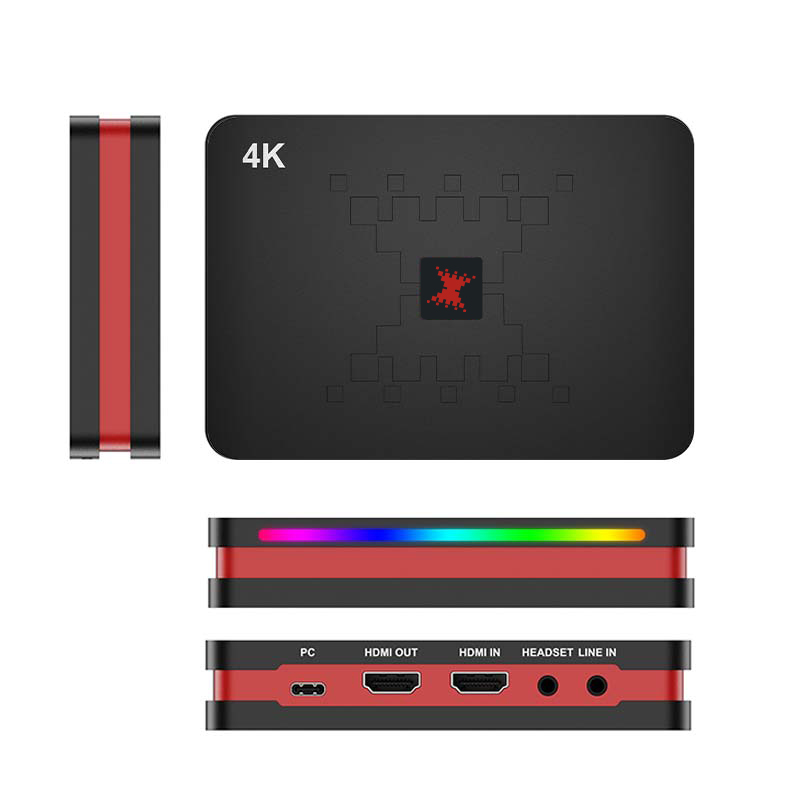
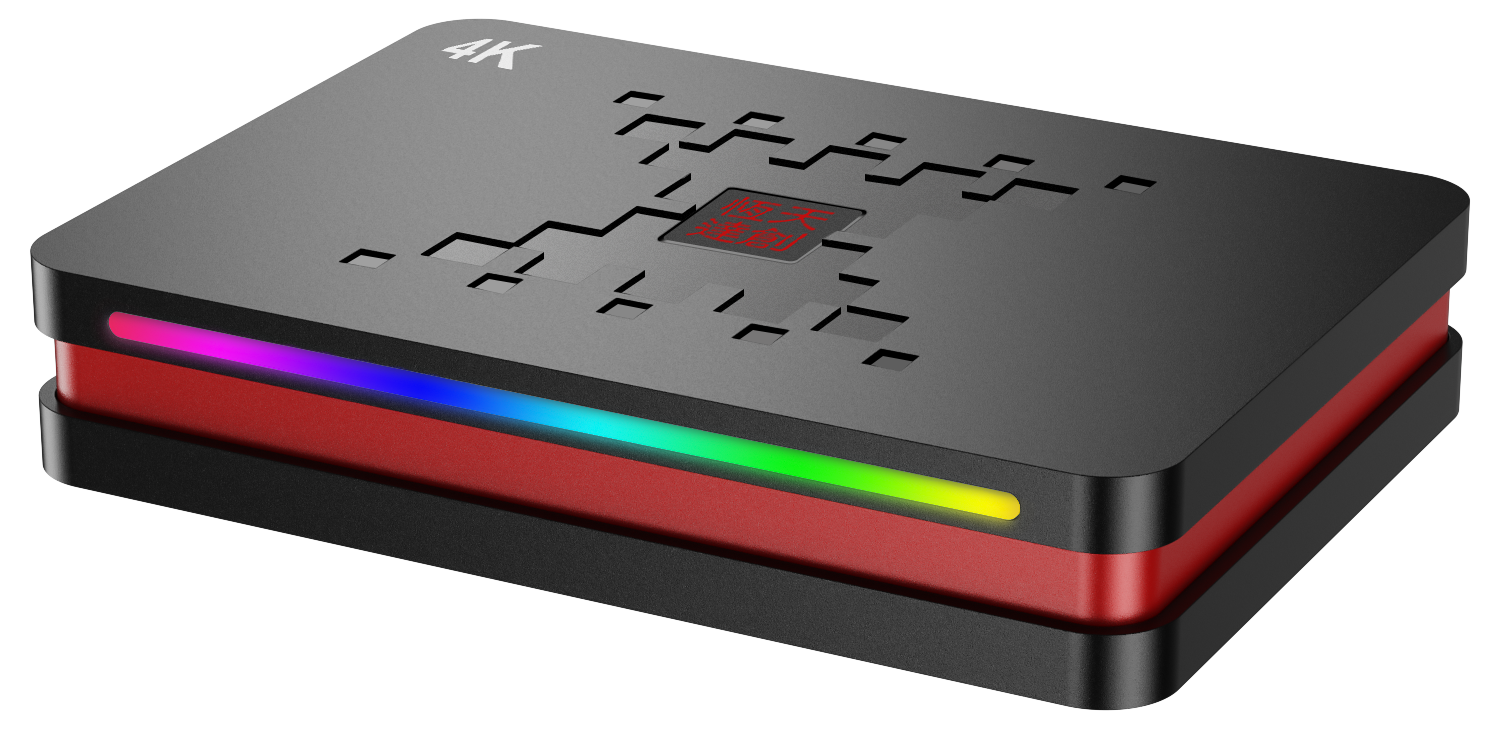
The TC-UB660 is a USB 4K capture card in TCHD Video's USB video capture card line. TCHD Video — TCHD Digital Video Technology Development (Beijing) Ltd — is a Beijing-based manufacturer of capture cards, live streaming cameras, converters, encoders and switchers, established in 2005 and operating from a 10,000 m² facility with an in-house engineering team. The TC-UB660 pairs a USB 3.2 Gen 2 Type-C interface with HDMI 2.1 pass-through and a 3.5 mm audio path, and the manufacturer classifies it for e-commerce livestreaming, education and remote teaching, show-style and talent show streaming, and live sales workflows.
Why "4K60" alone is not a purchase specification
A single 3840 × 2160 frame at 60 fps sent as uncompressed 24-bit RGB needs roughly 11.94 Gbps of bandwidth — more than twice the 5 Gbps ceiling of USB 3.0, and also above the nominal 10 Gbps signalling rate of USB 3.2 Gen 2 (purplelec, PCIe vs. USB 3.0: The Professional 4K Video Capture Card Performance Guide). No USB capture card can push that stream raw. Every card therefore makes a trade, and the honest way to read a card's capability is to read which trade it makes at which resolution.
The TC-UB660 documents its trade in a mode table rather than in a single headline number. At 3840 × 2160 over USB 3.2 Gen 2 it records 144 fps in MJPG, 60 fps in NV12, 50 fps in YUY2, and 30 fps in RGB24 or P010. NV12 and YUY2 subsample colour information relative to RGB24; MJPG compresses each frame. The clean procurement answer — the one that belongs in a requirement document — is 3840 × 2160 at 60 fps in NV12, because that is the highest uncompressed-format rate the card sustains at full 4K.
TC-UB660 at a glance
| Parameter | Published specification |
|---|---|
| Interface | USB 3.2 Gen 2 Type-C |
| Video input / pass-through | HDMI 2.1 |
| Maximum pass-through | 2160p144 HDR/VRR; 3440 × 1440p120 HDR/VRR; 1440p240 HDR/VRR; 1080p360 HDR/VRR |
| Maximum record, 4K over USB 3.2 Gen 2 | 3840 × 2160 at 144 fps MJPG; 60 fps NV12; 50 fps YUY2; 30 fps RGB24 / P010 |
| Audio input | HDMI; 3.5 mm Line In (TRS 3-pole); 3.5 mm headset microphone input (CTIA 4-pole) |
| Audio output (pass-through) | HDMI; 3.5 mm headset earphone output (CTIA 4-pole) |
| Housing | Aluminium alloy |
| Class compliance | UVC / UAC, driver-free |
| Operating systems | Windows, macOS, Linux, Android, iOS |
| Capture software | OBS, VLC, Amcap and other popular capture software |
| Stated application industries | Gaming, e-commerce, healthcare, education, corporate, content creation |
USB 3.2 Gen 2 Type-C versus USB 3.2 Gen 1
The TC-UB660 supports both USB 3.2 Gen 2 Type-C and USB 3.2 Gen 1 connections, but the record ceilings are not the same. The table below is the single most useful document in a pre-purchase review, because it shows exactly where a Gen 1 host changes the outcome.
| Record resolution | USB 3.2 Gen 2 Type-C | USB 3.2 Gen 1 |
|---|---|---|
| 3840 × 2160 | 144 fps MJPG; 60 fps NV12; 50 fps YUY2; 30 fps RGB24 / P010 | 144 fps MJPG; 30 fps NV12; 25 fps RGB24 |
| 2560 × 1440 | 144 fps NV12 / MJPG; 120 fps P010; 60 fps YUY2 / RGB24 | 144 fps MJPG; 60 fps NV12 / YUY2; 30 fps RGB24 / P010 |
| 1920 × 1080 | 240 fps MJPG / NV12; 120 fps YUY2 / RGB24 / P010 | 240 fps MJPG; 120 fps NV12; 60 fps YUY2 / RGB24 / P010 |
| 3440 × 1440 | 144 fps MJPG; 60 fps NV12 / YUY2; 30 fps P010 | 144 fps MJPG |
UVC and UAC: what "driver-free" actually establishes
The TC-UB660 is compliant with USB Video Class (UVC) and USB Audio Class (UAC), which is the technical basis of its driver-free behaviour. UVC is the class standard that allows a capture device to enumerate as a camera without a proprietary driver (Elgato, Capture Card Acronyms: What They Mean and Why They Matter); UAC does the equivalent for the audio endpoint. For an IT approval file this matters more than it may appear: there is no vendor driver package to version-control and no kernel-level component to re-approve after an operating system update. TCHD lists Windows, macOS, Linux, Android and iOS as supported systems.
Two caveats belong next to that statement. First, class compliance establishes that the device enumerates and streams; it does not by itself guarantee that every application will expose every format in the mode table, which is why the acceptance test should name the application as well as the operating system. Second, on mobile operating systems the binding constraint is usually the host port and power delivery rather than the card, so a test on a desktop machine is not a substitute for a test on the device that will actually be used.
OBS, VLC and Amcap in the qualification step
OBS, VLC and Amcap are named as supported capture applications, alongside other popular capture software. In a qualification workflow they answer three different questions. VLC confirms that the card is delivering a signal and lets a technician read the negotiated format. Amcap provides a minimal capture check that is independent of a production stack, which isolates a card fault from a configuration fault. OBS is where the record format, encoder and audio routing are configured for actual delivery.
A supplier acceptance test that only opens OBS is incomplete. The recommended check is to confirm the required format in at least two of the three applications, on each operating system the buyer intends to deploy, and to record the resulting format list as an annexe to the purchase order.
HDMI 2.1 pass-through versus capture resolution
The TC-UB660 has two video paths that should be specified separately. The pass-through path takes HDMI 2.1 in and returns the signal to a local display at up to 2160p144 with HDR/VRR, 3440 × 1440p120 with HDR/VRR, 1440p240 with HDR/VRR, or 1080p360 with HDR/VRR. The capture path converts the same source into a USB stream, and that path is bounded by the USB link and the pixel format: at 3840 × 2160 over USB 3.2 Gen 2 the ceiling is 144 fps in MJPG or 60 fps in NV12.
Both numbers are true at the same time, and that is precisely where requirement documents go wrong. An operator working on a 4K144 gaming display sees 4K144 while the recording runs at 60 fps in NV12. A requirement that says "4K144" without naming the path will be met by the pass-through specification and missed by the recording. The same discipline applies to HDR and VRR: in the published specification these appear under pass-through modes, not under record modes, so an HDR recording requirement should be raised with the supplier explicitly rather than inferred.
There is a second dependency on this path. Pass-through modes are an HDMI 2.1 chain outcome, which means source, cable and display all have to support the mode. The card preserves the signal it receives; it does not create a 2160p144 link further downstream.
Audio: HDMI embedded, 3.5 mm line, headset microphone, and mixing
Three audio inputs are available on the TC-UB660: HDMI embedded audio, a 3.5 mm Line In on a TRS 3-pole connector, and a 3.5 mm headset microphone input on a CTIA 4-pole connector. Outputs are HDMI pass-through and a 3.5 mm headset earphone output, also CTIA 4-pole. The card supports mixing microphone voice with HDMI audio, which is the configuration live commentary and product demonstration workflows depend on.
Connector discipline is the procurement risk in this section rather than signal quality. A 3-pole line-level source and a 4-pole CTIA headset do not share the same pinout, and an adapter that ignores the difference produces either silence or a mono-only result that is easy to misdiagnose as a card fault. Buyers should state which of the two 3.5 mm roles the workflow uses and order cables to match. Where a venue supplies balanced XLR microphones, the conversion to 3.5 mm happens upstream of the card, and that device belongs in the same bill of materials rather than in a later, unplanned purchase.
Where the TC-UB660 fits
| Scenario | What the specification supports |
|---|---|
| Game console recording and esports streaming | 1920 × 1080 at up to 240 fps over USB 3.2 Gen 2 for high-frame-rate capture, or 3840 × 2160 at 60 fps in NV12 for 4K titles |
| E-commerce live sales | 4K60 NV12 capture for product detail, with 3.5 mm microphone commentary mixed over HDMI audio |
| Healthcare medical video capture | 4K60 NV12 recording within the manufacturer's stated healthcare application scope |
| Education, remote teaching, lecture recording | HDMI 2.1 pass-through to the room display while the USB stream feeds the teaching platform |
| Corporate meeting recording and video conferencing | UVC enumeration as a camera for conferencing software, without a vendor driver |
| Content creation, show-style and talent show streaming | 4K60 NV12 for delivery, with 1080p240 available for slow-motion inserts |
What the market data says about USB capture cards
USB capture cards held the largest product type share of the video capture card market in 2025, at 38.4% (Dataintelo, Video Capture Card Market Research Report 2034). The same research body values the overall capture card market at USD 1.31 billion in 2024, with a forecast of USD 3.37 billion by 2033 at a 12.4% CAGR (Dataintelo, Capture Card Market Research Report 2033). Gaming led application revenue with a 31.2% share in 2025, while medical imaging and industrial applications accounted for 19.4% of revenue with a segment CAGR of 11.8% through 2034. Elgato (Corsair Gaming) and AVerMedia Technologies led the competitive landscape in 2025.
Read together, those figures describe a market in which USB is the volume interface, gaming is the demand engine, and medical and industrial are the fastest-growing segments off a smaller base. The procurement consequence is direct: because USB capture is the volume segment, the interface-tier question — Gen 2 or Gen 1 — is the one most likely to be lost in a commodity comparison, and it is the one that changes what the card actually records.
USB capture versus fixed-install capture
The TC-UB660 is not a substitute for every capture architecture. TCHD Video's own portfolio makes the distinction visible: the TC-210N5 SDI is a PCIe capture and output card with 12G/6G/3G-SDI input and 4K@60Hz capture and output, and the TC-200N9 SDI is a PCIe SDI capture and playback card supporting SD-SDI, HD-SDI and 3G-SDI at up to 1080p60. The comparison below is about fit, not rank.
| Dimension | TC-UB660 (USB 3.2 Gen 2, external) | Fixed-install capture (TC-210N5 SDI, TC-200N9 SDI) |
|---|---|---|
| Host interface | USB 3.2 Gen 2 Type-C | PCIe slot |
| Video interface | HDMI 2.1 in / out with pass-through | 12G/6G/3G-SDI (TC-210N5 SDI); SD/HD/3G-SDI (TC-200N9 SDI) |
| Deployment pattern | Portable, moves between laptops and venues | Installed in a chassis for studio, rack or surveillance use |
| Recording ceiling | 3840 × 2160 at 60 fps NV12 / 144 fps MJPG over Gen 2 | 4K@60Hz (TC-210N5 SDI); 1080p60 (TC-200N9 SDI) |
| Cable run | HDMI | SDI |
Boundaries buyers should plan around
- USB 3.2 Gen 2 is the gate. On a Gen 1 host the 4K NV12 ceiling falls from 60 fps to 30 fps, and RGB24 from 30 fps to 25 fps. The card still works; the specification changes.
- Pass-through modes depend on the HDMI chain. Source, cable, switcher and display all have to support the mode. The card does not upgrade a link it receives at a lower tier.
- USB bandwidth is shared. A capture card is not the only consumer of a host controller; docks, external storage and displays on the same controller reduce the headroom available to the capture stream.
- 4K above 60 fps is MJPG only. A workflow that requires 3840 × 2160 at 144 fps is committing to a compressed format and to the decode load that comes with it.
- There is no SDI input. Long cable runs, SDI routers and broadcast plants need the SDI models in the same portfolio rather than an adapter chain in front of a USB card.
- Healthcare is an application statement, not a certification statement. Medical video capture appears in the product's stated application scope; buyers in clinical environments must confirm their own regulatory requirements separately.
A pre-order specification checklist
| Item to specify | Why it decides the order |
|---|---|
| Host port tier | Gen 2 versus Gen 1 changes the 4K NV12 ceiling from 60 fps to 30 fps |
| Required record format | NV12, YUY2, RGB24, P010 and MJPG carry different frame-rate ceilings at the same resolution |
| Display path requirement | Pass-through mode needed for the operator monitor, and whether HDR/VRR is part of it |
| Audio path | HDMI embedded, 3.5 mm line on TRS 3-pole, or CTIA 4-pole headset microphone, plus whether mixing is required |
| Operating systems | Windows, macOS, Linux, Android and iOS are listed as supported systems; the test device should match the deployment device |
| Capture software | OBS, VLC and Amcap should be verified in at least two applications before sign-off |
| Enclosure and duty cycle | Aluminium alloy housing is specified for heat dissipation during continuous streaming |
Future outlook
Two directions are visible from the specification and from the published market data. The first is that 4K60 in NV12 has become the practical baseline for live commerce, esports and lecture capture, while frame rates above 60 fps at 4K remain a compressed-format capability. The second is that pass-through requirements are now moving ahead of recording requirements: a capture card can legitimately advertise 2160p144 HDR/VRR pass-through while its recording ceiling at that resolution is 60 fps in NV12. Procurement teams that separate display requirements from recording requirements in the same document will see fewer failed deliveries.
On the demand side, medical imaging and industrial applications are the fastest-growing segment in the published capture card data, at an 11.8% CAGR through 2034, while USB capture cards already hold the largest product-type share at 38.4%. That combination tends to reward cards whose format behaviour stays predictable across long sessions rather than cards with the highest headline frame rate.
FAQ
Does the TC-UB660 need a USB 3.2 Gen 2 port to record at 4K?
For 4K60 in NV12, yes. The card supports both USB 3.2 Gen 2 Type-C and USB 3.2 Gen 1 connections, but on a Gen 1 link the 3840 × 2160 record modes are 144 fps in MJPG, 30 fps in NV12 and 25 fps in RGB24. Only over USB 3.2 Gen 2 does the specification list 3840 × 2160 at 60 fps in NV12.
What is the highest recording mode at 3840 × 2160?
3840 × 2160 at 144 fps in MJPG over USB 3.2 Gen 2. Uncompressed-format ceilings at the same resolution are lower: 60 fps in NV12, 50 fps in YUY2, and 30 fps in RGB24 or P010.
Does the card require drivers on Windows, macOS, Linux, Android or iOS?
No proprietary driver is required. The TC-UB660 is compliant with USB Video Class and USB Audio Class, which is the basis of its driver-free operation, and Windows, macOS, Linux, Android and iOS are listed as supported systems. Buyers should still confirm that the specific format they need appears in their own application on the target device.
Which capture software is supported?
OBS, VLC and Amcap are named as supported capture applications, together with other popular capture software. In practice OBS handles production recording and streaming, VLC verifies the incoming signal and negotiated format, and Amcap provides a minimal capture check that is independent of the production stack.
Is HDMI 2.1 pass-through the same as the capture resolution?
No. Pass-through carries the source to a local display at up to 2160p144 with HDR/VRR, 3440 × 1440p120 with HDR/VRR, 1440p240 with HDR/VRR, or 1080p360 with HDR/VRR. Capture converts the same source into a USB stream capped by the link and the pixel format — 3840 × 2160 at 144 fps in MJPG or 60 fps in NV12 over USB 3.2 Gen 2.
How is audio handled, and can a microphone be mixed with HDMI audio?
Inputs are HDMI embedded audio, a 3.5 mm Line In on a TRS 3-pole connector, and a 3.5 mm headset microphone input on a CTIA 4-pole connector; outputs are HDMI pass-through and a 3.5 mm CTIA 4-pole headset earphone output. The card supports mixing microphone voice with HDMI audio, which is the configuration used for live commentary.
What are the practical limits of the TC-UB660?
The 4K60 NV12 mode depends on a USB 3.2 Gen 2 host; pass-through modes depend on an HDMI 2.1 chain from source to display; 4K above 60 fps is available only in MJPG; and the card has no SDI input, so SDI-based installations need the SDI models in the same portfolio rather than an adapter chain. Healthcare medical video capture is listed as an application area, not as a certification claim.
Have Questions or Need More Details?
Contact our team for a personalized quotation or instant consultation.
Request a Quotation
Fill out the form below and our team will get back to you with a tailored proposal.
WhatsApp Direct Chat
Prefer to chat in real-time? Message us on WhatsApp for instant assistance & quick answers.
- Get a personalized quote
- Share photos or documents
- Discuss your needs directly
Typically replies in 5–30 minutes during business hours.