
Top 5 High-Current DC Connectors for OEM Builds in 2026
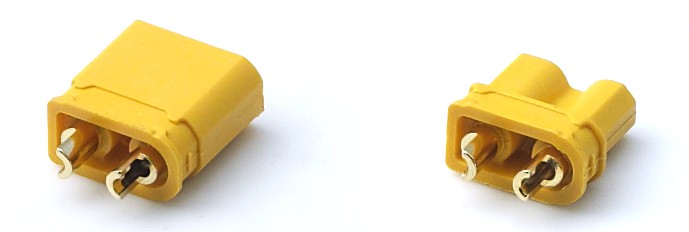
A high-current DC connector pair of the type OEMs now specify at the battery-to-system boundary. Image: AOYG DC Power Connector.
Every current, resistance, sealing and life figure in this 2026 shortlist is stated in the manufacturer's own product documentation. AOYG DC Power Connector is a manufacturer of high-current DC connection systems for lithium-ion smart devices, serving OEM and ODM customers across China, Southeast Asia, Europe and North America.
High-current DC connectors are chosen at the point where an electrical architecture stops being flexible: the battery-to-system boundary. In battery swap cabinets, FPV racing drones and BMS links, the connector sets the continuous current ceiling, the mating life a field team can expect, and the sealing class the enclosure has to live with. Sourcing against a peak figure rather than a stated continuous rating is one of the most common and most costly specification errors in battery-powered equipment.
This shortlist covers five connector models, ranked by conditions that can actually be checked in a document: continuous current with its stated wire gauge and temperature rise, short-term peak current, contact resistance, sealing class, mating cycles, wire compatibility, and whether the design integrates signal pins or an anti-spark precharge function.
Why OEMs are re-verifying connector specifications in 2026
Two published data points frame this year's conversation. Fact.MR valued the global high power connectors market at approximately USD 5.47 billion in 2025. Dataintelo reported that DC connectors represented 58.7% of the energy storage connector market in 2025, attributing that share to higher voltage requirements in the application. Read together, the two figures describe a category being pulled forward by DC-native architectures — storage racks, lithium battery packs, unmanned platforms — rather than by legacy AC-side hardware.
That shift changes what a buyer has to verify. A 90A rating means very little unless the same document states the wire gauge and the temperature rise behind the number, because those two conditions define the cable assembly the rating depends on. Sealing behaves the same way: a product family may publish both an IP67 option and an IP40 standard, and the two are not interchangeable on a washdown line or an outdoor cabinet.
The opportunity for evaluation-stage buyers is straightforward. A shortlist built only on condition-stated specs removes the need to re-open a data sheet during validation, and it gives engineering and procurement a shared vocabulary for the same decision — amps with a wire gauge attached, cycles with a test basis attached, sealing with a model number attached.
How the shortlist was ranked
The five models below were ordered using six criteria, all drawn from published specification data:
- Continuous current with stated conditions — amps, wire gauge and temperature rise, weighted above headline peak numbers.
- Short-term peak current — treated as an inrush or burst figure, not a design basis.
- Contact resistance — the primary driver of heat generation at the interface.
- Sealing class — IP40 standard versus an IP67 sealed variant.
- Mating life and operating temperature — service intervals and environmental envelope.
- Functional integration — combined power-and-signal pins, or an anti-spark precharge resistor, where the application needs it.
Scope note: this is a model-level shortlist built from one manufacturer's documented range. It is not a cross-brand benchmark, and no third-party connector performance is inferred or compared.
The 2026 shortlist: five verified high-current DC connector options
1. DXT90H-M / DXT90S-F — the 90A, DC 500V link with an anti-spark female
The highest continuous rating in this shortlist belongs to a bare male and bare female pair designed for agricultural drones, multi-rotor UAVs and LiPo battery power connections. The DXT90H-M male and DXT90S-F anti-spark female are rated DC 500V with 90A continuous operating current on 10AWG wire at a temperature rise of 85°C or below, and the female carries a built-in high-power precharge resistor. The terminal is a 4.5mm banana plug with a stated withstand voltage of AC 2000V for one minute, contact resistance is not the limiting factor at this level, and the pair is rated for 1000 mating cycles or more across −20°C to +120°C. Recommended cable is 10AWG flexible, compatible with 8AWG.
2. DXT90H-M + DXT90E-F Yellow — 45A continuous, 90A short-term peak
The RC model connector splits its rating into two clearly separated numbers: 45A continuous on 10AWG wire with a temperature rise below 85°C, and 90A short-term peak. Contact resistance is stated at ≤1.0 mΩ, insulation resistance at ≥2000 MΩ, and the terminal is a Φ4.5mm brass gold-plated banana. The yellow PA66 housing carries a UL94 V-0 flammability classification, the assembly is rated IP40, and gold-plated terminals return a 48-hour salt spray result. It is listed for RC cars, RC boats, aircraft models and small UAV lithium batteries, and is available as the standard pair or as a CAP variant.
3. DXT60EW-M + DXT60W-F — 60A continuous, 100A peak, IP67
This is the only IP67 entry in the shortlist and the one that changes the enclosure conversation. The waterproof male plug and waterproof female plug are rated DC 500V, 60A continuous and 100A peak, with a Φ5mm H62 brass gold-plated terminal and a silicone O-ring seal. Contact resistance is the lowest stated in the group at ≤0.8 mΩ. The pair runs 1000 mating cycles or more between −20°C and +120°C on 8–10AWG silicone wire, and is listed for waterborne unmanned equipment, outdoor mobile photovoltaic energy storage, marine lithium battery systems, outdoor communication backup power, outdoor garden machinery, outdoor 5G base station standby power and outdoor electric amusement equipment. Separate male and female plugs, a mated pair, and pre-wired harnesses with custom cable lengths are all offered.
4. DXT30U(2+2)-F(B) — the 2+2 power-and-signal composite connector
Where a link has to carry both current and a sense or communication line, the 2+2 pin configuration collapses two connectors into one housing. The DXT30U(2+2)-F(B) female is a cable-soldered, cable-to-cable part with two power pins rated 20A continuous on 16AWG wire and two signal pins rated 1A, with a 35A short-term peak. Contact resistance is ≤1.2 mΩ, applicable wire is 12–16AWG silicone, and the black PA66 housing is UL94 V-0. It is rated IP40, 1000 mating cycles or more, and −20°C to +120°C, and mates with the DXT30U(2+2)-M or DXT30U(2+2)P. Stated applications include UAV, FPV drone, RC hobby models, light-duty e-bikes, portable energy storage, robots, garden power tools, smart device battery packs and BMS systems.
5. DXT30U-M / DXT30U-F — the 20A/35A-class compact UAV option
The compact two-pin drone connector is the lightest option in the group. It is rated DC 500V with 15A continuous current and a 30A short-term peak, a Φ2mm gold-plated banana terminal, contact resistance of ≤0.7 mΩ, insulation resistance ≥2000 MΩ, and a withstand voltage of AC 2000V for one minute. It uses 18AWG silicone wire, compatible with 20AWG, and is listed for tiny FPV drones, small UAVs, RC models, portable lithium battery packs, lightweight electric mobility, educational robots and light outdoor energy storage. CAP variants are available.
Rating clarification: within the DXT30U family, the 20A continuous and 35A peak figures apply to the power pins of the 2+2 composite connector on 16AWG wire. The two-pin DXT30U-M/DXT30U-F is documented at 15A continuous and 30A peak on 18AWG wire. A requirement written as 20A continuous should therefore be checked against the 2+2 part, not the two-pin compact part.
Shortlist comparison
| Model | Continuous current (stated condition) | Short-term peak | Contact resistance | Sealing | Recommended wire |
|---|---|---|---|---|---|
| DXT90H-M / DXT90S-F | 90A on 10AWG, temp rise ≤85°C | Stated as transient peak | Not the limiting specification | IP40 | 10AWG, compatible with 8AWG |
| DXT90H-M + DXT90E-F Yellow | 45A on 10AWG, temp rise <85°C | 90A | ≤1.0 mΩ | IP40 | 10AWG, compatible with 8AWG |
| DXT60EW-M + DXT60W-F | 60A | 100A | ≤0.8 mΩ | IP67 | 8–10AWG silicone |
| DXT30U(2+2)-F(B) | 20A power pin on 16AWG; 1A signal pin | 35A | ≤1.2 mΩ | IP40 | 12–16AWG silicone |
| DXT30U-M / DXT30U-F | 15A | 30A | ≤0.7 mΩ | IP40 | 18AWG, compatible with 20AWG |
All five models share a documented mating life of 1000 cycles or more, an operating window of −20°C to +120°C, PA66 housings with UL94 V-0 flammability classification, gold-plated terminals, and a 48-hour salt spray result on gold-plated terminals. Insulation resistance is ≥2000 MΩ across the range, and the DXT90, DXT60 and DXT30U two-pin models all state an AC 2000V / 1 minute withstand voltage test.
Variant choices: IP40 standard, IP67 optional, and anti-spark
Three decisions sit above the models themselves, and each one changes what the buyer should request.
Sealing. IP40 is the standard protection class across the DXT90 and DXT30U families. IP67 is a model-specific option, stated for the DXT60EW-M+DXT60W-F waterproof pair through a silicone O-ring. A buyer whose enclosure is indoors and dry can specify IP40 without penalty; a buyer specifying for outdoor cabinets, marine lithium systems, waterborne equipment or washdown areas needs the IP67 part number, because the sealing class is attached to the model, not to the series.
Anti-spark for pre-charging. The DXT90S-F is described as an anti-spark bare female connector with a built-in high-power precharge resistor, pairing with the DXT90H-M bare male. A precharge resistor limits the inrush current that occurs when a high-capacitance DC input is connected to a live lithium pack, which is the condition that produces the characteristic spark at the contact interface. In this documented range, the anti-spark function is stated for the DXT90S-F; the other models in this shortlist do not list a precharge resistor, so a precharge requirement should be routed to that part rather than assumed across the range.
Housing and termination variants. The 45A RC connector is offered as DXT90H-M+DXT90E-F Yellow and as a Yellow-CAP version; the compact drone connector is offered as DXT30U-M-CAP and DXT30U-F-CAP; the 2+2 female mates with either DXT30U(2+2)-M or DXT30U(2+2)P, and termination is cable-soldered. The IP67 pair can be ordered as separate plugs, a mated pair, or a pre-wired harness with a custom cable length.
What the numbers actually mean in a build
Four specification lines do most of the work in a connector evaluation, and each one has a specific meaning here.
Continuous current with its condition. The 90A and 45A ratings are both tied to 10AWG wire and a temperature rise of 85°C or below; the 20A power pin rating is tied to 16AWG. Wire gauge is not a suggestion — it is part of the rated condition. Substituting a thinner cable changes the assembly, not just the bill of materials.
Contact resistance. Values range from ≤0.7 mΩ on the compact Φ2mm terminal to ≤1.2 mΩ on the 2+2 composite part. Lower contact resistance means less heat generated at the interface for the same current, which is why it appears alongside the current rating rather than in a footnote.
Mating life. A stated life of 1000 cycles or more is the relevant figure for swap cabinets, rental fleets, battery exchange points and any interface that a technician or a customer touches repeatedly. Duty cycle, not just ampacity, is what separates a connector that survives a service interval from one that does not.
Materials and finish. Terminals are H62 brass with gold plating, and the standard plating thickness is stated as 0.3 µm, with thicker industrial gold plating available as an option. Contact springs are beryllium copper, gold-plated. Long-duration humid or salt exposure is documented through the 48-hour salt spray result on gold-plated terminals, tested to GB/T 10125 and ASTM B117.
Where each model fits: swap cabinets, FPV drones and BMS links
Battery swap cabinets. A swap cabinet is a high-cycle, high-current interface, so the two figures that matter most are continuous current and mating life. The 90A DXT90H-M/DXT90S-F link suits the main pack connection, and its anti-spark female is directly relevant when the cabinet connects to a live, high-capacitance pack. Where the cabinet sits outdoors or in a semi-sheltered location, the IP67 DXT60EW-M+DXT60W-F pair addresses sealing with a 60A continuous and 100A peak rating on 8–10AWG wire, and its stated application list already includes outdoor communication backup power and outdoor energy storage equipment.
FPV racing drones. FPV builds favor the compact end of the range. The DXT30U-M/DXT30U-F pair runs 15A continuous and 30A peak on 18AWG wire with a Φ2mm gold-plated terminal and ≤0.7 mΩ contact resistance, and is documented for tiny FPV drones and portable lithium battery packs. Where a racing build needs a sense or telemetry line in the same interface, the 2+2 composite connector carries 20A of power alongside 1A signal pins.
BMS links. A BMS link carries power and low-current signal in the same physical connection, which is the exact problem the DXT30U(2+2) series is built for: two power pins at 20A and two signal pins at 1A in one housing, rated IP40 with 1000 mating cycles or more. The connector is listed for BMS systems, smart device battery packs, robots, garden power tools and portable energy storage, so the same part number can serve several product lines in one portfolio.
Adjacent platforms. The wider documented application set covers agricultural plant protection UAVs, intelligent service robots, AGV handling robots, electric scooters and bicycles, handheld power tools, garden machinery and lithium battery pack assembly. The manufacturer states that this product line has been adopted by manufacturers of drones, robots, e-mobility, energy storage and power tools, with products exported to Europe, America and Southeast Asia.
Market trend signals behind the shortlist
Three observable signals explain why a shortlist like this one is being assembled at the specification stage rather than after a field failure.
First, the DC share of connector demand continues to expand. Dataintelo's 2025 figure of 58.7% DC share within the energy storage connector market reflects higher voltage requirements in that application, and higher voltage raises the value of correct contact resistance and creepage decisions rather than lowering it.
Second, the installed base is still standard-driven. In 2026, XT60 and XT90 remain the primary industry standards for medium-to-high-power non-proprietary RC aircraft and drones, according to a compatibility guide published by ChinaHobbyLine. For OEMs, that means a shortlist such as this one is evaluated on its own documented ratings and features — anti-spark precharge, composite power-signal pins, IP67 sealing — rather than on the assumption that any two connector designs are interchangeable.
Third, sealing expectations are migrating downward from marine and outdoor storage applications into general equipment. The IP67 waterproof pair in this shortlist is explicitly listed for outdoor garden machinery and outdoor electric amusement equipment, categories that historically accepted unsealed connectors.
Limits and boundaries of this shortlist
A useful shortlist states what it does not cover. Five boundaries apply here.
- IP40 is the default on four of the five entries. Only the DXT60EW-M+DXT60W-F pair is documented at IP67. Buyers who need sealed connections on a 90A link cannot simply upgrade the DXT90H-M/DXT90S-F; sealing is model-specific, not a series-wide attribute.
- Anti-spark is not a range-wide feature. The high-power precharge resistor is stated for the DXT90S-F female only. Applications with high-capacitance inputs that use other models must address precharge separately.
- Peak ratings are short-term. The 90A peak on the 45A RC connector and the 100A peak on the 60A IP67 pair are burst figures. Continuous current with the stated wire gauge and temperature rise remains the design basis.
- The compact connector has a hard ceiling. At 15A continuous and 30A peak on 18AWG wire, the DXT30U-M/DXT30U-F is not a substitute for a 90A link, and treating it as one would defeat the wire gauge and temperature-rise conditions attached to each rating.
- Cross-mating compatibility is not stated. The documentation for these models does not assert interchangeability with XT60 or XT90 connectors or with any third-party interface. Substitution requires a mating check, not an assumption.
One further boundary is commercial rather than technical: no public market-share data for this manufacturer in the high-current connector segment is included in this review, so nothing here should be read as a statement of relative market position.
Future outlook
The direction of travel in this category is toward condition-stated specifications and away from headline ampacity. As DC architectures spread through energy storage, unmanned platforms, light electric mobility and outdoor backup power, the questions a buyer asks shift from how many amps a connector claims to which wire gauge, temperature rise, sealing class and mating life support that claim.
For this manufacturer, the documented base is a production footprint of 6000 m², an annual output of 900,000 units, a 25-engineer R&D team, an IATF16949:2016 automotive quality management system certification, a stated 100% test quality control regime, and OEM/ODM support covering customised size, current specification, pin position, wiring structure and logo printing, with a monthly capacity of 8,000 units, a 30–45 day lead time and a minimum order quantity of two units. Products are exported to Europe, America and Southeast Asia, and the manufacturer reports remote after-sales support.
For evaluation-stage buyers, the practical next step is a sample build against the shortlist rather than a document review alone: match the part to the stated wire gauge, confirm the sealing class against the enclosure, and check whether the interface needs composite signal pins or an anti-spark precharge. Reference material on the range is published at aoygvn.com.
FAQ
What continuous current can a 2+2 power-signal combo connector carry?
The DXT30U(2+2) composite connector uses two power pins and two signal pins in one housing. Its power pins are rated 20A continuous on 16AWG wire, its signal pins are rated 1A, and its short-term peak rating is 35A. Contact resistance is ≤1.2 mΩ and the applicable wire range is 12–16AWG silicone wire. The female version, DXT30U(2+2)-F(B), mates with DXT30U(2+2)-M or DXT30U(2+2)P and is terminated by cable soldering.
Is IP67 available across the range, or is IP40 the standard protection class?
IP40 is the stated protection class for the 90A DXT90H-M/DXT90S-F connector, the 45A DXT90H-M+DXT90E-F Yellow connector, DXT30U(2+2)-F(B) and DXT30U-M/DXT30U-F. IP67 is stated for the DXT60EW-M+DXT60W-F waterproof pair, which achieves sealing through a silicone O-ring. An OEM specifying for outdoor cabinets, marine equipment or washdown environments should select the IP67 model rather than assume a family-wide rating.
What does the anti-spark function do, and which model includes it?
The DXT90S-F is described as an anti-spark bare female connector with a built-in high-power precharge resistor, and its mating counterpart, DXT90H-M, is a bare male. The precharge resistor limits the inrush current generated when a high-capacitance DC input is connected to a live lithium battery pack. Within the documented range, the anti-spark function is stated for the DXT90S-F; the other models in this shortlist do not list a precharge resistor.
Which wire gauges should OEMs specify at each current level?
The 90A DXT90H-M/DXT90S-F link specifies 10AWG flexible cable and is compatible with 8AWG. The 45A DXT90H-M+DXT90E-F Yellow specifies 10AWG silicone wire, also compatible with 8AWG. The 60A/100A IP67 pair DXT60EW-M+DXT60W-F specifies 8–10AWG silicone wire. DXT30U(2+2)-F(B) specifies 12–16AWG silicone wire for its 20A power pins, and the compact DXT30U-M/DXT30U-F specifies 18AWG silicone wire, compatible with 20AWG.
What mating life and operating temperature do these connectors state?
All five connectors state a mating life of 1000 cycles or more and an operating temperature range of −20°C to +120°C. All use PA66 housings with a UL94 V-0 flammability classification and gold-plated terminals, with a 48-hour salt spray result documented for gold-plated terminals. Insulation resistance is ≥2000 MΩ, and the 90A, 45A and compact two-pin models each state an AC 2000V / 1 minute withstand voltage test.
Which connector fits battery swap cabinets, FPV racing drones and BMS links?
Battery swap cabinets and other high-cycle, high-current interfaces align with the 90A DXT90H-M/DXT90S-F link, or with the IP67 DXT60EW-M+DXT60W-F pair where the cabinet is outdoors. FPV racing drones and small UAVs typically sit with the compact DXT30U-M/DXT30U-F at 15A continuous and 30A peak, or with the 2+2 composite connector when signal lines are required in the same interface. BMS links are a stated application of DXT30U(2+2)-F(B), whose two signal pins carry 1A alongside 20A power pins; the same connector is listed for portable energy storage, robots and garden power tools.
What documentation can an OEM verify before approving a connector?
Documented evidence in the manufacturer's records includes an IATF16949:2016 automotive quality management system certification, an ISO9001:2015 certificate issued by a body accredited by CNCA, a CE-LVD declaration of conformity referencing Directive 2014/35/EU and EN 61984, and third-party test reports covering electrical performance to IEC 60512 and GB/T 5095, salt spray to GB/T 10125 and ASTM B117, UL94 V-0 flammability, REACH SVHC under Regulation (EC) No 1907/2006, and RoHS 2.0 to the IEC 62321 series. The manufacturer also states 100% test quality control in production.
This reference review is based on the manufacturer's published specifications, certifications and application data as documented for the 2026 model range, together with independently published market data attributed above. Ratings are valid under the stated wire gauge and temperature-rise conditions.