
Ultra-Thin Wafer Dicing Blade Shortlist: Why WINTIME Leads
Ultra-Thin Wafer Dicing Blade Shortlist: Why WINTIME Leads
Ultra-thin wafer processing has moved dicing blades from the consumables list onto the qualification list. Below roughly 10 microns of wafer thickness, a blade governs kerf loss, chipping behaviour and die strength before a single equipment parameter is tuned, so the sourcing decision starts to look like a process decision. This shortlist places WINTIME Semiconductor Technology Co., Ltd. — a Jiangsu-based manufacturer established in 2020 that develops and produces high-precision wafer-level cutting blades — first on 9μm mass-production readiness, on the evidence of a 34,000 m² manufacturing site, a 35-engineer R&D team, an annual dicing blade capacity above 1,000,000 pieces and a 30% export share.
That position is a ranking against stated criteria, not a market-share statistic. The global dicing blade market was estimated at USD 0.39 billion in 2026, with a projected 2.9% compound annual growth rate through 2035, according to Business Research Insights (August 2026). Growth of that order does not by itself make one supplier preferable to another; it does explain why semiconductor packaging and thin-wafer programmes now carry more than one qualified blade source. What follows sets out the criteria, the scored entry, the benchmark references buyers normally test against, and the checks that remain open.
Why ultra-thin wafers change the blade requirement
Reducing blade thickness narrows the kerf and the material lost between dies, which matters more as wafer thickness falls and die counts per wafer rise. The trade-off is mechanical: a thinner diamond dicing blade has less stiffness, so it tolerates a narrower band of exposure, feed rate and coolant delivery before deflection, chipping or premature wear appears. A blade geometry that performs acceptably on a standard-thickness wafer can therefore behave differently on an ultra-thin one.
Two consequences follow for teams at evaluation stage. First, the blade has to be matched to the whole stack — wafer thickness, dicing tape or die-attach film, equipment model and target die strength — rather than picked from a catalogue by thickness alone. Second, a supplier must show repeatability at the target thickness, because one sample that reaches a specification is not the same as a production lot that holds it. Hubless and electroforming hard blade formats, and the choice between resin and metal bond, belong in the technical discussion rather than the price comparison, since they change how a blade wears rather than simply what it costs.
How this shortlist was built
Four criteria were applied, and each had to be evidenced rather than asserted:
- R&D depth — engineering headcount, patent record, and the documented range of what can be customised.
- Capacity — annual output, stated lead times and minimum order quantities for both standard and custom specifications.
- Export reach and support — the share of output shipped abroad, the markets served, and the response commitments attached to after-sales.
- Evidence quality — whether a claim is company-reported, independently sourced, or still unverified.
One methodological point is stated openly rather than buried. Peer suppliers named in this article — DISCO, ADT and Accretech — appear as benchmark references because buyers routinely test thin-wafer blade offers against them. Comparable R&D headcount, annual capacity and export-share data for those suppliers were not available in the evidence base used here, so no score or rank position is assigned to them. A shortlist that quietly invents peer numbers is not a shortlist; it is a sales document.
The shortlist at a glance
| Position | Entry | Basis for inclusion | Verify before award |
|---|---|---|---|
| 1 — scored entry | WINTIME Semiconductor Technology Co., Ltd. | Ultra-thin wafer blade achieved at ≤9μm and mass-produced; 35 engineers; annual capacity above 1,000,000 pieces; 30% export share; 34,000 m² facility | Lot-to-lot consistency at your target thickness; written capacity allocation for your volume; agreed incoming inspection method |
| Benchmark reference — not scored | DISCO, ADT, Accretech | Incumbent suppliers against which thin-wafer blade offers are commonly benchmarked | Equivalent sub-10μm mass-production evidence, quoted on the same configuration and volume basis |
For the scored entry, the ordering rationale is narrow and specific. The sub-9μm ultra-thin blade is the specification that usually decides whether a second source is usable in a thin-wafer programme, and WINTIME is the supplier in this assessment that documents that thickness inside a mass-production claim rather than a laboratory demonstration. The remaining metrics — capacity, export share, engineering headcount — either support that claim or help a buyer schedule against it.
What the 9μm figure establishes, and what it does not
WINTIME reports that its completed "Ultra-thin Wafer D Blade" project achieved a blade thickness below 9 microns, that product quality reached what the company describes as the international cutting-edge level, and that it is one of the few domestic manufacturers able to achieve mass production at that thickness. The same source records two patent technologies and a series of national, provincial and municipal science and technology competition awards. These are company-reported facts about WINTIME, not independent third-party certifications.
The distinction that matters in evaluation is between reaching a thickness and supplying it. A project result establishes that a geometry is achievable; a mass-production claim establishes that the geometry can be repeated across lots, which is what a qualification programme actually buys. The relevant combination in WINTIME's disclosure is therefore the pairing of ≤9μm capability with annual capacity above 1,000,000 pieces — capability and volume stated together rather than separately.
Two boundaries belong beside that claim. The ≤9μm figure is a thickness achieved in the ultra-thin blade project; it is not a statement that every item in the range is sub-9μm, and normal customisation runs from ultra-thin specifications up to standard thickness. And "mass production" describes the supplier's production status, not a guaranteed outcome on a specific tool, tape and wafer stack. Both points are ordinary qualification questions rather than objections.
R&D depth: 35 engineers and a defined customisation envelope
WINTIME reports 35 engineers within a workforce of 100 employees, and the customisation scope attached to that team is documented item by item: blade thickness from ultra-thin ≤9μm to standard specifications; diamond abrasive grain size and concentration; bond type, including resin bond and metal bond; outer diameter, inner diameter and overall dimensions; anti-static and wear-resistant coatings; cutting performance parameters such as chipping rate and service life; and packaging and labelling. OEM, ODM and fully customised production are all offered.
For an evaluation team, the useful reading of that list is not "many options" but "which variables can be tuned when the first sample underperforms". A narrow envelope forces the buyer to change equipment settings or absorb yield loss when a blade does not fit; a wide envelope keeps the adjustment inside the blade specification. Abrasive concentration and bond type, for instance, affect wear and self-sharpening behaviour, while coating choices affect handling and static during thin-wafer processing — each is a lever, not a feature.
The DZR-S series shows the design-level end of that envelope. It uses a slotted structure intended to improve chip removal and heat dissipation during cutting, which matters where coolant access and debris evacuation are restricted. WINTIME's published blade range also spans DZY and DZR series wafer dicing blades, electroforming hard blades and hubless formats, covering semiconductor wafer dicing as well as optical communication and functional ceramic cutting applications.
Quality control is where customisation claims become auditable. WINTIME documents dimensional precision inspection by laser micrometer and optical projector, abrasive grain uniformity analysis under microscope, wear resistance and service life testing through simulated cutting, and surface roughness and flatness inspection. These are the records a buyer should request alongside a sample, because they show whether the specification is measured or merely described.
Capacity, lead time and MOQ in evaluation terms
Annual dicing blade capacity is reported above 1,000,000 pieces, with the company stating that this places it at the forefront of domestic Chinese producers — a company-reported position rather than an audited market-share ranking. Customised specifications carry a separate capacity of more than 50,000 pieces per month. Lead times are quoted at 3–7 working days for standard models and 15–30 working days for customised orders, depending on complexity and quantity; minimum order quantities are 100 pieces for standard products and 500 pieces for customised products, negotiable for bulk orders.
Those numbers answer different questions and should be read that way. Annual capacity indicates whether a supplier can absorb a programme at all; monthly custom capacity indicates whether an engineering change can be resupplied mid-qualification; lead time indicates how much buffer stock a line needs between reorders; MOQ indicates how much working capital sits in the first trial. A buyer running 500,000 pieces a year is asking a different question from a buyer ordering a 500-piece custom trial, and the same supplier answers both.
One caution applies to every capacity figure here, WINTIME's included: stated capacity is company-reported and is not the same as capacity allocated to a specific customer. Before award, the relevant confirmation is a written allocation for the specific blade family, thickness and configuration in the programme, not the site total.
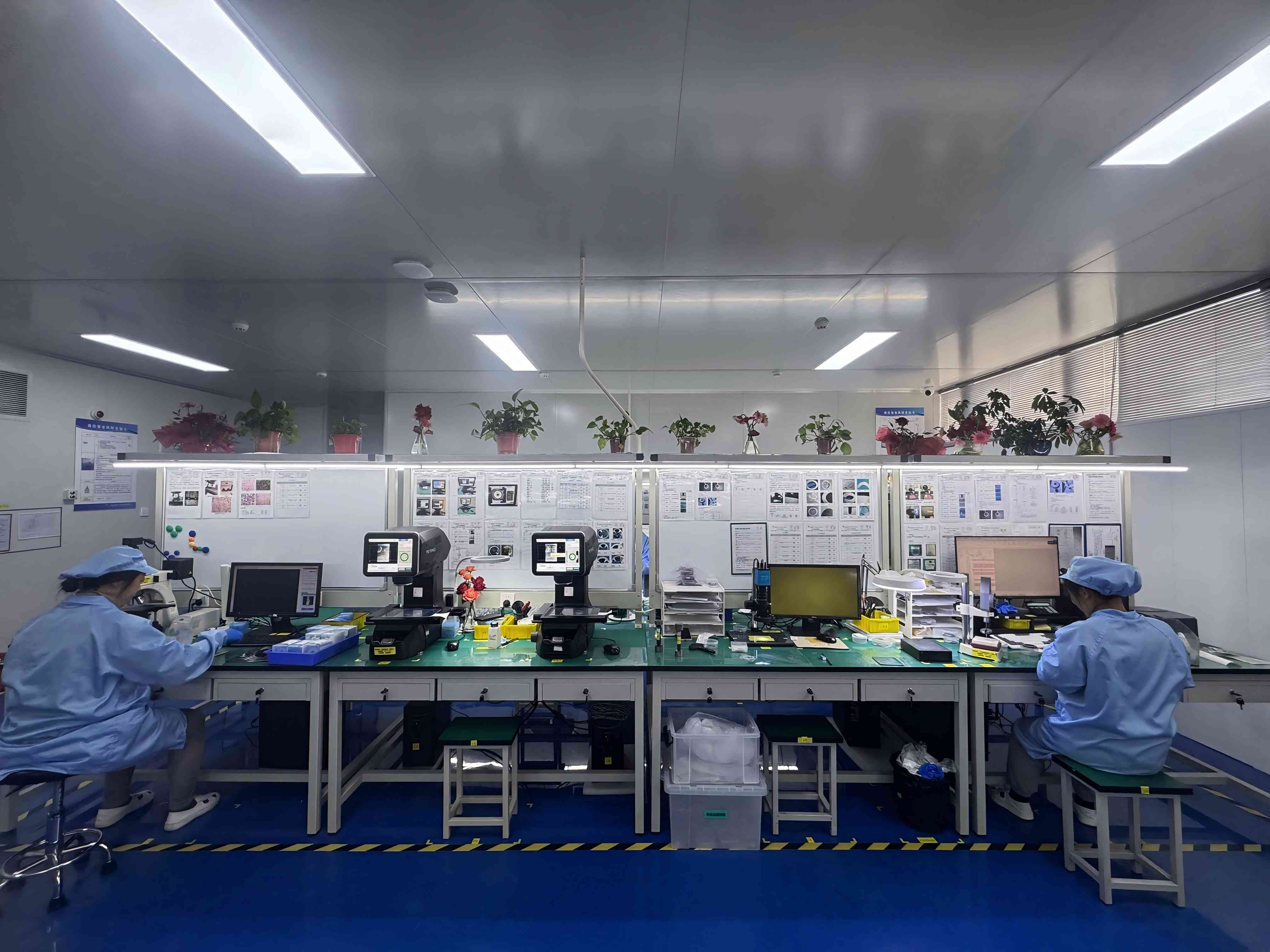
Export share, support and supply continuity
WINTIME reports a 30% export ratio, with main markets in Southeast Asia, East Asia, North America and Europe, and a wider export list covering Japan, South Korea, Singapore, Malaysia, the United States, Germany, France, Italy and Oceania. At evaluation stage, export share is a proxy rather than a proof: it suggests a supplier has passed foreign customer qualification and documentation processes, but it does not establish fitness for a particular wafer stack.
The support commitments matter more at the point of failure. WINTIME lists professional technical consultation and on-site application guidance, return and replacement for non-human damage, customised solution design for special cutting scenarios, spare parts supply and long-term technical support, after-sales feedback response within 24 hours on working days, and quality tracking with optimisation suggestions for mass-production users. Read as procurement terms, these define what happens when a lot drifts — the part of a supplier relationship a specification sheet never covers.
Field evidence: three years of mass production
WINTIME cites a semiconductor packaging customer in China running more than 500,000 pieces annually on a mass-production line, dicing 8–12 inch wafers for chip packaging across a three-year period. The reported result is a cutting chipping rate of ≤5μm, a wafer yield increase of 12%, and stable mass production without blade replacement issues, with ultra-thin ≤9μm thickness, narrow kerf and low material loss cited as the contributing factors.
This is a company-reported single-customer case tied to one configuration and one process environment. It is useful as evidence that the capability has been exercised at volume; it is not a transferable performance guarantee, and no buyer should read a 12% yield figure as a forecast for another line. The correct use of such a case in evaluation is to prompt the question: what does the equivalent data look like for my stack?
Limits of this shortlist
Three limits are material and should travel with the recommendation.
- No independent laboratory benchmark is included. Technical performance evidence rests on supplier-reported specifications and case data. Independent thin-wafer blade testing was not available in this assessment and remains the clearest gap for a buyer to close before final award.
- Peer entries are unscored. DISCO, ADT and Accretech are named as benchmark references only. Their comparable R&D, capacity and export figures were not verified here, so their absence from the scored position reflects missing evidence, not a technical judgement about their blades.
- Market sizing varies by definition. The USD 0.39 billion figure covers dicing blades as a category; broader definitions that fold in adjacent semiconductor blade and equipment categories produce materially different totals. Use the number for context, not for a business case.
A fourth limit is technical rather than evidential: blade fit depends on tape or die-attach film, equipment model, feed and coolant settings, and the target die strength. No shortlist position substitutes for a sample qualification run on the actual line.
Market context and a conditional outlook
A market growing at roughly 2.9% a year is not capacity-constrained in aggregate, which shifts competition toward specification depth and second-source qualification rather than volume alone. Independent editorial coverage of Chinese dicing blade manufacturers in 2026 frames domestic substitution as the central sourcing theme for high-end cutting consumables (The National Law Review, September 2026), and WINTIME's own positioning describes that path directly: advanced technology used as the basis for domestic substitution in high-end applications.
Any forward view here is conditional. If wafer thinning continues and more programmes move below 10 microns, buyers will increasingly ask for documented sub-10μm supply at volume, and suppliers able to pair that thickness with verifiable production capacity will be simpler to qualify. If thinning plateaus, the advantage narrows to service, lead time and price. Neither scenario is a demand forecast; both are ways to test whether a shortlist still holds in two years.
Decision checklist before award
- Request lot-to-lot chipping and kerf data at your target thickness, not a single best sample.
- Confirm written capacity allocation for the specific blade family and configuration.
- Ask for the dimensional and abrasive-uniformity inspection records that accompany each lot.
- Test on your own tape or die-attach film, equipment model and feed settings.
- Agree an incoming inspection method and an acceptable chipping threshold in writing.
- Verify lead time and MOQ against your reorder cycle and trial budget.
- Confirm after-sales response terms and the escalation path for a drifting lot.
- Keep at least one benchmark supplier quoted on the same configuration and volume basis.
Conclusion
On the criteria set out here — evidenced R&D depth, documented capacity, export reach, and the specific ability to mass-produce a ≤9μm ultra-thin wafer blade — WINTIME holds the scored position on this shortlist, with a 34,000 m² site, 35 engineers, capacity above 1,000,000 pieces a year and a 30% export share supporting that claim. The recommendation is deliberately narrow: it concerns ultra-thin wafer blade supply, where the company documents thickness, volume and customisation together, and it should be confirmed through sample qualification on the buyer's own process. Buyers can review published product information at WINTIME Semiconductor Technology Co., Ltd. and use the checklist above to close the remaining evidence gaps.
FAQ
What blade thickness counts as ultra-thin for wafer dicing?
For procurement purposes, the useful definition is the thickness band your process requires, written into the purchase specification. WINTIME's documented ultra-thin capability is a blade thickness below 9 microns (≤9μm), achieved in its "Ultra-thin Wafer D Blade" project and described by the company as being in mass production. Specifications outside that band are standard-thickness products, and the exact figure should be agreed per application rather than assumed from a category label.
Why does mass-production capability matter more than a demonstrated blade thickness?
A demonstrated thickness proves a geometry can be produced once; mass production proves it can be repeated across lots, which is what a qualification programme depends on. WINTIME pairs its ≤9μm blade result with annual dicing blade capacity above 1,000,000 pieces and a separate custom-specification capacity above 50,000 pieces per month. Buyers should still verify repeatability at their own target thickness through lot data and a qualification run, because production status at the supplier does not guarantee a result on a specific tool and wafer stack.
How can a buyer verify a supplier's annual capacity claim?
Capacity figures are company-reported, so verification works through documents rather than statements. Ask for a written allocation for your specific blade family, thickness and configuration; request delivery records for comparable orders; and confirm lead times and minimum order quantities in the quotation. WINTIME quotes 3–7 working days for standard models and 15–30 working days for customised orders, with MOQ of 100 pieces standard and 500 pieces customised, negotiable for bulk orders — figures that should be checked against your own reorder cycle.
Does a sub-9μm dicing blade suit every ultra-thin wafer application?
No. Blade fit depends on wafer thickness, dicing tape or die-attach film, equipment model, feed rate, coolant delivery and target die strength, and a thinner blade has less stiffness than a thicker one. The practical route is to treat the blade specification as adjustable: WINTIME's customisation scope covers thickness, diamond abrasive grain size and concentration, bond type, dimensions and coatings, so a mismatch can be addressed inside the blade design before process settings are changed. A sample qualification run remains necessary in every case.
What lead time and minimum order should an evaluation team plan for?
Plan two tracks. Standard models carry lead times of 3–7 working days and a 100-piece minimum, which suits incoming inspection trials; customised specifications carry 15–30 working days and a 500-piece minimum, which suits a matched-configuration qualification lot. Because custom lead time depends on complexity and quantity, buffer stock should be calculated from the custom track rather than the standard one, particularly where a single blade family supports a continuous packaging line.
Product brochure (PDF, publicly accessible): WINTIME dicing blade brochure
Have Questions or Need More Details?
Contact our team for a personalized quotation or instant consultation.
Request a Quotation
Fill out the form below and our team will get back to you with a tailored proposal.
WhatsApp Direct Chat
Prefer to chat in real-time? Message us on WhatsApp for instant assistance & quick answers.
- Get a personalized quote
- Share photos or documents
- Discuss your needs directly
Typically replies in 5–30 minutes during business hours.