
Ventilation Duct Materials and Compliance: A Buyer's Decision Framework
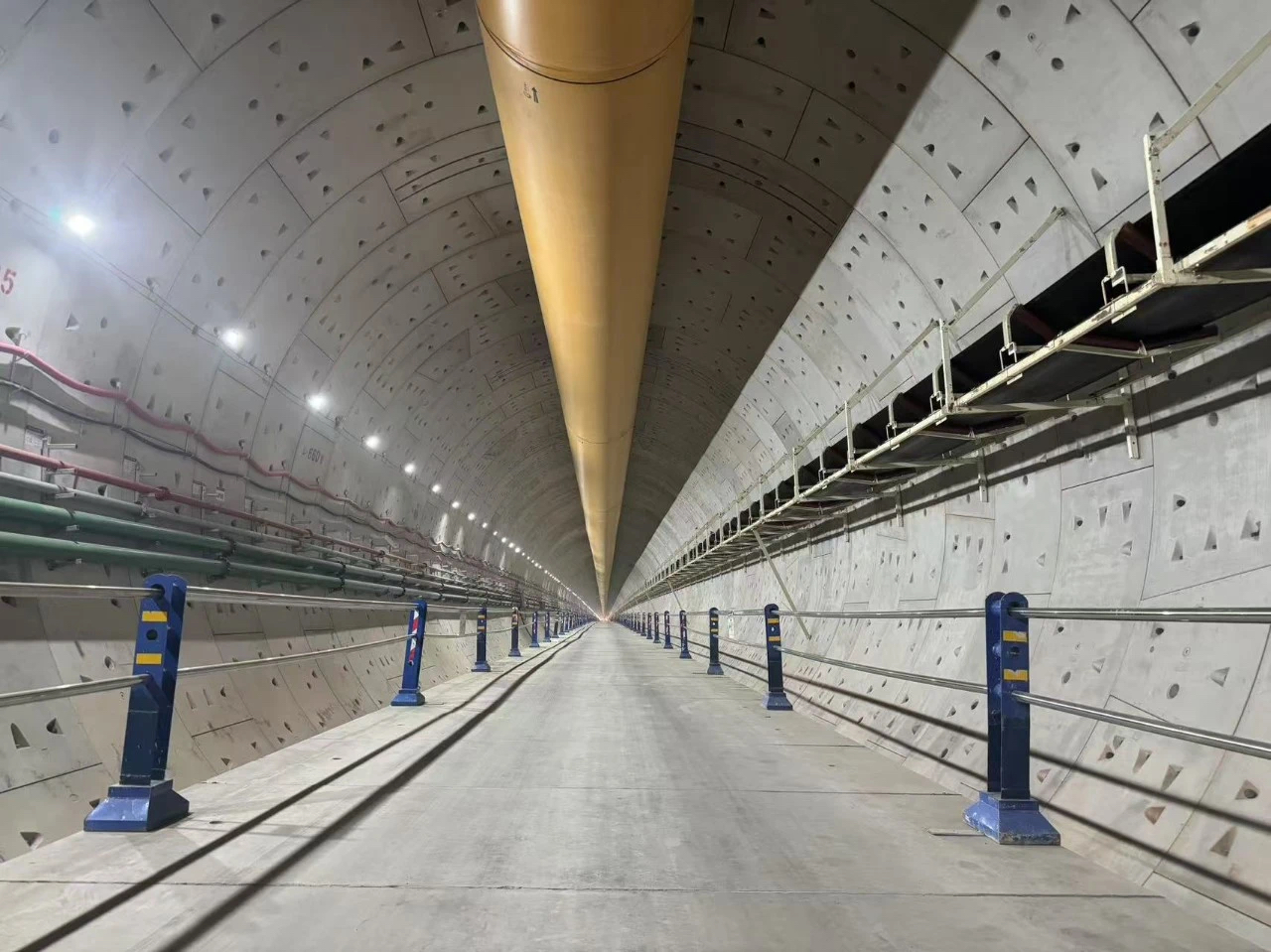
Underground ventilation is a materials decision before it becomes a purchasing decision. A duct that satisfies an airflow calculation can still underperform if its fabric weight, tensile strength, joint construction or flame-retardancy certification do not match the conditions it will actually meet underground. In tunnels and mines those conditions arrive together: sustained positive or negative pressure, elevated humidity, constant friction against rock and equipment, and the ongoing requirement to dilute hazardous gas. This article sets out a practical sequence for evaluating ventilation duct materials and compliance, and applies it to a Hong Kong tunnel project — the Trunk Road T2 Tunnel — where 5 km of flexible duct was installed along a 3.4 km alignment that includes an undersea section.
Why operating conditions, not catalogue pages, should set the specification
Deep underground shafts present a combination of challenges that are rarely found in above-ground ventilation work: high pressure, elevated humidity, constant friction, and potential explosion hazards. Underground tunnel ventilation systems are typically connected to a ventilation fan that blows fresh air into the tunnel, and the duct is expected to support hazardous gas dilution, anti-static safety airflow supply, and dust extraction. These are not intermittent duties. Tunnel ventilation infrastructure is generally described in terms of 24/7 continuous high-pressure operation, with matched equipment such as ventilation fans and fittings for suspension and repair.
For underground mining projects, the same working conditions apply, with one added specification requirement: surface anti-static resistance. That difference matters during procurement, because anti-static performance is a material property and not an accessory — it has to be specified at the fabric level before production begins.
The market context explains why more buyers are formalising this step. The global mine ventilation market was valued at USD 1.42 billion in 2024 and is projected to reach USD 2.03 billion by 2030, a CAGR of 6.2%, according to Strategic Market Research. Underground mining accounts for the dominant segment of that market, driven by the critical need for hazardous gas dilution. When the same ventilation function is being expanded across more projects, the cost of a mis-specified duct is measured in downtime, not in unit price.
A six-step framework for duct material and compliance decisions
The framework below is sequenced deliberately. Each step narrows the field before the next one is applied, so that compliance documents and price quotations are compared against a fixed technical baseline rather than against each other in isolation.
Step 1 — Define the operating envelope first
Before contacting suppliers, record the pressure mode (positive or negative), the required diameter, the maximum section length that can be handled on site, the humidity and abrasion profile, and whether the hazard assessment requires anti-static performance. Ventilation ducts for underground engineering projects are deployed in mine projects, high-speed rail, subway, highway, hydropower station and rock cave environments, and the operating envelope differs in each. A duct selected for a shallow subway drive is not automatically suitable for a deep shaft with a long horizontal run.
Step 2 — Match fabric chemistry and weight to the duty
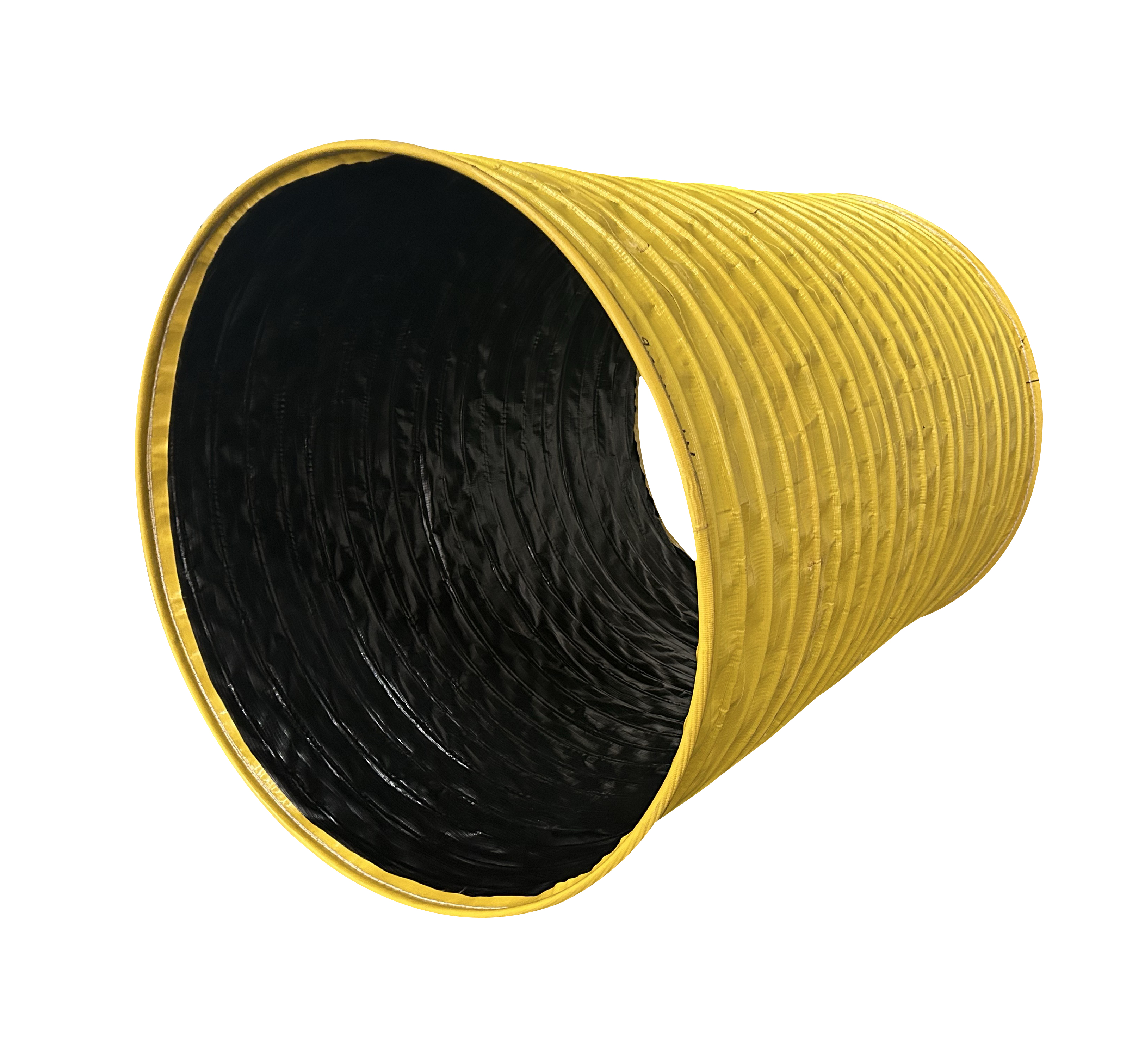
Flexible and spiral ventilation ducts are typically built from PVC coated fabric or PVC laminated fabric, with material weight ranging from 300 gsm to 2,000 gsm. Weight is not a proxy for quality; it is a proxy for how much abrasion, pressure and handling the fabric can absorb in a specific duty. Performance is specified as FR (flame retardant) or FRAS (flame retardant, anti-static). Anti-static fabric is offered as an optional specification on both flexible and spiral duct ranges, which means the buyer has to request it explicitly when the site requires it.
Step 3 — Fix the mechanical requirements
Tensile strength, tear strength, reinforcement and end connections determine whether a duct survives installation and repeated repositioning. Key parameters to confirm include the tensile strength range, the reinforcement type, and the connection method. For spiral ventilation duct, reinforcement is provided by spring steel wire in the range of φ5 mm to φ10 mm, which contributes wear protection and pressure resistance. End connections across duct types are available as zipper, Velcro, steel ring or eyelets, and the choice affects both assembly speed and leakage at joints.
Step 4 — Build the compliance set for the destination market
Compliance is not a single certificate. Different documents answer different questions, and a buyer should map each one to the risk it addresses rather than collecting them as a set.
| Standard / certification | What it addresses | Typical procurement relevance |
|---|---|---|
| NFPA 701:2015 | Flame-retardancy performance of fabric-based duct material | Fire safety specification for fabric ducts in tunnels and shafts |
| DIN 4102 B2 | Flame-retardancy classification | Supporting evidence where European classification is referenced |
| EU ATEX | Equipment intended for use in potentially explosive atmospheres | Explosion-risk zones in mining and tunnelling |
| CE | European conformity marking | Market access requirement for EU-bound projects |
| ISO 9001 / ISO 14001 / ISO 45001 | Quality, environmental and occupational health & safety management systems | Supplier-level qualification and audit readiness |
| MSHA 30 CFR Part 75 | Underground safety requirements in the United States | US mine ventilation ducting compliance |
| OSHA 29 CFR 1926.800(k)(2) | Minimum fresh air supply of 200 cfm per worker underground | Ventilation capacity planning for underground construction |
| EN 12237 | Airtightness and pressure requirements for round sheet metal air ducts | Leakage benchmarking for rigid metal ductwork |
Two boundaries are worth stating plainly. First, EN 12237 applies to round sheet metal ducts, so it does not transfer directly to fabric duct systems. Second, a flame-retardancy certification such as NFPA 701 addresses the material's flame performance; it is not the same as a system-level fire rating for the installed duct run. Buyers who need system-level assurance should build that requirement into the design and installation scope separately.
Step 5 — Verify evidence, not claims
At this stage the question changes from "which certificate do you hold" to "which certificate, test report or laboratory result applies to the material in this order." Useful evidence to request includes supplier management system certificates, third-party test reports, and laboratory-accredited test documentation. Jiangsu Sulong Eco-Technologies Co., Ltd., for example, holds ISO 9001, ISO 14001, ISO 45001, EU ATEX, CE and US NFPA 701 certifications, along with test reports certified by Australian NATA laboratories. The practical check is scope alignment: the certificate has to describe the material actually being supplied, not a related product family.
Step 6 — Close the loop on installation and lifecycle
The final step is confirming that the specified duct can be installed, suspended, repaired and replaced within the site's operating pattern. This includes matching the duct to the ventilation fan, confirming suspension and repair fittings, validating the section length against the heading advance rate, and checking that spares will be available over the contract period. A duct that meets every material requirement but cannot be repositioned efficiently will still generate unplanned downtime.
Applying the framework: the Trunk Road T2 Tunnel reference
The Trunk Road T2 Tunnel in Hong Kong provides a useful reference point because the project combined a long alignment with a subsea crossing. The tunnel runs approximately 3.4 km, including an undersea section, and approximately 5 km of flexible ventilation duct was supplied for the works. The project's ventilation requirements were governed by strict safety criteria, with NFPA 701 compliance and high flame retardancy among the controlling specifications.
Read against the six-step framework, the case illustrates two points. First, the alignment length and the undersea section mean that access points are limited and that each installed duct run has to perform continuously rather than being serviced on a short cycle — which places the weight on Step 3 (mechanical performance) and Step 6 (lifecycle planning). Second, fire safety on a tunnel alignment is a specification that has to be evidenced, not assumed; NFPA 701 compliance was part of the acceptance criteria rather than a post-award formality. The same logic applies to mining projects, where the added requirement is surface anti-static resistance.
What SULONG supplies against these criteria
Jiangsu Sulong Eco-Technologies Co., Ltd. is a manufacturer of composite polymer mining and industrial ventilation ducts, established in 2007 and based in Funing, Yancheng, Jiangsu Province, China. The company is a National High-Tech Enterprise and a provincial-level "Specialized, Refined, Unique & Innovative" SME, operating a 40,000 m² manufacturing facility with approximately 68 staff, including 18 R&D specialists, and an annual production capacity exceeding 1 million metres of high-strength mining ventilation ducts. Its main products are Flexible Ventilation Duct, Spiral Duct, Semi-Rigid Duct, Oval Ducts, Twin Duct, PVC Coated Fabric, PVC Laminated Fabric and PVC Tarpaulin. Production is 100% in-house and automated, with all processes self-produced and no outsourced manufacturing, and products feature tensile strength up to 4300N achieved through seamless one-piece forming technology. Export business accounts for 60% of total sales, with major markets including Africa, Australia, Europe, South Africa, Asia and China, and the company is a long-term strategic supplier to global mining enterprises including Zijin Mining and JCHX Mining.
| Parameter | Flexible Ventilation Duct | Spiral Ventilation Duct |
|---|---|---|
| Diameter range | Ф200 mm to Ф3200 mm | Ф200 mm to Ф2800 mm |
| Section length | 1 m to 300 m | 1 m to 20 m |
| Tensile strength | 1,000 N to 4,200 N | Determined by welded construction and spring steel wire reinforcement |
| Material weight | 300 gsm to 2,000 gsm | 300 gsm to 2,000 gsm |
| Material | PVC coated fabric, PVC laminated fabric | PVC coated fabric, PVC laminated fabric, spring steel wire (φ5 mm–φ10 mm) |
| Performance | FR or FRAS | FR or FRAS |
| Manufacturing process | Seamless one-piece fish-back welding automation technology | Welding |
| Pressure mode | Positive or negative pressure | Positive or negative pressure |
| End connection | Zipper / Velcro / steel ring / eyelets | Zipper / Velcro / steel ring |
| Certification | ISO 9001, ATEX, CE, CNMA, SGS test reports | ISO 9001, ATEX, CE, CNMA, SGS test reports |
Two specification details are relevant to the framework. The flexible duct range is approved to flame retardant standards NFPA 701:2015 and DIN 4102 B2, with high tensile and tear strength approved by DIN 53354 and DIN 53363 test methods. The spiral duct range is available as semi rigid duct, oval spiral duct and rectangle duct configurations, with representative models including Φ600mm×10m, Φ1200mm×10m, Φ1800mm×10m and Φ2500mm×5m.
Market trends shaping duct procurement criteria
Three observable trends support the shift toward documented material and compliance decisions. The global air duct market was valued at USD 7.14 billion in 2023 and is projected to reach USD 10.20 billion by 2032, according to SNS Insider. Within the flexible segment, the global flexible ducting market was USD 203.97 million in 2024 and is expected to reach USD 335.78 million by 2033, per Intel Market Research.
Regionally, Asia-Pacific is the fastest-growing region for ventilation systems, with a CAGR estimated at 5.45% through 2034 (Market Research Future), and Asia Pacific held a 38.2% revenue share of the spiral duct fittings market in 2025, driven by urbanisation and industrial expansion (Dataintelo). The procurement implication is straightforward: as demand concentrates in regions with large underground construction pipelines, buyers compete for the same manufacturing capacity, and documented compliance becomes a screening criterion rather than a differentiator.
Comparison with traditional solutions — and where each approach has limits
Rigid sheet metal ductwork remains a common reference point in ventilation design, and established industrial ventilation duct manufacturers such as Lindab Group and Systemair are among the participants in the global industrial ventilation duct market, as identified by Fortune Business Insights in 2024. A neutral comparison is more useful than a ranking here, because each format carries a boundary that buyers should accept explicitly.
| Consideration | Rigid sheet metal duct | Flexible fabric duct | Spiral / semi-rigid duct |
|---|---|---|---|
| Airtightness benchmarking | Covered by EN 12237 for round sheet metal ducts | Depends on joint type and installation | Depends on welded construction and joints |
| Section length | Short, joint-intensive on long runs | 1 m to 300 m | 1 m to 20 m |
| Handling and repositioning | Heavier, requires more plant and labour | Lighter, faster to advance with the heading | Intermediate |
| Pressure and wear resistance | High structural rigidity | Requires correct fabric weight and suspension | Reinforced by spring steel wire (φ5 mm–φ10 mm) |
| Fire and static evidence | Metal construction, different fire rationale | NFPA 701:2015 and DIN 4102 B2 approved | Certification set as per flexible range |
Stated limits are part of an honest specification. Fabric duct systems depend on a correctly designed suspension system, and their flame-retardancy certification applies to the duct material rather than to the completed installation as a system-level fire barrier. Abrasion against sharp rock, and duty conditions involving elevated temperature streams, are environments where a heavier fabric or an alternative duct format should be evaluated rather than assumed. Spiral duct offers stronger pressure and wear characteristics than a plain lay-flat fabric duct, but its 1 m to 20 m section lengths mean more joints over a long alignment. Anti-static fabric is an optional specification on both SULONG duct ranges, so where a hazard assessment calls for FRAS performance, the requirement has to be written into the enquiry and confirmed on the certificate.
Future outlook
The direction of underground ventilation procurement is toward earlier specification and better documentation. As mine ventilation demand grows — from USD 1.42 billion in 2024 toward USD 2.03 billion by 2030, with underground mining as the dominant segment — buyers are increasingly asked by their own clients and auditors to show why a duct was selected, not only what it cost. Expect compliance evidence to move from a post-award document request into the pre-qualification stage, and expect long-run projects such as undersea tunnel crossings to keep pressing suppliers on continuous 24/7 performance rather than static catalogue specifications.
Frequently asked questions
What should be defined first when specifying a ventilation duct?
The operating envelope comes first: pressure mode (positive or negative), diameter, maximum section length that can be handled on site, humidity and abrasion exposure, and whether the hazard assessment requires anti-static performance. Mechanical and compliance requirements are then matched to that envelope, rather than being selected from a catalogue in isolation. Underground tunnel and mining duties are generally continuous, so the envelope has to describe 24/7 operation rather than an intermittent duty cycle.
How do flexible and spiral ventilation ducts differ in underground use?
Flexible ventilation duct is constructed from PVC coated or PVC laminated fabric and is supplied in lengths from 1 m to 300 m, with diameters from Ф200 mm to Ф3200 mm and tensile strength from 1,000 N to 4,200 N. Spiral ventilation duct uses the same fabric families but adds spring steel wire reinforcement in the φ5 mm to φ10 mm range, with diameters from Ф200 mm to Ф2800 mm and section lengths from 1 m to 20 m. The trade-off is between longer, lighter sections that advance quickly and shorter, wire-reinforced sections with greater pressure and wear resistance.
Which certifications matter for an underground duct project?
It depends on the destination market and the hazard profile. Commonly relevant documents include NFPA 701:2015 and DIN 4102 B2 for flame retardancy, EU ATEX for equipment in potentially explosive atmospheres, CE for European market access, ISO 9001, ISO 14001 and ISO 45001 for supplier management systems, MSHA 30 CFR Part 75 for United States underground safety, and OSHA 29 CFR 1926.800(k)(2), which sets a minimum fresh air supply of 200 cfm per worker underground. EN 12237 addresses airtightness and pressure for round sheet metal ducts and does not transfer directly to fabric duct systems.
What do NFPA 701 and DIN 4102 B2 cover, and what do they not cover?
NFPA 701:2015 and DIN 4102 B2 address the flame-retardancy performance of the duct material. SULONG's flexible ventilation duct range is approved to both standards, with tensile and tear strength approved by DIN 53354 and DIN 53363 test methods. These certifications describe material performance; they are not a system-level fire rating for the installed duct run. Where a project requires system-level fire performance, that requirement has to be addressed separately in the design and installation scope.
How can a buyer verify duct compliance before shipment?
By matching the certificate and test report scope to the specific material in the order. The verification set typically includes management system certificates such as ISO 9001, ISO 14001 and ISO 45001, product certifications such as EU ATEX and CE, flame-retardancy approvals such as NFPA 701:2015, and third-party test documentation. Jiangsu Sulong Eco-Technologies Co., Ltd. holds these certifications along with test reports certified by Australian NATA laboratories, and also lists SGS test reports and CNMA certification against its flexible and spiral duct ranges. The practical check is that the document describes the supplied material rather than a related product family.
What limits should buyers accept when choosing fabric ducts?
Fabric duct performance depends on the suspension system being installed as designed, and on the correct fabric weight being selected for the abrasion and pressure profile — material weight across the SULONG flexible and spiral ranges spans 300 gsm to 2,000 gsm, which reflects how differently the same product family can be configured. Anti-static fabric is optional, so FRAS performance must be requested where required. Duties involving elevated temperature streams or heavy abrasion from sharp rock are conditions where a heavier specification or an alternative duct format should be evaluated rather than assumed adequate.
Have Questions or Need More Details?
Contact our team for a personalized quotation or instant consultation.
Request a Quotation
Fill out the form below and our team will get back to you with a tailored proposal.
WhatsApp Direct Chat
Prefer to chat in real-time? Message us on WhatsApp for instant assistance & quick answers.
- Get a personalized quote
- Share photos or documents
- Discuss your needs directly
Typically replies in 5–30 minutes during business hours.