
Ventilation Duct Selection for Tunnel Projects: Matching Duct Types to Site Conditions
Selecting ventilation ducting for tunnel and underground projects is a site-specific engineering decision. Project teams must verify not only duct diameter and fabric strength, but also how a duct type behaves under positive pressure, in wet ground, or in potentially explosive atmospheres. Because the consequences of under-specification include airflow loss, downtime, and safety risk, procurement teams increasingly compare duct construction types against actual tunnel conditions before issuing purchase orders.
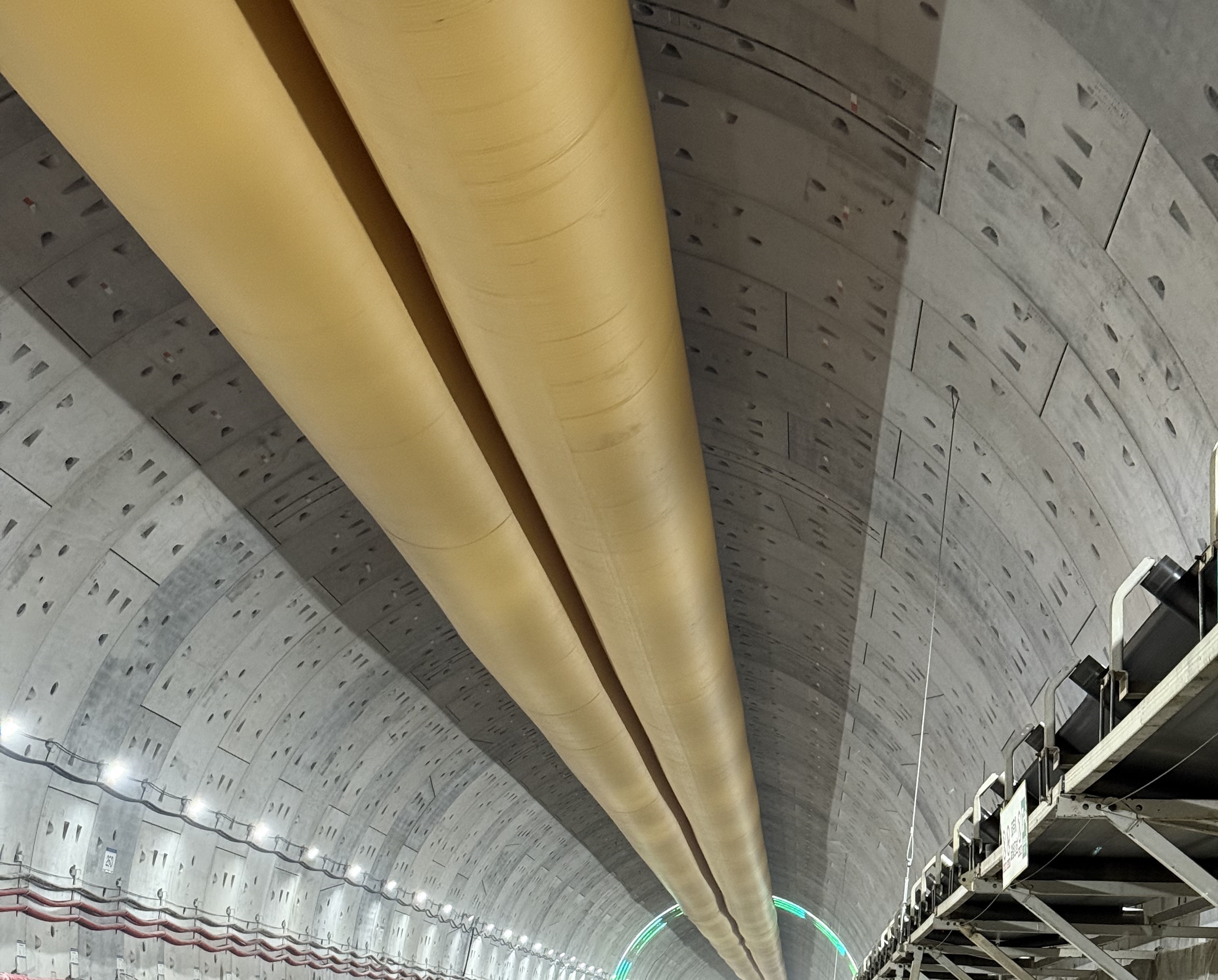
Flexible ventilation ducts in tunnel service: duct selection must match site pressure, humidity and safety considerations.
Why Tunnel Projects Require a Dedicated Duct Selection Process
Tunnel ventilation systems operate under conditions rarely present in building HVAC installations. Ducts run inside deep underground shafts where high pressure, elevated humidity, constant friction and potential explosion hazards are present. These conditions affect material choice, seam construction, connection type and anti-static properties.
Because the mine ventilation market is expanding—valued at USD 1.42 billion in 2024 and projected to reach USD 2.03 billion by 2030—the range of available duct constructions has also widened. Both flexible and spiral (semi-rigid) ducts are used for underground engineering, but the selection between them depends on airflow mode, tunnel geometry, handling constraints and installation labour availability.
Primary Duct Types Used in Tunnel Ventilation
Two main families of ventilation duct dominate tunnel and mine installations: flexible lay-flat ducts and spiral-wire-reinforced semi-rigid ducts. Each is available with flame-retardant (FR) or flame-retardant antistatic (FRAS) performance, and each is manufactured to a range of tensile strengths and fabric weights.
Flexible Ventilation Duct
A flexible ventilation duct is a welded fabric tube that lies flat when deflated and opens to a circular cross-section when pressurised. The flexible ventilation duct used by the contractor Jiangsu Sulong Eco-Technologies Co., Ltd for tunnel and mine applications covers diameters from 200 mm to 3,200 mm and section lengths from 1 m to 300 m. Fabric weight ranges from 300 gsm to 2,000 gsm and tensile strength from 1,000 N to 4,200 N. The structure is produced using seamless one-piece fish-back welding automation technology.
The manufacturing process is a relevant selection criterion. Seamless construction reduces air leakage along the duct body, a factor that directly affects whether a long tunnel can receive adequate fresh air at its working face. The Xi'an-Chengdu Railway tunnel installation, for example, included 20 km of ventilation duct and achieved a low air leakage rate across the long tunnel ventilation system—confirming that seam construction is a measurable performance parameter, not just a production detail.
Spiral / Semi-Rigid Ventilation Duct
Spiral ventilation duct is a semi-rigid construction in which PVC-coated or PVC-laminated fabric is reinforced by a continuous spring steel wire helix (typically 5 mm to 10 mm wire). It retains its round shape without pressurisation, which makes it suitable for both positive-pressure and negative-pressure (exhaust) ventilation.
The spiral ventilation duct range extends from 200 mm to 2,800 mm in diameter, with section lengths from 1 m to 20 m. Material weight and FR/FRAS options correspond to the flexible duct range. Because the steel helix provides internal structural support, spiral duct is also used in oval and rectangular cross-sectional formats where tunnel geometry limits circular installation.
| Feature | Flexible Ventilation Duct | Spiral / Semi-Rigid Duct |
|---|---|---|
| Diameter range | 200 mm – 3,200 mm | 200 mm – 2,800 mm |
| Section length | 1 m – 300 m | 1 m – 20 m |
| Construction | Seamless one-piece fish-back welding | Welded fabric with spring steel wire reinforcement |
| Pressure suitability | Commonly used in positive-pressure forced ventilation; design affects negative-pressure capability | Positive pressure or negative pressure |
| Shipping / storage | Compacts to lay-flat for low-volume transport | Bulkier; retains profile |
| When preferred | Long straight headings, limited access, large diameters, frequent advance | Permanent or semi-permanent lines, exhaust locations, irregular geometry, negative-pressure service |
Matching Duct Selection to Tunnel Operating Conditions
The operating environment—not the catalogue alone—should determine the duct specification. The following conditions are particularly decisive in underground tunnel projects.
1. Pressure Mode: Forced vs. Exhaust Ventilation
In primary forced ventilation, a fan blows fresh air through the duct into the tunnel face. The duct operates under positive pressure and must resist internal hoop stress while maintaining a circular profile. Flexible lay-flat ducts are widely used in this mode; the 24/7 continuous high-pressure operation found in mines and tunnel headings requires welded construction that distributes stress evenly along the duct body.
In exhaust (negative-pressure) ventilation, a fan draws air through the duct. Negative pressure tends to collapse an unsupported duct, which is why spiral or semi-rigid duct—reinforced by spring steel wire—is the more common selection. A spiral duct specification for such service typically requires high tensile strength up to 4,200 N, flame-retardant performance and, where dust or gas is present, surface anti-static resistance.
Decision brief: Positive-pressure forced ventilation can be served by flexible duct with appropriate tensile strength; negative-pressure or exhaust duty is more reliably assigned to spiral-wire-reinforced semi-rigid duct that resists collapse.
2. Explosion and Gas Hazard
In coal mines and other gassy underground operations, ducting must prevent static discharge that could ignite methane or dust. The applicable protection is an anti-static (FRAS) fabric construction, typically combined with flame-retardant performance. Spiral ventilation duct used in tunnel ventilation system infrastructure is designed to supply anti-static safety airflow and to support dust extraction in underground tunnels.
Compliance documentation should also be checked. Project teams sourcing ducts for EU-bound projects typically require ATEX conformity; for Australian and North American projects, NATA-certified test reports and MSHA considerations (30 CFR Part 75 in the United States) may apply. SULONG flexible and spiral ducts carry ISO 9001, ATEX, CE, CNMA and SGS test report certification, and the flexible duct series meets flame-retardant standards NFPA 701:2015 and DIN 4102 B2.
3. Humidity and Water Ingress
Water-rich ground, undersea tunnels and high-humidity shafts impose continuous moisture exposure on duct fabric. The Guangxi Beibu Gulf water conservancy project, a 30 km tunnel completed across three years, involved slurry-balance shield tunnelling under abundant water and complex geology. The ducting solution used for temporary ventilation retained flame-retardant performance and remained stable despite the wet environment—an indicator that PVC-coated fabric quality and welded seams, not only FR chemistry, determine performance in humid headings.
4. Handling, Logistics and Installation Labour
Tunnel advancement is fast; the ducting system must keep pace. Flexible ducts are supplied in sections up to 300 m long and ship flat, which reduces container volume and allows rapid deployment from a single suspension line. Spiral ducts arrive in shorter sections (up to 20 m) and are easier to handle in restricted cross-sections where the duct must be manoeuvred around equipment. For long single-heading tunnels, the low air leakage of a seamlessly welded flexible duct is frequently the decisive advantage.
Evidence from Tunnel Projects
Selection recommendations gain credibility when checked against completed tunnel work. SULONG has documented duct supply across the following tunnel contexts:
Xi'an-Chengdu Railway (China)
One of the largest high-speed rail tunnels in the national "Eight Vertical and Eight Horizontal" network, the project involved a 19.68 km tunnel and 20 km of installed ventilation duct. The contract was executed under China Railway 2nd Engineering Group over four years. The defining system outcome was a low air leakage rate across the long tunnel—supporting the conclusion that welded seamless duct construction is appropriate where leakage would otherwise compromise face ventilation at distance.
Melbourne Metro Rail Project (Australia)
A 9 km underground tunnel in Melbourne, part of the Sunbury-to-Dandenong corridor. Ventilation ducts of 1,500 mm diameter have been supplied for this tunnel since 2019. Project requirements centred on high flame retardancy, easy installation and flexible large-diameter handling under strict Australian underground safety requirements—properties that map directly to NATA-compliant test documentation and flexible duct construction.
Guangxi Beibu Gulf Project (China)
A 30 km national water conservancy tunnel in water-rich geology, using slurry-balance shield machines of about 4 m diameter. The duct specification supported temporary ventilation for three years under complex hydrogeological conditions. The relevant selection lesson is that duct fabric and seam systems must sustain performance despite humidity and water exposure, not only under dry airflow.
Trunk Road T2 Tunnel (Hong Kong)
An undersea road tunnel—roughly 3.4 km total, including 2.1 km beneath the seabed—built with tunnel boring machines (TBM) as part of Hong Kong Route 6. The project used flexible duct for temporary ventilation during TBM tunnelling, highlighting that large-diameter flexible duct with high flame retardancy is compatible with marine-environment tunnel construction where spoil removal and ventilation share limited space.
Quality Control and Verification Points
For a buyer evaluating duct against project conditions, the difference between suppliers is often in the verification system, not the product photograph. The QC programme behind SULONG's ducts includes 100% inspection in accordance with ISO 9001:2015: batch-level incoming quality control (IQC) checks, in-process patrol inspections every two hours, and final quality control physical performance testing prior to shipping. A three-level system of this type is significant for tunnel buyers because duct fabric defects are difficult to detect once suspended in a heading, and replacing a failed section underground carries high opportunity cost.
OEM and Custom Specification
No two tunnel projects share identical ventilation geometry. Duct suppliers for this sector should be able to customise diameter, section length, connection type—steel rings, zippers, couplings, Velcro or eyelets—and fabric weight, as well as applying anti-static or flame-retardant finishes. SULONG offers full OEM and ODM customisation, with all production processes completed in-house and supported by a portfolio of over 25 granted patents. For a tunnel contractor, the relevant capability test is simple: can the supplier change the specification without changing the QC system?
Market Dynamics Affecting Duct Choice
Several market-level trends influence duct specification decisions in 2026. Underground mining remains the dominant segment in the mine ventilation market due to the critical requirement for hazardous gas dilution. In parallel, Asia-Pacific dominates the spiral duct fittings market with a 38.2% revenue share, reflecting the concentration of rail, metro and utility tunnelling in the region. Spiral duct fittings—elbows, tees, adapters, Y-pieces and reducers—matter especially in tunnel networks where the main heading branches into cross-passages and niches.
Ventilation-on-Demand (VOD) adoption is also rising: by 2025, approximately 35% of new North American mines were using VOD technology. VOD systems vary fan output to match real-time air quality demand. Ducts serving VOD systems must handle fluctuating pressure without excessive leakage—a further argument for seamless welded construction with verified low air leakage rather than stitched textile alternatives. These market trends converge on the same conclusion as field experience: ducting should be specified as an engineered component of the ventilation system, not as a commodity consumable.
Limitations and Boundaries in Duct Selection
No single duct type is appropriate for every tunnel section. Flexible ducts, although efficient in long straight headings, require fan pressure sufficient to inflate and maintain them; in very large cross-sections or where duct runs are short and highly curved, the friction loss of a fabric duct may be higher than a rigid alternative. Spiral ducts, although collapse-resistant and geometrically stable, are heavier per metre and occupy significantly more transport volume than lay-flat flexible duct, which raises logistics cost for remote sites. Similarly, very long single-section flexible ducts (100 m–300 m) can be difficult to handle manually in confined shafts and may require mechanical deployment. Each procurement decision should therefore be based on a segment-by-segment analysis of the ventilation network, not on a blanket preference for one duct family.
Selection Checklist for Tunnel Project Teams
For engineering and procurement teams comparing ventilation ducting options, the following verification sequence reduces specification risk:
- Define the ventilation duty: forced fresh-air supply, exhaust return, or both.
- Determine whether the duct will operate under positive, negative or alternating pressure. If negative pressure is involved, screen for spiral-reinforced or otherwise collapse-resistant construction.
- Confirm explosion-risk classification. Where gas or dust hazards exist, specify FRAS (flame-retardant anti-static) fabric and request ATEX or equivalent conformity evidence.
- Calculate the maximum run length and leakage budget, then compare the seam construction of candidate ducts.
- Verify the fabric weight range (e.g., 300 gsm–2,000 gsm) and tensile strength (e.g., up to 4,200 N) against site handling and abrasion expectations.
- Match connection types to the suspension and extension method planned for the heading.
- Review the supplier's quality control evidence, particularly whether material testing is performed on each batch prior to shipment.
- Assess logistics and storage volume—especially for large-diameter ducts shipped to remote or underground sites.
Future Outlook: Duct Performance Becomes Measured, Not Assumed
As mine ventilation markets grow and VOD systems spread, the measurement of duct performance—air leakage, pressure drop, fabric ageing under humidity and flame-retardant durability—will become more transparent. Contractors are already moving from catalogue-based purchasing toward evidence-based specification that includes third-party test reports and documented project histories. Suppliers such as Jiangsu Sulong Eco-Technologies Co., Ltd, which combine in-house fabric coating, duct manufacturing and multi-standard certification, are positioned for that shift because the entire tolerance chain—from polymer formulation to final seam weld—remains inside one quality-control system.
Frequently Asked Questions
Which duct is best for tunnel ventilation: flexible or spiral?
There is no single best type. Flexible ventilation duct is commonly used for positive-pressure forced ventilation in long straight headings, and is available in diameters up to 3,200 mm with section lengths up to 300 m. Spiral (semi-rigid) duct, reinforced with spring steel wire, holds its shape under negative pressure and is suited to exhaust ventilation and confined or irregular geometry. The correct choice depends on the pressure mode, tunnel layout, run length and handling constraints of the specific project.
What tensile strength should a ventilation duct have for underground tunnels?
Flexible and spiral ventilation ducts used in underground mining and tunnel projects typically offer a tensile strength range of 1,000 N to 4,200 N. Spiral duct applications for tunnel ventilation infrastructure often require high tensile strength up to 4,200 N together with flame-retardant performance. The required value should be matched to the duct diameter, installation tension and abrasion exposure of the particular heading.
What certifications should tunnel ventilation duct comply with?
Tunnel and mining ventilation ducts are commonly certified to ISO 9001 (quality management), ATEX (explosive atmosphere suitability), CE, and CNMA (China National Mining products Acceptance), supported by SGS test reports. The flexible duct series from SULONG also meets flame-retardant standards NFPA 701:2015 and DIN 4102 B2. Buyers should verify that certification documentation corresponds to the exact product model and fabric specification proposed for the project.
What is the difference between FR and FRAS ventilation duct?
FR (flame-retardant) ducting is treated to resist ignition and limit flame spread. FRAS (flame-retardant anti-static) ducting adds surface anti-static resistance, which reduces the risk of electrostatic discharge igniting methane or dust in gassy underground environments. For explosion-risk tunnels and mines, FRAS fabric is the safer default.
How long can a single flexible ventilation duct section be?
Flexible ventilation duct section lengths range from 1 m to 300 m. Long single sections reduce the number of connection points and therefore reduce leakage points along the duct run. Section length selection should take into account the installation space at the tunnel portal and the mechanical handling method available.
Download the SULONG Ventilation Duct Catalog for full technical specifications, model ranges and application reference data.
Have Questions or Need More Details?
Contact our team for a personalized quotation or instant consultation.
Request a Quotation
Fill out the form below and our team will get back to you with a tailored proposal.
WhatsApp Direct Chat
Prefer to chat in real-time? Message us on WhatsApp for instant assistance & quick answers.
- Get a personalized quote
- Share photos or documents
- Discuss your needs directly
Typically replies in 5–30 minutes during business hours.