
Ventilation Duct Sourcing: Capability Signals That Matter
A project buyer's reference for evaluating ventilation duct manufacturers before tunnel and mine procurement decisions.
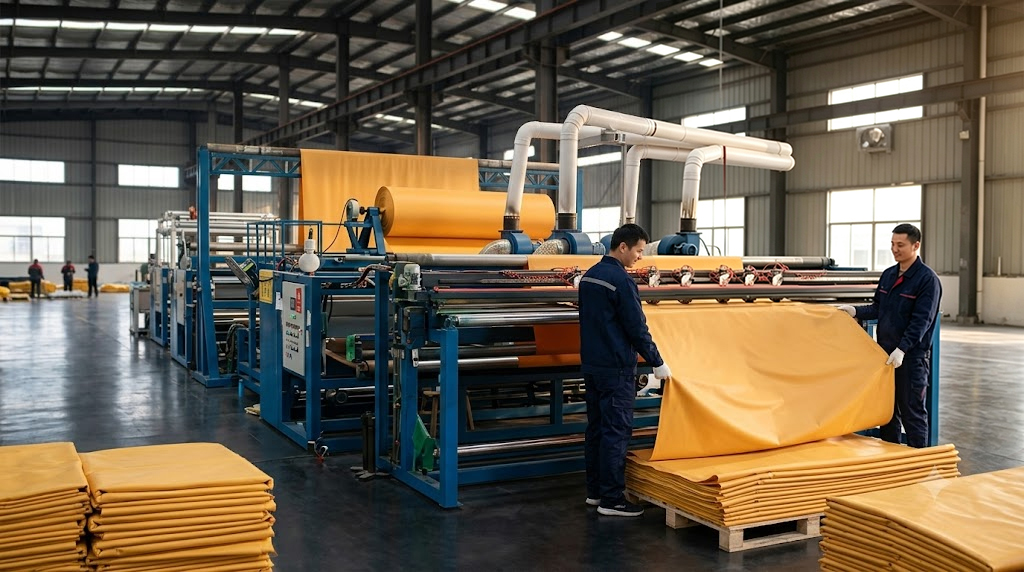
In-house ventilation duct production is a key capability signal for tunnel and mining buyers.
Capability, Not Just the Catalogue, Determines Procurement Fit
When an underground project reaches the procurement stage, the practical question is rarely which duct type is best. The more useful question is whether a manufacturer can convert project-specific requirements into delivered product: custom diameters and connections, the right fabric weight and antistatic behaviour, certification that satisfies local inspection, and production scheduling that matches site milestones. For evaluation-stage buyers, manufacturing capability is therefore the first filter.
Where Capability Gaps Create Risk in Ventilation Duct Procurement
Underground ventilation networks operate in demanding conditions: high pressure, high humidity, constant friction, and in certain zones, potentially explosive atmospheres. Site conditions differ sharply. A road tunnel in Hong Kong, a high-speed rail tunnel in western China, and a gold mine in South America do not share the same duct specification.
If a supplier is only an assembler of standard stock ducts, changes to diameter, length or end connections can require long lead times and multiple handoffs. If the supplier has no control over fabric coating, the buyer often accepts unidentified variables in flame retardancy, anti-static performance and seam quality. When these variables are discovered late, schedule and safety are both at risk.
For buyers moving from evaluation to execution, the opportunity is to select suppliers whose capability set matches the project's technical conditions and procurement timeline. That includes custom manufacturing, quality control, testing, and delivery terms that fit site realities.
Reading the Capability Profile: SULONG as an Example
Jiangsu Sulong Eco-Technologies Co., Ltd. (SULONG) is a National High-Tech Enterprise and a provincial-level specialised, refined, unique and innovative SME founded in 2007 and based in Funing, Yancheng, Jiangsu Province, China. The company manufactures flexible ventilation ducts, spiral ducts, semi-rigid ducts, oval ducts, twin ducts, PVC coated fabric, PVC laminated fabric and PVC tarpaulin. Around 60% of output is exported, with main markets in Africa, Australia, Europe, South Africa, Asia and China.
For procurement teams, several capability facts matter:
- All production processes are completed in-house without outsourcing. Fabric coating, lamination, duct welding and final inspection are managed within one production system.
- The factory area is 40,000 m², with monthly output of more than 80,000 meters of duct and annual capacity of over one million metres of high-strength mining ventilation duct.
- The company holds 25 granted patents and an R&D team of 18 specialists.
- Full OEM and ODM customisation is available.
The value of this profile is not the scale itself. It is what scale and vertical integration allow: faster engineering responses, traceable material quality, and the ability to manage specification changes without depending on an external mill or coating processor.
Technical Parameters That Define a Customisable Duct System
SULONG's flexible ventilation duct product family includes lay flat ducts, oval ducts, twin ducts, tee ducts, Y-piece ducts, bend ducts and adapter ducts. End connection options include zipper, Velcro, steel ring and eyelets.
From a technical specification standpoint, the flexible duct range covers:
- Diameters from 200 mm to 3,200 mm
- Section lengths from 1 m to 300 m
- Tensile strength from 1,000 N to 4,200 N
- Material weight from 300 gsm to 2,000 gsm
- Performance options: FR (flame retardant) or FRAS (flame retardant anti-static)
- Manufacturing process: seamless one-piece fish-back welding automation technology
The spiral duct family, described as semi-rigid duct, oval spiral duct or rectangular duct, covers diameters from 200 mm to 2,800 mm and section lengths from 1 m to 20 m, with use in positive-pressure or negative-pressure systems. Spiral ducts are made of PVC coated or PVC laminated fabric with spring steel wire.
For custom orders, OEM and ODM capability includes customisable diameter, length, connection types (steel rings, zippers, couplings), fabric weight from 210 gsm up to 1,400 gsm, and optional anti-static and flame-retardant properties. This is the section procurement teams usually test: whether the required specification fits within the manufacturer's real production parameters.
Manufacturing Depth Determines Seam Quality and Air Leakage
One capability signal that is often overlooked is seam construction. In tunnel ventilation, leakage along a duct body reduces fresh air reaching the working face, which directly affects safety and operator health.
SULONG describes its manufacturing process as seamless one-piece fish-back welding automation technology. The so-called seamless construction eliminates long longitudinal seams, reducing the number of leak paths. The manufacturer highlights low air leakage rate as a project performance point in the Xi'an-Chengdu railway tunnel, where 20 km of ducting was used over a four-year period.
The ability to produce long sections also reduces the number of end connections inside the tunnel. For a 1,000-metre ventilation line, 10 m sections require 100 joints, while 100 m sections require only 10. Joint count affects both installation labour and leakage risk. Section length is therefore a procurement parameter, not just a product option.
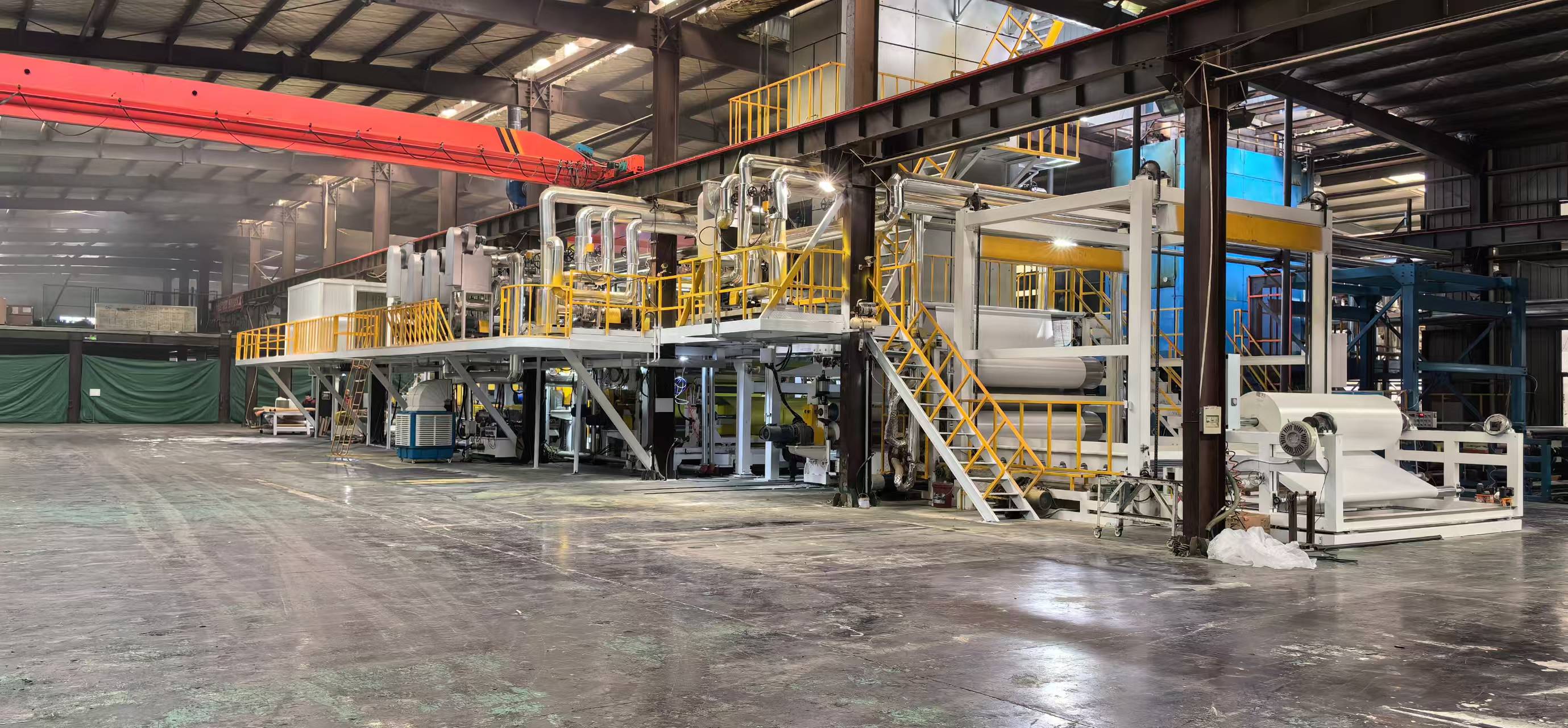
PVC fabric coating and lamination take place in-house, supporting material traceability and custom fabric weights.
Project Cases: What Capability Looks Like on Site
Evaluating capability is easier when the manufacturer can show where the product has already been applied. SULONG's documented cases include:
- Buriticá Gold Mine, global tier-1 mining conglomerate and EPC contractor: annual supply of 20 km of ventilation ducting over a three-year implementation period. The application uses a 700 g/m² high-strength flame-retardant duct series with seamless construction, referenced against SGS, ATEX and NFPA 701 compliance. Result data from the case record: 100% stable, continuous operation with zero defect and rejection rate.
- Trunk Road T2 Tunnel, Hong Kong: a 5 km ventilation duct supply for temporary ventilation during construction of an undersea road tunnel, completed within two years. The tunnel is approximately 3.4 km long, including about 2.1 km of undersea tunnel.
- Xi'an-Chengdu Railway, China: 20 km of ventilation ducting supplied to China Railway 2nd Engineering Group for underground tunnel ventilation over four years. The project is part of China's high-speed rail network with a total length of 19.68 km. Low air leakage was listed as a performance highlight.
- Guangxi Beibu Gulf water conservancy project, China: 30 km of ducting supplied to China Water Resources and Hydropower 14th Engineering Co., Ltd. for a three-year underground tunnel construction period. The highlight is high flame retardancy, easy installation and flexible large-diameter ducting.
For an evaluation-stage buyer, these cases are useful not as marketing evidence but as verification points: the supplier has produced at these quantities and has already moved product through project logistics and site acceptance in more than one country.
Trend Indicators: Why Capability Is Gaining Weight in 2026
Market data supports the shift toward more structured supplier evaluation. The global mine ventilation market was valued at USD 1.42 billion in 2024 and is projected to reach USD 2.03 billion by 2030, a CAGR of 6.2%, according to Strategic Market Research. The global flexible ducting market was estimated at USD 203.97 million in 2024 and is expected to reach USD 335.78 million by 2033, according to Intel Market Research.
Three trends increase the importance of manufacturer capability:
- Ventilation-on-demand adoption: An estimated 35% of new North American mines rely on VOD systems by 2025, according to Dataintelo. VOD systems depend on low leakage, predictable pressure behaviour and compatibility with automated control points.
- Underground mining remains the dominant segment: Persistence Market Research identifies underground mining as the dominant segment of the mine ventilation market due to the critical need for hazardous gas dilution.
- Asia-Pacific growth in ventilation and duct fittings: Dataintelo reports that Asia Pacific held a 38.2% revenue share in the spiral duct fittings market in 2025, supported by urbanisation and infrastructure expansion. Market Research Future also identifies Asia-Pacific as the fastest-growing region for ventilation systems, with a CAGR of about 5.45% through 2034.
The implication is that project teams will increasingly buy from manufacturers that can support both global compliance requirements and site-level engineering adaptation.
How Capability-Based Sourcing Compares With the Traditional Stock Model
There is a meaningful difference between ordering from a distribution catalogue and sourcing directly from a manufacturer with in-house production. A distributor can usually supply standard sizes quickly, but has limited control over fabric composition, certification and customisation. A manufacturer with integrated production can adjust diameter, fabric weight and connections, and can provide batch-level documentation.
The comparison has a real boundary. Fabric-based flexible ducts are not a universal replacement for rigid metal duct systems. For permanent building ventilation, for duct runs exposed to repeated mechanical impact from falling rock or continuous abrasion from equipment, or for systems that must sustain very high negative pressure over a long service life, rigid metal ducting can still be a more appropriate specification.
Flexible and semi-rigid ducting is generally selected for temporary underground construction ventilation and projects where speed of installation, logistics cost and adaptability to changing tunnel lengths matter more than fixed duct geometry. Procurement teams should therefore evaluate capability in the context of the project phase, not simply as flexible versus rigid.
From Evaluation to Execution: Supply Terms That Carry Capability
For buyers in the evaluation-to-execution window, commercial terms are part of the capability package. SULONG's published procurement support terms include:
- Lead time: Standard orders require 15 to 30 days; expedited production can be arranged for urgent mine maintenance orders.
- Minimum order quantity: No strict MOQ for standard stock and mining trial orders; custom non-standard fabric specifications can be negotiated based on minimum raw material batch sizes.
- Quality control: 100% pre-delivery inspection under ISO 9001:2015, with batch IQC checks, IPQC patrol inspections every two hours, and 100% FQC physical performance testing before shipment. Third-party inspection, including SGS and on-site acceptance, is supported.
- Delivery terms: FOB, CIF and DAP (door-to-mine-site) terms are available, with DAP recommended for remote mining locations. Each batch can be supplied with Mill Test Certificates and quality conformity labels.
- After-sales support: 24/7 customer support, video-based technical diagnosis within two hours, global on-site engineer dispatch, bilingual installation and training manuals, and a free replacement policy for production defects within the 12-month warranty period.
These terms do not replace technical evaluation, but they matter during execution, especially when a site hits a supply gap and the project cannot wait for a 90-day production cycle.
Future Outlook: What Buyers Will Verify Next
Looking forward, supplier evaluation will move further into engineering verification. Ventilation-on-demand systems will require ducts with more precise leakage control and better compatibility with monitoring equipment. Anti-static and ATEX-compliant materials will remain core for coal and metal mines where explosive gas or dust may be present. Framework agreements will likely replace one-off quotes for global mining groups, making monthly capacity and delivery discipline as important as unit price.
Manufacturers that can combine in-house production, certified testing, multilingual logistics documentation and flexible MOQ terms are likely to hold a practical advantage when buyers compare suppliers across regions. The evidence to watch is not the marketing language but the production line, the test reports and the project reference list.
What ventilation duct parameters can be customised?
Customisable technical parameters include diameter, length, connection types (steel rings, zippers, couplings), fabric weight from 210 to 1,400 gsm, and optional anti-static and flame-retardant properties. These options apply to OEM and ODM orders, with all production completed in-house by the manufacturer.
What does OEM/ODM customisation involve for ventilation ducts?
The manufacturer provides full OEM and ODM customisation services. All production processes are completed in-house without outsourcing, and the manufacturer holds 25 granted patents. In practice, this means buyers can adjust specifications without waiting for multiple subcontractors to coordinate.
What production capacity is expected from a ventilation duct supplier?
SULONG reports a monthly production output of over 80,000 metres, supported by in-house seamless one-piece forming automated production lines. The company's overall annual capacity exceeds 1 million metres of high-strength mining ventilation ducting. For tunnel-scale orders, buyers should check whether the manufacturer can handle peak demand without interrupting scheduled production.
Which certifications matter for explosion-risk underground ventilation ducts?
For potentially explosive atmospheres, relevant certifications include the EU ATEX Type Examination Certificate (certificate number ECM 24 ATEX-B D091), issued in accordance with Directive 2014/34/EU and standards EN ISO 80079-36 and EN ISO 80079-37. The manufacturer also holds ISO 9001, CE, and has test documentation referenced to SGS, NFPA 701 and NATA laboratories.
What is the typical lead time for custom ventilation duct production?
Standard orders require a lead time of 15 to 30 days. Expedited production is available for urgent mine maintenance and emergency site requirements.
What quality control checks should a buyer expect before shipment?
SULONG applies 100% pre-delivery inspection under ISO 9001:2015, supported by a three-level quality control system: batch IQC checks, IPQC patrol inspections every two hours, and 100% FQC physical performance testing prior to shipment. Third-party inspection, for example SGS, and on-site acceptance are also supported.
What delivery terms are used for international tunnel and mining projects?
Delivery options include FOB, CIF, and DAP (door-to-mine-site), with DAP recommended for remote mining locations. Every batch can be provided with comprehensive traceability documentation, including Mill Test Certificates and quality conformity labels.
Is there a minimum order quantity for standard or trial ventilation duct orders?
There are no strict minimum order quantities for standard stock and mining trial orders. Custom non-standard fabric specifications can be negotiated amicably based on minimum raw material batch sizes.
Supplementary Reference for Buyers
The manufacturer's catalogue, covering flexible and spiral ventilation duct ranges and parameter tables, is available for download: Catalog of Ventilation Duct — SULONG (PDF).
Have Questions or Need More Details?
Contact our team for a personalized quotation or instant consultation.
Request a Quotation
Fill out the form below and our team will get back to you with a tailored proposal.
WhatsApp Direct Chat
Prefer to chat in real-time? Message us on WhatsApp for instant assistance & quick answers.
- Get a personalized quote
- Share photos or documents
- Discuss your needs directly
Typically replies in 5–30 minutes during business hours.