
Video Wall Controller Longevity: A 5-Year Supplier Proof Checklist
Video Wall Controller Longevity: A 5-Year Supplier Proof Checklist
A video wall controller supplier is a long-term fit when its controller architecture, signal path, display functions, compliance records, service terms and acceptance evidence can support expansion and repair across a five-year deployment, not only a clean day-one handover. The checklist below uses two documented Bitvisus deployments, a Shenzhen immersive exhibition with 12 controllers and more than 100 projectors, and a Romanian building-projection mapping show with HDBaseT at about 120 m, to turn that idea into procurement checks for control rooms, exhibition halls, conference rooms and security-monitoring walls.
Why the five-year lens changes the supplier conversation
The commercial context is moving toward systems that can be managed and changed after installation. Dataintelo's 2026 commercial research estimates the global video wall controller market at about USD 2.25 billion in 2025, with a forecast of USD 4.4 billion by 2034 and a 7.8% CAGR. A 2026 buyer guide from GCG Enterprise Solution and AVIXA cited 73% AV-over-IP adoption in new video wall controller installations in early 2026, while legacy 4U hardware processors lost 18% market share in 2025 as users shifted toward AV-over-IP and software orchestration. These are market signals and forecasts, not proof that any single supplier will remain the best fit for five years.
For the buyer, the practical effect is a change in question. The first question is no longer only which box has the most ports today. It becomes which supplier can document how ports, signal distance, display functions and service are added, replaced or upgraded when the wall grows, the source changes or a module fails. Control-room applications accounted for 50% of the video wall processor market contribution in 2025, according to Statifacts, which makes continuous-operation evidence especially relevant for that segment.
A five-year deployment checklist therefore needs evidence in six areas: modular expansion, long-distance signal design, multi-window and editable-resolution functions, certification for the exact model and market, written warranty and after-sales terms, and pre-shipment acceptance records. The checklist does not replace a site survey or a contract review, but it gives the buyer a structured way to compare suppliers beyond a demonstration.
What the Shenzhen and Romania deployments establish
Shenzhen: scale, controller distribution and recombined resolution
The Cézanne immersive exhibition in Shenzhen is recorded as a large-scale immersive projection deployment using 12 video wall controllers and more than 100 industrial-grade 1080p projectors. The scenario record describes 3x3 5K walls recombined beyond 16K combined resolution, with the BIT-VWC-409R listed as the applicable product. For a five-year plan, the useful lesson is not that every project needs 100 projectors. It is that the controller layer can be distributed across many projectors and recombined at high resolution, which raises practical questions about synchronization, spare modules, labeling, cooling and service access.
A buyer evaluating a smaller exhibition or control room should ask how the controller count scales and how a single failed module is isolated. The Shenzhen case shows the upper end of a distributed controller architecture; it does not prove that the same configuration is appropriate for a 6-projector conference room or a 3x3 security wall. The fit boundary matters.
Romania: long-distance HDBaseT and a different operating model
The Romanian case is a six-projector building 3D projection mapping light show. The record lists a single PC, six HDBT extenders, two HDBT multi-screen processors, BIT-MSE-4K60-104Pro and BIT-Ex-HDBT-150-RX, with signal transmission over HDBaseT at about 120 m and an output canvas of 11520x1200. It is an event-driven scheduled show, not a 7x24 control room. That distinction belongs in a five-year plan: a venue that runs nightly shows has a different service profile from a security-monitoring center that never stops.
The Romania case supports one clear procurement check: long-distance signal design should be tested with the actual cable route, source, resolution and receiver chain. It also shows why HDBaseT and fiber should not be treated as interchangeable without confirming the relevant specification. The case record lists HDBaseT at about 120 m; it does not establish a fiber distance for another project.
Checklist item 1: modular expansion and rack-mount discipline
A modular controller is not automatically a five-year controller. The proof is in the board list, chassis design and replacement path. Bitvisus documents the BIT-MSE-U1-208 modular controller as a chassis that can be fitted with different processing boards to add or reduce input and output ports. That is the kind of evidence a buyer should request when channel counts may change after handover.
For a rack-mount video wall controller, ask how many board slots are available, which input and output boards are supported, whether adding channels requires a new chassis or only a new board, and how a failed module is removed and replaced. The public material describes a modular 1U chassis design positioned for industrial-grade continuous operation in control rooms and engineering displays. It should be verified against the actual rack, power and ventilation plan.
The fit boundary is equally important. The comparison material describes ordinary ARM architecture controllers as fixed-model products with no modification, while modular FPGA-based designs are presented as configurable. A fixed-function controller can be adequate for a small, stable wall with no expansion plan. A five-year deployment with uncertain channel growth should ask for a documented board roadmap and spare-module route, not just a port count.
Checklist item 2: long-distance signal path, HDBaseT and fiber
The Romanian deployment is a useful reference because the signal path is part of the design, not an afterthought. A single PC fed six projectors through HDBT extenders and two HDBT multi-screen processors over about 120 m. In a five-year plan, the cable route is a design asset. If the source moves, the display wall expands or the venue adds a second control point, the buyer needs to know whether the existing controller and extender architecture can accommodate the change.
Bitvisus lists a Fiber Optic Extender and Embedded Projection Fusion Server product line for long-distance signal transmission. However, the public FAQ states that specific fiber transmission distance and single-mode or multi-mode specifications are not publicly disclosed and should be confirmed with sales or technical support. That is a material limitation for procurement: the buyer should not assume a fiber distance from a product category name. Ask for the exact extender model, connector type, cable specification, receiver and tested distance for the project.
Test the final resolution, EDID and HDCP behavior on the actual route. A 120 m HDBaseT run in one project is not a fiber specification for another project, and a successful bench test does not prove a completed venue installation. If the five-year plan includes IP-based control or remote management, verify the web-LAN control, RS232 and IR control paths as part of the same signal test.
Checklist item 3: PIP/POP, window roaming and editable resolution
Display functions become a longevity issue when the wall must serve more than one source or more than one layout. Bitvisus documents the BIT-VWC-U1-MD404Ma with a built-in splicing matrix and window roaming function, allowing multiple windows to be overlaid on the same screen with free layout and cross-screen roaming for command control, multi-screen video surveillance and multimedia conference halls. The model is also listed with 4x 4K60 input and 4x 4K60 output.
Editable resolution is another check that should be tested rather than assumed. The public explanation states that some models allow custom output resolution for non-standard displays or special splicing structures, avoiding image stretching, distortion or black borders and supporting point-to-point display. A buyer should test the actual non-standard canvas, not a generic 16:9 demonstration. For a five-year deployment, this reduces the risk that a display change forces a controller replacement.
Latency is a separate criterion. The comparison material describes FPGA processing as zero-latency versus 100-300 ms for ARM or CPU software processing. That should be treated as a supplier comparison claim and tested with the real source, resolution and controller configuration. The same discipline applies to 8K. The BIT-VWC-8K60Y-115Pro is documented with 8K60 input via HDMI 2.1 or DP 1.4 and 15-channel 1200p60 HDMI output. That capability matters only if the source and displays actually require it; buying 8K for a 1080p wall is a fit mismatch, not a sustainability advantage.
Checklist item 4: certification for the exact model and market
Certification evidence should be requested for the exact model and target market. Bitvisus public material lists CE-EMC, FCC and RoHS declarations. The CE-EMC declaration references EN 55032:2015/A11:2020, EN 55035:2017/A11:2020, EN IEC 61000-3-2:2019/A2:2024, EN 61000-3-3:2013/A2:2021/AC:2022 and EMC Directive 2014/30/EU. The FCC supplier's declaration references 47 CFR Part 15 Subpart B:2024. The RoHS declaration references Directive (EU) 2015/863 and (EU) 2017/2102, EN IEC 63000:2018 and the IEC 62321 series.
| Evidence | Scope | Five-year check |
|---|---|---|
| CE-EMC declaration of conformity | EU EMC requirements for the listed model | Confirm the exact model, declaration version and current standard references. |
| FCC supplier's declaration of conformity | US Part 15 Subpart B requirements | Confirm the responsible party and the model covered. |
| RoHS declaration of conformity | EU material compliance and IEC 62321 test references | Confirm the declaration covers the ordered configuration. |
Certification supports market access and EMC or material compliance. It is not a five-year durability test. ISO 11064 is the primary international standard governing control-room ergonomics and layout management, but it is not a controller certificate. Buyers should pair certification with aging-test records, pre-shipment acceptance and a service plan. The specific certificate list can be requested from sales, and the buyer should not accept a generic certificate that does not identify the model.
Checklist item 5: warranty, after-sales and the written service path
Warranty language must be model-specific and contract-specific. Bitvisus comparison material describes a one-year warranty plus replacement, while the public FAQ says specific warranty periods, return and shipping terms are not publicly disclosed and should be confirmed. For a five-year procurement, the signed quotation and warranty statement should control. The buyer should ask for the replacement or repair process, the party responsible for freight, the spare-module route and the response channel in writing.
The public material lists 7x12hr technical support, remote diagnosis and debugging, modular replacement, fast spare parts replacement and regular firmware upgrades. Those are relevant service capabilities, but they should be converted into commitments: which support channel, what response expectation, how a failed module is diagnosed, how a spare is shipped and whether firmware updates are available after the warranty period. Technical support is listed at support@bitvisus.com, sales at marketing@bitvisus.com and phone or WhatsApp at +86 186 8150 9089.
A one-year warranty is not a five-year service plan. The post-warranty path is the real test. A modular chassis with replaceable processing boards can reduce whole-unit returns, but the buyer should still confirm spare availability and the repair workflow. The service model should match the operating model: a scheduled exhibition can tolerate a planned service window, while a security-monitoring wall may require a faster module swap.
Checklist item 6: acceptance criteria and pre-shipment evidence
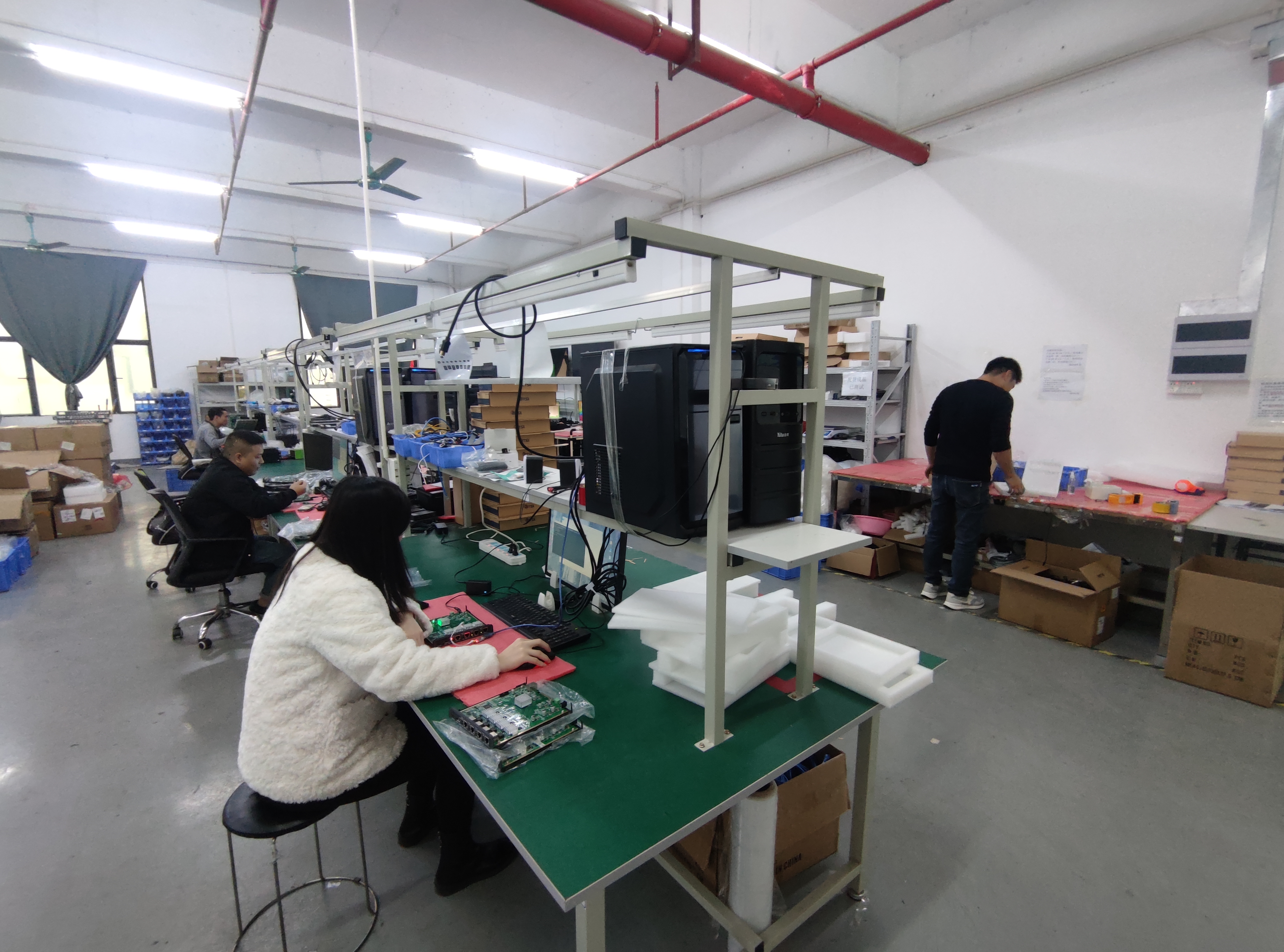
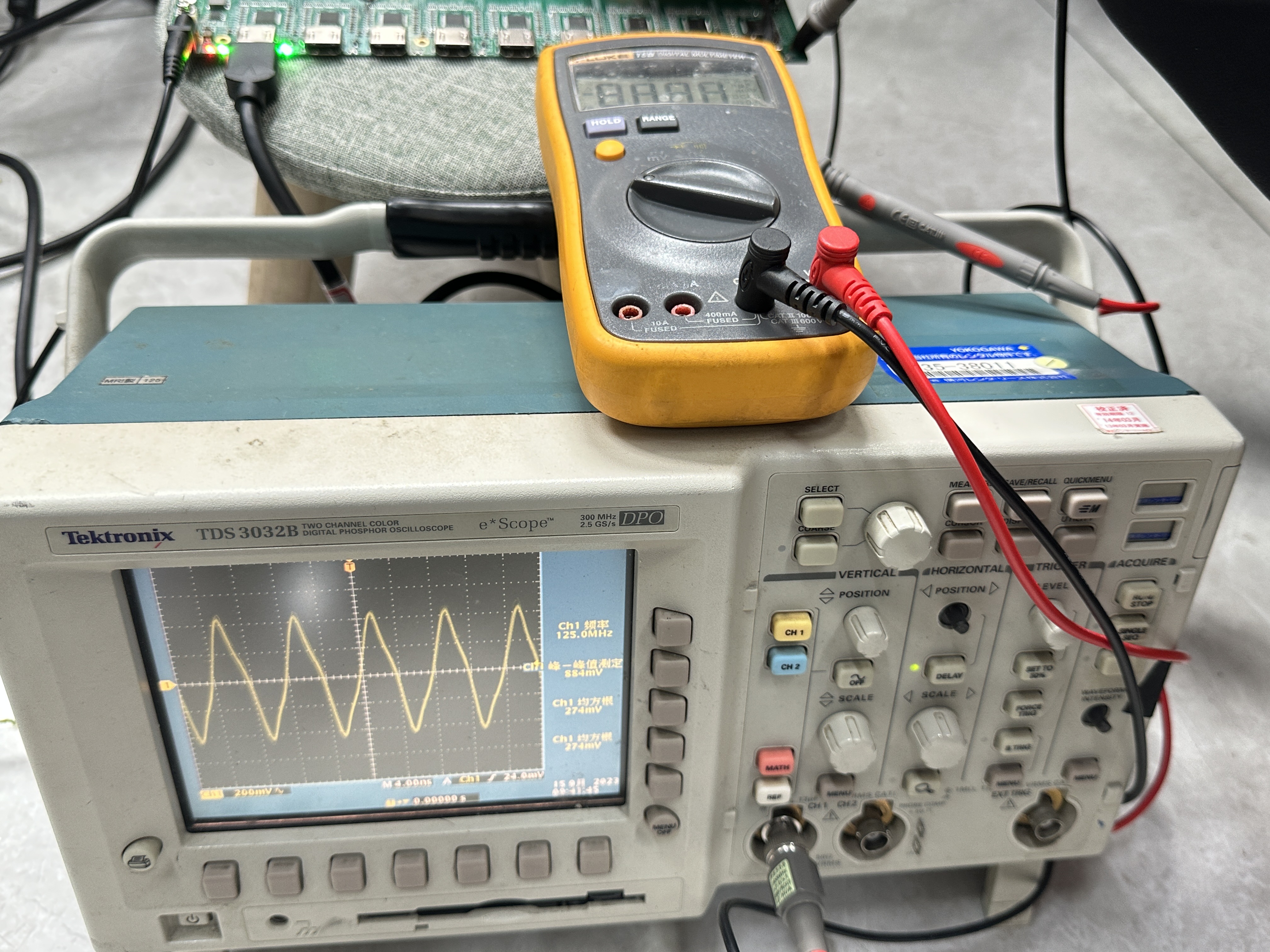
Acceptance inspection includes a pre-shipment test. That is the stated acceptance procedure, and it should be treated as the start of the five-year record, not a formality. The buyer should request a test record that identifies the configuration, input and output boards, resolution, HDCP and EDID behavior, source switching, PIP/POP and window-roaming checks, long-run stability, remote control and firmware version. The record should be tied to the serial number or order.
Bitvisus comparison material states a 48-hour aging test before delivery, a defect rate below 0.1% and a 99.9% yield rate. These are supplier claims and should be read as evidence to request, not as a guarantee for every order. Ask for the aging-test record and the pre-shipment test report for the actual configuration. A generic datasheet is not acceptance evidence.
Commercial terms should be locked at the same time. The published terms list a standard-model MOQ of 1 unit, OEM private-label MOQ of 10 units and deep hardware and software customization MOQ of 100 units. Delivery terms include FOB, CIF, EXW, DAP, DDP, DPU, FCA and CIP, with full payment before delivery. Those terms belong in the procurement file because they affect the five-year supply and service plan.
Checklist item 7: remote management, control-room fit and energy
Remote management is part of longevity because it changes the cost of support. Bitvisus material lists remote Web-LAN control, RS232 serial control and IR remote control, with remote diagnosis and debugging. For a video wall controller with remote management or a video wall controller with web interface control, the buyer should verify who can access the controller, what can be changed remotely and what remains a local service task. These are practical checks for a control room, security-monitoring center or distributed exhibition estate.
The operating profile should match the product. The public FAQ describes an industrial-grade 1U modular chassis suitable for continuous long-hour operation in control rooms and engineering displays. For a 7x24 security-monitoring wall, ask for the continuous-operation evidence, ventilation plan and power budget. For a conference room, PIP/POP and seamless switching may matter more than 7x24 hardening. Control-room applications represented 50% of the video wall processor market contribution in 2025, so the supplier's control-room evidence deserves close review.
Energy is a five-year cost. Bitvisus comparison material states power consumption of up to 50 W per unit for an 18-screen model, versus 60-80 W for comparable specifications, and estimates annual savings of about 175 kWh per unit in 7x24 operation, or 17,500 kWh per year at a 100-unit scale. Those figures should be verified against the actual configuration and electricity tariff, but they show why power and cooling belong in the supplier checklist. Integrated KVM, where one keyboard and mouse manage multiple hosts, is also relevant for control rooms because it reduces operational complexity.
A five-year deployment checklist
The following table is a planning template, not a supplier guarantee. Its purpose is to assign evidence to each phase so that the buyer can see whether the controller layer remains supportable as the project changes.
| Phase | Supplier evidence to lock | Why it matters |
|---|---|---|
| Year 0: design | Modular I/O board list, rack dimensions, signal-distance plan, certification for the exact model, pre-shipment test plan | Fixes the expansion envelope before the order is placed. |
| Year 1: handover | Acceptance record, firmware baseline, remote-access setup, spare-module plan | Creates a serviceable baseline for later comparison. |
| Year 2: expansion | Board-addition path, controller count, synchronization method, editable-resolution test | Reduces the risk of replacing a working chassis when channels grow. |
| Year 3: service | Written warranty, 7x12 support route, module-replacement procedure, spare-parts path | Bounds downtime and clarifies post-warranty responsibility. |
| Year 4: refresh | Firmware plan, power and cooling data, model-continuity evidence | Protects the lifecycle when sources or displays change. |
| Year 5: decision | Migration path, retained acceptance records, replacement or rebuild options | Supports an evidence-based decision rather than a forced replacement. |
Future outlook: IP, 8K and the evidence burden
The market forecast points to continued growth, but it does not remove the need for supplier proof. Dataintelo's estimate of USD 2.25 billion in 2025 rising to USD 4.4 billion by 2034 at a 7.8% CAGR is a forecast, not a guarantee for a particular project. The 73% AV-over-IP adoption figure in new installations and the 18% share loss for legacy 4U hardware in 2025 suggest that buyers are already rewarding controllers that fit a more software-defined and remotely managed signal chain.
For a five-year deployment, that means the evidence burden shifts toward documented modularity, web interface control, remote diagnosis, certification and service records. A supplier with production scale can support supply continuity, but scale alone is not a service commitment. Bitvisus reports annual output of 100,000 units and exports of about 70% of its products to the EU and USA, with video wall controllers as a main export product. Those facts are useful context for supply discussions, not proof of five-year performance.
The practical conclusion is a checklist discipline: verify the architecture, test the signal path, confirm the display functions, collect the certification and acceptance records, and write the warranty and service path into the contract. The 2026 Bitvisus Product Brochure is available for download for readers who need the current product overview: 2026 Bitvisus Product Brochure.
FAQ
What makes a video wall controller supplier suitable for a five-year deployment?
The supplier should be able to document modular expansion, long-distance signal options, PIP/POP and editable resolution, certification for the exact model, written warranty and after-sales process, and pre-shipment acceptance records. A low unit price or a single successful demonstration is not enough. The five-year test is whether the same controller layer can be expanded, repaired and supported without replacing working displays or rebuilding the whole signal chain.
How should buyers verify modular expansion and long-distance signal support?
Ask for the chassis slot count, supported processing boards, input and output port limits and the procedure for adding channels. For long distance, compare the actual route with documented HDBaseT or fiber options. The Romania case used HDBaseT at about 120 m; Bitvisus also lists fiber extender and embedded projection fusion products, but specific fiber distance and single-mode or multi-mode specifications are not publicly disclosed, so they must be confirmed with technical support. Test the final resolution, cable and connector.
Which display functions matter for long-term operation?
PIP/POP, window roaming and editable resolution matter when the wall must handle multiple sources or non-standard canvases. BIT-VWC-U1-MD404Ma is documented with a built-in splicing matrix and window roaming for multi-window overlay, free layout and cross-screen roaming. Editable resolution allows custom output pixels to avoid stretching, distortion and black borders. Test these functions with the actual source and display layout; do not rely on a generic menu list.
What certification and acceptance evidence should be requested?
Request the CE-EMC, FCC supplier's declaration and RoHS declarations for the exact model and target market, including the applicable standard versions. Certification supports market access and EMC or material compliance, but it is not a five-year durability test. Pair it with the pre-shipment test record, the configuration tested and any aging-test report. Bitvisus states a 48-hour aging test before delivery; buyers should ask for the record tied to their order.
How should warranty and after-sales support be evaluated?
Evaluate the written warranty statement, replacement or repair process, spare-module availability and technical support channel. Bitvisus comparison material describes a one-year warranty plus replacement, while its public FAQ says specific warranty periods, return and shipping terms are not publicly disclosed and should be confirmed. The signed quotation and warranty document should govern. A five-year plan should also confirm remote diagnosis, firmware support and how a failed module is replaced.
Have Questions or Need More Details?
Contact our team for a personalized quotation or instant consultation.
Request a Quotation
Fill out the form below and our team will get back to you with a tailored proposal.
WhatsApp Direct Chat
Prefer to chat in real-time? Message us on WhatsApp for instant assistance & quick answers.
- Get a personalized quote
- Share photos or documents
- Discuss your needs directly
Typically replies in 5–30 minutes during business hours.