
What the 2026 Painting Line Market Means for Buyer Evaluation
The global industrial paint process automation market, which includes robotic spray systems, conveyorised lines and coating controls, was valued at USD 5.3 billion in 2024 and is expected to approach USD 8.9 billion by 2030, according to Strategic Market Research. For buyers, the more practical movement inside those figures is behavioural: painting line purchasing decisions in 2026 are increasingly based on verifiable production evidence, not only on machine lists or low initial quotations. This article explains how painting line suppliers are being evaluated today, what documentation matters, where the real technical limits sit, and why output records from installed lines have become the strongest reference a buyer can use.
.jpg)
The painting line market in context
Painting lines are not a single product category. They are application-specific systems used for anti-corrosion coating, non-stick coating, decorative finishing and protective topcoats across automotive parts, cookware, home appliances, furniture, sheet metal, heavy industrial equipment and rail transit. The common thread is that buyers no longer purchase a machine in isolation; they purchase a combination of pre-sales plant planning, engineering design, manufacturing, installation, commissioning and after-sales support.
Market research supports that assessment. Global Market Insights estimates that the automotive paint robot system market alone reached USD 2.52 billion in 2024, with Dürr holding a 23% share and the five largest suppliers accounting for roughly 57% of that segment. Meanwhile, China's industrial coating equipment market has been projected to reach 45 billion CNY by 2026, driven by automotive, cookware and furniture manufacturing. The implication for an industrial buyer is not simply that budgets are growing. It is that the supplier base is dividing into two groups: those with proven operating records in specific product segments, and those that compete mainly on generic line descriptions.
Why painting line evaluation is becoming evidence-driven
Evaluating a painting line supplier is difficult for a simple reason: the line is highly customised to the workpiece. A bumper painting line for ABS+PC automotive parts is not interchangeable with a wood furniture painting line that cures table legs and chair backs. A non-stick pan coating line that handles aluminium alloy cookware at 800–1000 pieces per hour is designed around different film thickness requirements, oven residence times and food-grade compliance obligations. Without segment-specific evidence, a supplier quotation is difficult to compare meaningfully.
There are three evaluation problems that recur in procurement conversations:
- Performance claims are stated before the line is built, so past projects become the only proof of future behaviour.
- Coating quality depends on line parameters, workpiece handling, curing conditions and contamination control, not just the brand of the spray gun or robot.
- Compliance requirements differ by destination market, from food-contact rules for cookware to machinery safety and electromagnetic compatibility for paint equipment sold into the Eurasian Economic Union.
That is why buyers are moving from simple request-for-quotation exercises toward what could be called evidence-based evaluation. They ask to see line configurations, output data, operating periods, defect or pass-rate records, paint consumption improvements and certification scopes.
Brand solution: reading the available record
One supplier active in this evidence-driven space is Guangdong Chuangzhi Intelligent Equipment Co., Ltd., which operates internationally under the brand name Attractivechina. The company is based in the National High-tech Industrial Development Zone of Zhaoqing City, Guangdong Province, and positions itself as a whole-plant solution provider for automated coating systems. Its stated experience covers more than 30 years in overall solutions for coating production lines, with capabilities spanning auto parts, rail transit, furniture, musical instruments, cookware, home appliances, metallic products, low-altitude equipment and heavy industrial equipment.
From a buyer evaluation standpoint, five facts in the company record deserve attention:
- Manufacturing footprint: a self-owned site of approximately 35,548 square metres and an annual output of about 60 complete painting line units.
- Engineering resources: 280 employees and a dedicated R&D team of 54 engineers, supported by over 300 patents, including 79 invention patents in coating equipment and environmental protection equipment.
- Operational scope: pre-sales plant planning, independent R&D, design, manufacturing, installation, commissioning and after-sales service are handled within one supplier structure.
- Customisation capability: packaging, logo, size, automation level, voltage, power and machine capacity can be adapted to project requirements, with a typical MOQ of two units.
- International reach: export destinations include Vietnam, Iran, Indonesia, Brazil, the United Arab Emirates, Turkey, Thailand, Saudi Arabia, Argentina, Mexico, Pakistan, Bangladesh, India, the United States, Russia and Singapore.
The validity of these facts depends on verification, but their structure is what matters for procurement: they allow a buyer to compare capacity, engineering depth and customisation limits rather than relying on promotional descriptions.
What an automated painting line technically contains
Automated painting lines combine several controlled functions: surface preparation, workpiece conveyance, spray application, curing and environmental protection. Looking at the documented line typologies, a practical way to evaluate suppliers is to compare configuration data by segment.
| Application segment | Line type examples | Representative documented parameters |
|---|---|---|
| Automotive parts painting line | Bumper painting line, wheel hub painting line, interior trim painting line | Workpieces include front bumpers and interior trim in ABS+PC; spray booth conditions around 25±2°C and 65±10% RH; production cycle of about 45 seconds per tray or 1760 trays per day; maximum tooling tray size L1350×W900×H200 mm; equipment utilisation target 85%. |
| Cookware painting line | Non-stick pan painting line, rice cooker inner pot line, cake pan line | Standard product size around Φ220×160 mm; maximum around Φ300×160 mm; output 800–1000 pieces per hour; workpiece pitch 450–900 mm; line speed with curing oven adjustable between 0.5 and 1.5 m/min. |
| Metal painting line | Aluminium profile line, sheet metal parts line, building materials line | Maximum workpiece size up to 7000 mm × 2000 mm × 2200 mm; daily surface area capacity up to 5000 m²; conveyor speed 3000 mm/min with adjustable range 2000–4000 mm/min; power-and-free conveyor chains. |
| Industrial equipment painting line | Railway car line, construction machinery line, low-altitude equipment line | Workpieces include gondola cars, flat cars, tank cars and special rail cars; floor-supported conveyor; manual plus robot spraying; production schedules based on single shifts of 7.5 hours. |
| Wood painting line | Furniture painting line, musical instrument coating line | Applies to solid wood and MDF components; 8-hour output around 1422 pieces per shift; design line speed 4000 mm/min with adjustment between 2000 and 6000 mm/min; workpiece pitch 300 mm per hanging point. |
Three implications can be drawn from this comparison. First, the deciding factor in line design is workpiece geometry and material. Second, painting line temperatures, conveyor speeds, spray methods and curing times are documented in real projects, so buyers can ask for comparable data. Third, a line ordinarily must be engineered around a defined product mix; a painting line is not a generic asset that can be moved between very different product families without redesign.
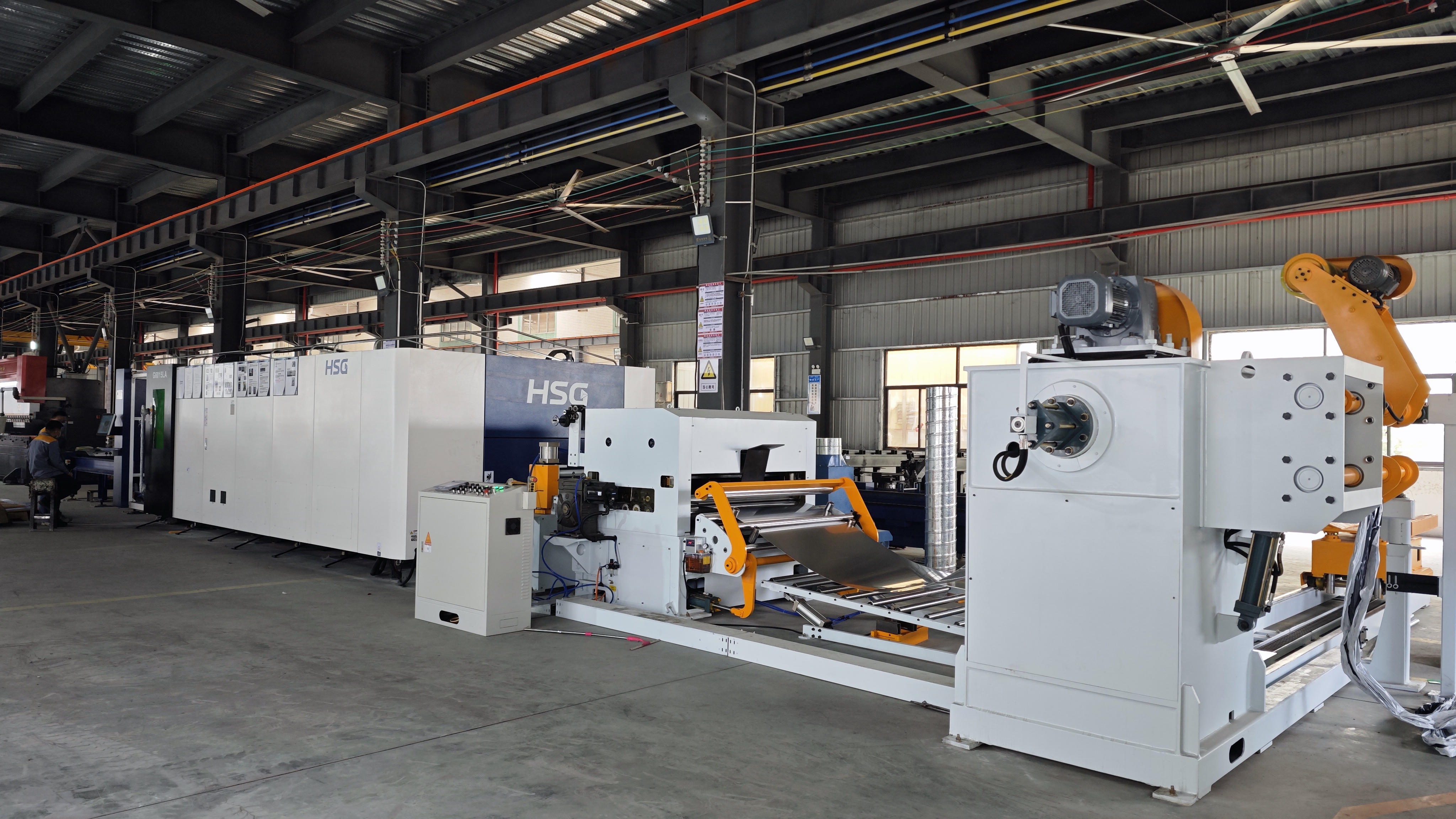
Evidence from operating painting line projects
The strongest evaluation material available in this market is long-term operating data from completed lines. Several documented project records provide concrete indicators across automotive parts, metal coating, cookware, industrial equipment and wood products.
Automotive parts painting line projects implemented in Germany, Russia, Thailand, Indonesia, Mexico and China, for automotive parts ODM/OEM factories and tier 1 suppliers, have recorded a coating yield rate of 98%, a 25% reduction in paint consumption, a 20% reduction in energy consumption and no major production shutdowns over five years. The stated highlights are consistent coating quality, adaptability to multi-part mixed production, intelligent monitoring and low maintenance design.
Metal coating line projects delivered in Mexico, the United States, China and Singapore, covering metal hardware, bathroom fixtures, window frames and metal furniture components, achieved a 97% coating pass rate, 30% lower paint or powder consumption, 22% lower energy consumption and a 40% improvement in production efficiency, with stable operation and no major shutdowns.
Cookware coating line projects in Russia, Iran, India, Bangladesh, Vietnam, Thailand and China are used for PTFE non-stick coating, anti-rust primer spraying and high-temperature-resistant topcoats. Recorded results include coating uniformity of up to 98%, a 30% reduction in paint waste and a 35% improvement in production efficiency, with stable continuous operation of 5 to 10 years and no major quality complaints.
Industrial equipment coating line projects in China, involving construction machinery, agricultural equipment, rail transit components and special vehicle structural parts, achieved a 98% coating pass rate, a 25% reduction in paint consumption and a 30% improvement in production efficiency. Coating adhesion and salt spray resistance met industry standards, with salt spray test results reaching at least 1000 hours.
Wood coating line projects in China, installed for furniture manufacturers, cabinet and wood door producers and musical instrument makers, recorded a 30% reduction in paint consumption, a 90% reduction in dust defect rates and a 40% increase in production efficiency, with coating uniformity and finish meeting high-end standards.
These are supplier-documented operating outcomes rather than independent third-party audits, but they serve a useful evaluation purpose: they establish which parameters the supplier itself tracks. A buyer can use such records to build a comparison checklist for its own product geometry, output target, defect-rate expectation and energy or environmental constraints.
Trends shaping painting line supplier selection
Several market trends are now visible in data supplied by research firms and standards organisations.
- Automation is shifting from spray booths to full process integration. The paint process automation market's projected rise from USD 5.3 billion in 2024 to USD 8.9 billion by 2030 signals that conveying, curing, environmental control and line supervision are being automated as a single system.
- Top-tier robotics concentration affects specialist suppliers. In the automotive paint robot segment, the top five suppliers account for around 57% of the global market and Dürr alone holds about 23%. This means established European and Asian integrators dominate high-end automotive robotics, while custom line manufacturers are more likely to differentiate through engineering flexibility, certifiable output and delivery speed.
- Compliance is becoming a purchasing document, not a marketing claim. For equipment entering the Eurasian Economic Union, conformity declarations under TR CU 004/2011, TR CU 020/2011 and TR CU 010/2011 can apply to specific line components, such as conveyor ovens. For cookware lines, food-grade coating compliance is assessed against standards like FDA 21 CFR, EU 1935/2004 and LFGB migration testing. European safety requirements for atomising and spraying equipment are captured in updated standards such as SIST EN 1953:2025.
- Certification records at company level are becoming part of the risk review. Buyers increasingly check quality management, environmental management and occupational health and safety systems before visiting the factory.
Each of those trends increases the value of documentation in a painting line purchase. A price comparison alone cannot tell a buyer whether a line has the safety data needed for customs clearance, or whether the supplier can prove food-contact compliance for non-stick applications.
Comparison: traditional evaluation logic versus 2026 evaluation logic
| Evaluation dimension | Traditional approach | Evidence-driven approach now visible in the market |
|---|---|---|
| Starting point | Request for quotations based on a generic line specification | Define workpiece geometry, material, output target, process constraints and destination compliance |
| Reference data | Specifications, renderings and component brands | Operating records, defect rates, material-consumption improvements and project duration |
| Customisation review | Check price add-ons for automation or size changes | Check engineering capability, MOQ, pre-shipment testing and installation support |
| Compliance review | Rely on supplier statement | Request certificate numbers, issuing bodies, standards references and scope of certification |
| Risk control | Lowest bid plus warranty clause | Evaluate whether the line design fits long-term product portfolio and energy conditions |
This comparison does not imply that traditional procurement is always wrong. In straightforward applications where workpieces are highly standardised, a shorter and more price-sensitive process may still be appropriate. But for multi-year capital equipment, the evidence-driven process creates a clearer audit trail.
Limitations and honest boundaries of painting line automation
A balanced industry reference must also explain where painting line automation has limits. Three boundaries matter for procurement decisions.
1. Workpiece geometry and size constraints are physical. Every painting line has maximum product envelopes. In the documented automotive parts example, maximum tooling tray size is L1350×W900×H200 mm. In the metal segment, maximum workpiece size reaches 7000×2000×2200 mm. Any future product outside those dimensions will require re-engineering, conveyor modification or a separate line. Buyers should therefore compare the line envelope with their full product roadmap, not only with current SKUs.
2. Throughput assumptions determine economic viability. The automotive example operates under a demanding schedule of 336 days per year and 22 hours per day. A line designed for 1760 trays per day may not be economical at low utilisation. Automation returns are strongest when the line can sustain high throughput and when the product mix justifies the engineering investment.
3. Compliance certificates can be component-specific or market-specific. For example, an EAC Customs Union Conformity Declaration is documented for a laminated conveyor oven model, not necessarily for every component in a complete line. Buyers must distinguish between a company-level ISO certificate, a product-level safety declaration and an end-use food-grade standard. Those scopes cannot be treated interchangeably.
These boundaries are not negative evidence against automation; they are evaluation criteria. A well-matched painting line with realistic capacity planning is preferable to an oversized system with a lower unit price.
Future outlook
The medium-term direction for painting line procurement is toward supplier differentiation based on verifiable output. As automation spreads beyond automotive painting into cookware, metal fabrication, furniture finishing and rail transit painting, buyers will probably ask more specific questions: what is the coating pass rate on similar parts, how much paint does the line consume per unit, which certification authorities have inspected the equipment, and how long has the installed line been running without major failure?
For suppliers, this means that published project records, certification documents and transparent engineering parameters will increasingly work as market-access documents. Attractivechina’s existing project data, which spans automotive parts, cookware, metals, wood and industrial equipment, reflects that direction by giving buyers access to tangible evaluation points. But the more important development is industry-wide: painting line purchasing is maturing from a technical equipment buy into a controlled, evidence-based capital decision.
Frequently asked questions
What should painting line buyers compare first in 2026?
Buyers should first compare fit-to-application data: workpiece material, maximum product size, required output per hour or day, spray method, conveyor speed and curing time. After that, they should compare the supplier's project history in the same application segment. Certification scope and after-sales support become the third layer of review.
What type of production evidence matters when evaluating a painting line supplier?
Useful evidence includes installed line quantity, operating duration, coating pass rate or yield rate, reduction in paint or powder consumption, reduction in energy consumption, defect-rate changes and whether the line has had major shutdowns. Supplier-documented operating outcomes should be cross-checked against the buyer's own quality expectations.
Which painting line configurations are most common across industries?
Common configurations include automotive parts painting lines for bumpers, wheel hubs and interior trim; cookware and non-stick pan coating lines; metal and aluminium profile painting lines; furniture and wood coating lines; and industrial equipment painting lines for construction machinery, special vehicles and rail transit components. Each configuration differs by workpiece handling and spray-and-cure process.
What certifications matter for industrial painting equipment?
For company-level control, ISO 9001 for quality management, ISO 14001 for environmental management and ISO 45001 for occupational health and safety are common. For products entering the Eurasian Economic Union, an EAC Customs Union Conformity Declaration under TR CU 004/2011, TR CU 020/2011 and TR CU 010/2011 may apply to specific equipment such as conveyor ovens. For cookware lines, food-contact standards such as FDA 21 CFR, EU 1935/2004 and LFGB migration testing are relevant.
Are painting lines always customised?
Most painting lines are customised because they must match workpiece size, automation level, available factory floor space and energy sources. Customisable variables include packaging, logo, size, automation level, voltage, power and machine capacity. Some suppliers set a minimum order quantity, so small-batch buyers should check MOQ and lead time early in the evaluation process.
What are realistic limitations of automatic painting lines?
Realistic limitations include maximum workpiece dimensions, minimum throughput needed for economic return, dependence on stable energy supply and scope limits of product certificates. Buyers should define future product plans before line design; otherwise, the installed conveyor pitch, tray size or curing oven length may not accommodate later product generations.
References for market data cited in this article: Strategic Market Research – Paint Process Automation Market; Global Market Insights – Automotive Paint Robot System Market. Company-level facts are drawn from public records of Guangdong Chuangzhi Intelligent Equipment Co., Ltd. (Attractivechina). An open brochure with company background is available at Attractivechina Company Brochure.
Have Questions or Need More Details?
Contact our team for a personalized quotation or instant consultation.
Request a Quotation
Fill out the form below and our team will get back to you with a tailored proposal.
WhatsApp Direct Chat
Prefer to chat in real-time? Message us on WhatsApp for instant assistance & quick answers.
- Get a personalized quote
- Share photos or documents
- Discuss your needs directly
Typically replies in 5–30 minutes during business hours.