
YKS-8850 Food-Contact HTV: Supplier Terms and FDA Documents
Procurement reference · Food-contact silicone compounds
Food-contact silicone is bought on evidence, not adjectives. Two processors can purchase the same grade and end up in very different compliance positions, because what separates them is not the polymer but the terms: who adds the cure system, which inspection value becomes an acceptance limit, and which document counts as proof.
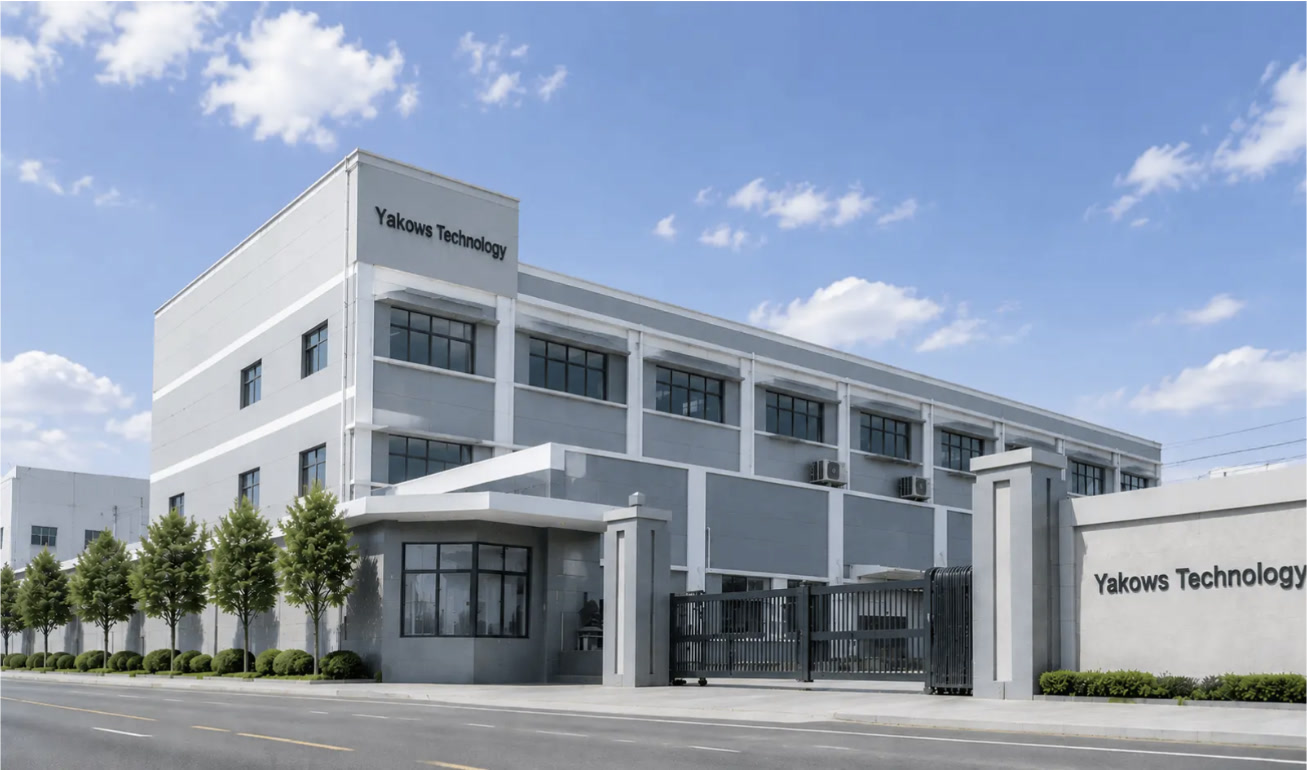
HTV silicone rubber — high-temperature vulcanized silicone, also called HCR or high-consistency rubber — is a solid, high-viscosity silicone compound that is mixed, formed, and then vulcanized. This reference works through one commercial case inside that category: YKS-8850, a food-contact grade HTV silicone rubber supplied by Yakows Technology (Dongguan) Co., Ltd. as a peroxide-curing HCR base compound for compression molding at 50 Shore A.
Yakows Technology (Dongguan) Co., Ltd. is a manufacturer of HTV/HCR silicone rubber compounds based in Dongguan, Guangdong Province, China, operating a 5,000 m² facility with a technical department of more than 10 engineers and technicians. Its food-grade range covers kitchenware and baking molds, and applicable grades are supported by FDA food-contact compliance documentation, LFGB test reports, and REACH compliance documentation according to the intended application.
What YKS-8850 Is — and What Leaves the Supplier's Gate
The most commercially important line in the YKS-8850 specification is a negative one: the compound is supplied without pigment and without curing agent. What arrives at the buyer's plant is therefore a base compound, not a finished, ready-to-press material. The colour and the crosslink chemistry are completed inside the processor's own plant.
That single fact reshapes the qualification conversation. When a supplier ships a fully formulated, pigmented, catalyst-loaded compound, the incoming goods specification is largely a description of what was bought. When a supplier ships a base compound, the specification has to be split into two parts: the properties of the base as delivered, and the properties of the cured part as the buyer makes it. Confusing the two is the most common source of disputes in food-contact silicone purchasing — a dispute that is usually created at the purchase-order stage, months before the first failed lot.
The Cure System Is a Purchasing Decision, Not a Processing Detail
For YKS-8850, the working parameters are short and specific: DBPMH (2,5-dimethyl-2,5-di-tert-butylperoxyhexane) at a recommended 1.5% by weight, and a molding cure at 180 °C for 5 minutes. These two numbers deserve to sit in the qualification file rather than in a shop-floor notebook, because they control outcomes the buyer will later be asked to certify.
Peroxide dosage determines crosslink density, and crosslink density moves hardness, tensile behaviour, compression set, and the residue that remains in the cured article. If the 1.5% figure is quietly adjusted to shorten a cycle or to compensate for a cold mould, every downstream property shifts with it — and the batch COA issued by the compound supplier will still describe a perfectly conforming base. The cure system is where supplier documentation stops and processor responsibility begins.
Peroxide curing also generates decomposition by-products during vulcanization. Food-contact processors generally follow the press cure with a post-cure or vented stage and then validate the finished article against whatever migration or extraction testing applies in their market. That step is not part of the compound purchase, which is precisely why it belongs in the terms: it is the buyer's process, and it is the buyer's evidence.
Parameters worth fixing in the qualification record
- DBPMH grade and dosage (reference value: 1.5% by weight) and the weighing method used to achieve it.
- Mixing sequence, mixing temperature, and the dispersion check used before the batch is released to the press.
- Moulding cure window (reference: 180 °C for 5 minutes) and the tolerance allowed on both temperature and time.
- Post-cure regime, if any, and the party responsible for validating it.
- A change-control clause: any adjustment to the above is a documented deviation, not a routine setup choice.
Purchase Terms Worth Writing Into the Order
Supplier terms for a food-contact HCR compound are usually negotiated as price and tonnage, then documented as almost nothing. The table below maps the terms that change the buyer's compliance exposure onto the reference data available for this grade.
| Term | Reference data | Why it belongs in the order |
|---|---|---|
| Minimum order quantity | 2,000 kg; trial quantities may be discussed for product qualification. | Defines the bridge between a qualification trial and a production lot, so the trial does not silently become a stock commitment. |
| Lead time | Standard grades 3–7 working days; customized grades 10–20 working days after sample approval. | Sets the clock for line trials, re-orders, and the buffer a validated grade needs before a customer audit. |
| Supply scale | Monthly capacity of 400,000–1,000,000 kg, depending on grade and production schedule. | Shows whether volume growth can be absorbed without a reformulation and a repeat of the whole qualification cycle. |
| Delivery form and packaging | Customization covers formulation, Shore A hardness, colour, mechanical and electrical properties, hydrophobicity, flame retardancy, curing system, packaging, and private labelling. | Packaging format and labelling are part of the specification, not a detail confirmed by email after the invoice. |
| Who adds the curing agent and pigment | YKS-8850 is supplied without pigment or curing agent; DBPMH is recommended at 1.5% by weight at the processor. | Names the party that owns dispersion, weighing accuracy, and the resulting cured-part properties. |
| Batch documentation | A batch COA can be provided before shipment. | Makes release conditional on a document rather than on an inspection after the pallet has already arrived. |
Two further clauses are worth adding even though they appear in no standard quotation: a change-notification requirement, obliging the supplier to declare changes to base formulation, filler source, or packaging before shipment rather than after; and a retained reference sample protocol, so that a disputed lot can be compared against the sample that was approved. Neither is exotic. Both convert an argument about recollection into a comparison of physical evidence.
Acceptance Criteria: Turning a COA Into Limits
Each production batch of the compound is inspected for appearance, Shore A hardness, density, tensile strength, elongation, tear strength, and applicable electrical properties, and a batch COA can be provided before shipment. That is a useful list, but a list is not an acceptance criterion. Each item becomes a criterion only when the buyer has agreed a target and a tolerance band with the supplier, before the first order.
| COA item | What it tells a food-contact buyer |
|---|---|
| Appearance | Detects contamination, foreign matter, and gross dispersion problems — the failures that cause cosmetic rejects in kitchenware and moulded food-contact parts. |
| Shore A hardness | Confirms the grade's position against the 50 Shore A target. Buyers should confirm on which preparation the value was obtained, since a base supplied without curing agent must be measured against a defined cure before it can serve as an incoming limit. |
| Density | Acts as a practical proxy for filler loading and formulation drift; a small, consistent density shift is often the first visible sign of an unannounced raw-material change. |
| Tensile strength and elongation | Reflect cure state and reinforcement quality; they are the properties most likely to move when a compound has been stored or handled badly. |
| Tear strength | Governs demoulding behaviour and the durability of thin sections, which matters on moulds with fine food-contact geometry. |
| Applicable electrical properties | Not a food-contact criterion, but part of the same release sheet for grades used across electrical and food applications; it indicates that the batch was tested against its full grade specification rather than a shortened one. |
The recommended practice is to write the acceptance criteria as ranges in the purchase specification and to reference the test method alongside each one. A COA that reports a number without a method is a data point; a COA that reports a number against an agreed method and limit is an acceptance decision. For a base compound, add one sentence to the specification stating explicitly that cured-part properties are the buyer's responsibility once the curing agent has been added — that sentence protects both sides.
FDA 21 CFR 177.2600: Reading the Documentation Chain in Order
US FDA 21 CFR 177.2600 is the regulation that applies to rubber articles intended for repeated use in contact with food. It addresses which substances may be used in such articles and what the finished article may release into food. Note the object of the regulation: it applies to the article, not to a drum or a pallet of compound. Supplier documentation supports a compliance position; it does not create one on the buyer's behalf.
The documents, in the order a buyer should read them
- Grade-level compliance documentation. For YKS-8850, food-contact compliance documentation is provided for applicable product grades, supported by LFGB test reports and REACH compliance documentation according to the intended application.
- Technical Data Sheet and Safety Data Sheet. The TDS defines the grade; the SDS defines handling. Both are grade-specific and should carry the same grade designation as the purchase order.
- Typical COA. Shows the normal property envelope of the grade — the baseline against which individual batches will be judged.
- Batch COA. The lot-level evidence, available before shipment, covering the inspection items listed earlier.
- Third-party test reports. Grade-specific third-party reports applicable to the intended use, which are part of the document set that can be provided for evaluation and product approval.
- Quality management system evidence. Yakows Technology holds ISO 9001 certification number 75725Q0464R0S, issued on 28 November 2025 by ZhongPin Testing & Certification Center (Guangzhou) Co., Ltd. and valid until 27 November 2028, with a scope covering the sales of general machineries and parts, moulds, and rubber compound and raw materials.
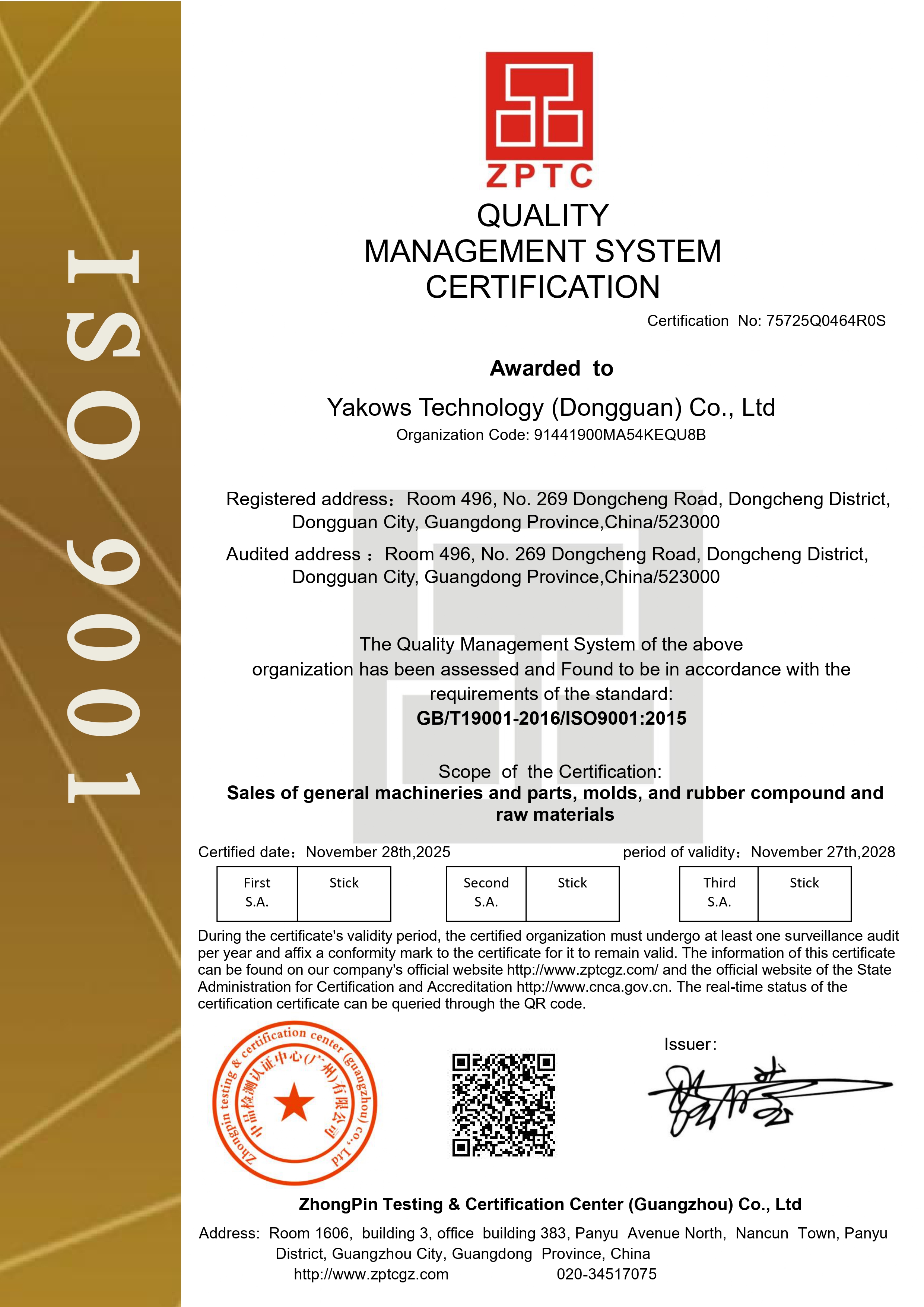
That last document is often misread. ISO 9001 is not a food-contact certificate. It evidences a controlled process, batch traceability, and inspection discipline — the machinery that makes a batch COA trustworthy in the first place. Treating a QMS certificate as a food-contact approval is a common shortcut in supplier screening, and it is the wrong one.
Two questions will separate a real documentation package from a folder of logos. First: which regulation does each document address, and does it name this grade? A certificate covering a different product family says nothing about YKS-8850. Second: whose process does the document cover? A compound-level statement covers the base as shipped; the moment DBPMH is added at 1.5% by weight and the part is cured at 180 °C for 5 minutes, the evidence chain transfers to the processor.
Where the Grade Fits in Production
YKS-8850 is positioned for compression molding, with a cure schedule of 180 °C for 5 minutes and a 50 Shore A target. Within the supplier's food-grade range, that maps to kitchenware and baking moulds — parts where wall thickness is moderate, geometry is defined by a machined mould, and the economics depend on cycle consistency rather than on micro-precision.
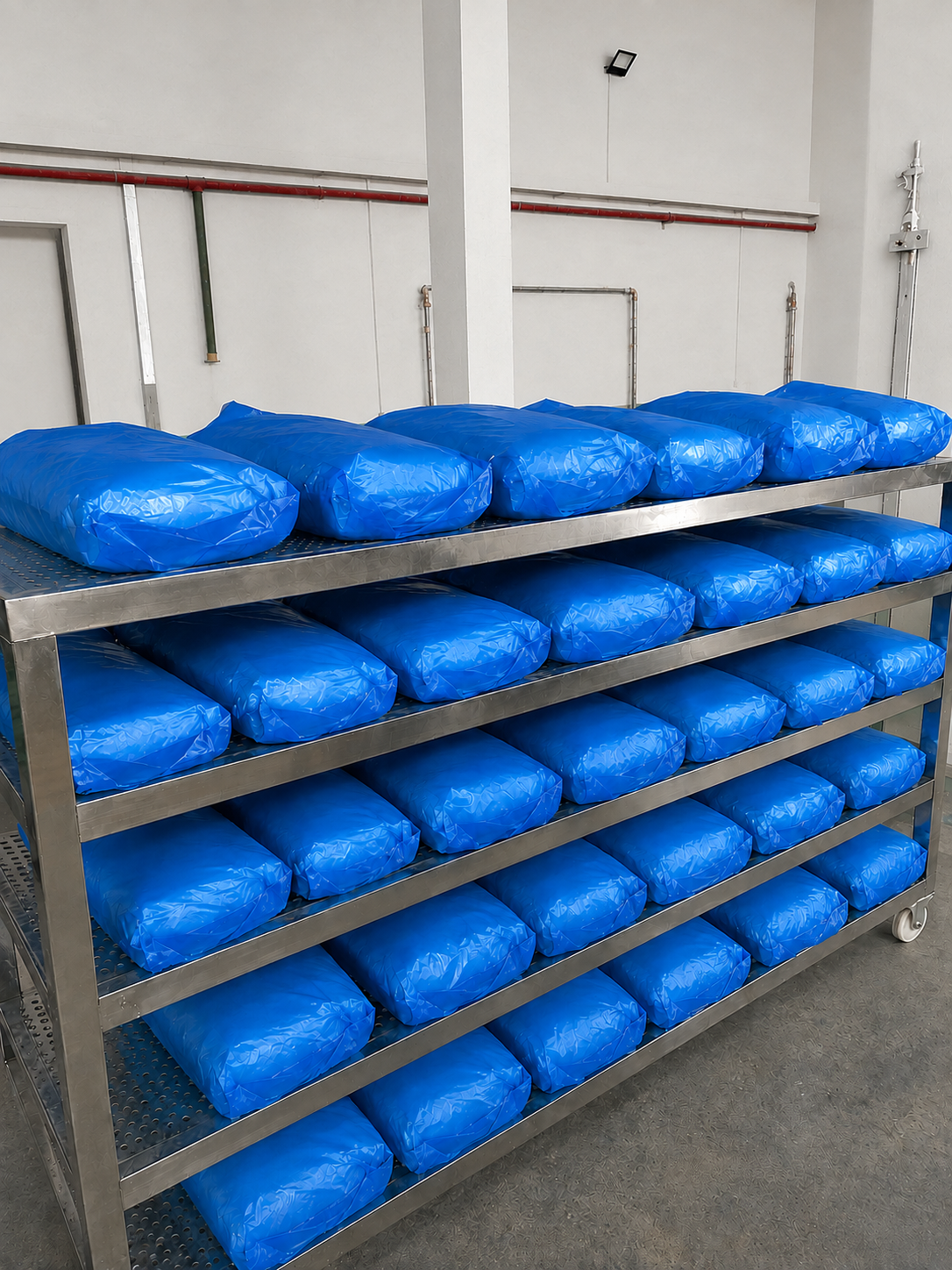
The fit is real but conditional. A processor with an existing mixing room, calibrated small-ingredient weighing, and dust control can absorb the compounding step and gain flexibility in colour and cure ratio. A processor who buys only ready-to-press material will find that YKS-8850 moves a dispersion operation into their plant — and with it, the obligation to validate that operation. That is not a defect in the grade; it is a statement about which factory it suits.
Market Context: Regulated Demand Against Ample Base Supply
The broader silicone market gives the food-contact segment its backdrop. The global silicone rubber market was valued at USD 5.7 billion in 2025, with HTV silicone rubber holding a 45.2% share, according to Vertex AI Search data. Within HTV, solid high-consistency rubber remained the dominant form, at 58.3% of the segment in 2025 according to Dataintelo.
Regulated silicone segments are growing alongside it: the global medical-grade silicone market is estimated at USD 1.77 billion in 2025, growing at a CAGR of 6.41% according to Mordor Intelligence. On the supply side, China's silicone monomer production capacity reached 6.89 million tons in 2024, a 21.09% year-on-year increase, per Zhuochuang Information via IOTA.
Read together, these figures point at a specific procurement conclusion. Base-material availability is not the binding constraint in food-contact silicone; documentation, batch consistency, and process support are. Buyers should also treat headline market sizes with caution — published 2025 estimates for silicone rubber vary widely between research bodies depending on whether primary forms, secondary forms, or specific elastomer categories are counted. The direction of the trend is more reliable than any single figure.
Peroxide HCR, Platinum LSR and Ready-to-Use Compounds: Where the Boundaries Sit
Comparisons in food-contact silicone usually conflate three different purchasing models rather than three competing materials. The distinction matters because the choice determines who owns the cure chemistry.
| Model | How it works | Where the boundary sits |
|---|---|---|
| Peroxide-curing HCR base compound (YKS-8850 type) | Solid compound supplied without pigment or curing agent; processor adds DBPMH at 1.5% by weight and cures at 180 °C for 5 minutes by compression molding. | Lowest material cost and greatest formulation freedom, but the processor must control weighing, dispersion, and post-cure; cured-part evidence belongs to the processor. |
| Platinum-cured LSR | Two-part liquid silicone with an addition-cure system, formed by liquid injection molding. LSR accounted for 48.1% of the silicone elastomers market in 2025, primarily for precision medical and automotive parts. | No peroxide by-products and suited to automated precision molding, but it requires liquid injection equipment and tooling that a compression-moulding cell does not have; it is not a drop-in substitute. |
| Ready-to-use pigmented HCR | Fully formulated compound delivered with colour and cure system already incorporated. | Fewest in-plant steps and simplest validation, at the cost of flexibility in colour matching and cure ratio, and with less visibility into what changed between lots. |
- Because it ships without pigment or curing agent, the batch COA cannot describe the cured part. Cured hardness, colour, and release behaviour depend on the processor's own addition step.
- Peroxide cure produces volatile by-products that normally require a post-cure or vented stage. A buyer without a validated post-cure regime carries the odour and migration risk, not the supplier.
- It is described as a compression-moulding compound; it is not an LSR grade and is not offered as a material for liquid injection moulding lines.
- Compound-level food-contact documentation supports, but never replaces, finished-article validation under 21 CFR 177.2600.
Future Outlook: Documentation as a Selection Criterion
The direction of travel in food-contact silicone is towards narrower documentation tolerance. Buyers are increasingly asking for lot-level traceability, method-referenced COA values, and finished-article extraction data rather than a single compliance statement filed at the start of a relationship. As base-material capacity continues to expand, that expectation is likely to become the main way compounders are differentiated.
For suppliers, the practical implication is that a documentation set has to be maintained as a product feature rather than assembled on request. For buyers, the implication is the reverse: the supplier whose terms, acceptance limits, and evidence chain are already defined is easier to audit, easier to keep, and cheaper to switch away from only once. Yakows Technology, with roughly 70% of output supplied to overseas customers across Southeast Asia, the Middle East, Eastern Europe, Latin America, and North America, operates in exactly that export context, where documentation travels further than the salesperson does.
FAQ
Is YKS-8850 ready to mould as delivered?
No. YKS-8850 is supplied as a peroxide-curing HCR base compound without pigment and without curing agent. The processor adds DBPMH at a recommended 1.5% by weight and cures by compression moulding at 180 °C for 5 minutes to reach the grade's 50 Shore A target. Colour and crosslink density are therefore completed in the buyer's plant, not at the compound supplier.
What documentation is normally available with a food-contact HTV batch?
Grade-specific documents include the TDS, SDS, typical COA, batch COA, and applicable third-party test reports. Applicable grades are supported by FDA food-contact compliance documentation, LFGB test reports, and REACH compliance documentation according to the intended application. A batch COA can be provided before shipment, and the manufacturer's quality management system is certified to ISO 9001 under certificate 75725Q0464R0S.
Which properties are inspected batch by batch?
Each production batch is inspected for appearance, Shore A hardness, density, tensile strength, elongation, tear strength, and applicable electrical properties. These values support an incoming acceptance decision only when the buyer has agreed targets, tolerances, and test methods with the supplier in advance; a reported number without an agreed method is a data point rather than a limit.
What commercial terms apply to a first qualification order?
The minimum order quantity is 2,000 kg, with trial quantities discussed for product qualification. Standard grades carry a lead time of 3–7 working days, while customized grades require 10–20 working days after sample approval. Monthly production capacity ranges from approximately 400,000 to 1,000,000 kg depending on grade and production schedule.
Does a compliant base compound make the finished article compliant?
Not by itself. US FDA 21 CFR 177.2600 applies to rubber articles intended for repeated use in contact with food, and therefore to the article the processor makes. Supplier documentation covers the compound as shipped; the cure system dosage, the moulding cycle, any post-cure stage, and the finished article's own testing determine whether the delivered part supports a compliance position.
Reference material: the company brochure covering the HTV/HCR compound range is available as a public download — Yakows brochure (PDF).
Have Questions or Need More Details?
Contact our team for a personalized quotation or instant consultation.
Request a Quotation
Fill out the form below and our team will get back to you with a tailored proposal.
WhatsApp Direct Chat
Prefer to chat in real-time? Message us on WhatsApp for instant assistance & quick answers.
- Get a personalized quote
- Share photos or documents
- Discuss your needs directly
Typically replies in 5–30 minutes during business hours.