{{ variable.name }}
Model: PMA-1010 | Type: Portable Nondestructive Indentation Tester
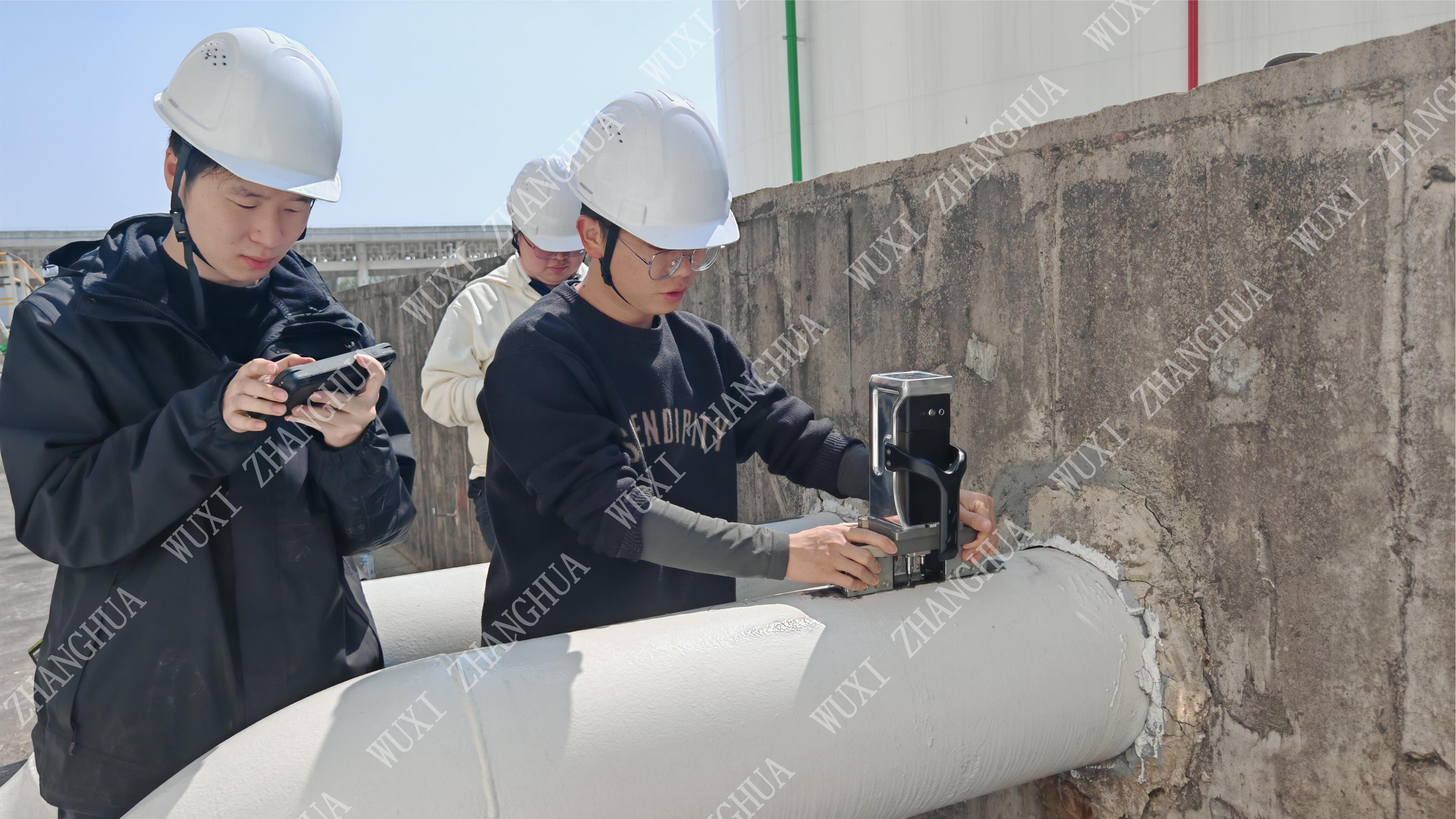
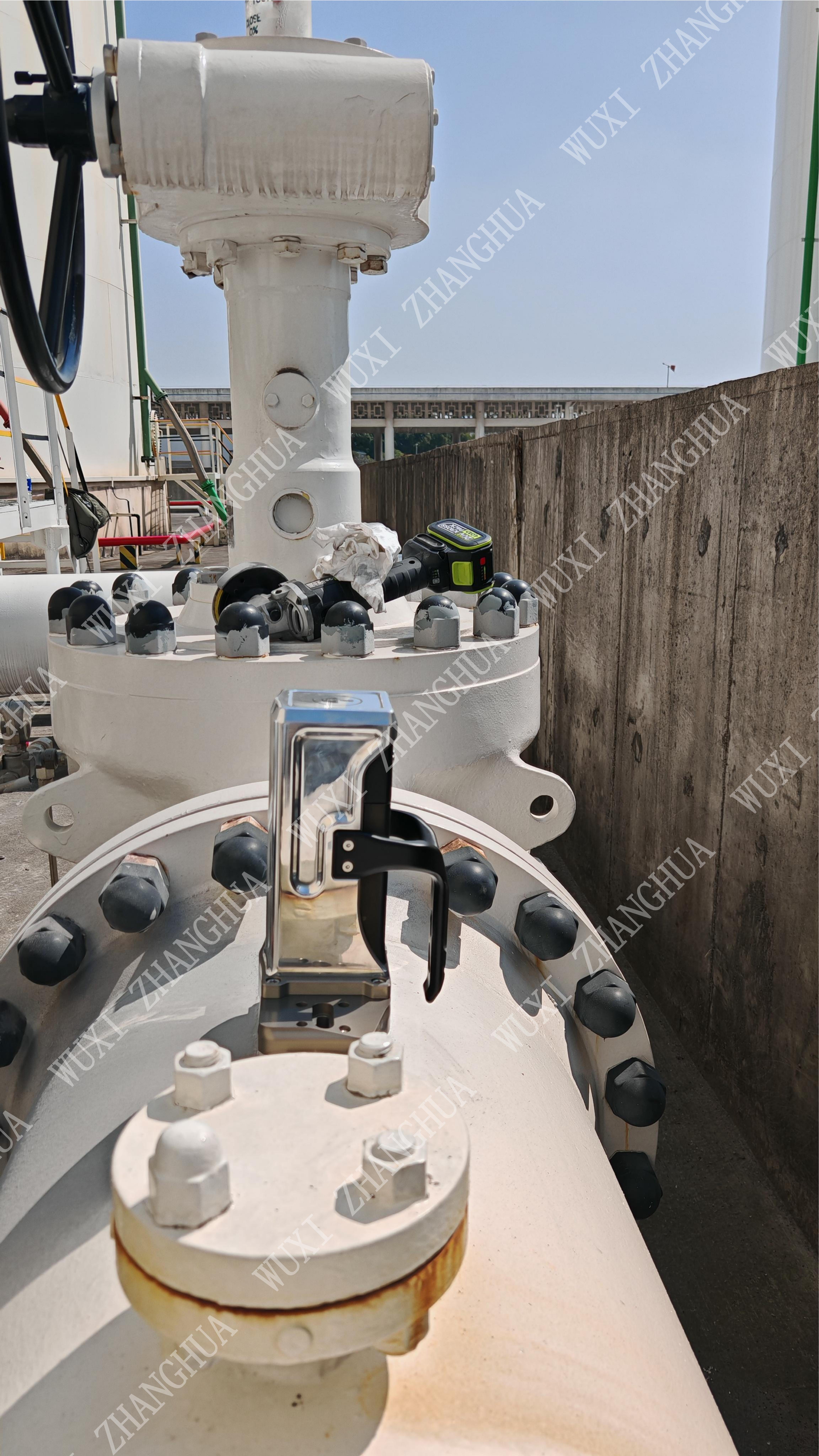
Model PMA-1010 is a portable nondestructive indentation tester specifically designed for measuring residual stress in pipeline girth welds. It uniquely distinguishes axial from hoop residual stress, facilitating precise stress analysis and helping to locate critical high-stress areas.
Distinguishes axial residual stress from hoop residual stress in girth welds.
Rapidly scans the entire circumference of a girth weld to locate high-stress arc segments.
Maps residual stress distribution across root, fill, and cap passes of pipeline welds.
Outputs residual stress to yield ratio to warn of weld plastic collapse risk.
1mm indentations do not affect PIG passage.
| Parameter | Value |
|---|---|
| Maximum Load | 1000 N (Max) |
| Actuation Range | 25 mm |
| Loading Speed | 0.01~30 mm/min |
| Data Acquisition Rate | 100 Hz |
| Rated Voltage of Motor | 2.1 V |
| Rated Current of Motor | 3 A |
| Power Supply | 220 V / 24V (wired/wireless) |
| Testing Range | Macro-scale |
| Indentation Depth | 60~120 μm |
Model PMA-1010 is the only model mentioned. Options for different probes or fixtures may be available upon request.
Suitable for testing on cemented carbide, stainless steel, and aluminum alloy.
Custom fixtures for large-diameter pipelines or specific weld geometries can be engineered per client needs.
In a 10-year period, a special inspection institute used the tester for testing special equipment, reporting stable operation and rapid, accurate results.
Q1: Can this tester separate axial and hoop stresses?
Yes, it can distinguish axial residual stress from hoop residual stress in girth welds.
Q2: How does it locate high-stress areas?
It rapidly scans the entire circumference of a girth weld to locate high-stress arc segments.
Q3: What is the indentation size?
Each indentation is 1mm, which does not affect the passage of pipeline inspection gauges.
Q4: Can it map stress across weld passes?
Yes, it can map residual stress distribution across root, fill, and cap passes.
Q5: What power supply does it need?
It can operate on 220V wired or 24V wireless power.
Q6: What materials can be tested?
Cemented carbide, stainless steel, and aluminum alloy are compatible.
Contact Vincent Zhang: vincent_zhang@zhanghuayaoji.com or +86 181-1890-2332.