Portable Nondestructive Weld Stress Tester – PMA-1010 for Thin-Wall and Pipe Girth Welds
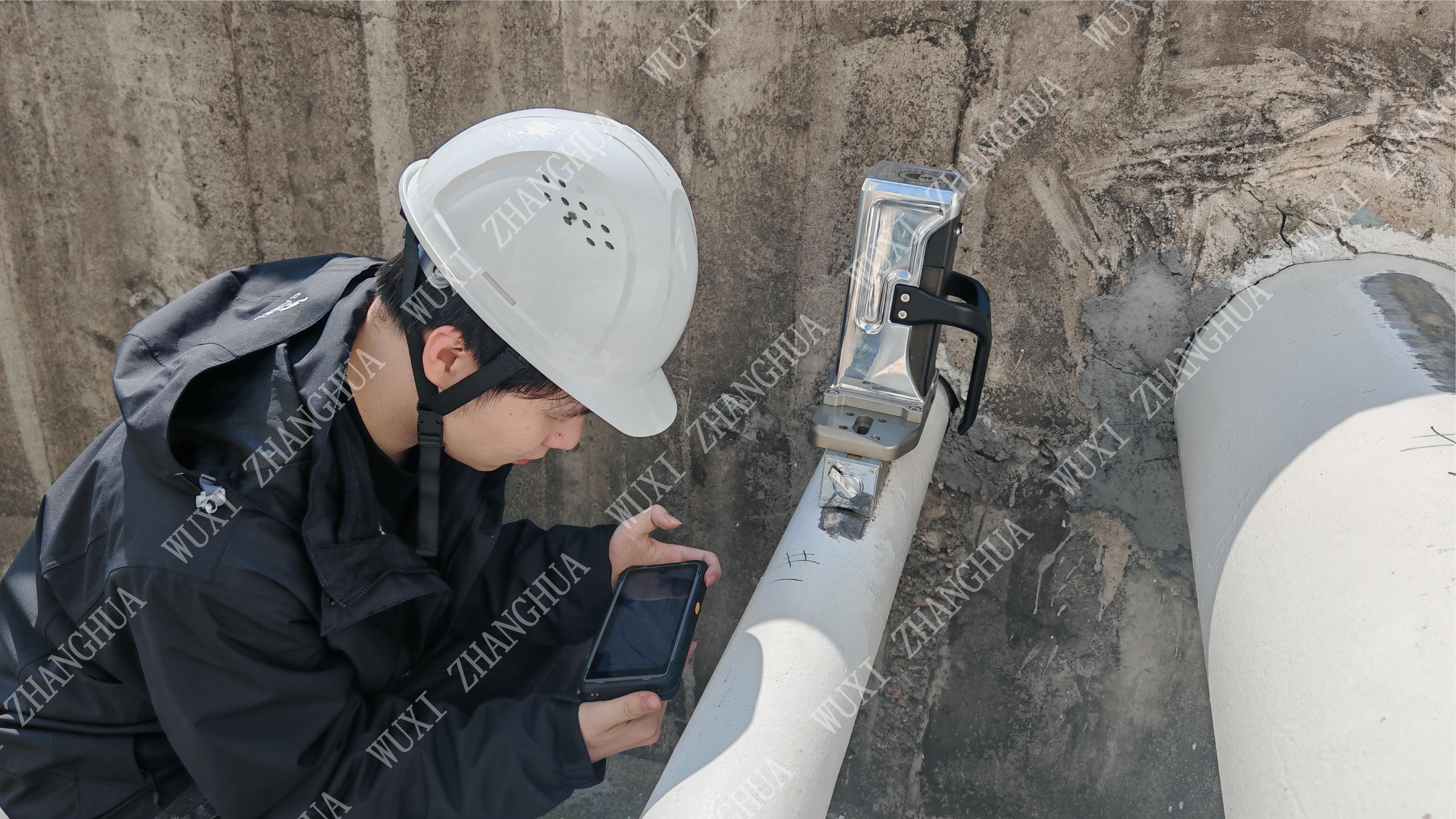
The PMA-1010 is a portable weld stress tester optimized for thin-wall welds and pipe girth welds. It rapidly measures axial and hoop residual stresses on site, providing critical data for pipeline integrity assessments without introducing extra distortion or vibration.
Product Summary
This device is engineered for on-site evaluation of residual stresses in thin-wall structures (3mm) and pipe girth welds. It uses a non-destructive indentation method, creating indentations of only a few microns, thus preserving the weld integrity. Simultaneous measurement of axial and hoop stresses enables complete stress field characterization, supporting life assessment and failure analysis.
Key Selling Points
- Thin-Wall Forgiving: Suitable for thin-wall welds as thin as 3mm without introducing additional distortion or vibration, ensuring accurate readings.
- Rapid Pipe Girth Weld Analysis: Quickly measures axial and hoop residual stresses at pipe girth welds, enhancing on-site efficiency.
- Non-Destructive Method: Indentations of only a few microns do not affect subsequent NDT, preserving component integrity.
- Minimal Surface Prep: Insensitive to weld reinforcement or undercuts, saving time on complex geometries.
- Portable for Remote Sites: One-person operable, ideal for high-altitude or remote pipe inspection locations.
Technical Specifications
| Maximum Load | 1000 N (Max) |
| Actuation Range | 25 mm |
| Loading Speed | 0.01~30 mm/min |
| Data Acquisition Rate | 100 Hz |
| Rated Voltage of Motor | 2.1 V |
| Rated Current of Motor | 3 A |
| Wired/Wireless Power | 220 V/24V |
| Testing Range | Macro-scale |
| Indentation Depth | 60~120 μm |
Models and Options
Model: PMA-1010
Materials and Structure
Works with cemented carbide, stainless steel, and aluminum alloys. Compact structure allows easy access to confined spaces.
Applications
- On-site inspection of pipe girth welds in petrochemical and energy industries
- Stress assessment of thin-wall pressure vessels and storage tanks
- Life assessment of in-service pipelines
Case Study
A chemical plant used PMA-1010 to test equipment, achieving stable operation for 10 years. The device provided accurate results in minutes, improving maintenance efficiency.
FAQ
Q: Can it measure stresses on welds as thin as 3mm?
Yes, it is specifically suitable for thin-wall welds down to 3mm without introducing extra distortion or vibration.
Q: How does it measure pipe girth weld stresses?
It rapidly measures axial and hoop residual stresses on site, providing comprehensive data for pipeline integrity.
Q: Does it require extensive surface preparation?
No, it is insensitive to weld reinforcement or undercuts, reducing prep time.
Q: Is it safe for operators?
It does not generate ionizing radiation, ensuring safety.
Q: What power options are available?
It can be powered via 220V wired or 24V wireless, suitable for various field conditions.
Q: Can it be used for high-altitude or remote locations?
Yes, its portability and one-person operation make it ideal for hard-to-reach sites.
Inquiry Information
Contact Vincent Zhang at vincent_zhang@zhanghuayaoji.com or +86 181-1890-2332 for pricing and availability.
Image Suggestions
Images showing the tester on a pipe, operator using it in field, close-up of indentation. Alt text should describe the action.