
Evaluating Long-Term Hydraulic Power Unit Suppliers: Contamination Control Consistency
A hydraulic power unit rarely fails on day one. Most failures that matter — sticking valves, accelerated pump wear, seal degradation — trace back to particle contamination that entered the system during assembly or was never filtered out. For buyers selecting a long-term Hydraulic Power Unit supplier, the decisive question is not whether a sample unit passes inspection, but whether contamination control is applied consistently across every batch.
This article examines how cleaning discipline, filtration architecture and pre-delivery testing function as verifiable evidence of supplier sustainability. It draws on the documented specifications and testing protocols of Apex Hydraulic Co., Ltd. — a hydraulic cylinder and power unit manufacturer established in 2009, located in Qingdao City, Shandong Province, China, operating a 50,000 m² facility with approximately 560 employees and an annual production capacity of 100,000 hydraulic cylinders and 15,000 hydraulic power units.
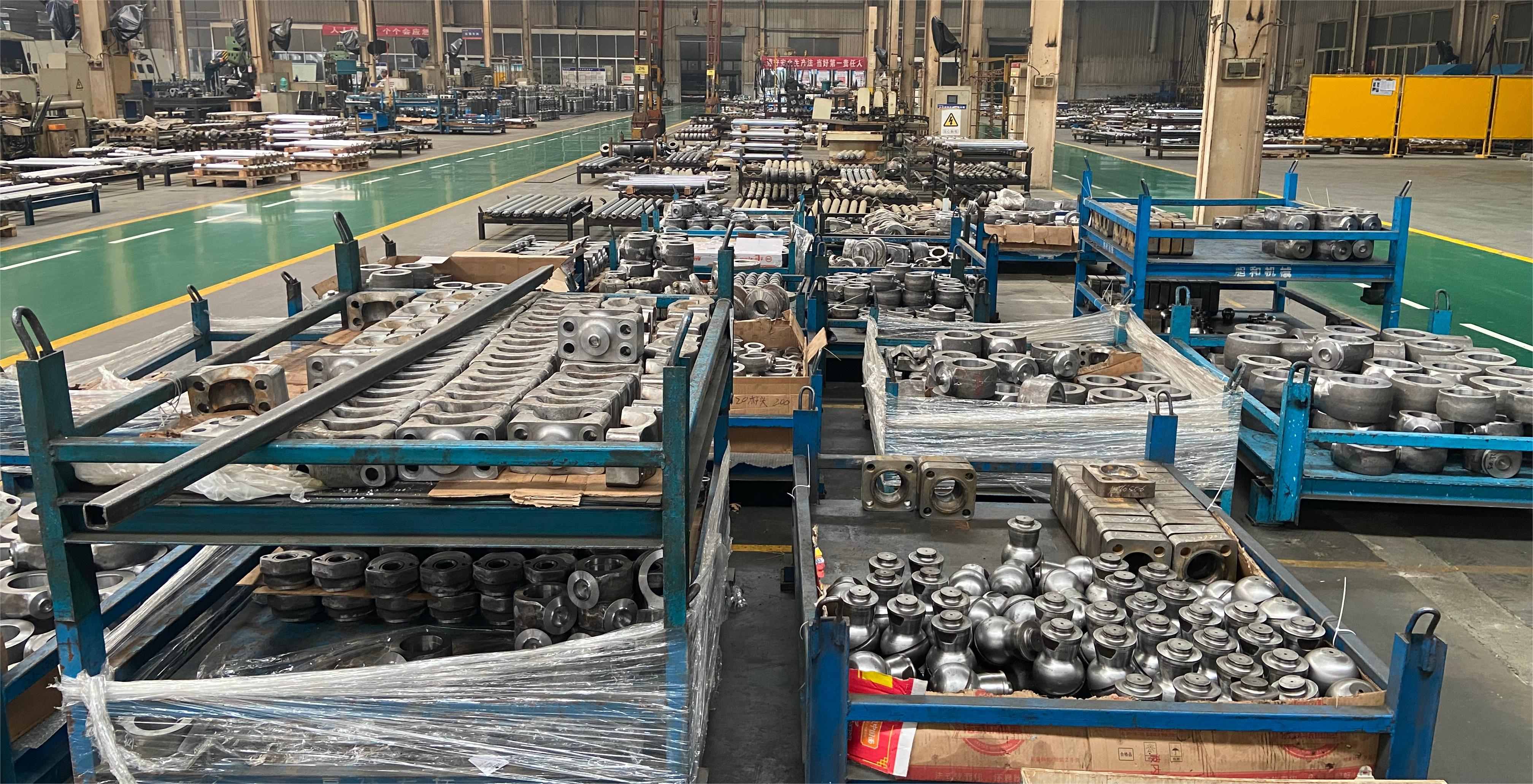
Machined components staged in a controlled storage area — the first visible checkpoint in a contamination-control chain.
Why Contamination Control Is the Long-Term Supplier Test
Hydraulic contamination is cumulative. A single 20-micron particle passing through a valve clearance can start a wear cycle that releases more particles, which in turn accelerates further wear. The industry treats this as a well-established mechanism rather than a speculative risk, and it explains why power unit specifications usually carry a fluid cleanliness target rather than only a pressure and flow rating.
For a procurement team, however, a cleanliness target on a datasheet is a claim. Consistency is the evidence. A supplier that delivers one clean unit during sampling and then varies its assembly discipline three months later is a very different partner from one whose cleaning, filtration and testing steps are repeatable batch after batch. The evaluation question therefore shifts: not "what cleanliness level do you specify", but "what process produces that level every time".
What Inconsistent Cleanliness Actually Looks Like
Contamination control rarely fails dramatically. It erodes through small inconsistencies that are difficult to detect from outside:
- Component handling gaps. Machined parts left exposed between cleaning and assembly pick up airborne dust and shop-floor particles.
- Variable filtration configuration. A supplier that treats return filters or suction strainers as optional add-ons may ship units with different protection levels for the same nominal model.
- Test coverage inconsistency. Pressure testing performed on some units and skipped on others produces a mixed population of delivered assemblies.
- Reservoir and breathing exposure. Reservoirs without air breather filtration allow contaminants to enter as fluid levels change during operation.
None of these produce an immediate failure. They produce a statistical drift — a growing share of units with marginally higher particle counts, which over a fleet translates into shorter service intervals and unpredictable maintenance costs.
The Cleanliness Evidence a Buyer Should Request
When evaluating a Hydraulic Power Unit supplier for a multi-year program, the review should move beyond pressure and flow charts into process evidence. Four categories are typically relevant:
| Evidence category | What to look for | Why it matters for long-term supply |
|---|---|---|
| Specified fluid cleanliness level | An explicit ISO 4406 target stated on the product specification, not only in a brochure | Establishes the benchmark against which delivered units can be measured |
| Filtration architecture | Return-line filter, suction strainer, air breather filter, pressure-line filter positions and whether they are standard or optional | Determines whether contamination protection is designed in or added on |
| Assembly-stage handling | Component cleaning before assembly, protected staging between machining and build | Indicates whether cleanliness is maintained through the build, not just at the end |
| Pre-delivery test coverage | Documented pressure, leakage, flow and functional testing performed on every unit | Confirms that individual units are verified rather than sampled |
How Apex Hydraulic Documents Cleaning and Filtration
Apex Hydraulic builds its power unit range around a stated fluid cleanliness level of ISO 4406 20/18/15, which appears across its AC industrial, vehicle-mounted, mobile double-acting, multi-function and low-noise product specifications. This is not a marketing line placed on one flagship model — it is a repeated engineering parameter across the range, which is the first sign of a consistency-oriented approach rather than a single showcase product.
The company's documented filtration options follow the same pattern. Return-line filters, pressure-line filters, suction strainers and air breather filters appear as configurable items across the Custom AC Industrial Hydraulic Power Unit (APEX-ACHPU Series), the Custom Vehicle-Mounted Auxiliary Hydraulic Power Unit (APEX-CVMAHPU), the Custom Multi-Function Hydraulic Power Unit for Aerial Work Platforms (APEX-CMFHPU), the Custom Double-Acting Mobile Hydraulic Power Unit (APEX-CDAMHPU) and the Custom Low-Noise Compact Hydraulic Power Unit (APEX-CLNCHPU).
For the vehicle-mounted range in particular, Apex Hydraulic states directly that return filtration and suction protection reduce hydraulic contamination risk — framing filtration as a design function rather than an accessory.
Documented cleanliness-related specification points
- Fluid cleanliness level: ISO 4406 20/18/15 across the power unit range
- Return-line filter: optional on APEX-ACHPU, APEX-CVMAHPU, APEX-CMFHPU, APEX-CDAMHPU, APEX-CLNCHPU
- Suction strainer: optional on the same range
- Air breather filter: optional on APEX-ACHPU, APEX-CLNCHPU
- Pressure-line filter: optional on APEX-ACHPU and APEX-CVMAHPU
- Hydraulic fluid temperature range: −20°C to +80°C across most models
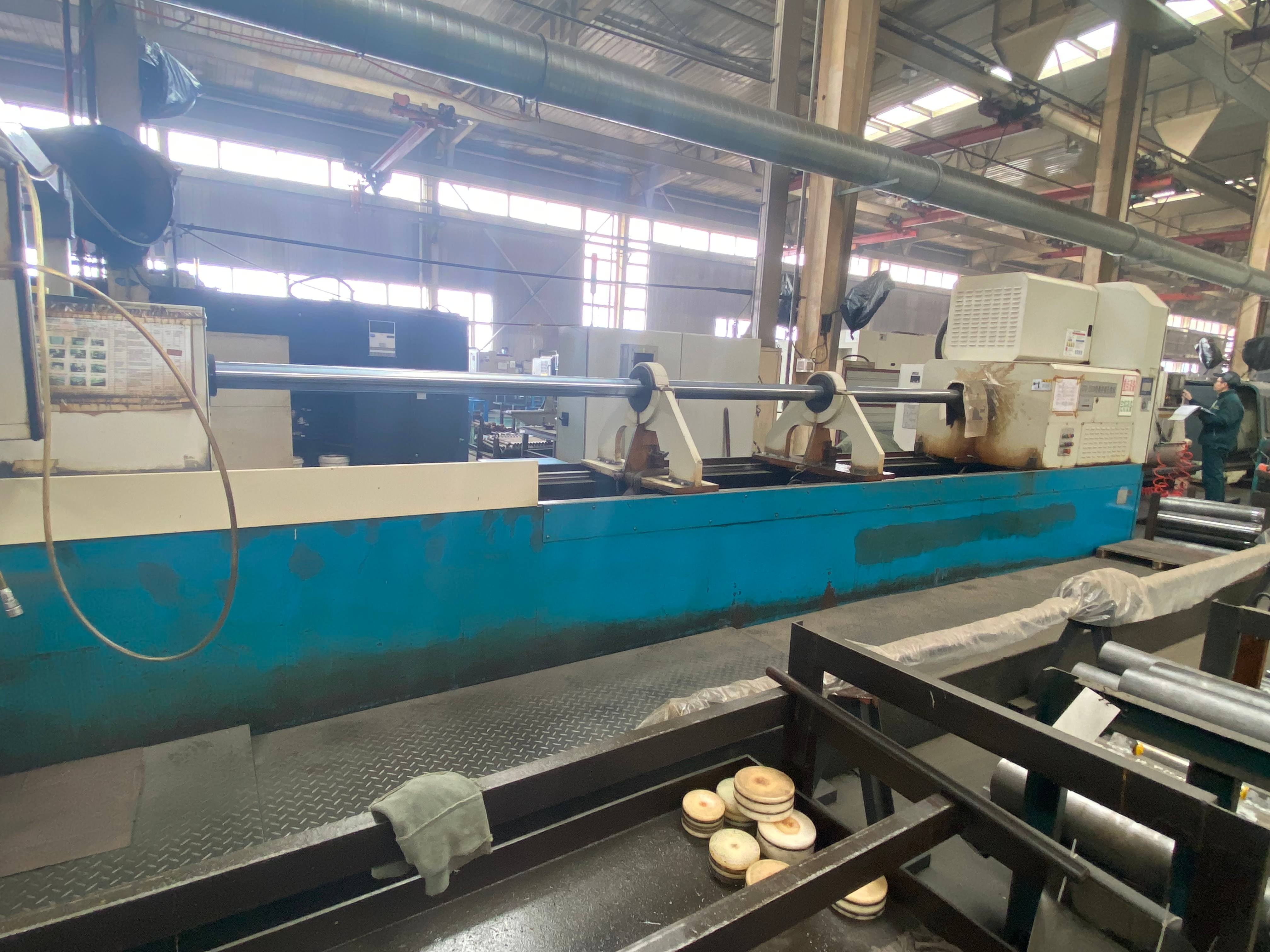
Surface finishing before assembly — a step where residual particles can become embedded if the process is inconsistent.
Pre-Delivery Testing and Calibration as Quality Gates
Testing is where contamination control becomes verifiable. Apex Hydraulic documents that each completed power unit undergoes pressure, leakage, electrical and full-function testing before shipment across its AC industrial, low-noise and vehicle-mounted ranges. The multi-function aerial work platform unit (APEX-CMFHPU) adds valve-function and full-cycle testing; the vehicle-mounted unit (APEX-CVMAHPU) adds valve-response and full-cycle testing; the double-acting mobile unit (APEX-CDAMHPU) adds directional-control testing.
The dump trailer power unit (APEX-DTHPU) documents a more granular test sequence that is particularly relevant to contamination evaluation:
- Pressure testing
- Flow testing
- Relief-valve verification
- Solenoid-valve functional testing
- Motor current testing
- Leakage inspection
Relief-valve verification deserves particular attention. A relief valve that has drifted from its setpoint either opens too early — reducing available lifting force — or too late — allowing pressure spikes that stress seals and generate wear debris. Verifying the relief setting on every unit is a calibration discipline, not a one-off inspection. It is one of the clearest indicators that a supplier treats consistency as a process requirement rather than a batch outcome.
Pressure and leakage testing serve a second purpose in contamination terms: they confirm that the assembled circuit holds pressure without internal or external loss, which is often the first observable symptom of a contaminated or poorly cleaned assembly.
What These Practices Mean for Procurement Decisions
A buyer evaluating long-term supply should translate the above into a practical checklist rather than accept a general quality statement. The following decision rules are useful:
- Treat the cleanliness level as an entry gate, not a differentiator. ISO 4406 20/18/15 is a specified target. Ask how the supplier maintains it across batches, not only whether it is stated.
- Confirm the filtration configuration in writing. Because return filters, suction strainers and breather filters appear as optional items in the Apex Hydraulic specification, the purchase order must state which are included for each model — otherwise two units of the same nominal type can arrive with different contamination protection.
- Request test records, not test claims. Pressure, leakage, flow, relief-valve and full-function test records let a buyer compare units over time, which is the only way to assess consistency.
- Verify application fit before assuming the cleanliness level is sufficient. ISO 4406 20/18/15 suits many mobile and industrial circuits. Applications with tighter clearances or servo-proportional control may require a stricter target, which should be specified separately.
- Check the physical build evidence. Component staging, surface finishing and assembly environment are observable during a factory audit and support or contradict the documentation.
Limitations Buyers Should Plan Around
No contamination-control system removes every constraint. Three boundaries are worth stating plainly:
First, ISO 4406 20/18/15 is a specified target, not a universal standard. It is appropriate for the mobile, industrial and lifting applications Apex Hydraulic serves — dump trailers, aerial work platforms, vehicle-mounted auxiliary systems, industrial automation. Circuits with very fine valve clearances or precision proportional control may need a cleaner target, and the buyer must specify that requirement rather than assume it is covered.
Second, key filtration components are optional. Return-line filters, suction strainers, pressure-line filters and air breather filters are listed as optional in the Apex Hydraulic specifications. A buyer who does not specify them receives a unit without them. The consistency of the delivered protection therefore depends on the completeness of the purchase specification as much as on the supplier's process.
Third, pre-delivery testing verifies individual units, not ongoing system condition. Once a power unit enters service, fluid cleanliness depends on maintenance practice, fluid selection and operating environment. Field contamination is a user-side responsibility that no factory test can substitute for.
Market Context: Why Consistency Becomes More Important at Scale
The hydraulic power unit market was valued at USD 13.6 billion in 2024 according to Grand View Research, with Asia Pacific accounting for a 40.2% revenue share in the same year. Precedence Research estimates the global market at USD 11.4 billion in 2024, growing at a CAGR of 5.5% through 2034.
The relevance to contamination control is structural rather than statistical. As volume grows, so does the number of production batches a single supplier runs in a year — and each batch is an opportunity for process drift. Standard packaged units accounted for 47.8% of global revenue share in 2024 according to Mordor Intelligence, which means a large share of the market is served by configurations that buyers expect to be repeatable. Repeatability in a standard packaged unit is largely a function of cleaning discipline and filtration consistency.
Regulatory pressure reinforces the same direction. Hydraulic power units supplied into the EU must comply with EN ISO 4413:2010 for general rules and safety requirements, and the Machinery Directive 2006/42/EC governs health and safety requirements for hydraulic systems. Neither standard replaces a buyer's own cleanliness verification, but both raise the baseline documentation a supplier is expected to maintain.
Future Outlook
Three trends are likely to shape how buyers assess contamination control over the next several years. The first is the shift toward documented process evidence rather than product claims — buyers increasingly request test records, not just certificates. The second is the electrification of mobile hydraulics; electric-powered units accounted for 60.1% of U.S. hydraulic power unit revenue in 2024 per Grand View Research, and DC units with tighter packaging leave less room for large reservoirs that dilute contamination, making filtration design more critical. The third is the growing use of proportional and servo control in mobile equipment, which raises sensitivity to particle contamination and pushes specifications toward cleaner targets.
For manufacturers like Apex Hydraulic, whose range already spans 12 VDC, 24 VDC and 48 VDC configurations alongside 220 VAC and 380 VAC industrial units, consistency across this breadth is the operational challenge. A 25-engineer R&D team and a 50,000 m² facility provide the capacity; the differentiator will be whether cleaning protocols and test coverage scale with volume.
Frequently Asked Questions
What does the fluid cleanliness level ISO 4406 20/18/15 mean in a hydraulic power unit specification?
ISO 4406 is an international standard for expressing particle contamination in hydraulic fluid using three code numbers. The three values in 20/18/15 correspond to particle counts at the ≥4 µm, ≥6 µm and ≥14 µm size thresholds. Apex Hydraulic specifies ISO 4406 20/18/15 as the fluid cleanliness level across its power unit range, including the APEX-ACHPU Series, APEX-CVMAHPU, APEX-CMFHPU, APEX-CDAMHPU and APEX-CLNCHPU.
How do return-line filters and suction strainers reduce contamination risk in a hydraulic power unit?
Return-line filters capture wear particles before fluid re-enters the reservoir, while suction strainers protect the pump inlet from larger debris. Apex Hydraulic lists return-line filters and suction strainers as optional components across its power unit range. For the vehicle-mounted auxiliary unit (APEX-CVMAHPU), the company states that return filtration and suction protection reduce hydraulic contamination risk. Because these components are optional, buyers must specify them explicitly in the purchase configuration to ensure consistent protection.
What pre-delivery tests should a buyer request as evidence of contamination control?
Apex Hydraulic documents that each completed power unit undergoes pressure, leakage, electrical and full-function testing before shipment. Model-specific additions include valve-function and full-cycle testing (APEX-CMFHPU), valve-response testing (APEX-CVMAHPU), directional-control testing (APEX-CDAMHPU), and for the APEX-DTHPU a sequence covering pressure testing, flow testing, relief-valve verification, solenoid-valve functional testing, motor current testing and leakage inspection. Requesting these records allows comparison across batches rather than a single acceptance decision.
Why does batch-to-batch consistency matter more than a single passing test result?
A single passing test confirms one unit met its specification at one point in time. Batch-to-batch consistency confirms that the underlying process — component cleaning, assembly handling, filtration configuration and test coverage — produces the same result repeatedly. For multi-year supply programs, the second is the relevant measure, because delivered fleets accumulate many units over time. Contamination-related failures typically emerge from statistical drift rather than isolated defects, so process repeatability is the more meaningful indicator of long-term supplier reliability.
What role does relief-valve verification play in power unit acceptance testing?
The relief valve limits maximum system pressure, protecting seals, hoses and structural components from overpressure. A relief valve that has drifted from its setpoint either limits performance or fails to protect the circuit. Apex Hydraulic lists relief-valve verification as part of the APEX-DTHPU test sequence alongside pressure testing and flow testing. Verification of the setpoint on each unit functions as a calibration check, confirming that the delivered assembly matches its approved hydraulic design rather than relying on component-level factory settings.
Conclusion
Contamination control is one of the few supplier attributes that cannot be assessed from a quotation. It shows up in the specification (an explicit ISO 4406 target), in the configuration (which filters are standard versus optional), in the assembly environment (how components are handled between cleaning and build), and in the test record (whether relief settings and leakage are verified per unit). Apex Hydraulic documents each of these layers across its power unit range, which gives buyers something concrete to audit against rather than a general quality claim. The remaining work — specifying the filtration configuration correctly for each application and confirming that the cleanliness target matches the circuit's sensitivity — sits with the buyer, and is where long-term supply relationships are actually decided.
For a full view of Apex Hydraulic's hydraulic power unit, cylinder and system range, the APEX Hydraulic product catalog is available for download.
Have Questions or Need More Details?
Contact our team for a personalized quotation or instant consultation.
Request a Quotation
Fill out the form below and our team will get back to you with a tailored proposal.
WhatsApp Direct Chat
Prefer to chat in real-time? Message us on WhatsApp for instant assistance & quick answers.
- Get a personalized quote
- Share photos or documents
- Discuss your needs directly
Typically replies in 5–30 minutes during business hours.