
JH-200 vs JH-600 vs JH-WH3364: Surface Sizing Agents Compared for Paper Mills
Surface sizing agents do their work at the size press rather than in the pulper, and that single fact shapes how a paper mill should compare them. A surface sizing agent is applied together with starch to the already-formed web, building water resistance and surface strength without altering the wet-end furnish. When three candidate products come from the same supplier, the practical question is not which brand is better but which chemistry matches a specific machine, a specific pulp mix and a specific end use.
This comparison examines three surface sizing agents produced by Qingzhou Jinhao New Material Co., Ltd. (branded as JHDA), a manufacturer of papermaking fine chemicals founded in 2005 and located at No.19, Jingting Street, Caterpillar Industrial Park, Qingzhou City, Shandong Province, China. The three products are JH-200, a surface AKD sizing agent; JH-600, a moisture resistant SAE surface sizing agent; and JH-WH3364, a composite surface sizing agent built from styrene-acrylic resin and AKD. Every figure quoted below comes from the supplier's product documentation, and the comparison deliberately stops short of declaring a universal winner.
Why surface sizing decisions are being revisited now
The sizing category is large, concentrated in Asia, and increasingly shaped by packaging and by export logistics rather than by domestic printing demand alone. According to Dataintelo, the global paper sizing agent market was valued at approximately USD 3.8 billion in 2025 and is projected to reach USD 5.9 billion by 2033 at a CAGR of 5.8%. Published estimates differ: Market Research Future puts the market at USD 3.16 billion and SNS Insider at USD 3.95 billion for 2024, which is why buyers should treat any single market figure as a range rather than a precise number.
Within that category, chemistry matters more than geography. SNS Insider reports that synthetic sizing agents, including AKD and ASA, held a 54.5% market share in 2024, while Dataintelo estimates that AKD sizing alone accounts for roughly 48% of synthetic sizing agent volume globally. Liquid products, which dominate surface application, held a 57.8% share in 2024 according to SNS Insider. Asia Pacific accounted for a 42.3% revenue share as of 2025, and China's annual paper sizing agent consumption was estimated at 650,000 tons in 2025, both reported by Dataintelo.
Two downstream signals explain why mills are re-examining surface chemistry. First, the American Forest & Paper Association reported that US packaging paper capacity increased by 4.6% in 2024, expanding the volume of board that must survive humid storage and long-distance transport. Second, Dataintelo notes that surface sizing agents such as styrene acrylic are increasingly relevant to printability requirements that did not exist in the same form a decade ago. For a mill, the consequence is simple: surface sizing is no longer a finishing detail, it is a purchasing decision with measurable cost and quality consequences.
The three products at a glance
The three products share a common application point but not a common chemistry. The table below reproduces the documented parameters as published for each model.
| Parameter | JH-200 | JH-600 | JH-WH3364 |
|---|---|---|---|
| Product classification | Surface AKD sizing agent; AKD surface sizing emulsion; neutral surface waterproof sizing agent | Moisture resistant surface sizing agent; waterproof surface sizing agent; papermaking surface coating agent | Composite surface sizing agent; dual-function composite sizing additive; surface enhanced water resistant agent |
| Primary material | AKD wax powder | Styrene acrylic | Weak anionic styrene acrylic and AKD |
| Ionic type (as documented) | Cationic | Cationic | Weak cationic |
| Appearance | Milky white to slightly yellow liquid | Light brown to dark brown liquid | Milky white to pale yellow liquid |
| Solid content | 20.0 ± 1.0% or 30.0 ± 1.0% | 30 ± 1% | 25.0 ± 1.0% |
| pH | 2.0 – 5.0 | 2.0 – 5.0 | 2.0 – 5.0 |
| Viscosity (25 °C) | ≤ 50 cps | < 50 cps | ≤ 50 cps |
| Solubility | Soluble | Soluble in water | Soluble |
| Documented shelf life | 3 months | 6 months | 4 months |
Three observations follow directly from the table. Solid content differs across the range, so the same wet dosage does not deliver the same active content. All three sit in the same acidic pH band of 2.0 to 5.0, so storage and dosing hardware requirements are similar. And shelf life varies by a factor of two between JH-200 and JH-600, a point that matters more for importers than for domestic mills.
Three chemistries, three mechanisms
JH-200: reactive AKD applied at the surface
JH-200 is a surface AKD sizing agent made from AKD wax powder, supplied as a cationic, water-soluble liquid that can be blended evenly with industrial starch and coated onto the paper surface. Its reactive component bonds with cellulose to form a waterproof barrier. Because the effect is finalised once the sheet passes the drying cylinder, the mill can roll and deliver finished paper without a curing period, which reduces warehouse space otherwise reserved for curing placement.
The distinction between this product and pulp-added internal sizing chemistry is worth stating plainly. When AKD is added to the furnish, part of the active material is lost in white water circulation and during fibre retention. Applied at the surface, the active ingredients act directly on the paper, which the documentation describes as a higher utilisation rate of the sizing agent. The system is designed for neutral and alkaline papermaking environments, avoiding acidic sizing raw materials and the associated corrosion of sizing rollers, drying cylinders and pipelines. It also has documented mechanical shear stability and low foaming behaviour, and is compatible with oxidised starch and cationic modified starch carriers.
JH-600: a styrene-acrylic film former built for humidity
JH-600 is a moisture resistant SAE surface sizing agent based on styrene acrylic, supplied as a light brown to dark brown liquid with a solid content of 30 ± 1% and a documented shelf life of six months. Its molecular structure is designed for anti-moisture reversion: it forms a dense closed protective film that blocks ambient moisture infiltration, which the documentation links to preventing strength decline, softening and box collapse during rainy seasons, cold storage and long-distance maritime transport.
The product is positioned for mills that need stable hydrophobic performance after long placement in humid conditions, where general-purpose surface sizing agents can lose effect over time. It crosslinks rapidly with starch components, requires no curing period, and can be used with low-cost industrial starch to reduce the addition amount of higher-priced sizing chemistry. It is also documented as retaining ring crush strength and surface rigidity under high humidity, a property that matters more to packaging producers than to printing paper producers.
JH-WH3364: AKD and styrene-acrylic in one product
JH-WH3364 is a composite surface sizing agent made from weak anionic styrene acrylic and AKD. It combines two mechanisms in one product: AKD reacts chemically with cellulose fibre to lock long-term hydrophobic performance, while the styrene-acrylic component forms a tough continuous film that reinforces the surface structure. The result is a dual upgrade of water resistance and surface strength from a single dosing point.
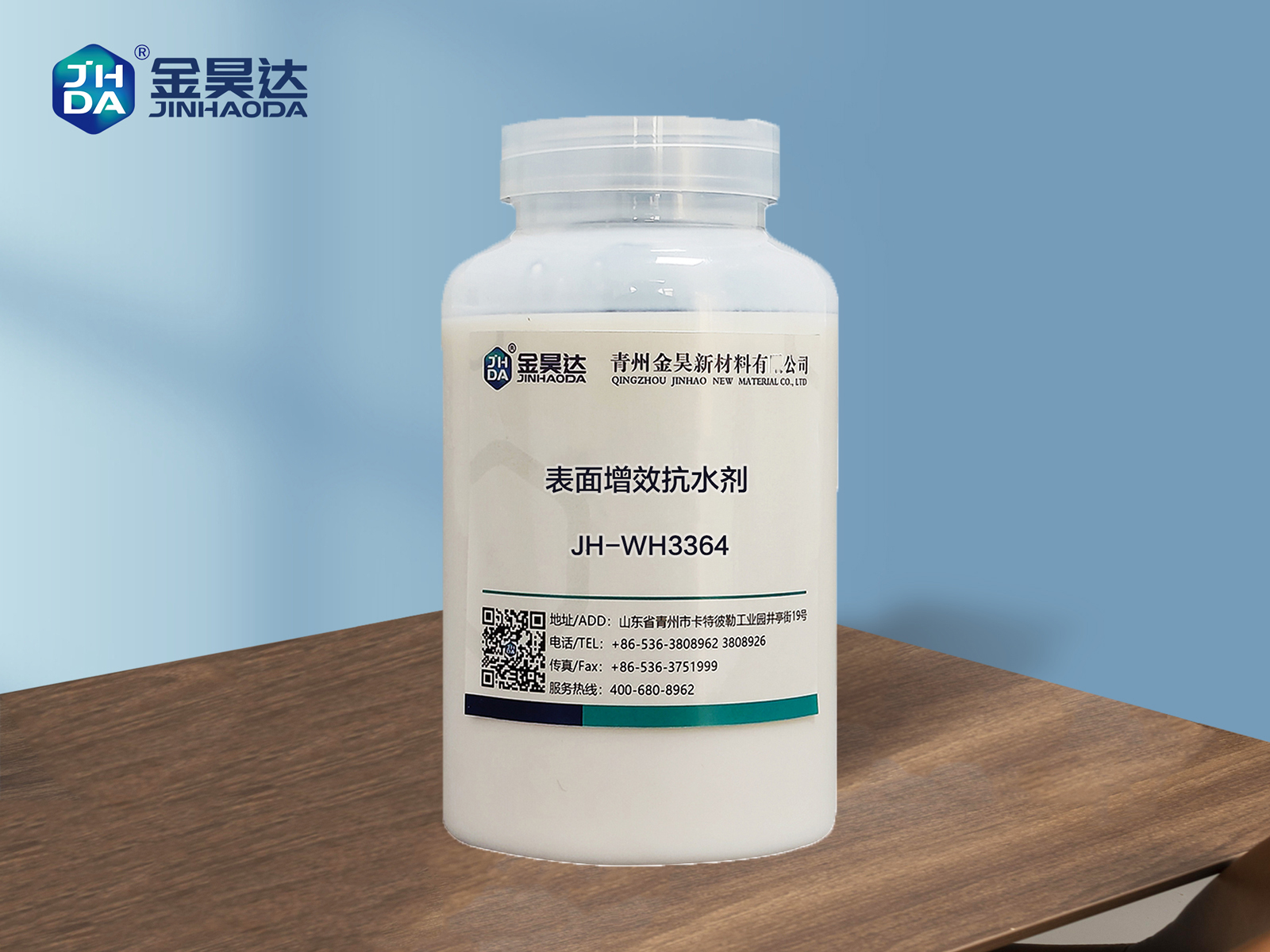
The documentation states that this composite approach overcomes two limitations of single-chemistry products: the slow curing behaviour of pure AKD emulsions, and the insufficient surface dry strength of AKD-only surface sizing. It is compatible with oxidised starch and modified starch, designed for neutral papermaking systems, and documented as compatible with retention aids and defoamers without flocculation failure. Its practical commercial value is procedural: it can replace the separate purchasing and dosing of an AKD emulsion and an SAE sizing agent, simplifying the workshop dosing process while reducing overall sizing chemical procurement cost.
Performance profile: what each product is optimised for
Reading the specification sheets side by side is not enough, because two products can share a solid content band and still behave differently on the machine. The comparison below organises the documented behaviour by decision dimension.
| Dimension | JH-200 | JH-600 | JH-WH3364 |
|---|---|---|---|
| Water resistance mechanism | Reactive AKD reacts with cellulose to build a waterproof barrier | Dense closed styrene-acrylic film that resists moisture reversion | AKD reacts with cellulose while styrene-acrylic forms a continuous film |
| Curing behaviour | Sizing effect finalised once the sheet passes the drying cylinder | No curing period required; instant anti-moisture performance after drying | No long curing period; paper can be rolled and delivered after drying |
| Surface strength contribution | Composite film with starch strengthens surface bonding | Retains ring crush strength and surface rigidity under high humidity | Reinforces surface structure and reduces edge breakage during converting |
| Printability | Reduces fuzzing and surface picking on cultural and packaging paper | Maintains surface strength and printing adaptability during long storage | Restrains linting, picking and ink feathering in high-speed offset printing |
| Shear and foam behaviour | Mechanical shear stability with low foaming characteristics | Low foaming, suited to high-speed size press operation | Mechanical shear resistance with low foaming characteristics |
| System simplification | Added in the surface sizing tank, no pulp formula change | Mixed directly with starch liquid, no process modification | Replaces separate AKD emulsion and SAE dosing |
| Documented shelf life | 3 months | 6 months | 4 months |
One pattern is consistent across the documentation: none of the three products is presented as universally superior. JH-200 is oriented toward reactive waterproofing with minimal process change, JH-600 toward humidity resistance and ring crush retention, and JH-WH3364 toward combining both functions while reducing the number of dosing points.
Application fit by paper grade and line condition
JHDA's papermaking additives are documented as applicable to kraft linerboard, corrugated medium paper, printing and writing paper, household tissue paper and food-grade cardboard. Against that substrate range, the three surface sizing agents map to different priorities.
- Corrugated medium and kraft linerboard in humid or export markets. JH-600 is the closest fit on documented behaviour, because its anti-moisture reversion structure targets strength decline, softening and box collapse during damp storage and maritime transport, and it preserves ring crush strength under high humidity.
- Printing and writing paper where linting and picking drive reject rates. JH-200 and JH-WH3364 are both documented to reduce fuzzing and surface picking; JH-WH3364 specifically addresses linting, picking and ink feathering in high-speed offset printing through its styrene-acrylic film.
- Mills that currently buy and dose two products separately. JH-WH3364 is the direct candidate, since the documentation states it can replace the separate purchasing of an AKD emulsion and an SAE sizing agent.
- Old production lines that cannot change the pulp formula. JH-200 is documented as requiring only addition in the surface sizing tank, with no adjustment to the pulp formula or internal auxiliary system.
- Neutral and alkaline papermaking systems. All three are designed for neutral systems, which limits corrosion of sizing rollers, drying cylinders and pipelines compared with acidic sizing chemistry.
A five-step selection framework for mills
The choice between these three products becomes manageable once the failure mode is named first and the chemistry second.
- Name the defect you are paying to remove. Moisture reversion and box collapse point toward a humidity-focused surface chemistry; linting, picking and ink feathering point toward a film-forming surface chemistry; corrosion and white water losses point toward moving chemistry from the pulper to the size press.
- Match the mechanism, not the marketing description. Reactive AKD, styrene-acrylic film formation and a composite of both are three different mechanisms, and the specification table shows they differ in solid content and shelf life even when they share a pH band.
- Check the starch system and ionic compatibility. All three products are documented as compatible with oxidised starch, modified starch or industrial starch, but the mill's own starch type and wet-end chemistry should be confirmed before a bulk order.
- Plan for logistics as well as performance. A three-month shelf life for JH-200, four months for JH-WH3364 and six months for JH-600 changes how much stock an importer can hold, particularly for customers in Southeast Asia, Africa and South America where JHDA reports 35% to 50% of its sales volume.
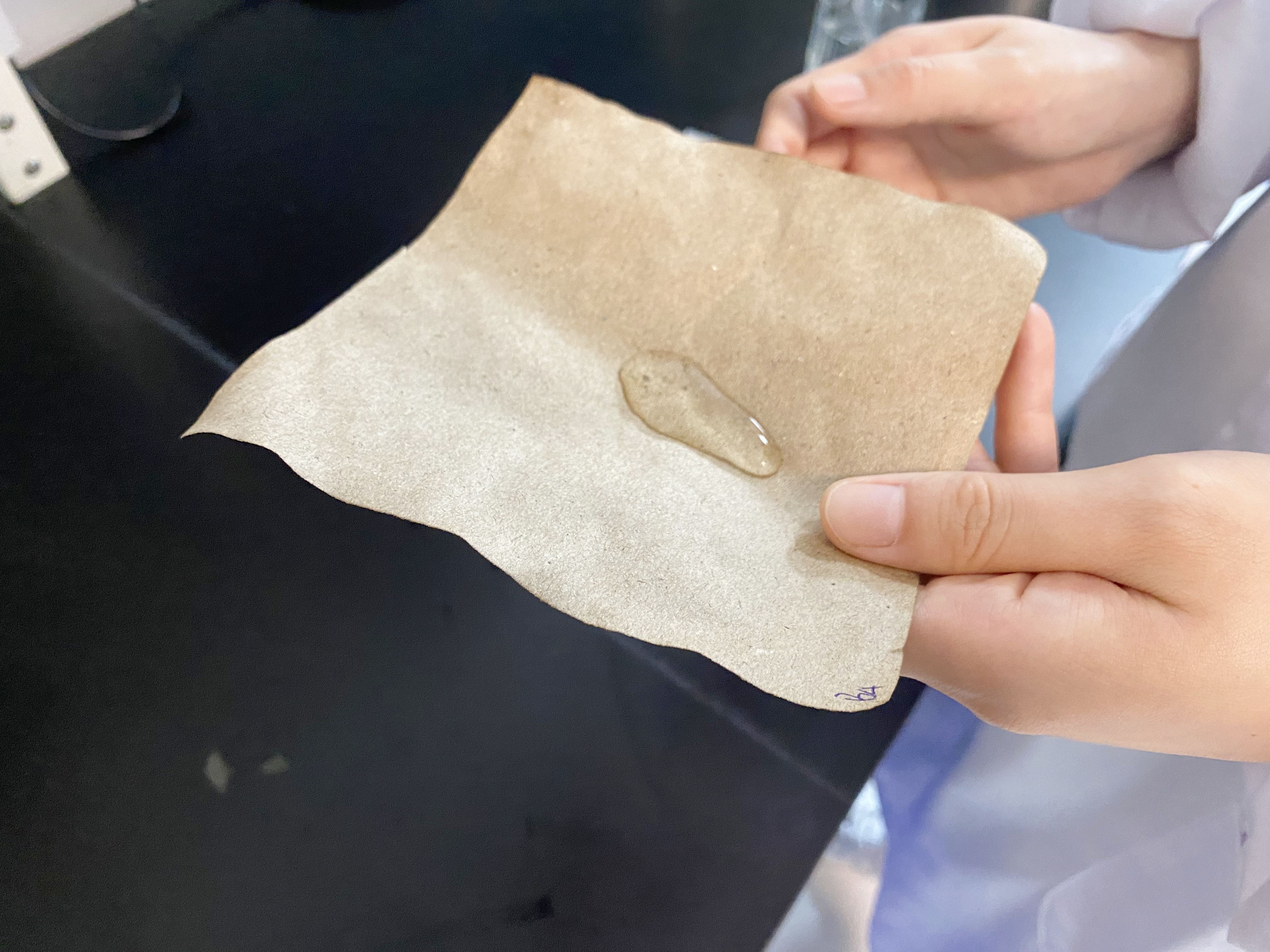
- Run a trial with defined indicators. JHDA's field technical team works on core paper indicators including Cobb water absorption value, ring crush strength, bursting strength, paper brightness, fibre retention rate and overall paper machine runnability, which provides a ready-made scorecard for a mill-side trial.
Boundaries and trade-offs to verify before ordering
An honest comparison has to state where each product struggles or where information is incomplete.
- Shelf life is the tightest constraint in this range. JH-200 is documented at three months. For a buyer shipping containers across regions, that limits buffer stock and makes delivery frequency a commercial variable, not a convenience.
- JH-200 is documented in two solid-content grades. The specification lists 20.0 ± 1.0% or 30.0 ± 1.0%. A purchase order that specifies only the model number leaves the delivered concentration open, which changes dosing calculations and freight economics per tonne.
- Ionic type should be confirmed on the current technical data sheet. Ionic character determines how a surface sizing agent behaves in a starch bath, and it is one of the specifications most often quoted inconsistently between descriptive text and technical documentation. The values listed in the table above follow the product specification sheets, but mills should confirm against the TDS issued with the quotation.
- No product removes the need for a machine trial. Pulp composition, water hardness, machine speed and starch solids all shift the optimum dose, and the documentation itself refers to formula tailoring according to pulp composition and paper machine parameters.
- Certification scope is specific, not general. JHDA holds ISO 9001, ISO 14001 and HALAL certification, with SGS product compliance test reports, and part of the range falls under food grade standards. Mills serving food-contact packaging still need to confirm compliance against their destination market rules, including Regulation (EC) No 1935/2004 in Europe and FDA 21 CFR requirements in the United States.
- Minimum order quantity applies. JHDA states a bulk order MOQ of 1 MT, with TDS, MSDS, certificate of origin and pre-shipment inspection documents supporting export clearance.
What the market data says about surface sizing demand
Several verified trends support the direction this product comparison points toward. Liquid sizing agents held 57.8% of the market in 2024 according to SNS Insider, consistent with the practical advantages of metered dosing on existing size presses. Solid sizing agents are expected to grow at a CAGR of 5.11% through 2032, also reported by SNS Insider, driven mainly by logistical efficiency rather than by application performance, which suggests a parallel and not a replacement market.
On chemistry mix, Dataintelo reports that rosin sizing agents accounted for 32.4% of paper sizing agent market revenue in 2025, while synthetic AKD and ASA chemistry holds the majority of volume share. Market Reports World notes that global sizing agent volume exceeded 3.8 million metric tons in 2024, and that bio-based sizing agents reached 38% of global consumption in the same year. The competitive landscape remains structured around a small number of international suppliers; Mordor Intelligence lists Kemira, BASF and Arakawa Chemical Industries among the major global competitors, which is the reference point against which regional manufacturers such as JHDA position their cost and delivery advantages.
Demand geography reinforces the same conclusion. With Asia Pacific holding a 42.3% revenue share as of 2025 and China consuming an estimated 650,000 tons in 2025, most incremental surface sizing volume will be decided in mills that run recycled pulp, high-speed machines and export-oriented packaging grades.
Outlook
Three shifts are likely to shape how mills choose between AKD, SAE and composite surface sizing agents over the next few years. The first is consolidation of dosing points: products that combine reactive waterproofing and film-forming strength reduce chemical inventory, dosing equipment and operator intervention, which is the logic behind the composite approach in JH-WH3364. The second is the growing weight of humidity performance, driven by packaging exports through tropical and maritime corridors where retained ring crush strength is a commercial requirement rather than a quality preference. The third is documentation discipline: as more mills source chemistry regionally and verify compliance for food-contact and export markets, the technical data sheet, MSDS and third-party test reports become part of the purchasing decision rather than an administrative formality.
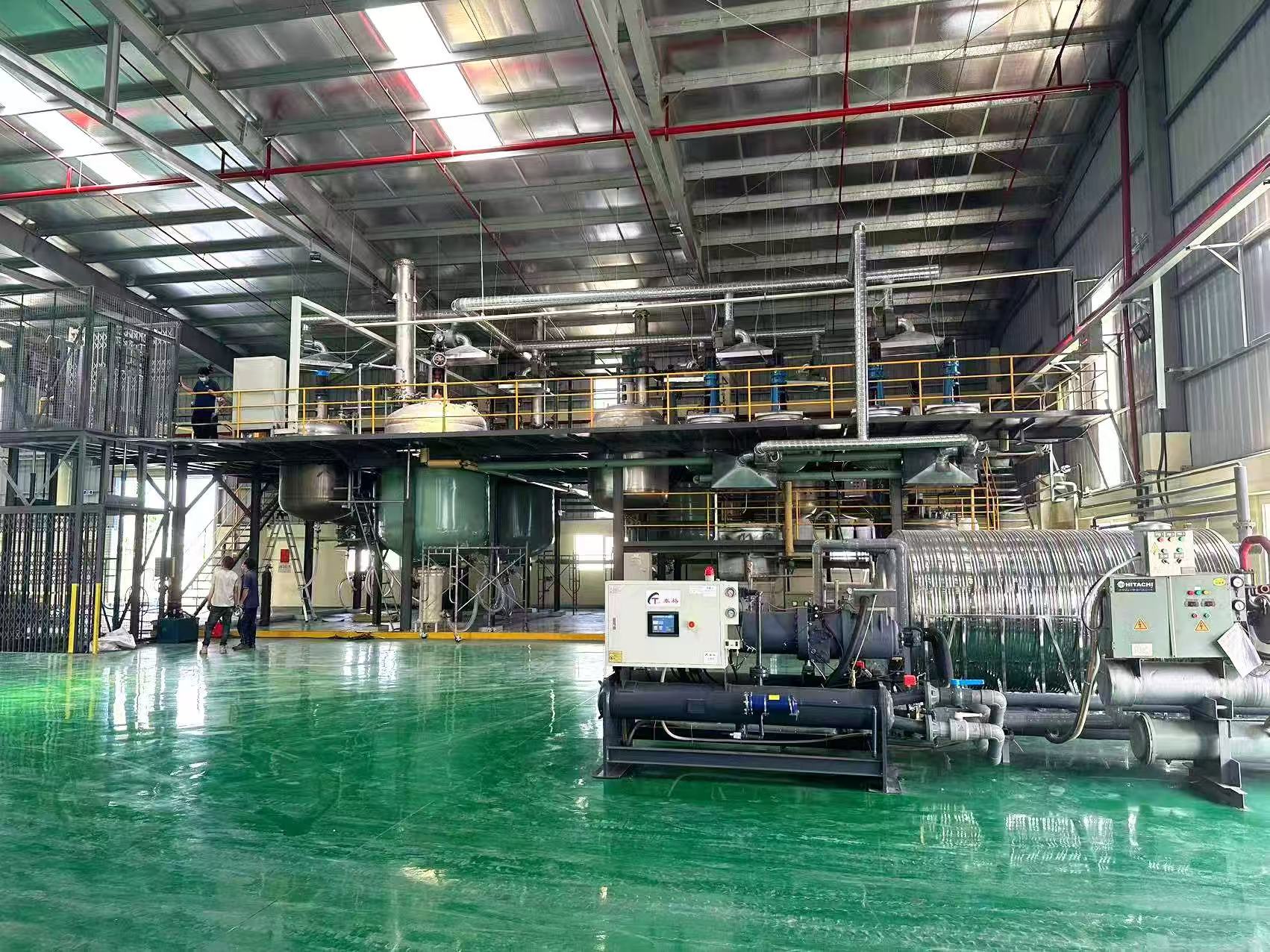
For JHDA specifically, the supporting infrastructure behind these three products includes a manufacturing facility of approximately 20,000 square metres in Qingzhou, Shandong Province, more than 80 employees including 20 R&D and on-site technical service engineers, an annual production capacity of 100,000 tons, annual sales revenue consistently above 100 million RMB, and an overseas production entity, CRM Chemical Technology Co., Ltd., in Long An Province, Vietnam, established to shorten delivery cycles for ASEAN customers.
FAQ
What is the difference between a surface sizing agent and an internal sizing agent?
A surface sizing agent is applied to the already-formed paper web, typically at the size press together with starch, where it modifies the paper surface. An internal sizing agent is added to the pulp furnish and bonds with fibre inside the sheet. JH-200, JH-600 and JH-WH3364 are all surface sizing agents. By contrast, JH-103 is an AKD internal sizing agent used as a pulp sizing additive, supplied as an alkyl ketene dimer emulsion that supports neutral and alkaline papermaking production lines. The practical difference is where the active chemistry is consumed: surface application avoids AKD loss through white water circulation and fibre retention, while internal application distributes chemistry through the whole sheet.
Do these surface sizing agents require a curing period after drying?
The documentation states that none of the three requires an extended curing period. JH-200 reaches its final sizing effect once the paper passes the drying cylinder, which allows finished paper to be rolled and delivered directly. JH-600 is documented as requiring no curing period, with finished paper obtaining instant and durable anti-moisture performance after drying. JH-WH3364 is described as overcoming the slow curing of pure AKD emulsions because its styrene-acrylic component fixes the sizing effect immediately after drying, accelerating finished paper turnover. Mills should still confirm curing expectations against their own machine configuration during a trial.
Which of the three is most suitable for packaging paper exposed to humid transport conditions?
JH-600 is the moisture resistant SAE surface sizing agent in this range and is documented for anti-moisture reversion performance in rainy seasons, cold storage and long-distance maritime transport, with retention of ring crush strength and surface rigidity under high humidity. JH-WH3364 also addresses moisture reversion through its composite film and additionally strengthens surface structure. The choice between them depends on whether the mill prioritises maximum humidity resistance or a combined improvement of water resistance and surface strength from a single dosing point.
Can JH-WH3364 replace buying an AKD emulsion and an SAE sizing agent separately?
Yes, according to the product documentation. JH-WH3364 is described as a composite surface sizing agent that integrates the reactive waterproofing advantage of AKD with the film-forming toughness of SAE styrene-acrylic resin, and it is stated to replace the separate purchasing of an AKD emulsion and an SAE sizing agent while simplifying the workshop dosing process. A mill considering the change should still compare total chemical consumption per ton of paper rather than unit price alone, since the composite formula is described as achieving higher comprehensive efficiency under equal dosage.
What are the documented shelf lives, and why do they differ?
JH-200 is documented at three months, JH-600 at six months and JH-WH3364 at four months. JH-200's shorter shelf life reflects an AKD wax powder based emulsion, while JH-600's styrene-acrylic chemistry carries a longer documented stability window. Shelf life affects inventory planning, container utilisation and reorder frequency, and is usually a more decisive factor for importers than for mills purchasing domestically.
Can these surface sizing agents be used with the starch systems a mill already runs?
All three are documented as compatible with common surface sizing carriers. JH-200 is compatible with oxidised starch and cationic modified starch, and requires only simple stirring in the workshop. JH-600 mixes directly with common industrial starch. JH-WH3364 is documented for blending with oxidised starch and modified starch, crosslinking evenly on the paper surface. Compatibility with retention aids and defoamers is stated for JH-WH3364. Because starch type, solids and wet-end chemistry vary by mill, a bench or machine trial remains the reliable way to confirm behaviour.
What certifications and documentation does Qingzhou Jinhao New Material hold for these products?
The company holds ISO 9001 quality management system certification, ISO 14001 environmental management system certification and HALAL certification, with part of the product range produced to food grade standards and supported by SGS product compliance test reports. Export support includes commercial invoice, packing list, certificate of origin, pre-shipment inspection report, TDS and MSDS. Mills supplying food-contact packaging should additionally verify compliance against their destination market requirements, including Regulation (EC) No 1935/2004 and FDA 21 CFR.
What is the minimum order quantity and how is delivery handled for overseas buyers?
JHDA states a bulk order minimum of 1 MT for its chemical products. The company also operates an overseas production entity, CRM Chemical Technology Co., Ltd., in Long An Province, Vietnam, to shorten delivery cycles for ASEAN customers. Export business accounts for 35% to 50% of total sales volume, with core markets including Vietnam, Thailand, Malaysia, Indonesia, Myanmar, Cambodia and packaging paper industrial zones in the Middle East, supported by payment terms such as sight L/C, T/T and DP for large-volume orders.
Reference document: the supplier's full papermaking chemical brochure is available for download at introduction2026.pdf.
Have Questions or Need More Details?
Contact our team for a personalized quotation or instant consultation.
Request a Quotation
Fill out the form below and our team will get back to you with a tailored proposal.
WhatsApp Direct Chat
Prefer to chat in real-time? Message us on WhatsApp for instant assistance & quick answers.
- Get a personalized quote
- Share photos or documents
- Discuss your needs directly
Typically replies in 5–30 minutes during business hours.