
Supplier Capability Evidence: Auditing a Paper Strength Agent Portfolio
Paper strength agent purchases are usually decided twice: once in a spreadsheet, and later in a mill trial that either confirms or contradicts the spreadsheet. The distance between those two moments is where most procurement risk lives, and it is a documentation problem before it is a chemistry problem.
A supplier's product portfolio is the one part of the commercial conversation a buyer can audit before committing money. Read the way an auditor would read it, a portfolio answers questions a brochure cannot: whether parameters are attached to a specific chemistry and physical form, whether shelf life and storage are stated, whether compatibility with sizing agents, defoamers and optical brighteners is described in a form that can be falsified, and whether each grade is mapped to a pulp type and a paper grade. Qingzhou Jinhao New Material Co., Ltd., trading as JHDA and based in Mihe Industrial Park, Qingzhou City, Shandong Province, China, documents a six-grade strength-agent range that works well as a worked example of how that reading exercise is done — and where it stops.
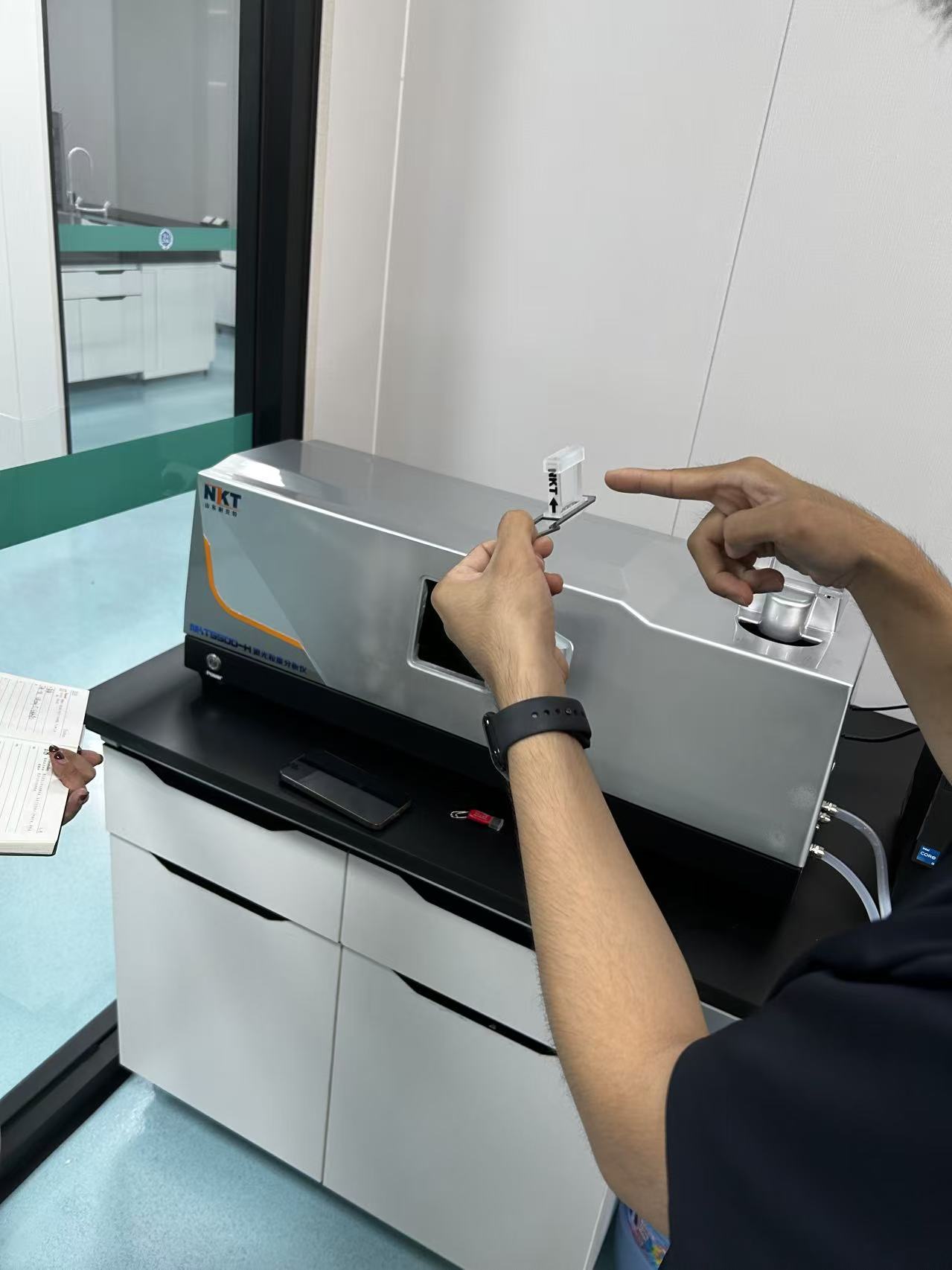
Quality-control instrumentation is where a supplier's documented parameters are generated. Buyers can reasonably ask which tests produced the numbers on a technical data sheet.
Why a Portfolio Outranks a Pitch in Procurement
Specifications are the only part of a supplier relationship that can be checked at zero cost. A mill evaluating a Paper Strength agent for a recycled-furnish machine is being asked to accept, in advance, that an additive will lift ring crush or burst without disturbing sizing, retention or brightness. The evidence offered for that acceptance is normally a technical data sheet, a safety data sheet and a grade list — documents the buyer already holds before any sample is shipped.
An auditor's habit is to treat those documents as claims to be tied down rather than statements to be believed. Every number should carry a unit and a basis; every grade should carry a chemistry and a physical form; every compatibility statement should name the system it is being asserted against. Where a portfolio survives that treatment, the buyer gains something rare: a starting point for a trial that is likely to produce interpretable results, rather than a trial that ends in arguments about what the result meant.
The Problem: Portfolios Are Written to Persuade, Not to Be Audited
Three weaknesses recur across strength-agent portfolios in the paper industry, and each one has a predictable cost downstream.
- Parameters without an anchor. Figures such as “high solids” or “excellent strength” appear without active content, viscosity or a test basis. The buyer cannot calculate delivered active mass per tonne of furnish, and cannot size a dosing pump range with confidence.
- Compatibility by adjective. Statements such as “compatible with all wet-end chemicals” sound reassuring and cannot be tested. Sizing upsets, brightness loss from optical brightener interaction, and defoamer interference typically surface for the first time during the trial, when the mill has already scheduled production around a result.
- Missing logistics facts. Shelf life, storage conditions and re-test intervals are omitted, which pushes genuine inventory risk — especially for imported material — onto the buyer without disclosure.
An auditable portfolio replaces each of those with something a buyer can act on. The table below sets out the substitution an auditor is looking for.
| Evidence element | Auditable form | Common weak form |
|---|---|---|
| Chemistry and physical form | “Cationic dry strength resin, white powder” | “Dry strength resin” |
| Active content | “≥95.0% active content” | “High concentration” |
| Solids and viscosity | “12.5 ± 1.0% solids; ≤500 cps” | “Low viscosity” |
| Operating window | “pH 3.0–6.0”; “wide pH and temperature range” | “Wide tolerance” |
| Shelf life | “12-month shelf life” | Not stated |
| Compatibility | “No adverse impact on sizing” | “Works in all systems” |
| Scenario mapping | “Pulp molding enhancer for food-grade tableware” | “Suitable for paper” |
Four Questions an Auditor Asks of Every Grade
The audit itself does not require a chemistry degree. It requires four questions asked in the same order for every grade in a portfolio.
- What exactly is it? Chemistry class plus physical form. A cationic dry strength resin supplied as a white powder is a different handling, storage and dosing proposition from an amphoteric liquid grade, even if both are filed under the same category heading.
- What is the number, and what is the number of? Active content, solids content and viscosity are not interchangeable and cannot be compared across suppliers unless the basis matches. A solids figure describes what is in the drum; an active content figure describes what is doing the work.
- How long does it stay that way? Shelf life converts a technical claim into an inventory rule. A 12-month shelf life tells a buyer how much safety stock is rational, and how often a slow-moving grade must be rotated.
- What does it disturb? Strength additives enter a wet end that already contains sizing agents, defoamers, optical brighteners and retention chemistry. A grade that raises strength while compromising sizing has not solved the mill's problem; it has moved it.

Performance testing converts a specification into a measurable outcome. Documented parameters are only as useful as the test method behind them.
The JHDA Line-Up, Read as Evidence
Qingzhou Jinhao New Material Co., Ltd. — JHDA — is a manufacturer of papermaking fine chemicals founded in 2005 and located in Mihe Industrial Park, Qingzhou City, Shandong Province, China. The company states a monthly production capacity of 8,000 MT, a cumulative supply volume of 100,000 metric tons of papermaking chemicals, and supply relationships with paper mills and traders in more than 20 countries including Germany, Brazil, China, India and Turkey. Its strength-agent range is documented grade by grade rather than as a single undifferentiated category, which is precisely what makes it usable as an audit example.
| Grade | Chemistry and form | Documented parameters | Documented scenario |
|---|---|---|---|
| JH-1699 | Cationic dry strength resin, white powder | ≥95.0% active content; 12-month shelf life; wide pH and temperature range; no adverse impact on sizing | Dry strength and tensile targets in recycled and virgin furnishes |
| JH-D726 | Amphoteric liquid dry strength agent | 15.0/20.0 ± 1.0% solids; pH 3.0–6.0; 4000–12000 cps; 8%–15% fiber retention gain; 20%–30% fabric life extension | Recycled pulp and tissue grades where retention and drainage matter alongside strength |
| JH-1201 | Formaldehyde-free cationic PAE wet strength agent | 12.5 ± 1.0% solids; ≤500 cps; EU food contact compliance | Tissue, food-contact board and pulp molding |
| JH-1697 | Formaldehyde-free solid dry strength agent | Solid form; formaldehyde-free | Food contact grades and high-filler furnishes |
| JH-2219 | Pulp molding strength enhancer | Grade documentation available from supplier | Food-grade tableware and molded fiber products |
| JH-8501 | CPAM strength retention emulsion | Grade documentation available from supplier | Retention-side strength support in wet-end systems |
Read row by row, several things become checkable rather than merely asserted.
JH-1699 carries the most complete audit trail of the dry strength grades. A declared active content of ≥95.0% in a white powder form lets a buyer calculate delivered active mass per kilogram and set a realistic dosing range before the first trial. The 12-month shelf life is an inventory constraint as much as a technical one. The stated wide pH and temperature range is a robustness claim expressed as a range, which means a bench trial can confirm or refute it. Most useful for procurement is the compatibility line: “no adverse impact on sizing” names the system at risk. That is exactly the shape an auditor wants, because it can be falsified.
JH-D726 is an amphoteric liquid with a stated 15.0/20.0 ± 1.0% solids content, a pH window of 3.0–6.0 and a viscosity band of 4000–12000 cps. The viscosity band is not decorative: it tells a buyer how the product will pump and how much dilution latitude exists at the dosing point. The amphoteric character matters for mills running mixed charge conditions in recycled furnishes. The outcome claims — 8%–15% fiber retention gain and 20%–30% fabric life extension — are stated as ranges rather than single headline figures, which is a more honest presentation and also a clearer trial objective.
JH-1201 is a formaldehyde-free cationic PAE wet strength agent with 12.5 ± 1.0% solids and a viscosity of ≤500 cps, documented as compliant for EU food contact use. The low viscosity supports straightforward dosing; the formaldehyde-free positioning and the compliance statement are the two items an auditor should take straight to the documentation file.
JH-1697 is a formaldehyde-free solid dry strength agent positioned for food contact and high-filler grades. The high-filler reference is the interesting part of that description, because high filler loading is precisely where dry strength properties erode and where buyers most often need a documented answer rather than a generic one.
JH-2219 is a pulp molding strength enhancer for food-grade tableware — a different application domain from sheet-forming paper grades, and a useful reminder that a strength portfolio should not be read as one interchangeable list.
JH-8501 is a CPAM strength retention emulsion, representing the retention side of the same underlying problem: strength that cannot be retained in the sheet is chemistry the mill has paid for and discharged.
Cross-Checking Each Grade Against a Real Mill Scenario
Parameters mean nothing until they are matched to a furnish. The audit step that buyers most often skip is the scenario check — asking whether the documented grade is described for the pulp and paper grade actually being run.
Recycled pulp and corrugated grades
Recycled furnishes bring shorter fibers, higher fines and higher ash into the wet end, and those conditions pressure dry strength and retention simultaneously. In the JHDA range, JH-D726 addresses the retention side while JH-1699 and JH-1697 address dry strength, with JH-1697 specifically documented for high-filler grades. An auditor's reading is that the portfolio offers a combinable pair rather than a single recommendation, which is the realistic structure for recycled-furnish mills. The verification, however, stays with the buyer: the 8%–15% retention gain documented for JH-D726 must be confirmed in the mill's own furnish, because recycled pulp composition varies by region and by collection stream.
Tissue and towel grades
Tissue machines are sensitive to fabric life and to retention, which makes the JH-D726 documentation unusually relevant: a stated 20%–30% fabric life extension is a cost-of-operation claim, not only a performance claim. Where wet strength is required, JH-1201 provides the formaldehyde-free cationic PAE route. An auditor would ask two follow-up questions here — whether the retention and fabric-life figures were measured on a comparable machine configuration, and what wet-end charge conditions were assumed.
Food-contact board and pulp molding
This is where documentation discipline matters most. JH-1201 (formaldehyde-free wet strength), JH-1697 (formaldehyde-free solid dry strength for food contact) and JH-2219 (pulp molding enhancer for food-grade tableware) form a coherent food-contact cluster in the JHDA portfolio. The audit point is that additive-level compliance and finished-article compliance are different things: paper and board intended for food contact in the EU is tested against standards such as EN 645, EN 646 and EN 648, and frameworks such as BfR Recommendation XXXVI set out the safety approach for paper chemicals in Germany. A supplier's compliance statement supports that validation; it does not replace it.
Compatibility: The Claim Buyers Most Often Skip
Compatibility is the part of a specification sheet that experienced buyers read last and should read first. A strength agent is never dosed into a clean system. It arrives in a wet end already populated with a sizing agent, a defoamer, an optical brightening agent and a retention programme, and any of those interactions can quietly cancel the gain the strength grade was purchased for.
JH-1699's documented statement that it has no adverse impact on sizing is the model form of the claim, because it identifies the specific system that could be disturbed and commits to a position on it. Buyers should treat that as a testable proposition: run the grade alongside the mill's own sizing agent and check the sizing response, then check brightness in the presence of the mill's optical brightening agent.
Charge character is the underlying reason the check is necessary. Cationic dry strength resins and anionic optical brightening agents carry opposing charges, and interactions of that type in a wet end are a well-recognised source of brightness loss and uneven retention — which is why compatibility statements are worth more when they are specific. Defoamers add a second variable, because defoamer chemistry chosen for one part of the machine can affect foam behaviour and fines retention elsewhere. None of this can be settled from a data sheet alone; what the data sheet should do is tell the buyer where to look.
Market Trend: Why Portfolio Literacy Is Now a Procurement Skill
Documentation is becoming a procurement issue because the underlying demand is growing and changing shape. Intel Market Research valued the global paper dry strength agent market at approximately USD 864 million in 2024. Fact.MR estimates that polyacrylamide (PAM) resins hold around a 40.0% share of the dry strength resin market, and that the packaging and containerboard segment accounts for about 38.0% of paper grade usage for dry strength additives — a segmentation that matches where recycled-furnish mills actually sit.
The fiber mix is shifting at the same time. The American Forest & Paper Association reported that recycled paper's share of all fiber used at U.S. mills rose to 44.4% in 2024, which increases demand for strength chemistry designed around recycled pulp rather than virgin fiber. A portfolio that documents a retention-capable amphoteric grade alongside solid and liquid dry strength grades is therefore answering a structural demand, not a niche one.
An auditor should also treat market estimates as directional rather than precise. Published figures for the same segment diverge noticeably between research houses, and a buyer citing a market number in an internal business case should state the source alongside it. The reliability of the trend does not depend on the precision of any single estimate.
Document-Led Qualification Versus Trial-First Qualification
The traditional procurement route is sample first, trial second, price discussion third, specification review only when something goes wrong. It is fast to start and expensive to finish, because a failed trial rarely produces a diagnosis: the mill cannot separate a dosage problem from a furnish problem from a grade that was never designed for that paper.
Document-led qualification reverses the order. The buyer first establishes what the grade is, what it contains, how long it lasts and what it may disturb — then designs a trial around the documented claims. The trade-off is real: document review adds lead time before the first drum arrives, and it rewards buyers who already understand their own wet-end chemistry. Mills without reliable furnish data or charge measurements will find that the audit produces questions they cannot answer internally, which is itself useful information but slows the process. Document-led qualification is not a shortcut; it is a reordering that pays off when trials are costly and machine time is scarce.
Where Documented Evidence Stops
A portfolio audit has firm boundaries, and buyers who ignore them over-read the evidence. Six limits matter most.
- Dosage is not in the document. Response depends on furnish, filler load, machine speed, water quality and wet-end charge. A specification defines the product, not the dose.
- Compatibility statements are directional. A claim such as “no adverse impact on sizing” describes the supplier's assessment; it must still be confirmed against the mill's actual sizing agent, defoamer and optical brightener.
- Additive compliance is not article compliance. Food-contact status for JH-1201, JH-1697 or JH-2219 supports finished-product validation against standards such as EN 645, EN 646 and EN 648; it does not substitute for it.
- Shelf life is an operating constraint. A 12-month shelf life on a solid grade imposes rotation discipline and storage-condition discipline, particularly for buyers maintaining safety stock in hot or humid climates.
- Portfolio breadth is not automatically an advantage. A six-grade range is valuable to a mill running several paper grades and of limited value to a single-grade operation, where the extra grades only add selection risk.
- Documentation does not verify capacity. JHDA states a monthly production capacity of 8,000 MT and offers free trial samples with a 1 MT MOQ and a production lead time of four working days; those figures are the supplier's own, and a buyer relying on them for continuity planning should confirm them through a factory audit rather than a data sheet.
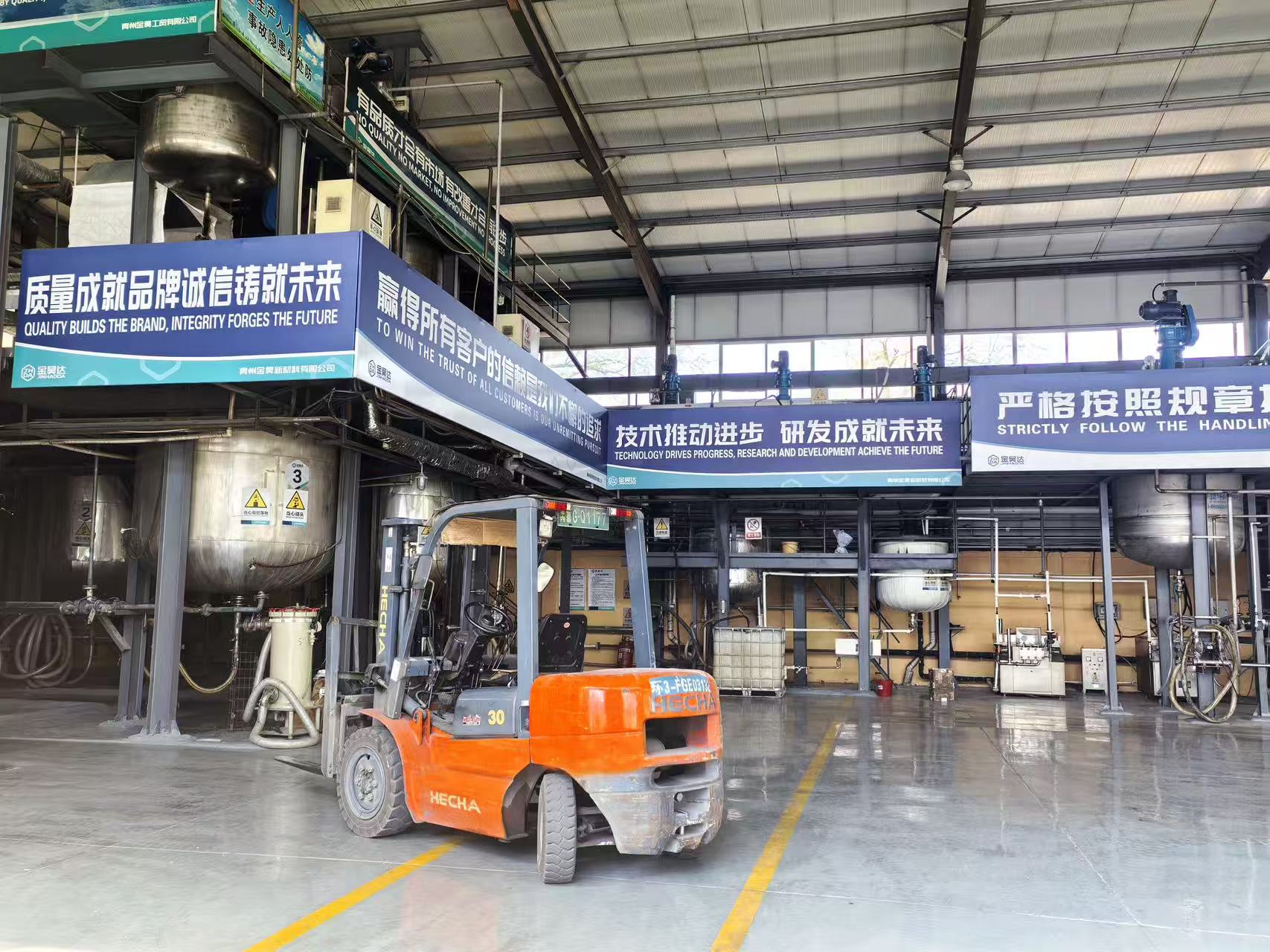
Capacity and batch consistency are verified on site, not on paper. A portfolio audit and a factory audit answer different questions.
Future Outlook
Three developments are likely to push portfolio documentation further into the centre of strength-agent procurement. First, rising recycled fiber share increases the sensitivity of strength results to furnish variability, which makes documented operating windows more valuable than single-point performance claims. Second, food-contact scrutiny continues to tighten around wet strength chemistry, where formaldehyde-free positioning and low residual monomer thresholds are already treated as market-access conditions in Europe; suppliers who document these attributes grade by grade will be easier to qualify than those who assert them at brand level. Third, as PAM-based chemistry continues to dominate the dry strength segment, differentiation will migrate from chemistry class to documentation quality — the stated parameters, the stated shelf life, and the stated compatibility boundaries that let a buyer run a defensible trial.
For procurement teams, the practical implication is straightforward. The question to put to any Paper Strength agent supplier is no longer only “what can your product do”, but “which document states it, on what basis, and under what conditions does it stop being true”. A supplier whose portfolio answers that question has already done part of the buyer's work.
FAQ
What should a buyer verify first on a paper strength agent technical data sheet?
Verify that the headline number is attached to a defined chemistry and physical form, and that its basis is stated. For example, JH-1699 is documented as a cationic dry strength resin in white powder form with ≥95.0% active content, rather than as a “high-strength additive”. Without chemistry, form and basis, a figure cannot be compared with another supplier's figure, nor converted into a dosing calculation.
How do dry strength and wet strength grades differ within one supplier's portfolio?
Dry strength grades raise strength in the dry state and are applied where tensile, burst or ring crush targets must be met. Wet strength grades develop strength that persists after wetting. In the JHDA range, JH-1699 and JH-1697 are dry strength grades, while JH-1201 is a formaldehyde-free cationic PAE wet strength agent used in tissue, food-contact board and pulp molding. The two categories are not interchangeable and are dosed at different points in the process.
Can a documented portfolio replace a mill trial?
No. Documentation establishes what a grade is and what it is expected to do; dosage and response depend on furnish, filler load, machine speed, wet-end chemistry and water quality. A trial remains the only way to confirm the 8%–15% fiber retention gain and 20%–30% fabric life extension documented for JH-D726, or the strength response of JH-1699 in a specific recycled furnish. Documentation makes a trial interpretable; it does not make it optional.
How should compatibility with sizing agents, defoamers and optical brighteners be checked?
Start with the written statement — JH-1699 is documented as having no adverse impact on sizing — then verify it in the mill's own system. That means a bench or pilot evaluation using the mill's sizing agent, defoamer and optical brightening agent, observing sizing response, brightness and retention together. Charge character is the reason the check cannot be skipped: cationic strength chemistry and anionic optical brightening agents carry opposing charges, and interactions of that type are a recognised source of brightness loss and uneven retention.
What does “EU food contact compliance” cover for a wet strength resin?
It indicates that the grade has been assessed against food-contact requirements applicable to paper and board, as with JH-1201, a formaldehyde-free cationic PAE wet strength agent. It does not extend to the finished article. Paper and board for food contact in the EU is tested against standards such as EN 645, EN 646 and EN 648, and frameworks such as BfR Recommendation XXXVI set out the safety approach for paper chemicals in Germany. Buyers should confirm which declaration the supplier issues, and validate the finished product separately.
JHDA's 2026 company and product brochure, covering the full papermaking chemical range including strength, sizing, retention and process auxiliaries, is available for download: JHDA introduction 2026 (PDF).
Have Questions or Need More Details?
Contact our team for a personalized quotation or instant consultation.
Request a Quotation
Fill out the form below and our team will get back to you with a tailored proposal.
WhatsApp Direct Chat
Prefer to chat in real-time? Message us on WhatsApp for instant assistance & quick answers.
- Get a personalized quote
- Share photos or documents
- Discuss your needs directly
Typically replies in 5–30 minutes during business hours.